


A Revived Piece of GDR Heritage
Reimagining a 1970s Apartment on Leipziger Strasse
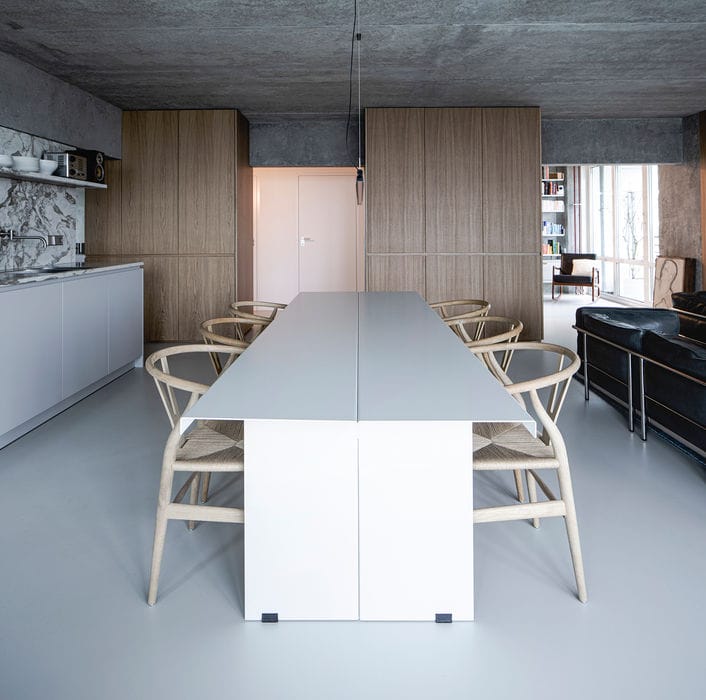
The monolithic apartment blocks lining Leipziger Strasse are instantly recognizable relics of East Germany's architectural legacy. Designed in 1976 by Joachim Näther and Werner Straßenmeier, these eight steel-frame towers—towering 23 to 25 stories each—have undergone a remarkable transformation in the public eye. What once seemed imposing is now celebrated as iconic modernism, with their raw concrete facades back in favor. The flats themselves remain highly sought-after: spacious by the standards of their era, thoughtfully proportioned, and today housing some of Berlin's most creative residents. Since 2020, the entire ensemble has been protected as a historic landmark.
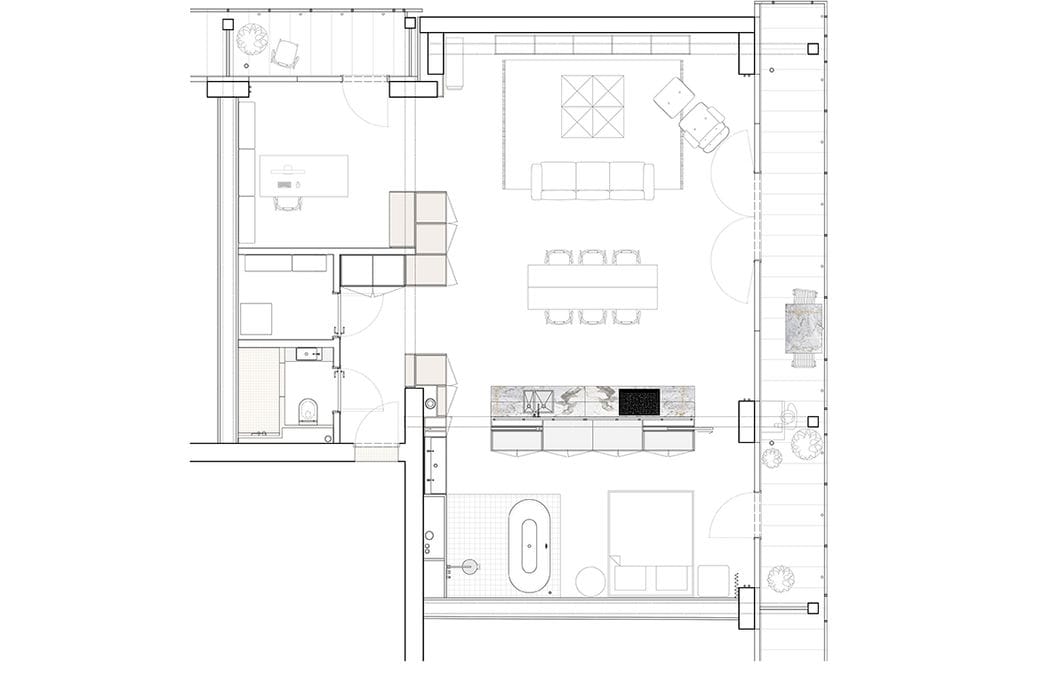
Architect Christopher Sitzler has both his home and office in a 100-square-meter corner unit here. He stripped it to its bones—removing walls to break down the original four-room layout and create one expansive, loft-like space. What emerged was enlightening: the building's substantial concrete beams, once hidden, became the natural organizing element of the design. The result is a naturally zoned floor plan. First, however, came the demanding work of repairing the concrete structure and updating all technical systems.
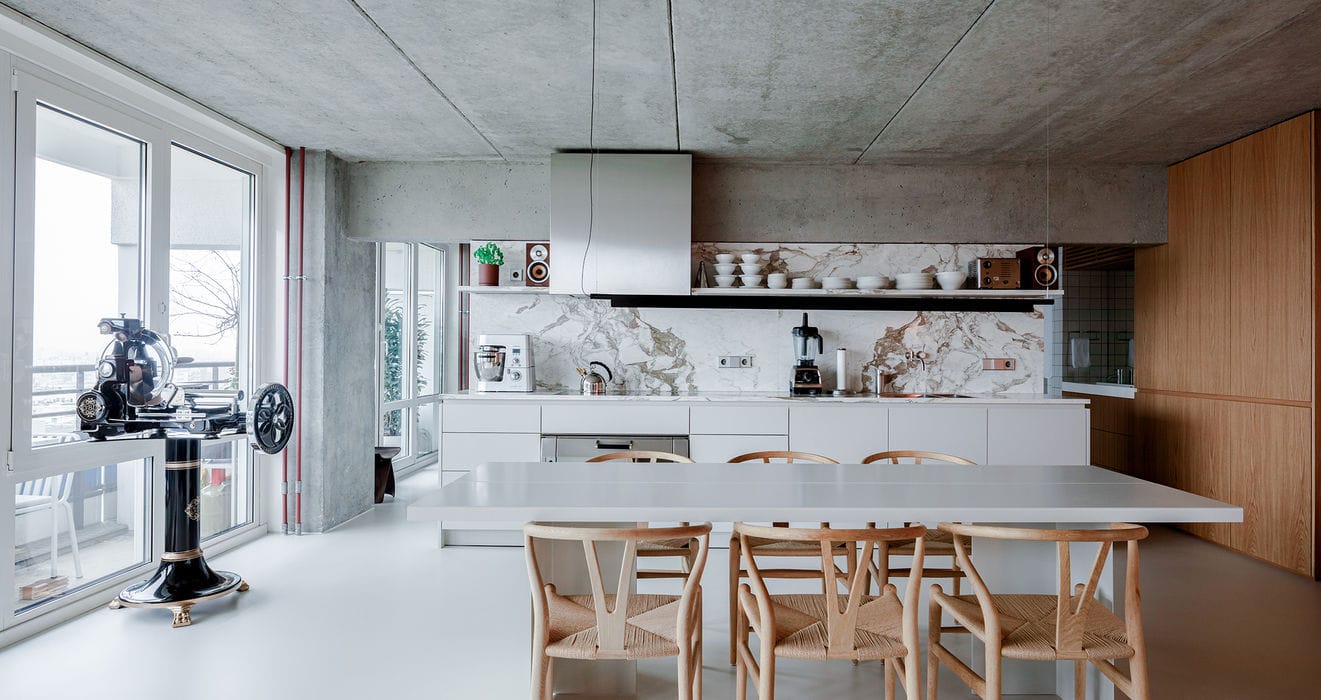
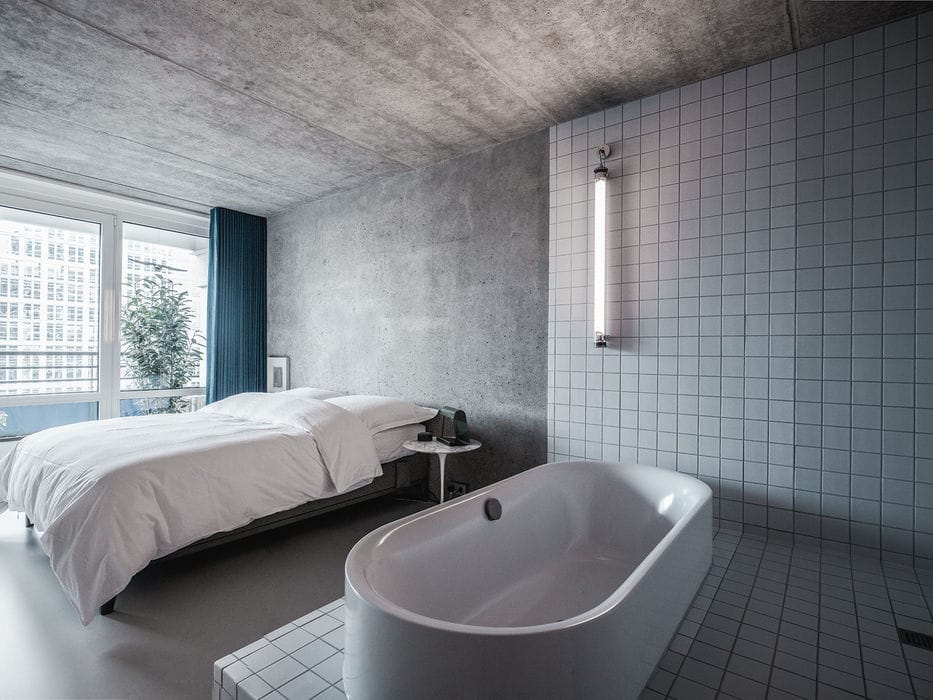
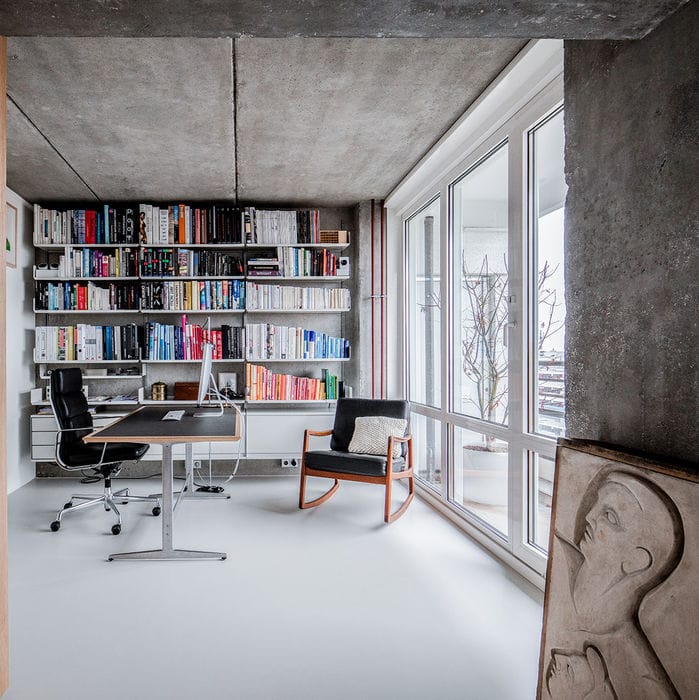
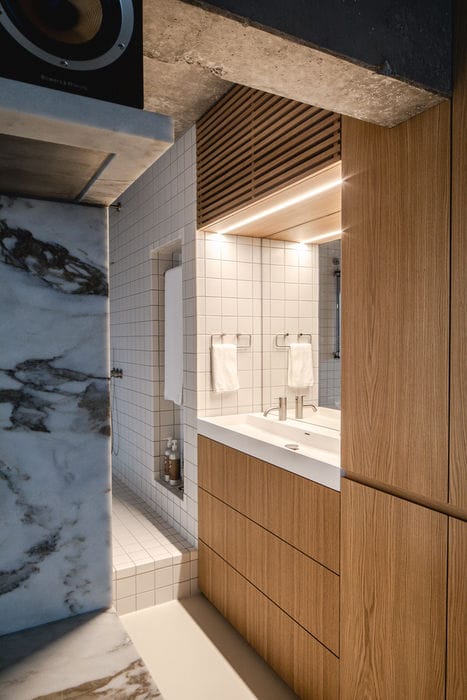
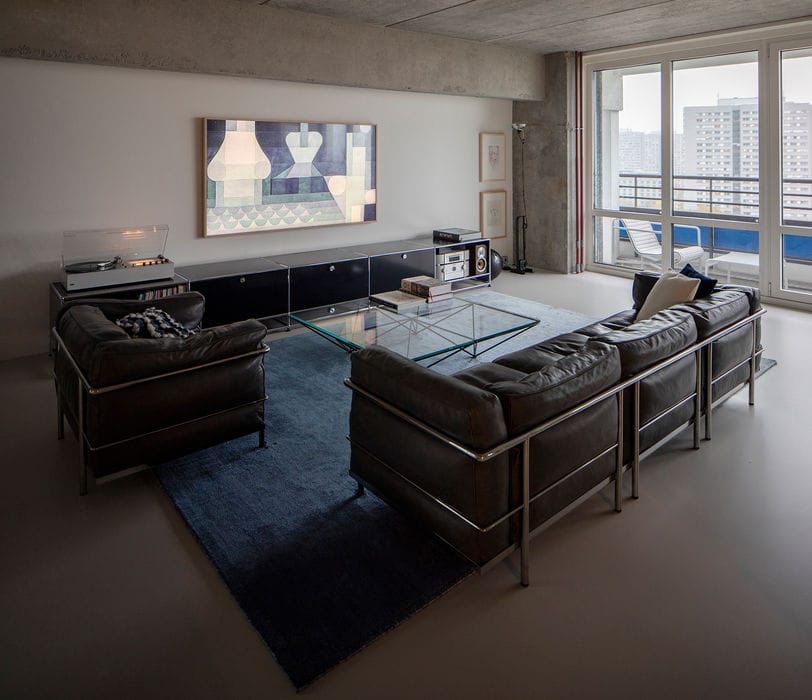
The redesign is a study in purposeful spatial division. A compact entrance area holds storage and a powder room. The heart of the home is a generous open-plan living and dining area flowing into the kitchen. The study occupies the corner space with seamless continuity. A sliding door defines the private realm—bedroom and bath—beyond. The bathroom itself is an unconventional statement: an open concept within the bedroom, with the tub perched on a platform of swimming-pool tiles. Sitzler removed the exterior panels that once obscured the windows, replacing them with floor-to-ceiling glazing that frames unobstructed views across Berlin's roofscape. The flooring throughout is a smooth, light-grey cast concrete from Senso. Every material choice—from the concrete walls to light oak accents—creates a deliberate color narrative. Built-ins are restrained and functional. Even the radiators have vanished, replaced by underfloor heating.
The interior reads like a curated design collection: Dieter Rams' iconic Vitsœ shelving, an original Alfred Roth bar cart from the 1930s, a white marble kitchen counter, Hans J. Wegner's Wishbone chairs, Le Corbusier's LC3 sofa, and USM office systems by Fritz Haller. Sitzler has created something rare—a singular vision within these concrete monoliths. Word has spread, and a growing number of creative professionals are seeking residence here.
Photography Credits:
Maximilian König
www.maximilian-koenig.com
(Published in CUBE Berlin 01|22)
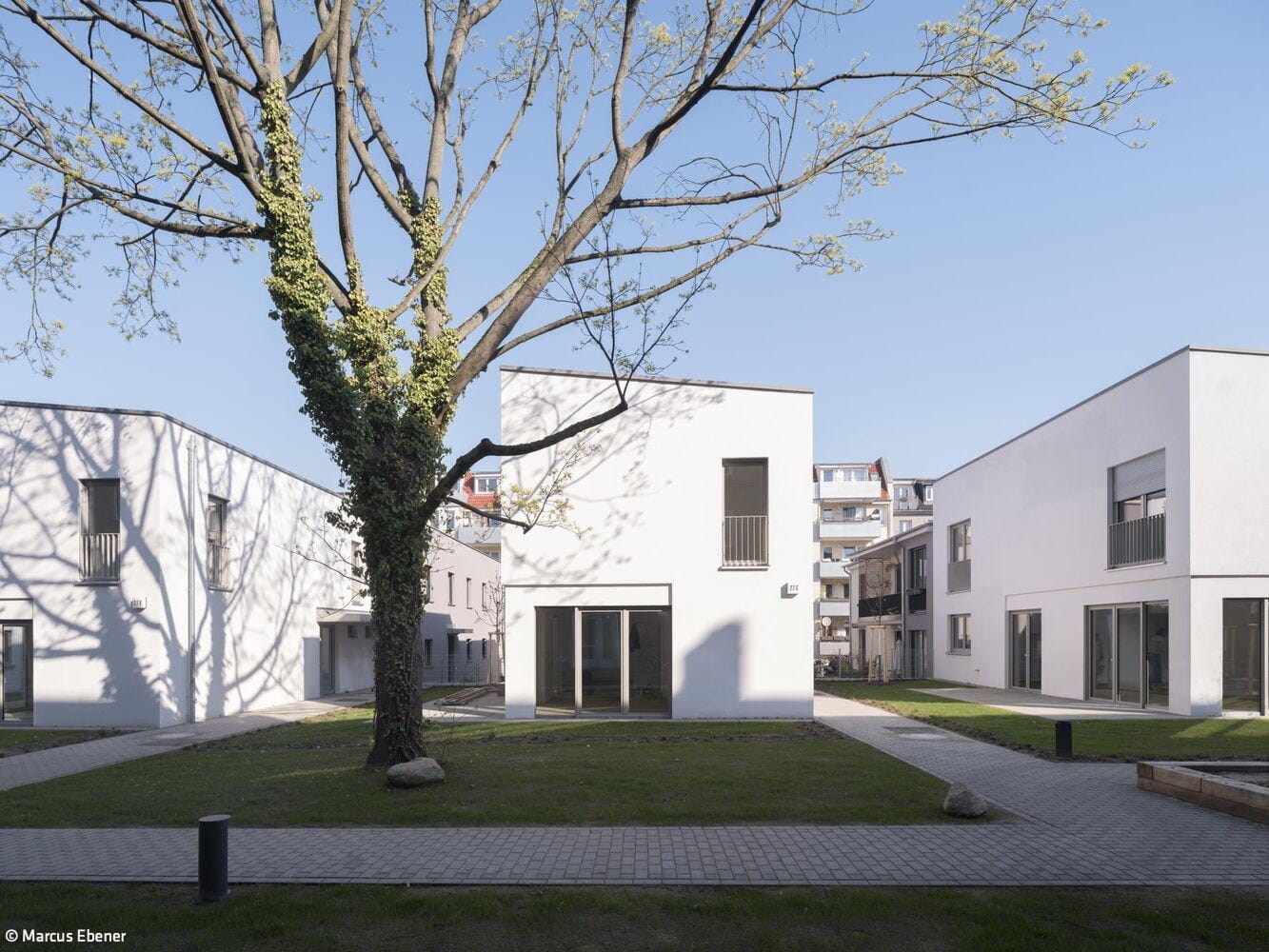
Up and down
Two complementary structures create a unified complex.
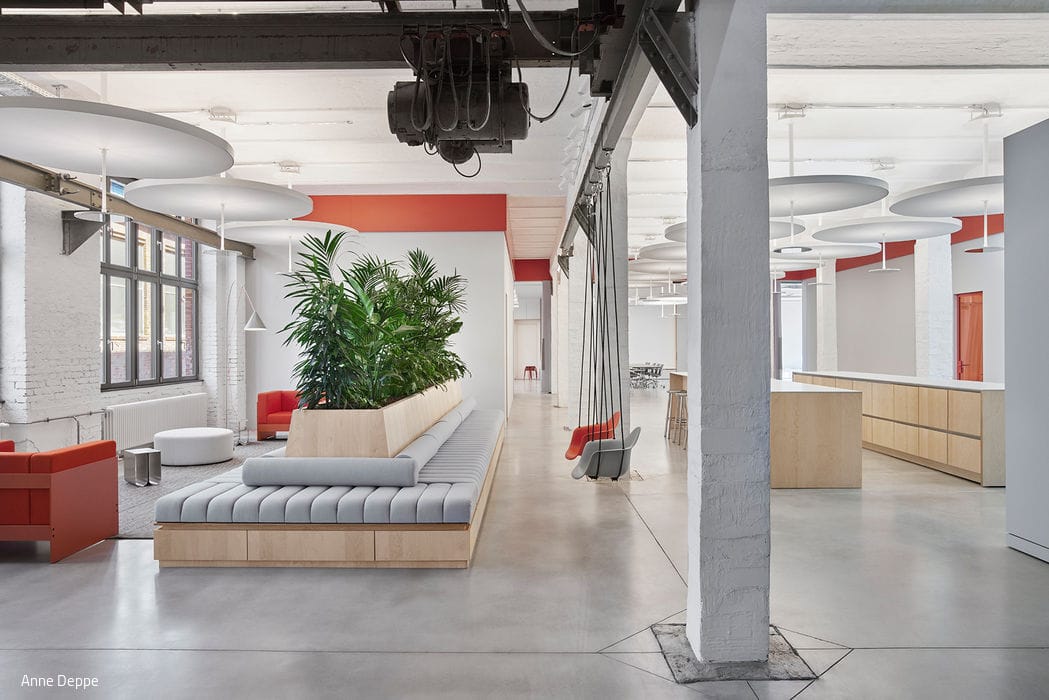
Ideas for Sustainable Change
Design Concept and Interior Architecture, Flawlessly Realized
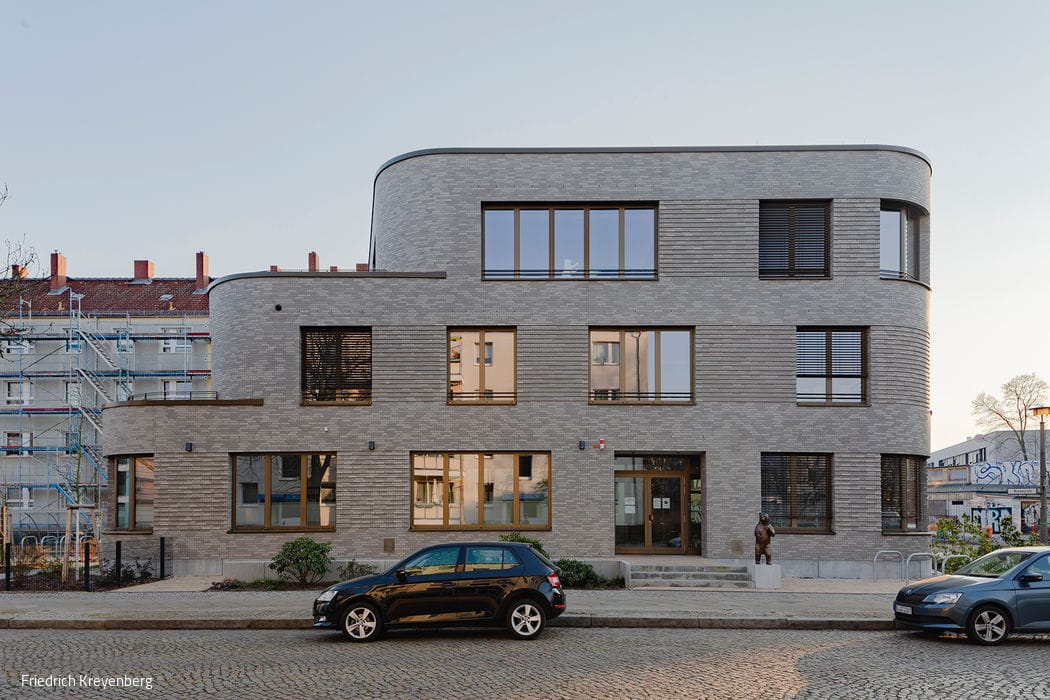
Three Distinct Voices
Standing in a Row: One Commercial Building and Two Residences in Oberschöneweide
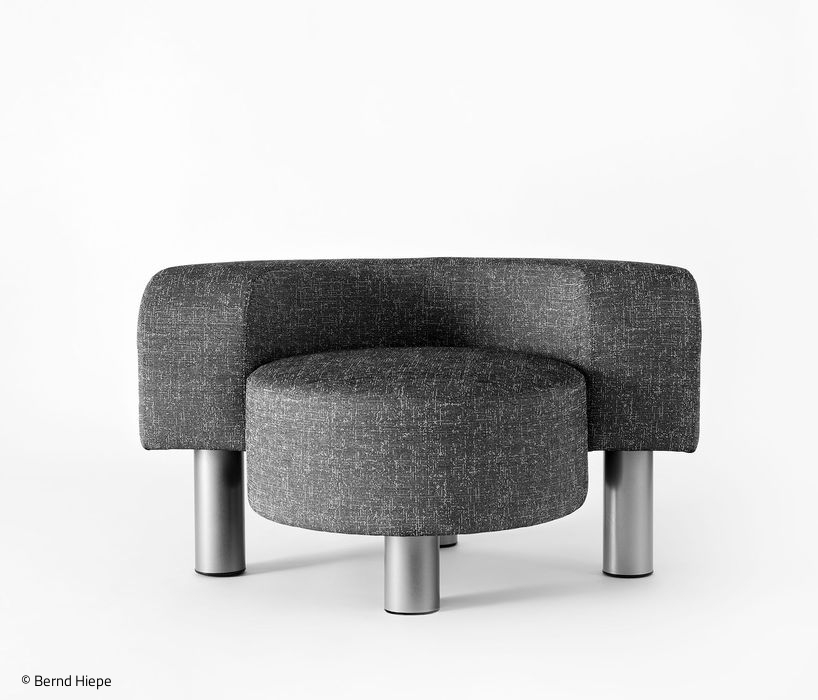
Hidden Champion
For years, Hermann August Weizenegger has ranked among Berlin's most accomplished designers.