


Volumetric interplay
A residential home in Hamm that captivates through bold, distinctive architecture
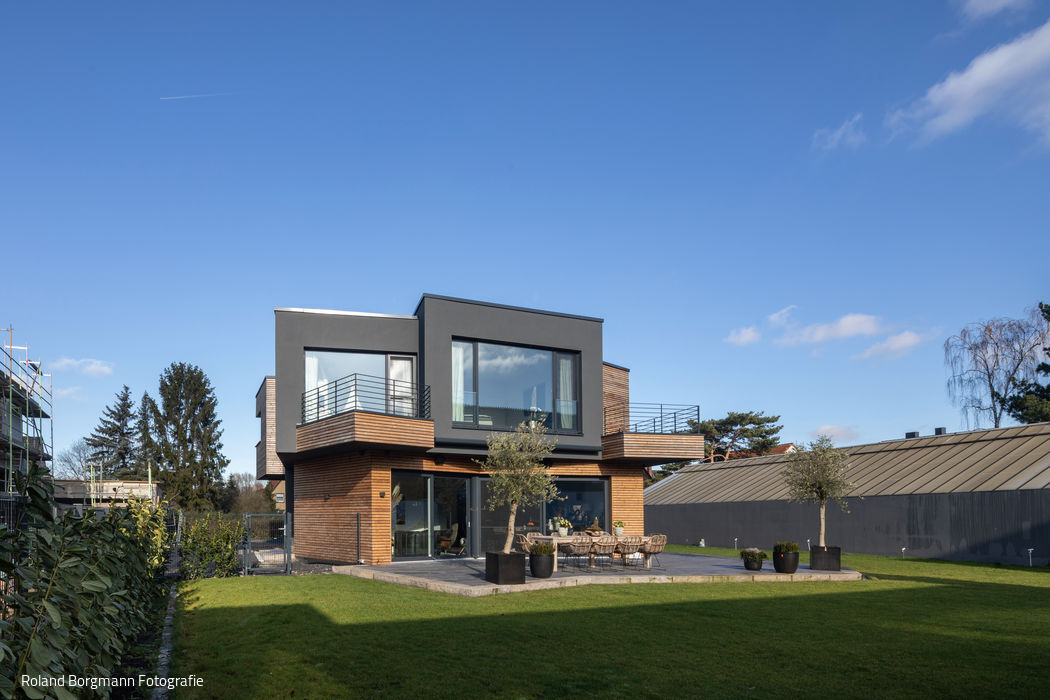


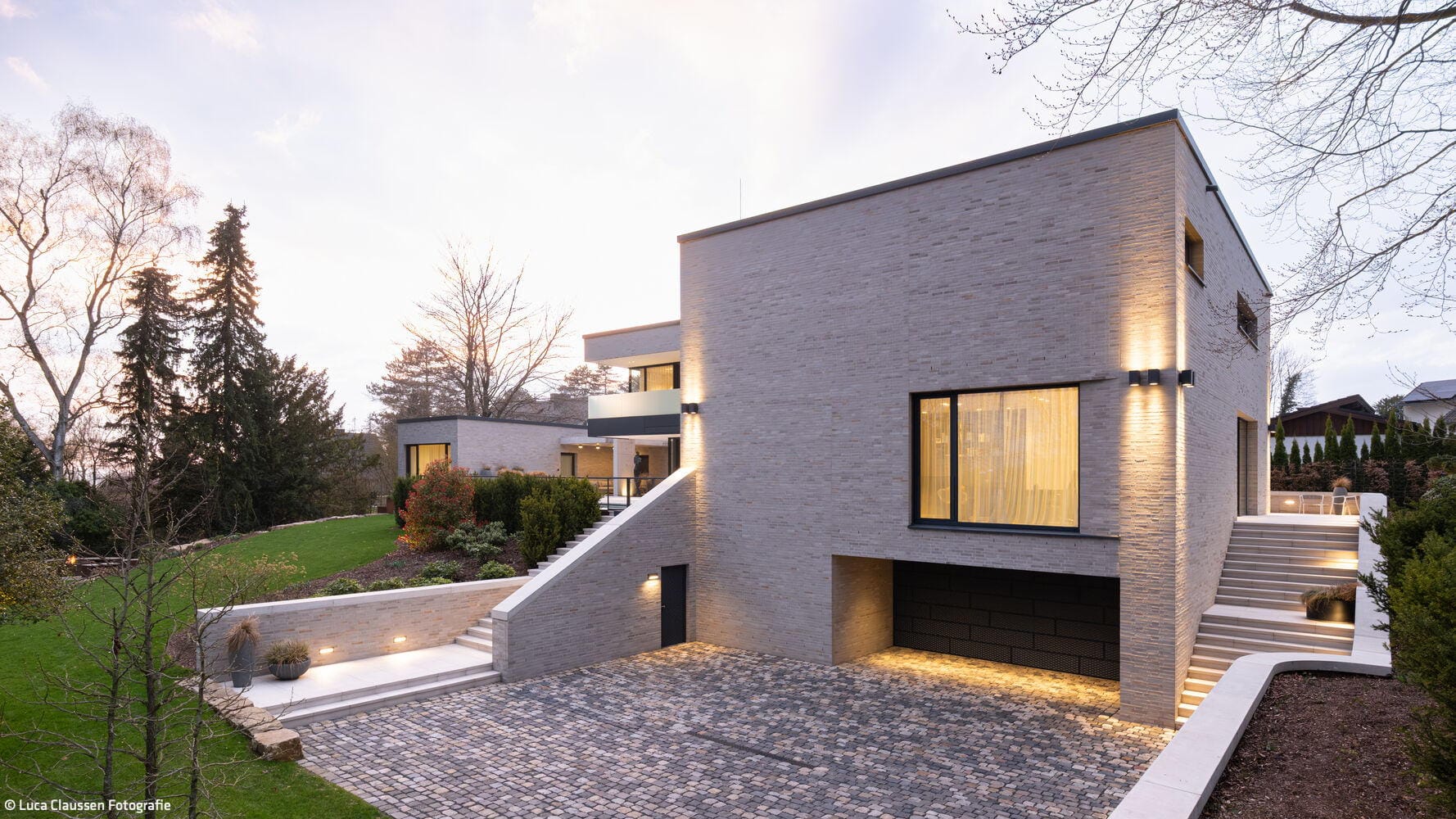
In Hamm, a Westphalian city, architect Jens Berghaus has designed a detached home in the sought-after residential quarter of Lohhauser Holz—an area characterized by intimate, small-scale development—that stands distinctly apart. Situated discreetly at the rear of an open plot, the house commands its own presence. With generous setbacks from neighboring structures, its façade reveals a sophisticated interplay of staggered projections and recesses, articulated through two contrasting materials and colors.
Along the northeast edge, the building mass aligns directly with the property boundary, anchoring the structure's backbone. Conversely, the southwest façade registers a deliberate rotation of the volume, creating an inviting threshold at the entrance. The garden-facing open-living zone embraces the terrace seamlessly, dissolving the boundary between interior and exterior. The upper floor's overhang both shelters the terrace below and floods the spaces with natural light. Like binoculars trained outward, the staggered cubes frame expansive views of the surrounding landscape. Where the levels offset, the long sides realign them into a unified edge. On the building's west side, the ground floor's angled façade orchestrates a fluid transition between stories while framing the entry. This rhythmic layering of projections and recesses intensifies through material and color: anthracite-rendered surfaces provide essential contrast to the horizontal wood cladding. Across all four elevations, this dialogue unfolds on multiple levels—recessed wood paneling from the ground floor resurfaces as a continuous element above. This exterior articulation finds its echo inside. A luminous void occupies the home's heart. Radiating outward, the ground floor opens into a generous, unified living-dining-kitchen zone. Service spaces—utility and mechanical rooms—occupy the rear, acting as a buffer to the garage. A three-flight U-staircase ascends to the upper level, where a gallery with integrated bridge connects the parents' suite (spa and dressing area) to the children's wing. This spatial sequence naturally establishes private sanctuaries that, tellingly, correspond to the volumetric composition visible from without.
www.berghausarchitekten.de
(Featured in CUBE Ruhrgebiet 04|20)

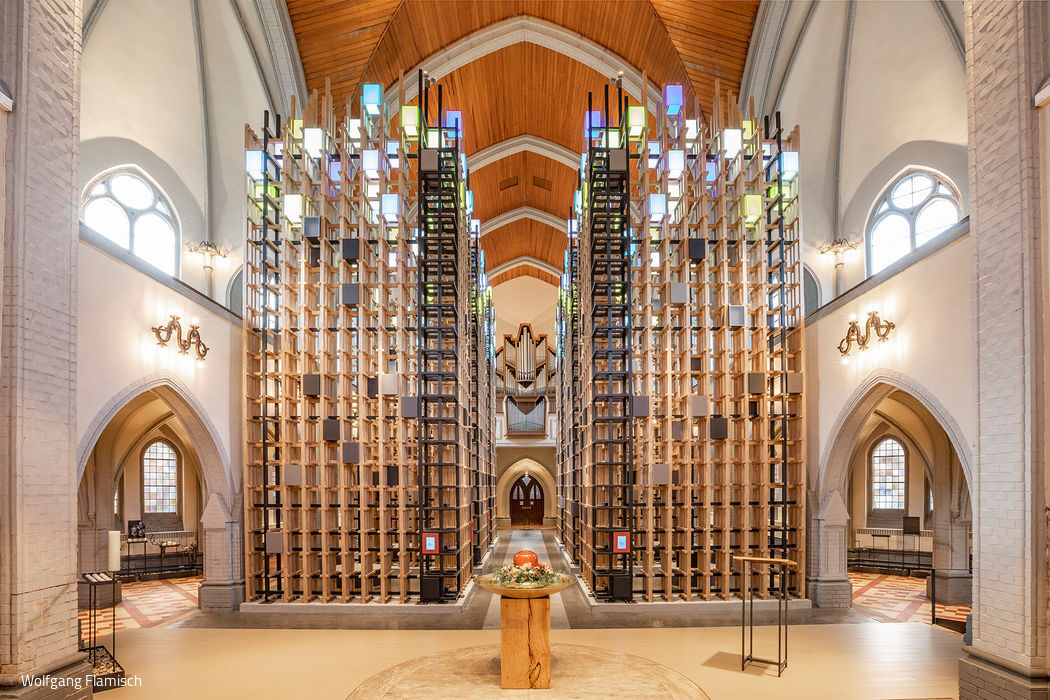
Preserved Within the Existing Structure
The Rheinkirche in Duisburg-Homberg Reimagined as a Columbarium

A Home for Seniors
A residential building in Oer-Erkenschwick designed with the needs of older adults at its core.
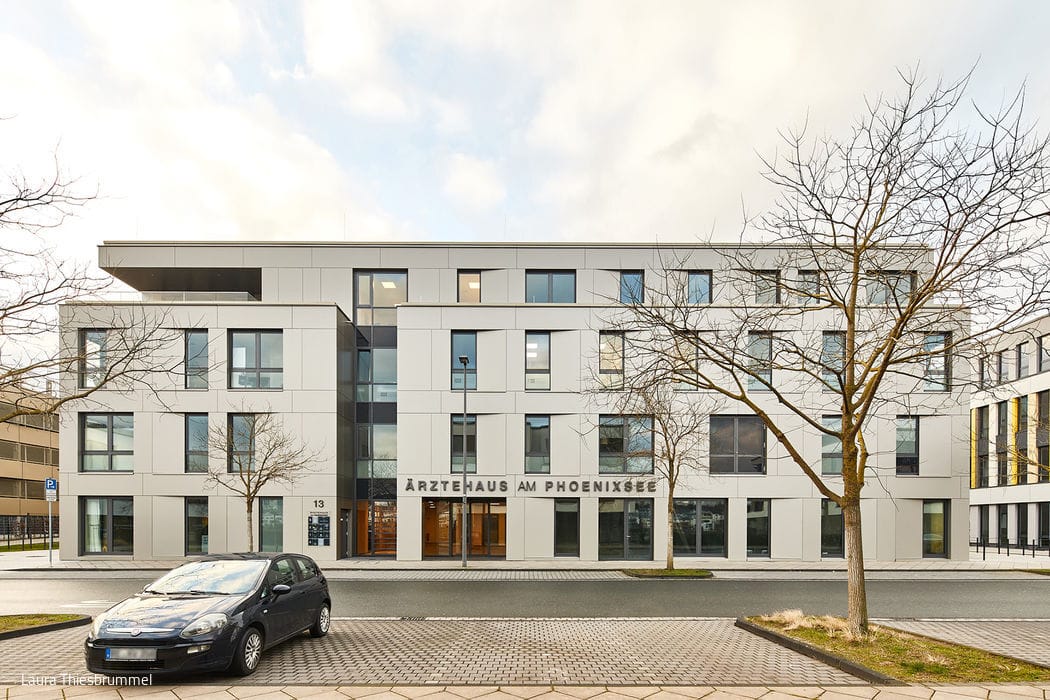
House of Health
Light-filled medical centre rises on the shores of Phoenixsee in Dortmund
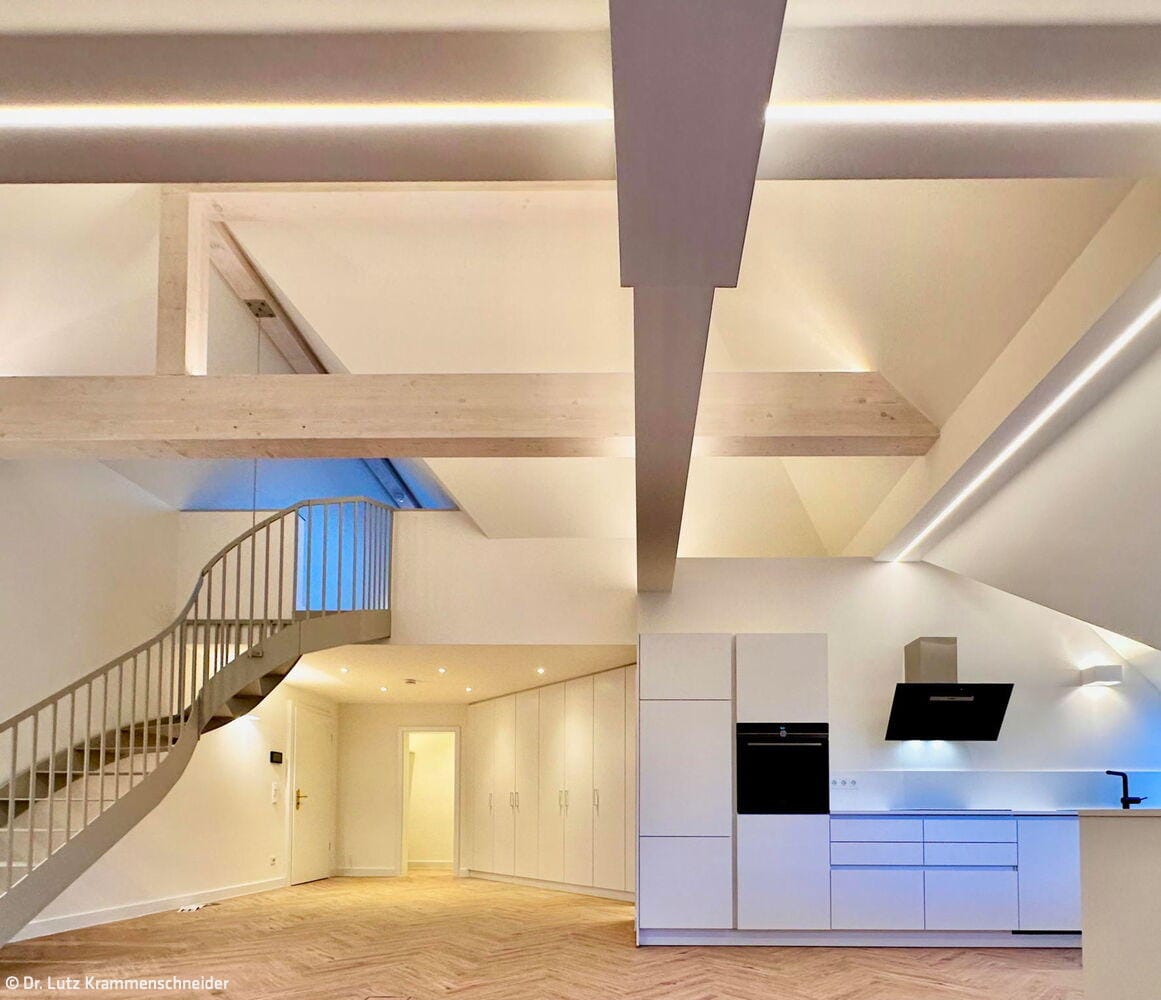
Treasures Under the Roof
How a attic apartment in an Essen apartment building became an award-winning model for urban renewal