


Projected Interference
The University of Cologne's Physics Institutes have received a striking new extension building
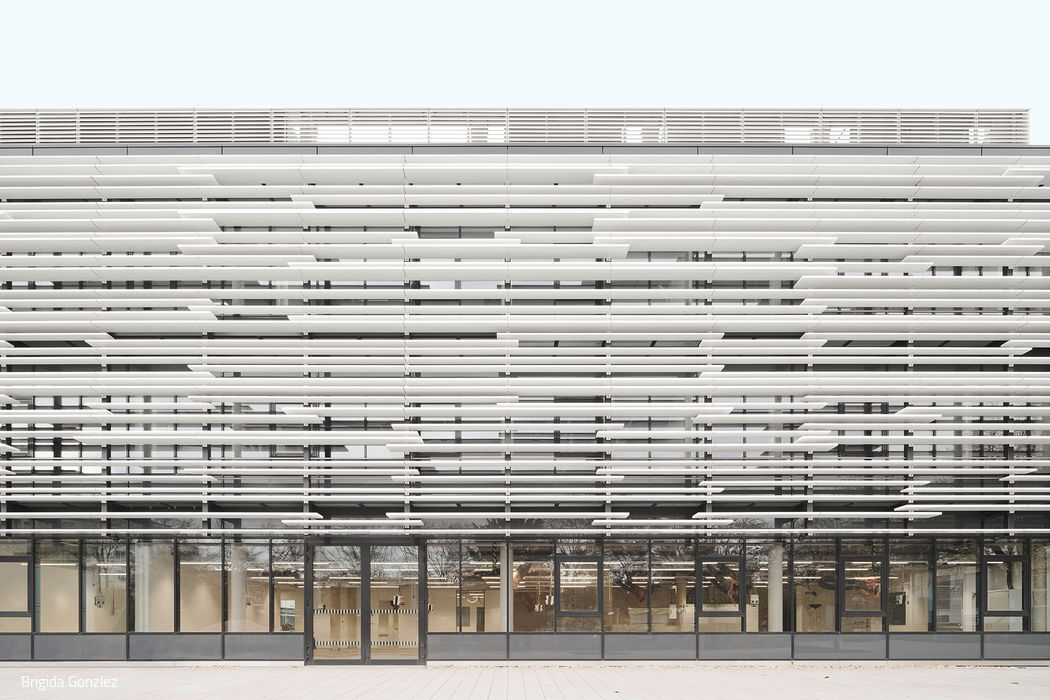
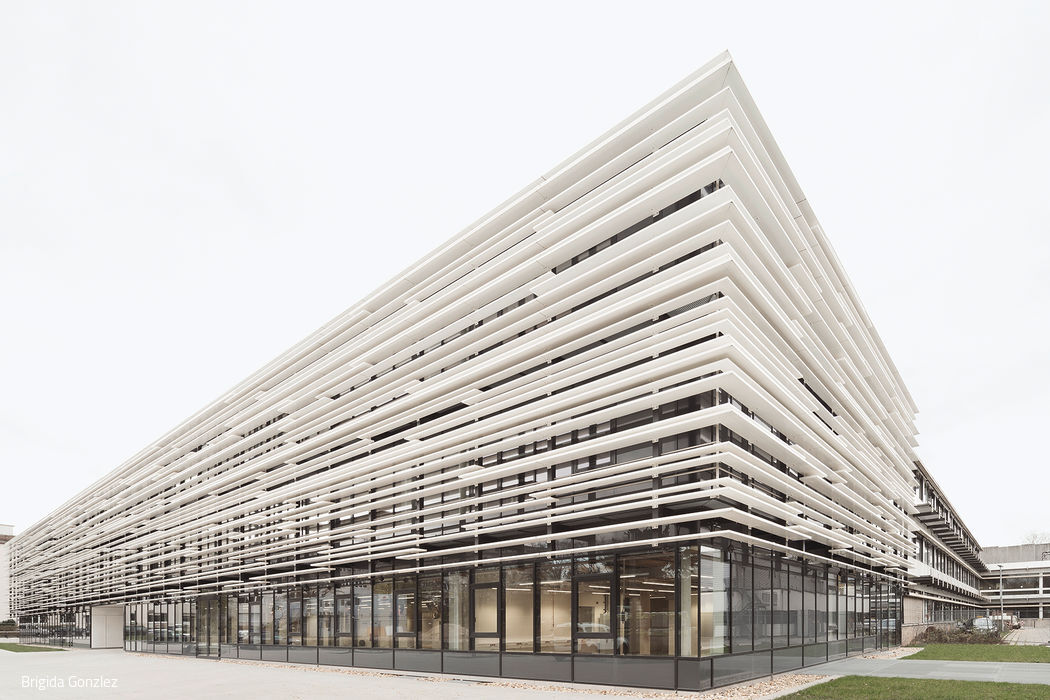
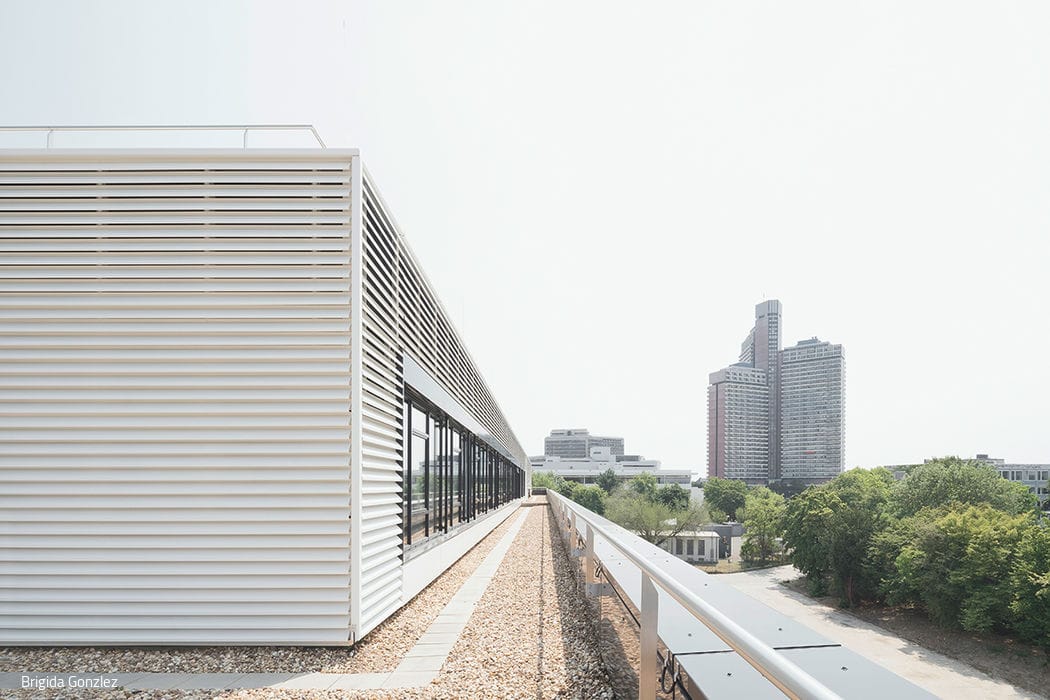
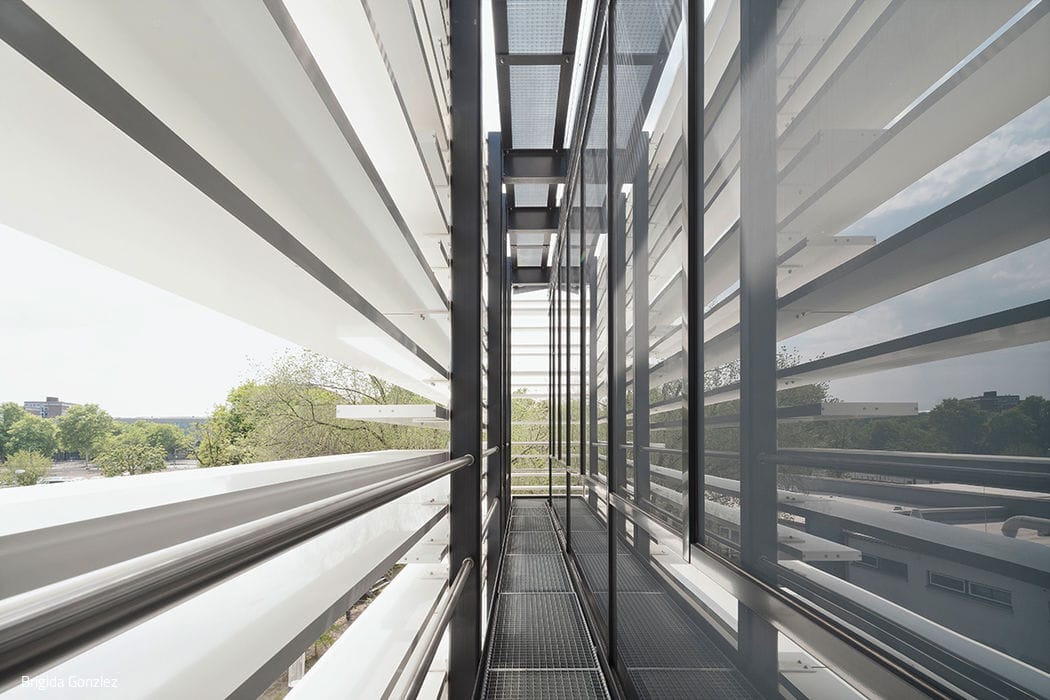
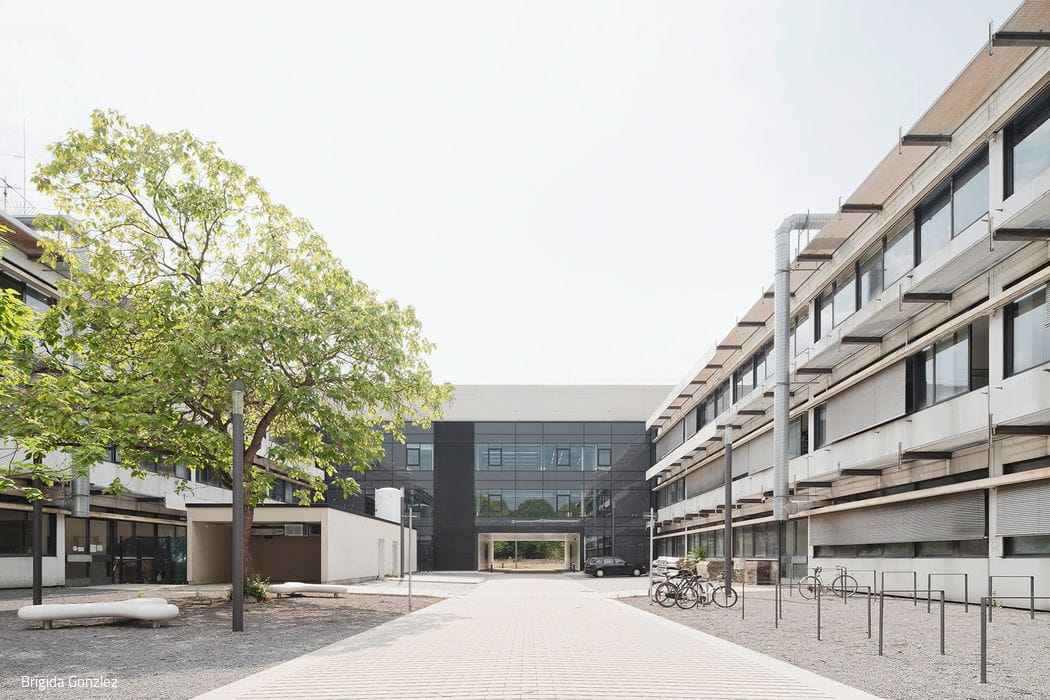
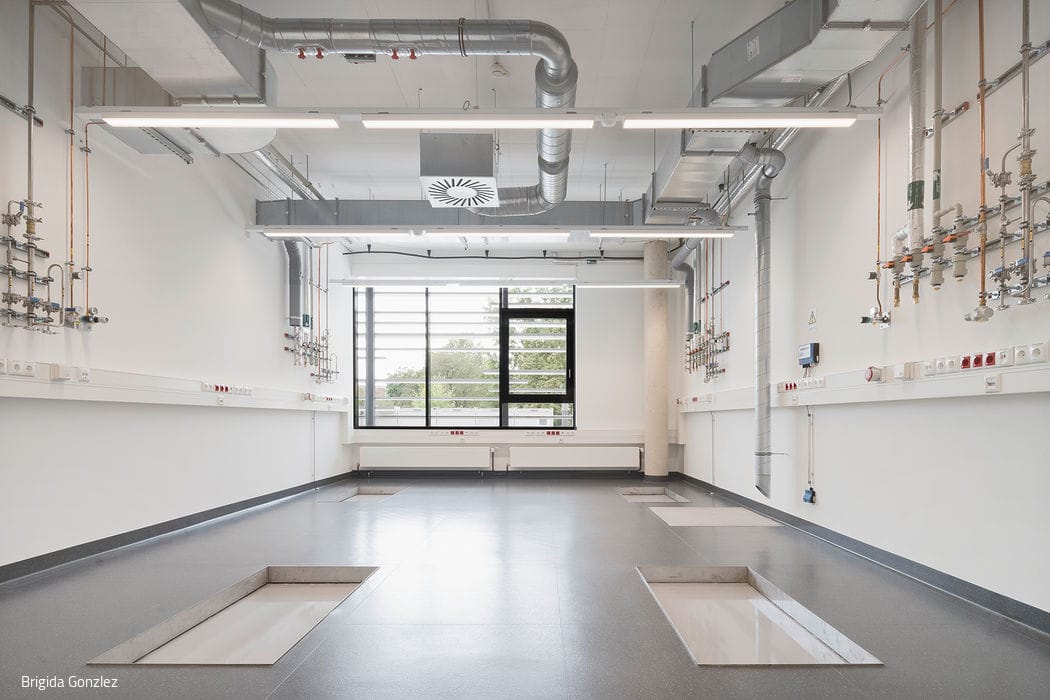
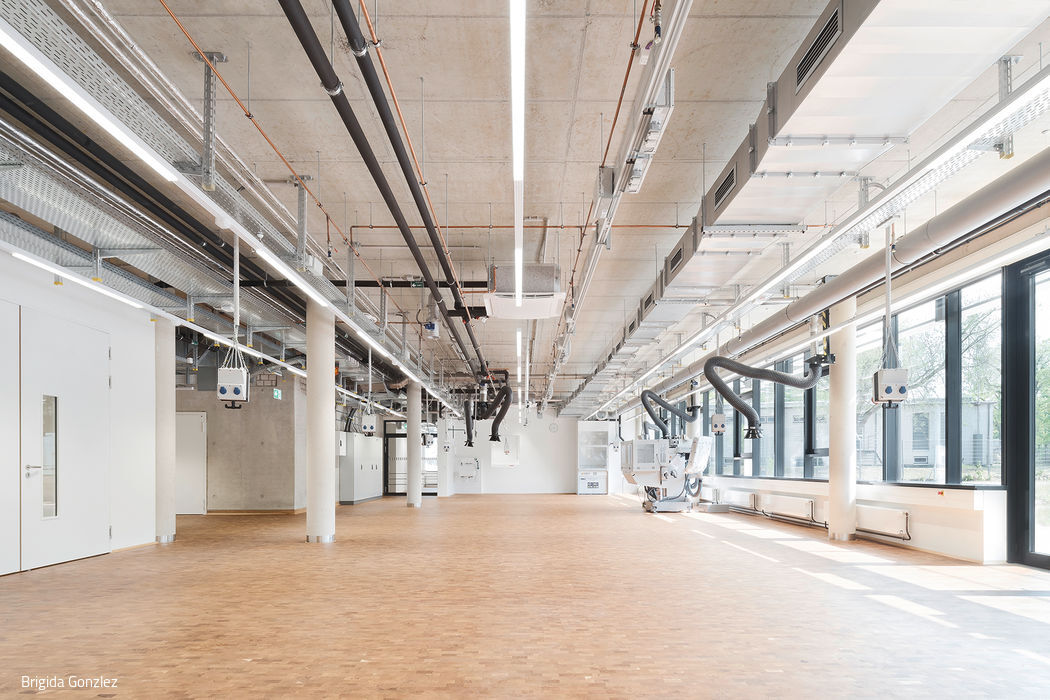
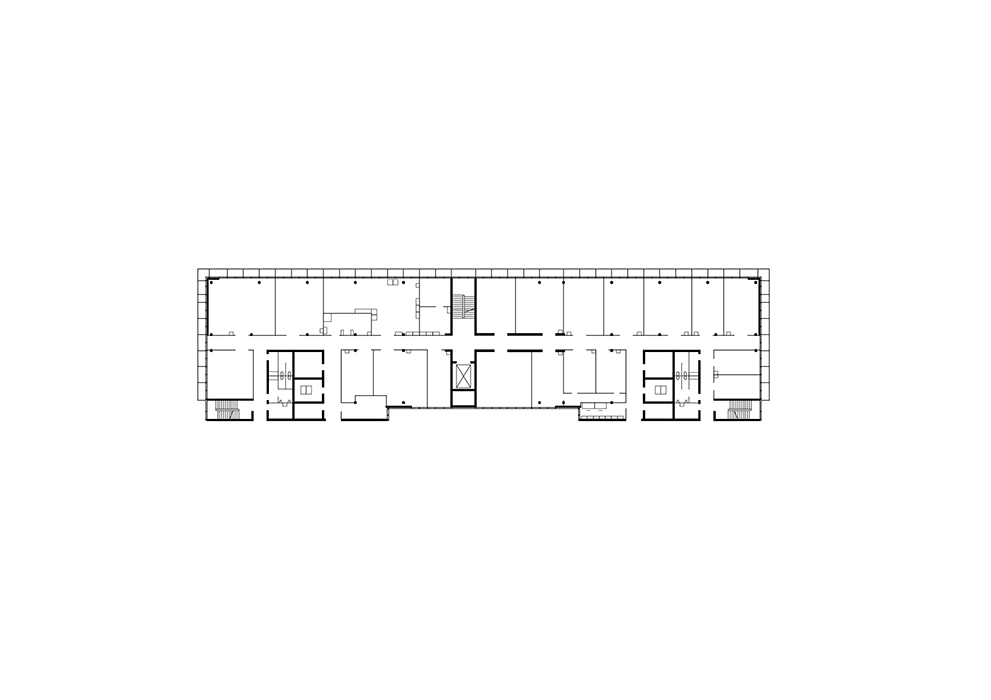
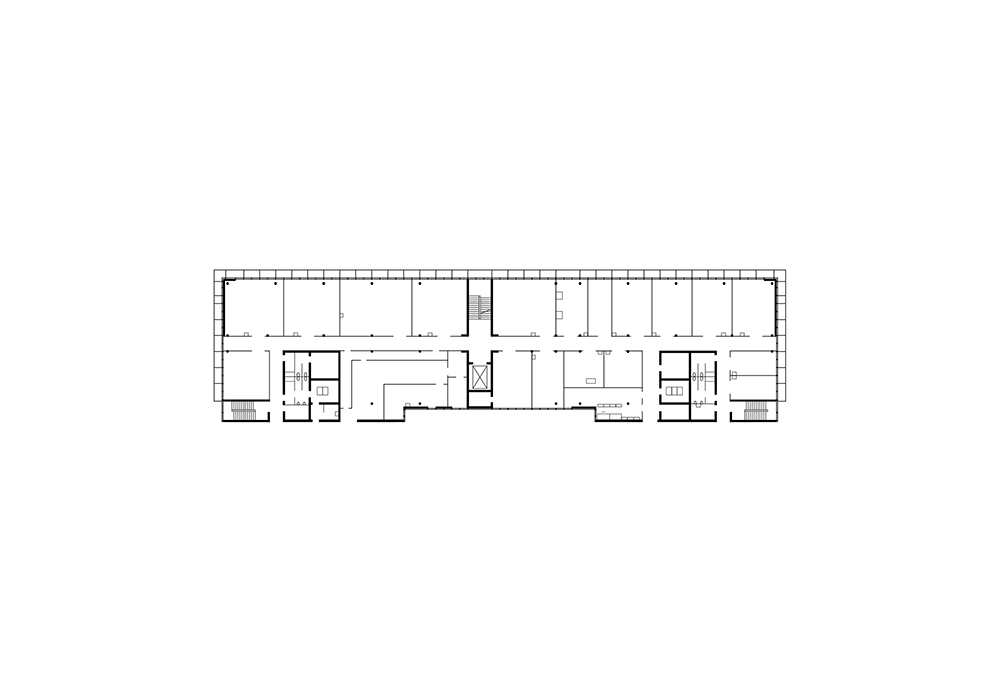
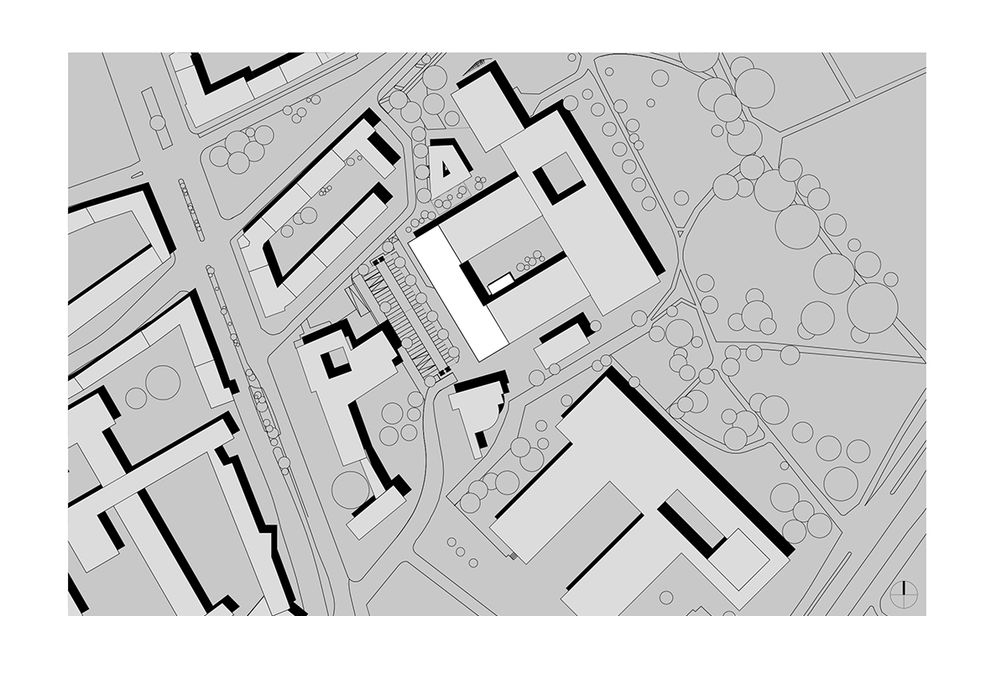
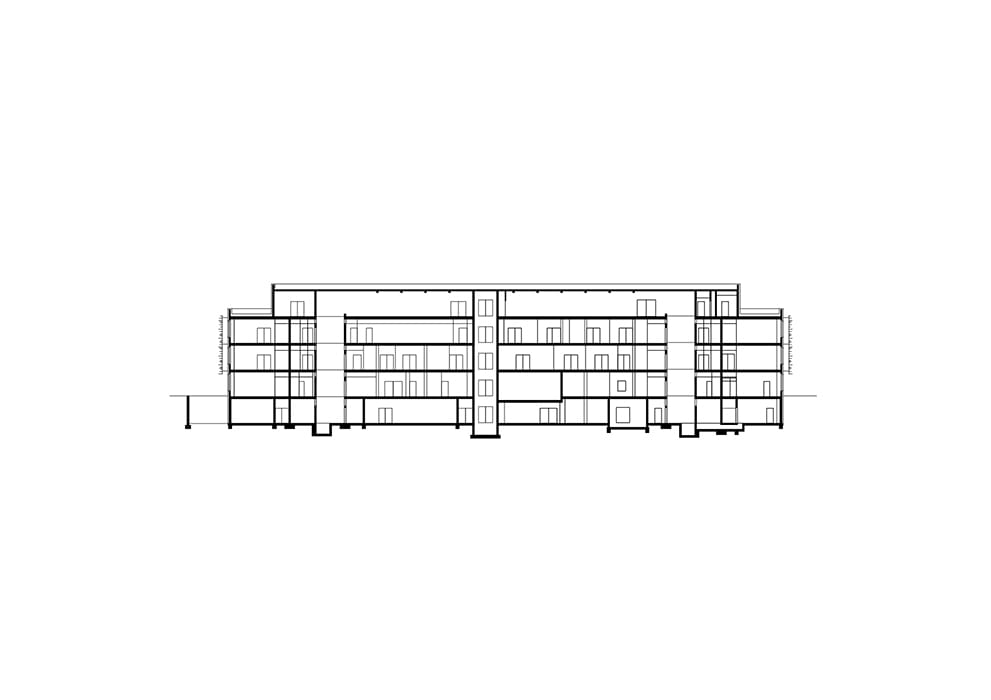
Physics stands among the most compelling fields in the natural sciences. At the University of Cologne, research spans the complete spectrum—from the structure of matter at its smallest scale in nuclear and molecular physics to black holes and galactic dynamics. The five institutes of the Physics Department—Astrophysics, Experimental Physics, Nuclear Physics, Theoretical Physics, and Biological Physics—operate as independent yet closely collaborative scientific entities, sharing common infrastructure.
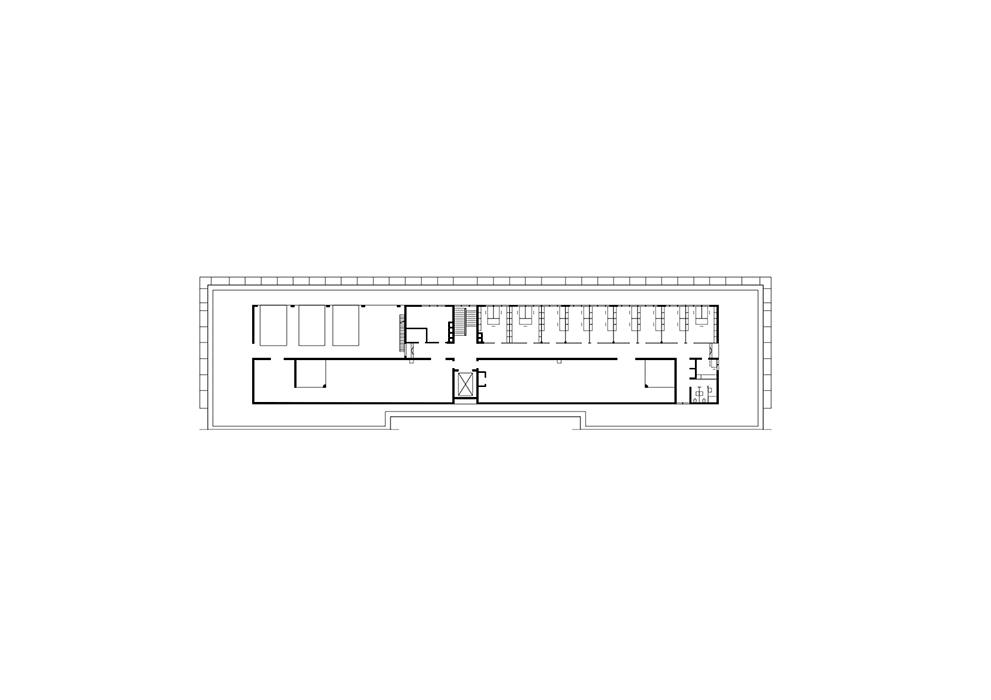
The building complex, erected in the 1960s after designs by the influential post-war architect Willy Kreuer (1910–1984), gained a complementary extension in 2014 dedicated to theoretical physics research and instruction. The Cologne-based firm heinlewischer, which led the design and execution of that project, has now completed a second expansion as master planner. This new structure closes the U-shaped campus as a connecting element—standing as its own distinct building while thoughtfully echoing the existing architecture. Across five stories and 7,010 m² of space, it houses state-of-the-art laboratories, offices, measurement facilities, workshops, and cleanrooms. Throughout the design process, the architects prioritized a respectful integration into the larger context. Rather than competing with the existing buildings, they conceived the new structure as an independent entity. To establish visual continuity, they translated the existing complex's defining horizontal façade rhythm into a signature design element for the new building. The existing structure's stacked composition of window bands, parapets, lintels, sun protection boxes, external louvered elements, and service corridors finds its echo in the new façade—rendered in carefully matched materials and colors. Fixed horizontal aluminum louvers in powder-coated pure white give the extension its distinctive character. Beyond sun control, these louvers serve as a projection surface for the building's scientific mission, translating physical concepts—interference, superposition, displacement, and motion—into visual form. The staggered arrangement of slats in varying widths and depths generates a dynamic, animated façade while maintaining optimal interior light distribution. Through strategic absorption and reflection, the system provides consistent solar protection across all seasons. To ensure the original complex remains contemporary, the architects have recently been commissioned to undertake a comprehensive renovation of the entire Physics Institute.
Photography:
Brigida González
www.brigidagonzalez.de
(Published in CUBE Cologne 03|23)


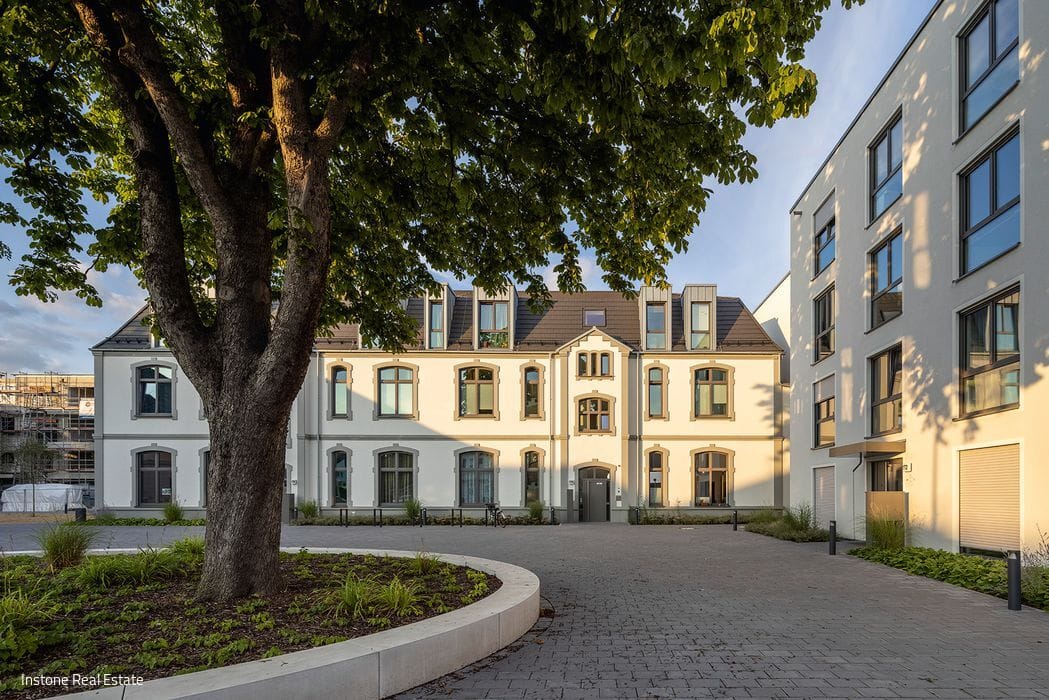

Thoughtful Transformation
A historic protected residence in Ehrenfeld demonstrates the power of renewable energy integration
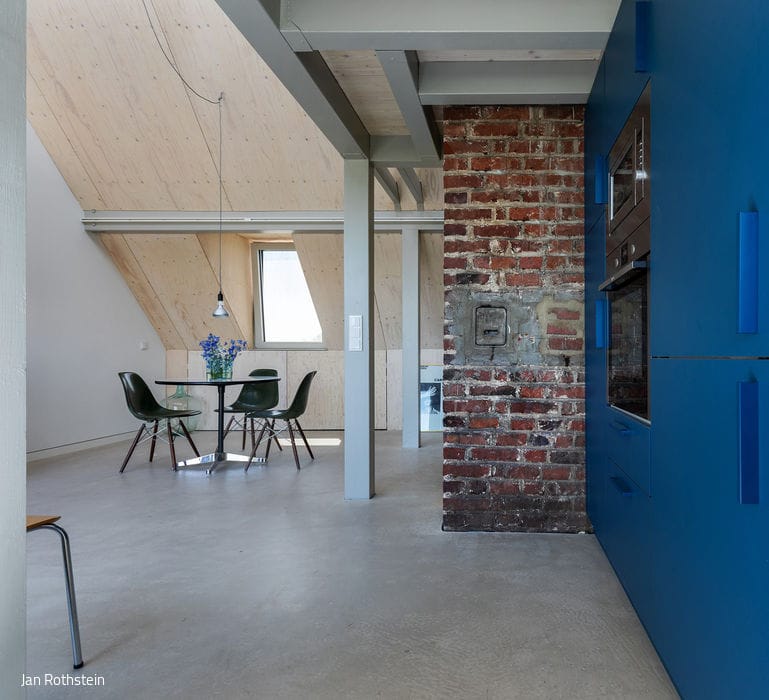
Contrasts Seamlessly Integrated
Converting Storage Into Living: Individual Spaces Follow the Roofline
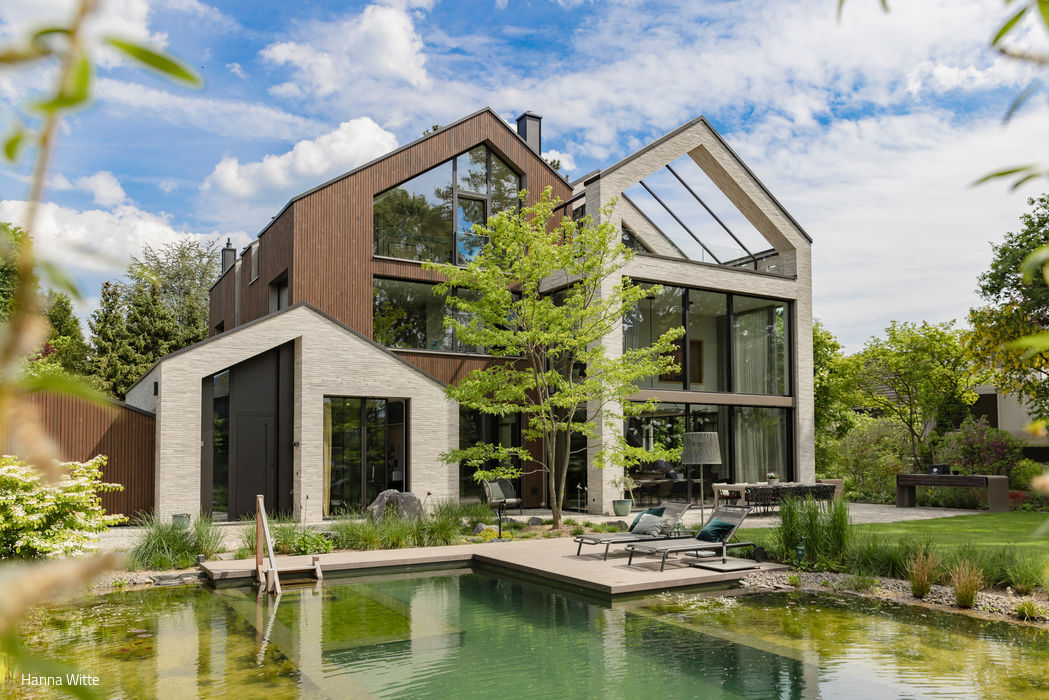
One to Four
A residential home that stands apart through its distinctive composition and rich spatial diversity.
Because First Impressions Matter
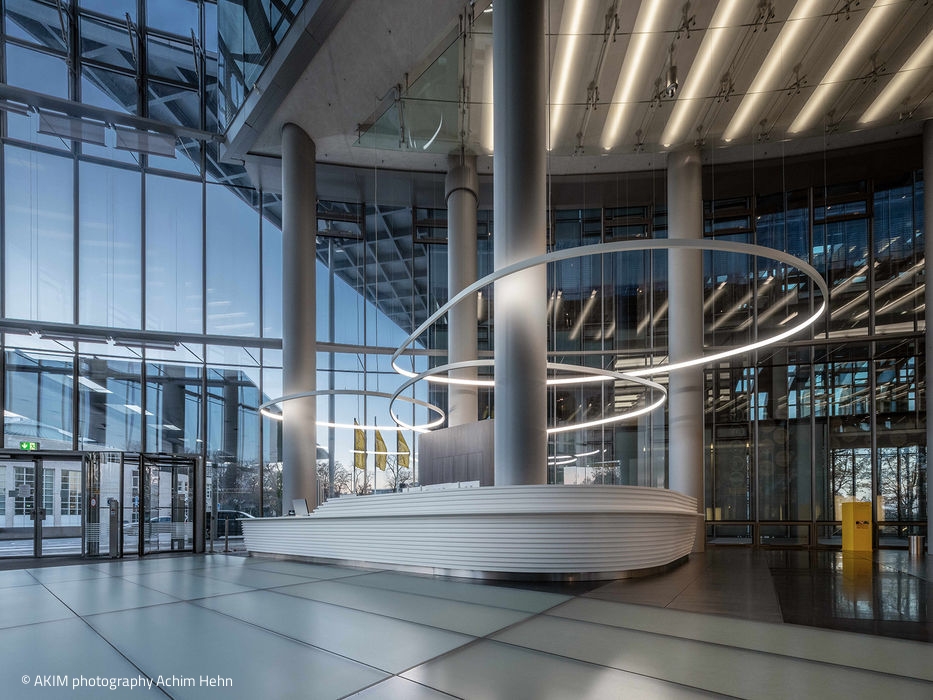
Reimagined Reception Area at Post Tower