


Connected
A depot unified through a "garden wall" connecting its diverse functions
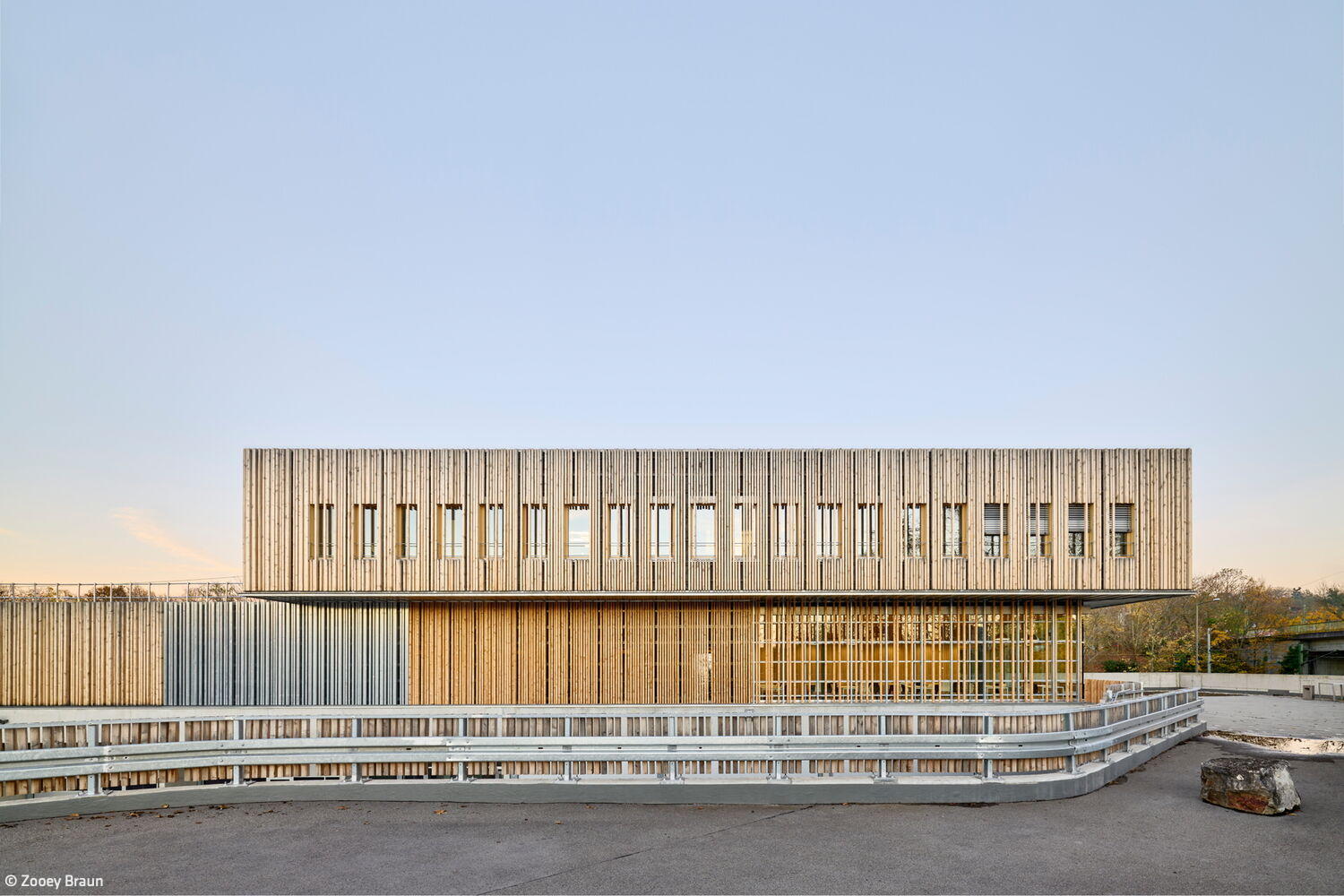
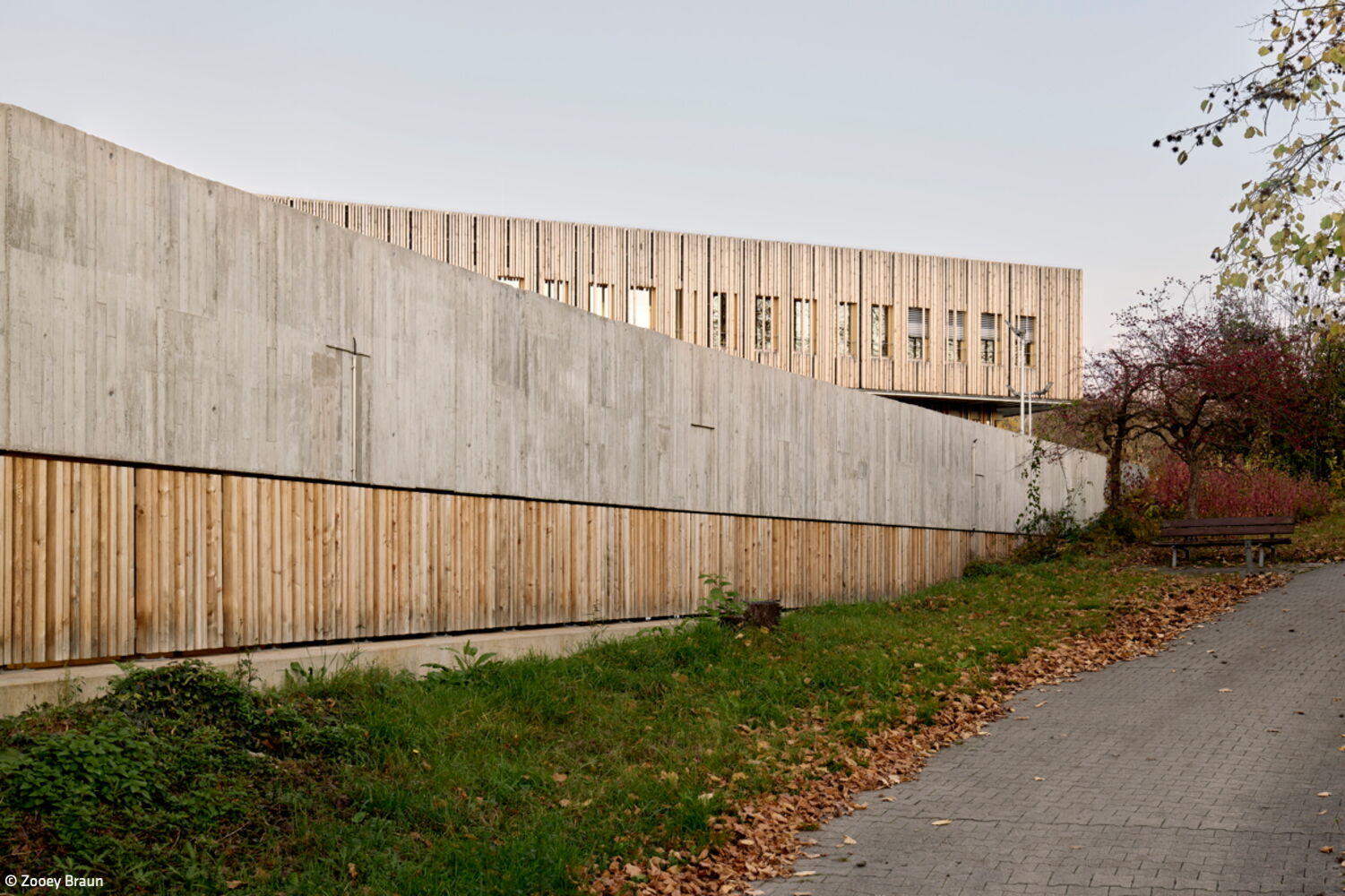
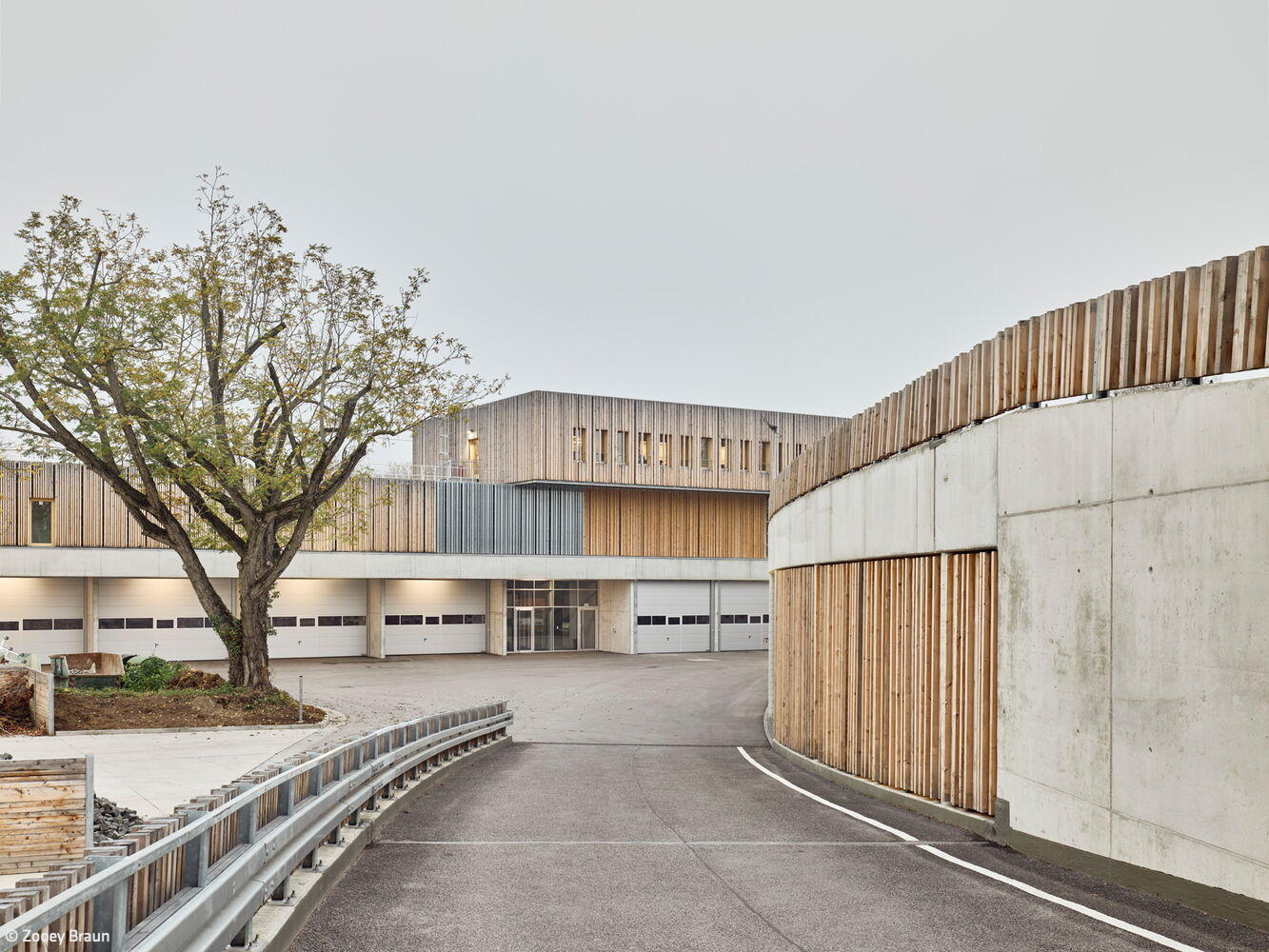


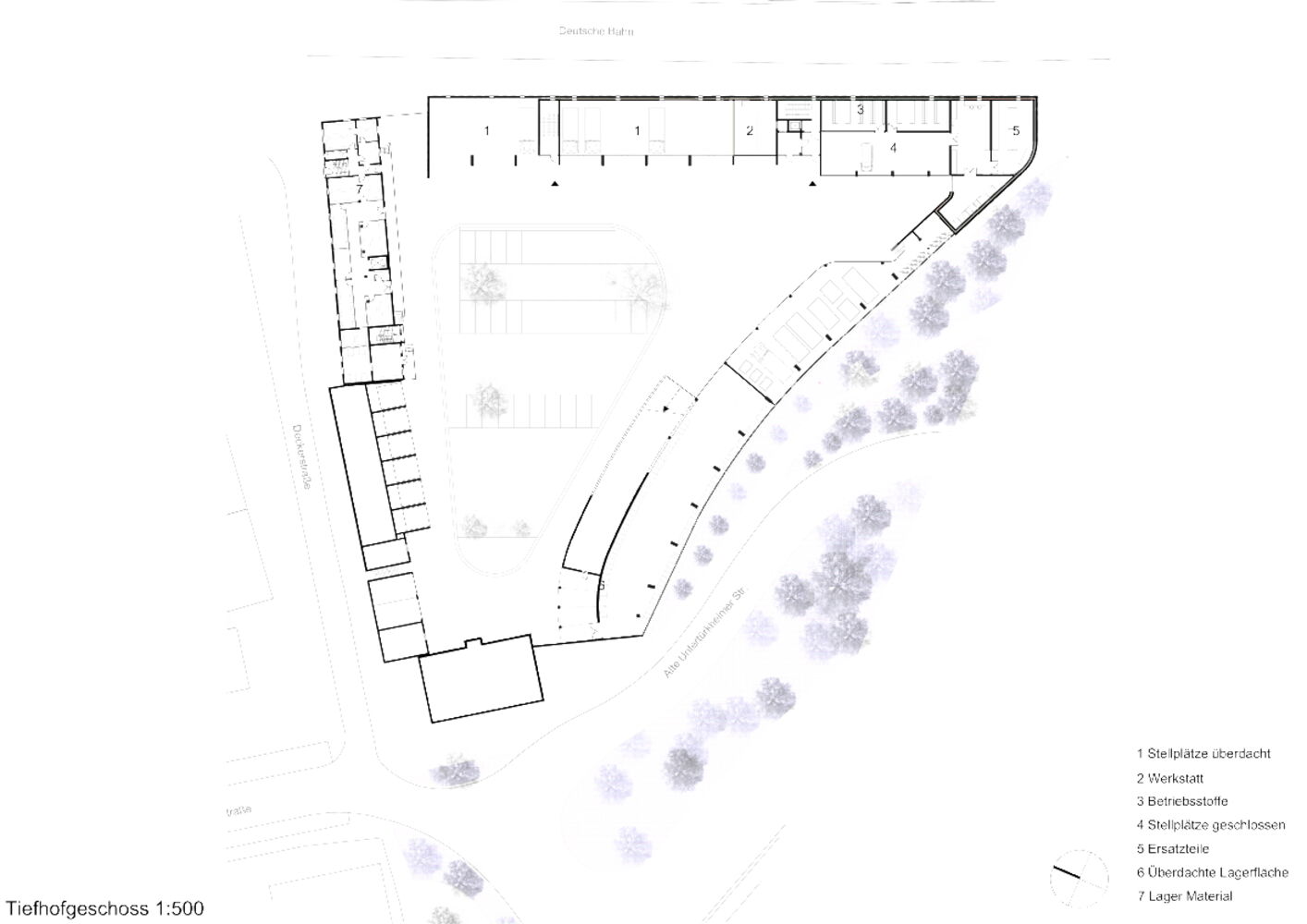
Stuttgart's civil engineering office once occupied this site. The vision was to reconfigure and expand the existing structure, while carving out additional space for the parks and cemeteries department. Positioned at the edge of a residential district—with a busy railway line running behind it—the design needed to address noise mitigation, sensitive urban integration, and contextual sensitivity. The challenge was compounded by a critical constraint: ongoing operations had to continue uninterrupted throughout construction, with the courtyard remaining fully functional at all times.
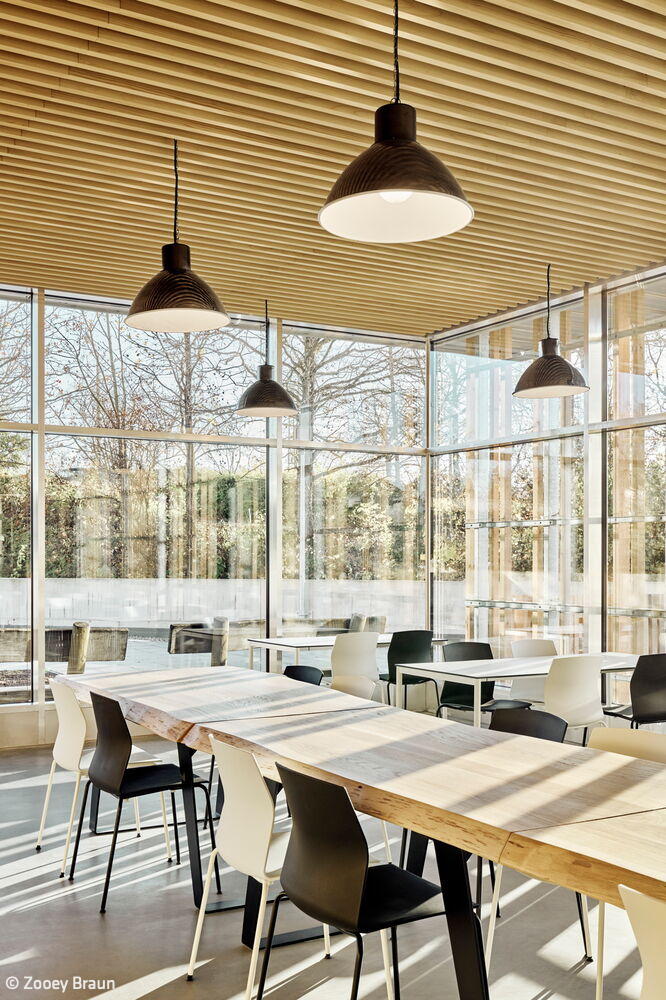
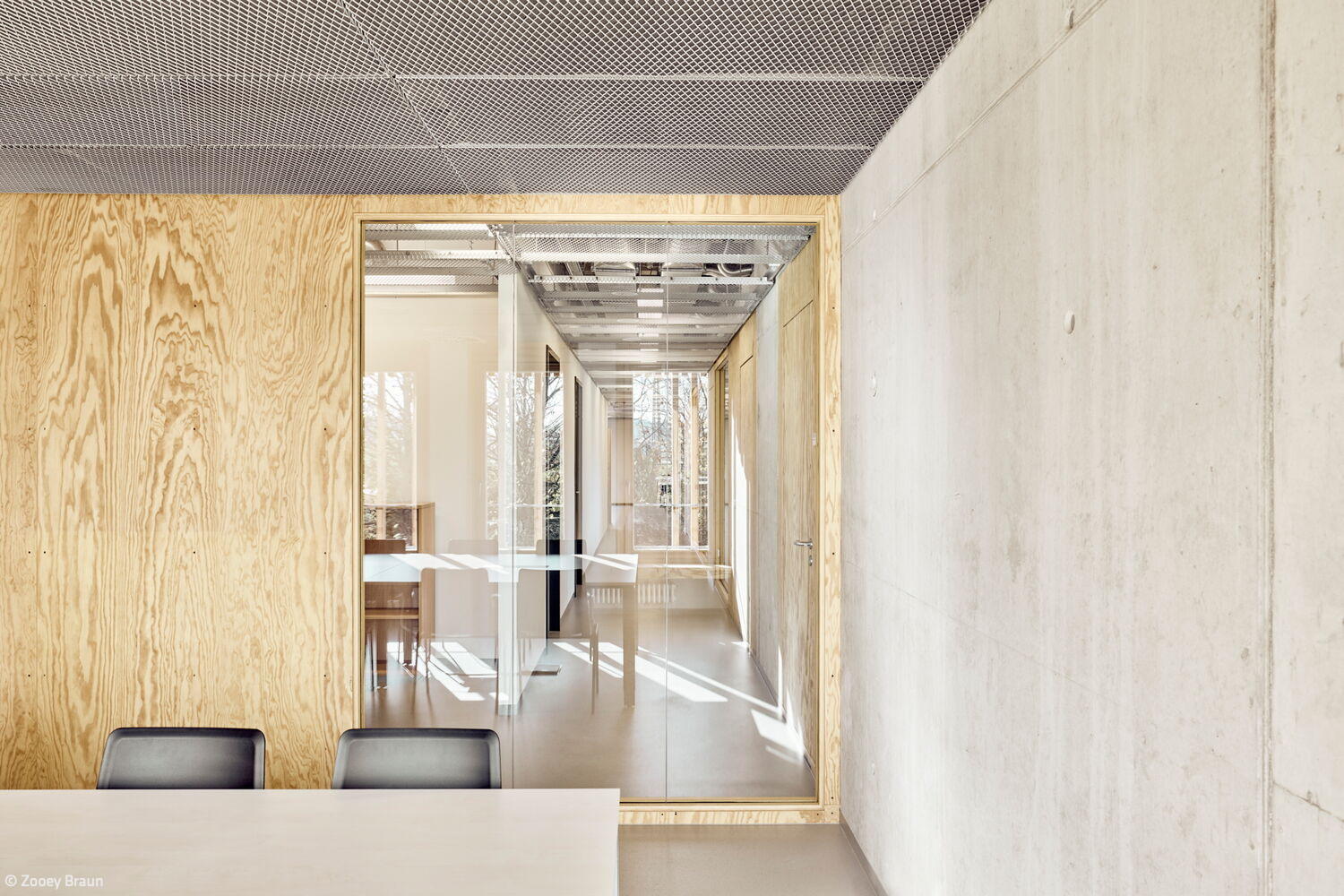
To weave together the site's diverse functions, anchor the architecture to its natural topography, and shield the neighboring homes from noise, asp Architekten devised a striking solution: a "functional garden wall" of recycled concrete. This boldly articulated feature—with its interlocking shelves, containers, and storage bays in varying configurations—immediately reads as the depot's visual signature. Prefabricated timber elements create rhythmic projections and recesses across the composition. Semi-opaque and solid timber louvers, spaced with intention and punctuated by glazing and gates, frame the garage entrances and protective canopies. The wall's structural logic also preserved the site's mature trees, a subtle but meaningful gesture toward the landscape. The main building's rear face closes off firmly toward the railway, presenting a protective barrier. Both formally and constructively, the "garden wall" and floor plates interlock as a unified system—an independent architectural gesture that visually and acoustically seals off the urban block from the railway corridor and southern approach. The garages and workshops nestle naturally into this framework, forming a robust plinth that anchors the timber-clad volumes above. The dialogue between raw materials—exposed concrete and steel mesh—and warm wood continues throughout the interiors. Open, transparent working spaces reveal wood-clad walls, coffered ceilings, and exposed concrete slabs that meet expansive glazing framed in maritime pine. The timber louvers that animate the façade do more than filter sunlight; they modulate daylight, drawing it deep into the workspace. At the property's southern edge, a striking three-story volume marks a bold new landmark for the depot and echoes the roofline gestures of the surrounding district.
Photos:
Zooey Braun
www.zooeybraun.de
(Featured in CUBE Stuttgart 01|25)

Escape and Feel at Home
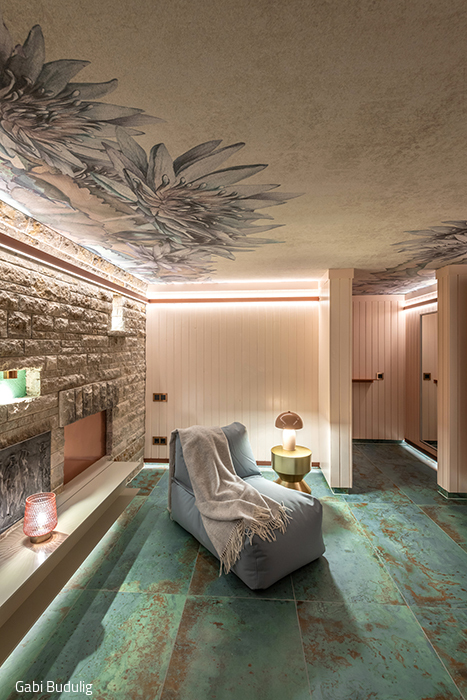
A 1960s private sauna evolves into a sophisticated wellness retreat
More beautiful than any vacation destination
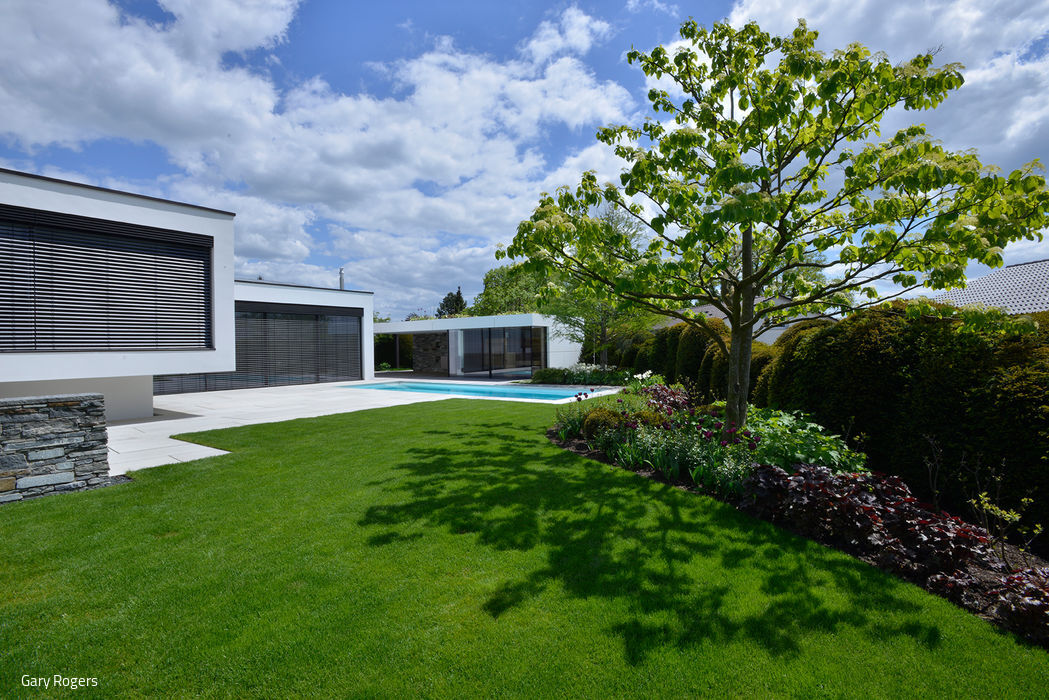
A sanctuary garden where contemporary and timeless design elements come together in perfect balance

New Brand World
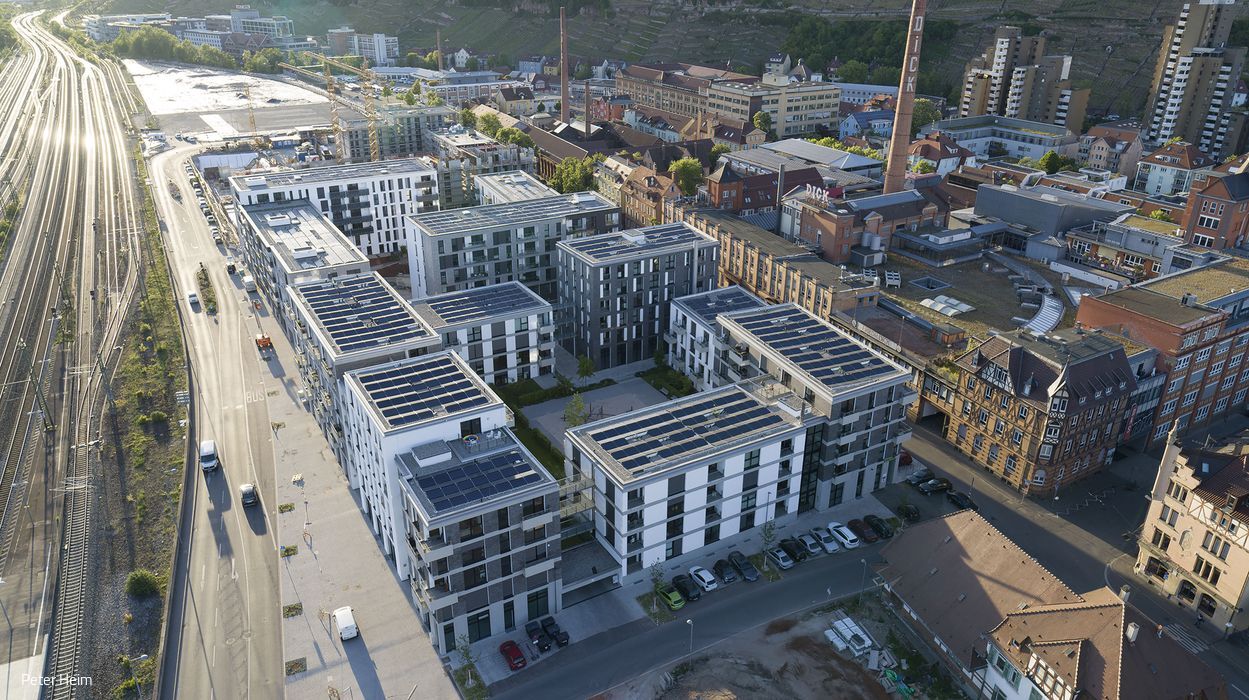
New buildings and high-rise form a cohesive architectural ensemble at the company headquarters
Learning and Playing Reimagined
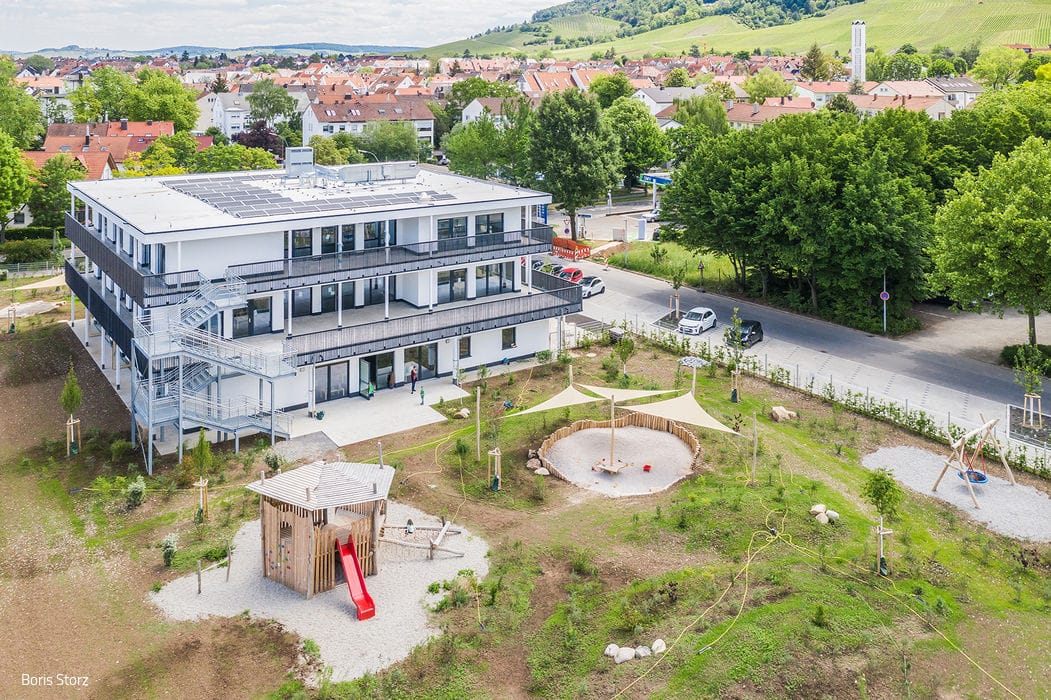
Childcare Provider Builds Modular Children's Centre in Fellbach