


Where Old Meets New
A New Integrated Secondary School Makes Its Mark in Lichtenberg


Integrated secondary schools exist only in Berlin. Introduced in 2010 as part of a school structure reform, this school type merges three educational streams—Hauptschule, Realschule, and Gesamtschule—into one. They're called secondary schools because they build upon primary education.
The integrated secondary school on Paul-Junius-Straße in Lichtenberg is among the newest facilities, opening its doors in July 2023. Bringing this building back to life required extensive renovation and reconstruction: the 1970s prefabricated concrete structure, originally built in East Germany, needed preservation alongside a bold new addition. The building's journey tells its own story. Once a polytechnic secondary school, it became the Olof Palme School after reunification, later served as overflow space for the Johann Gottfried Herder Gymnasium, and eventually fell vacant for years. NAK Architects won the commission to both restore the existing structure and design a new building that would unite the school and gymnasium into a cohesive whole. The renovation meant stripping the prefabricated block—that long, narrow bar flanking Paul-Junius-Straße—down to its concrete skeleton, preserving only the load-bearing frame. The sports hall underwent the same treatment, retaining only its structural shell. NAK's ingenious solution: a two-storey connector building, inserted between the two structures like a bridge, linking the four-storey original school building and the gymnasium while creating a unified campus. This intermediate building anchors a new main entrance on the south side at Starkower Straße, complete with a welcoming forecourt. Now serving as both the spatial and functional heart of the school, the connector houses essential spaces previously missing—crucial for an all-day school. Today, the campus accommodates approximately 600 students.
On the ground floor, visitors enter a striking foyer anchored by a long seating staircase. Classrooms in the original building lie to the right; the sports hall to the left. The kitchen and dining area occupy the central spine, while a flexible stage opposite hosts speakers, concerts, and theatrical productions. Above on the first floor are the staff room, administrative offices, and access to the new wing. The design also weaves in public art. Robert Dufter from Siegsdorf, a concrete art pioneer, won the commissioning competition and created several glass installations throughout the campus. Each consists of three layered panes with distinct graphic patterns and colors—yet fully transparent, allowing students to see across from both sides. This dialogue between opacity and clarity gave the work its fitting title: "See you."
Photography:
Adel Bikulov
Ulrike Lauber
www.lauber-fotografie.de
(Featured in CUBE Berlin 04|24)

None as Beautiful as This One
A Pankow Remise Becomes an Architectural Gem
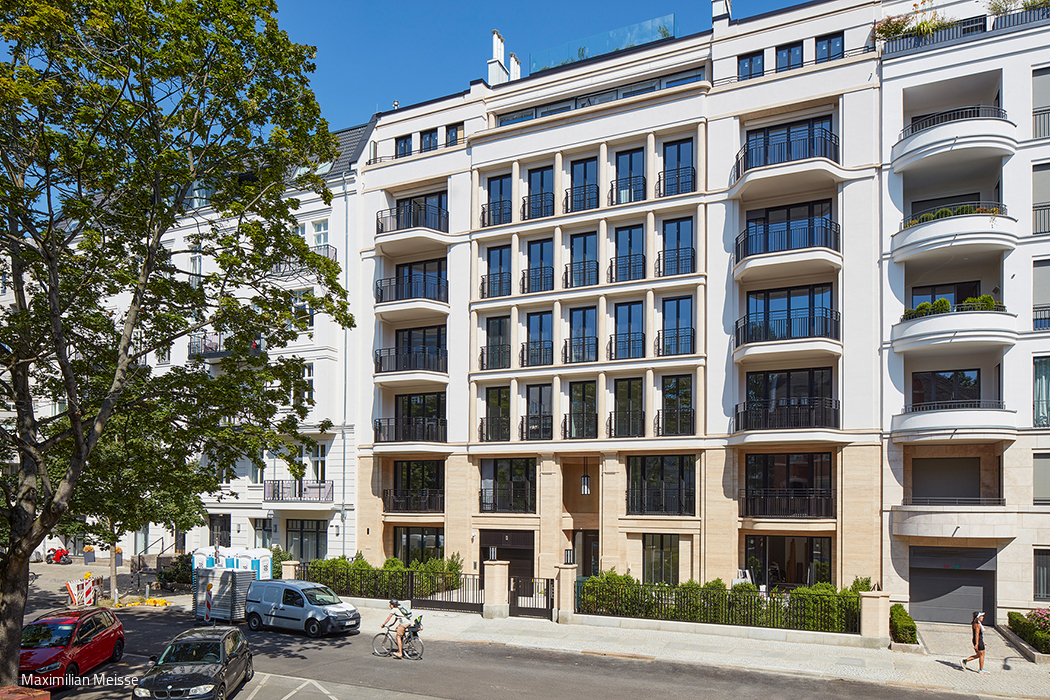
Façade for Flaneurs
A contemporary "rural city villa" in Wilmersdorf
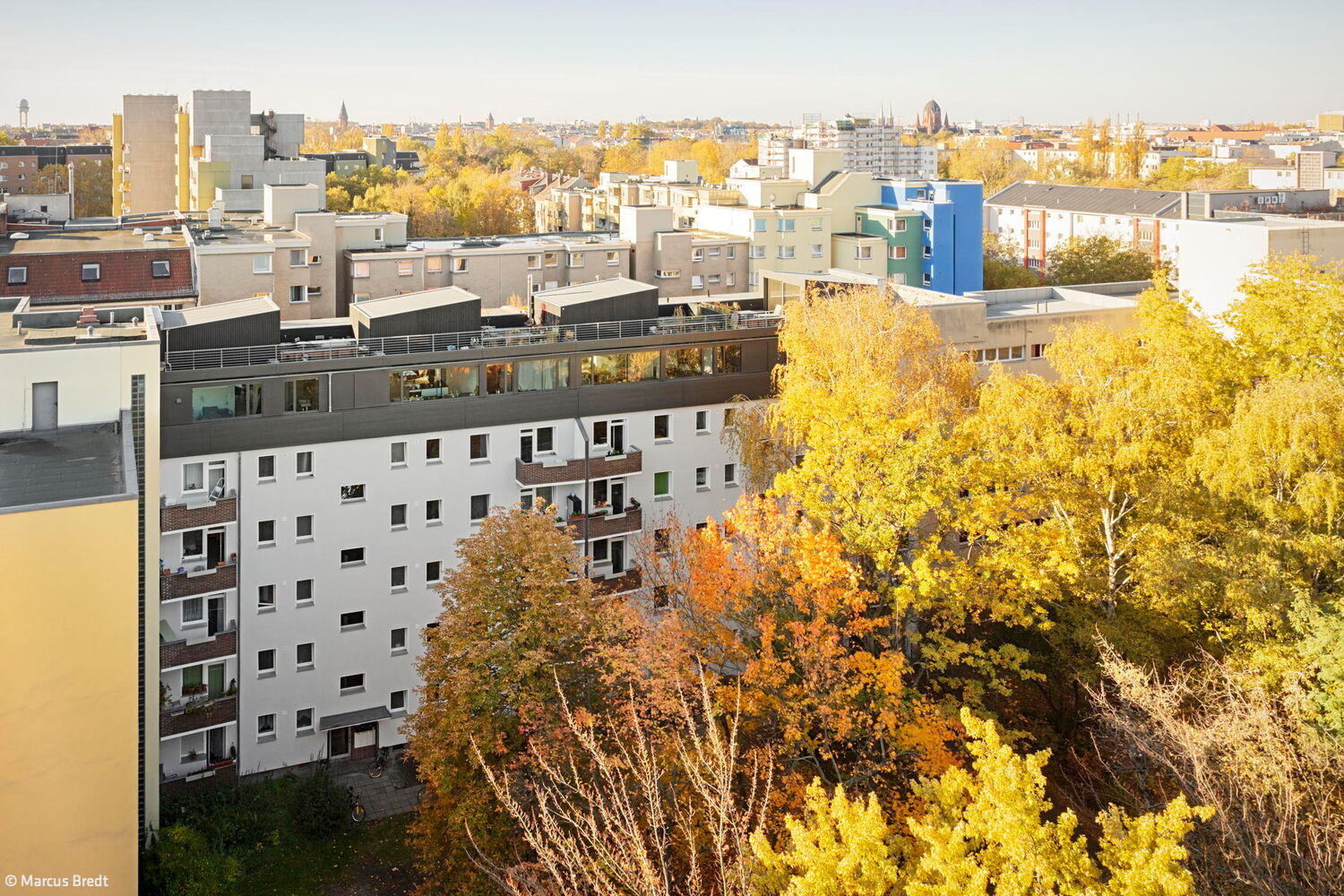
Light, Air, and Sun
Building Upward—How a Roof Extension Creates New Living Space
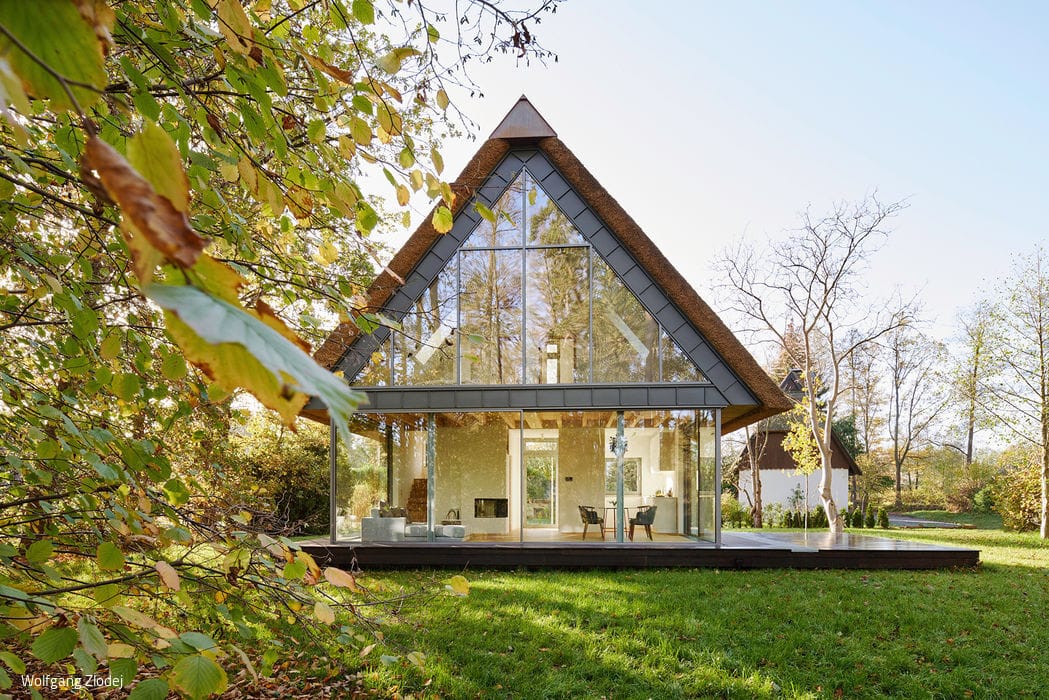
A Dream House in Miniature
In the Spreewald, tradition and cutting-edge design converge in one weekend retreat.