


Everything Under One Roof
The new comprehensive school on Severinswall captivates with its bold, sculptural form.




School buildings are far more than functional structures—they form a vital part of the urban fabric and establish a distinctive architectural identity within the city. Enduring and robust, they reflect society's vision for the future. Through their engagement with fundamental architectural principles—spatial composition, materiality, and light—they become an integral dimension of the educational experience itself. The Fritz Meyer Group and Molestina Architekten + Stadtplaner won the competitive tender for this integrated comprehensive school at Severinswall, commissioned by the City of Cologne's Building Management. Completed in August after two years of construction, this ensemble encompasses approximately 7,000 m² of academic and athletic spaces, now serving the students and faculty of the secondary school program.
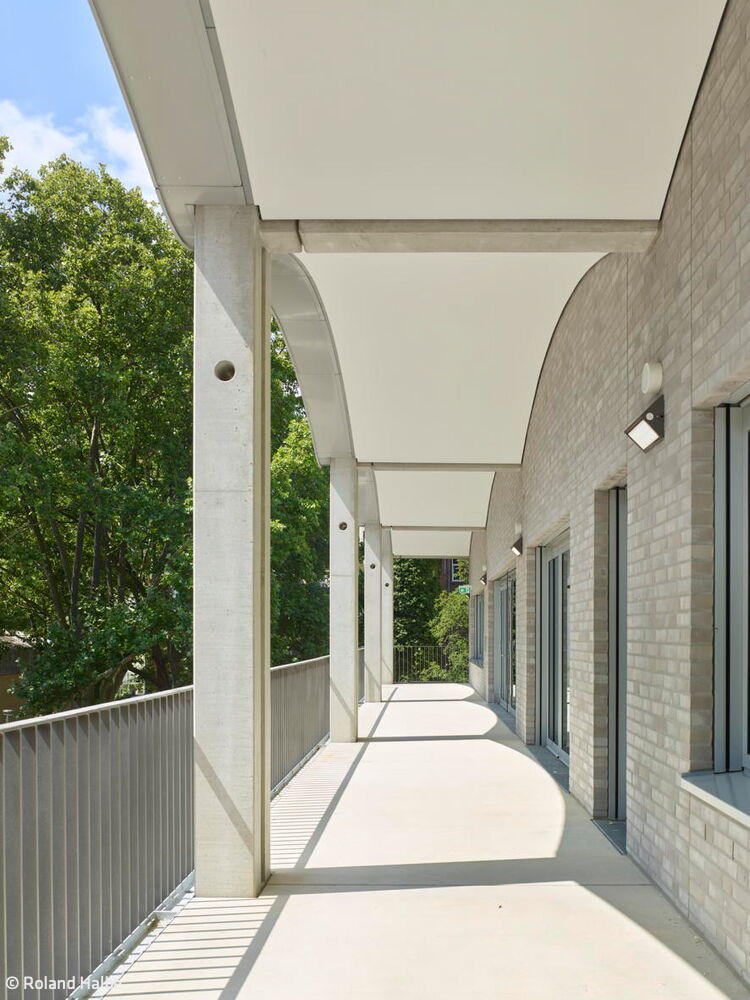
The three-story building marks a clear architectural statement along Severinswall while maximizing the rear courtyard for student recreation. Its barrel roof profile references the vernacular school architecture of Cologne's Südstadt, establishing immediate identity and distinctive visual presence. Carefully positioned to respect neighboring structures, the school maintains its own spatial integrity while contributing harmoniously to the broader urban fabric. The design separates the school wing from the sports hall wing—each with independent entrances—enabling flexible scheduling and simultaneous use. The clinker brick façade is punctuated by a striking tile mosaic at the main entrance, a subtle nod to the school's proximity to the Rhine. Mirrored accent tiles frame the entry points, while expansive glazing in the main stairwell floods interior spaces with natural light, blurring the boundary between inside and out.
Exposed concrete and wood dominate the interior, establishing a sense of warmth and permanence. A deliberately restrained color palette allows these materials to shine—strategic pops of color appear only in wayfinding signage and select wall treatments. The school's intimate human scale fosters natural navigation throughout. The barrel vaults in the sports hall and upper-floor learning clusters create distinctive environments that feel distinctly shaped and purposeful.
The ground floor features flexible partitioning—sliding doors and movable wall panels transform the entrance hall and educational commons into unified spaces for school festivals, celebrations, and events. When weather permits, these areas open directly to the outdoors. The administrative wing remains discreetly separated, with its own staff entrance on the southwest façade. The art, music, and performance spaces share convenient access to the sports hall's changing rooms—ideal for theatrical and musical productions. Generous south-facing terraces function as informal gathering spaces and circulation hubs between learning clusters, while naturally shading the building during summer months. They also serve as accessible escape routes for both the school and adjacent sports facilities. The playground sits nestled within a traditional block courtyard, its mature tree canopy thoughtfully preserved and integrated into the new landscape design.
Photos:
Roland Halbe
www.rolandhalbe.eu
(Published in CUBE Cologne Bonn 01|25)


Heart and Soul
Three harmoniously integrated structures bridge Bonn's urban divide
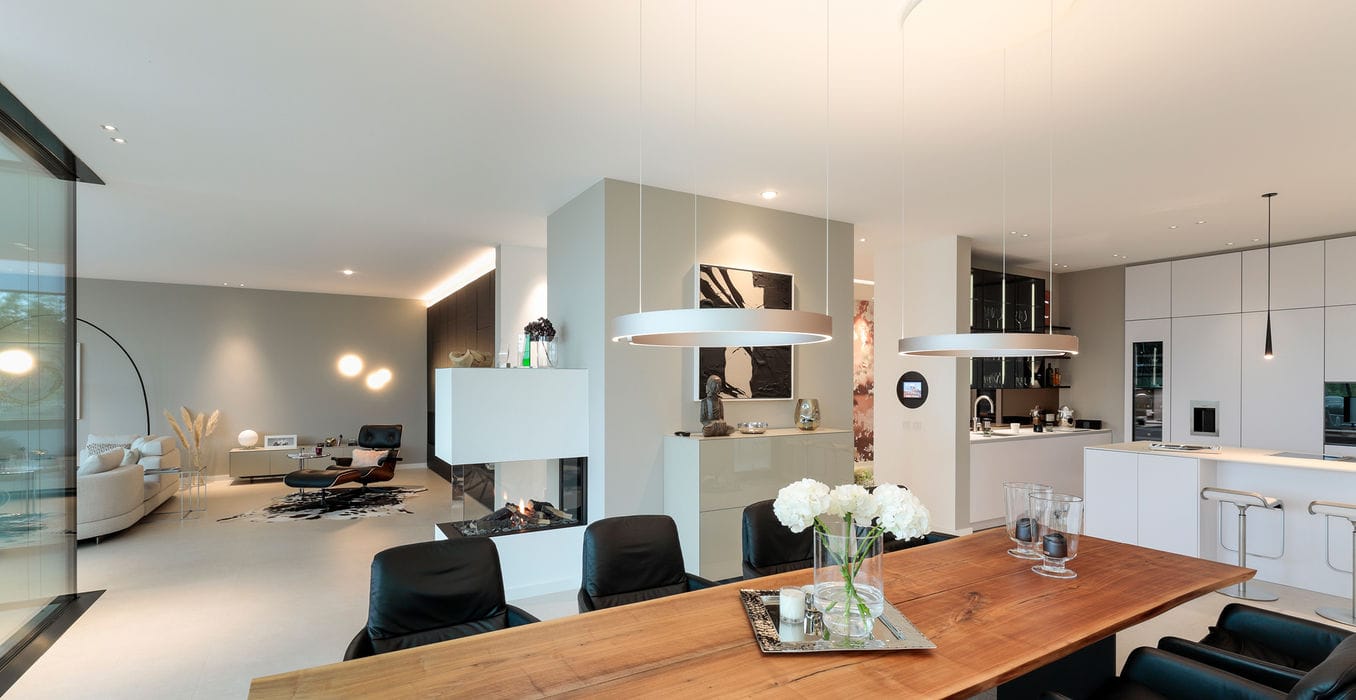
Harmonizing contradictions
Color and Light Define Flowing Living Spaces
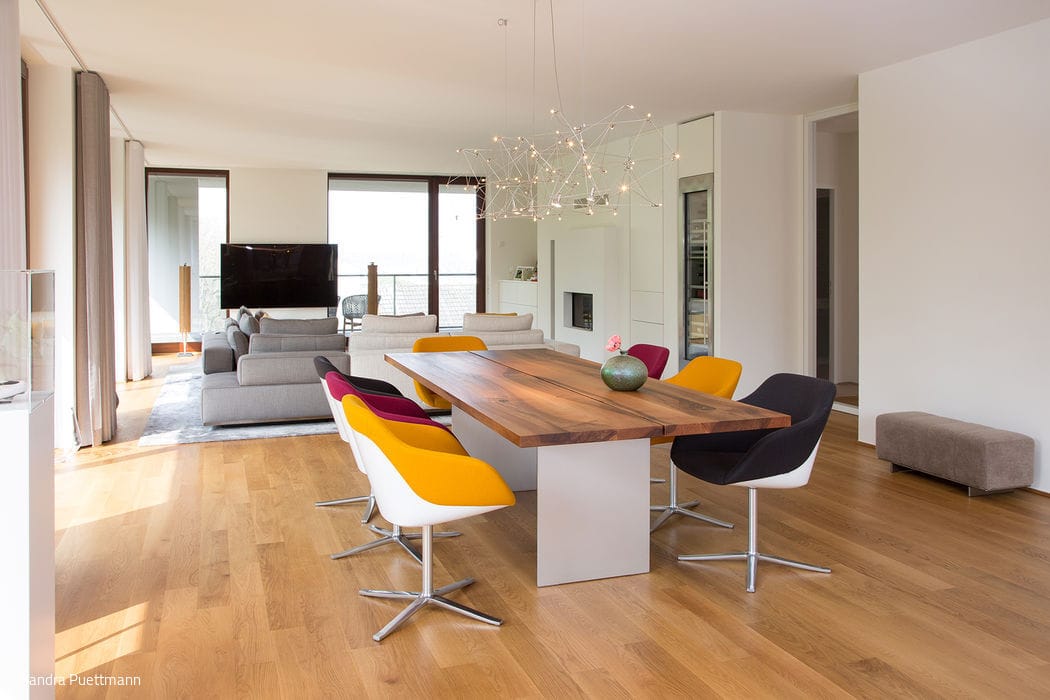
Creating Space for Personal Style
Thoughtfully Refreshed with Custom Built-Ins, Strategic Lighting, and Meticulous Attention to Detail
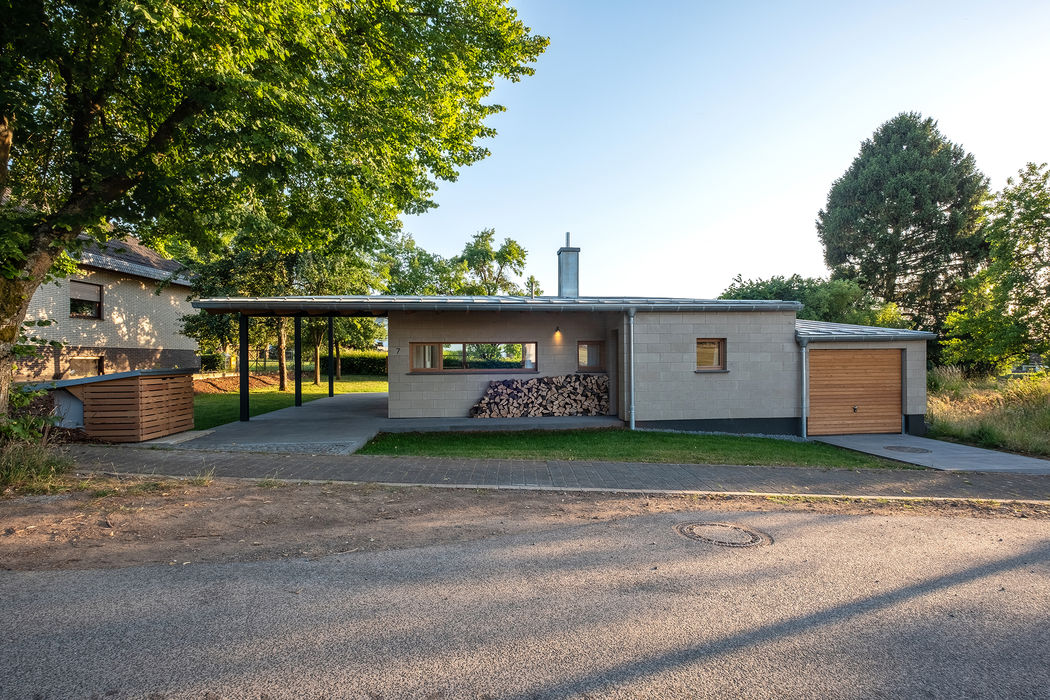
Sustainable in Nature
A house in the Eifel that distills design to its essentials—where resource consciousness meets deep local rootedness