


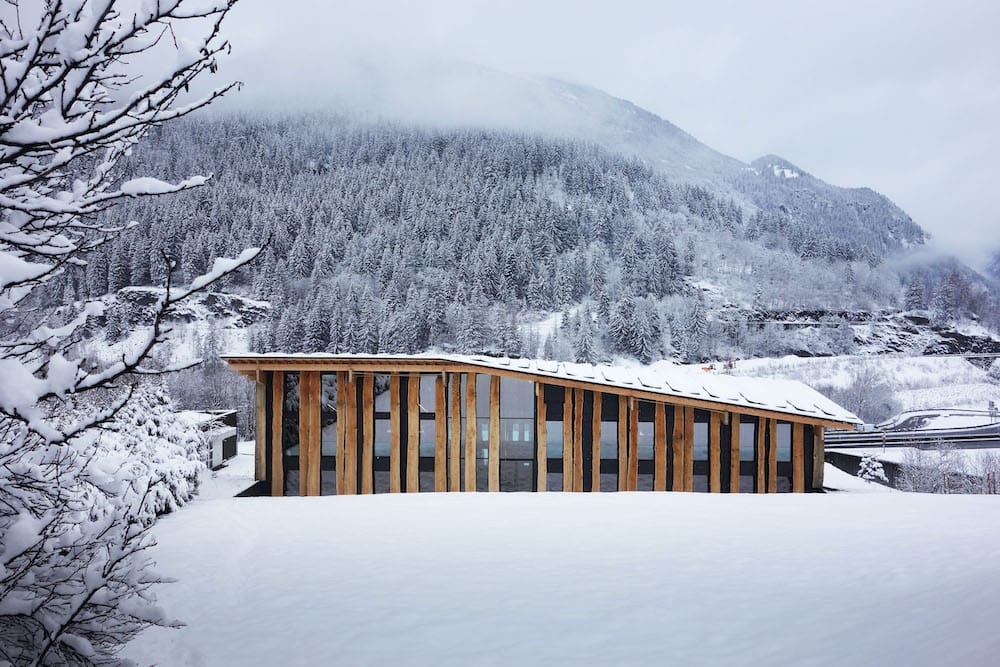
Mont Blanc Base Camp © Kengo Kuma & Associates
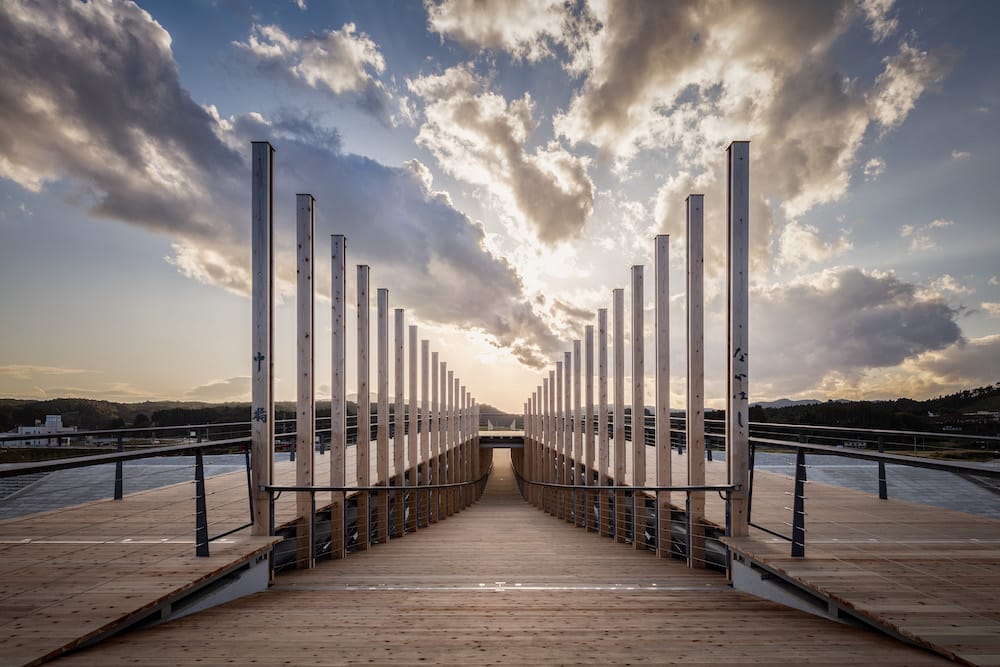
Nakabashi © Keishin Horikoshi - Kosuke Nakao SS Tokyo
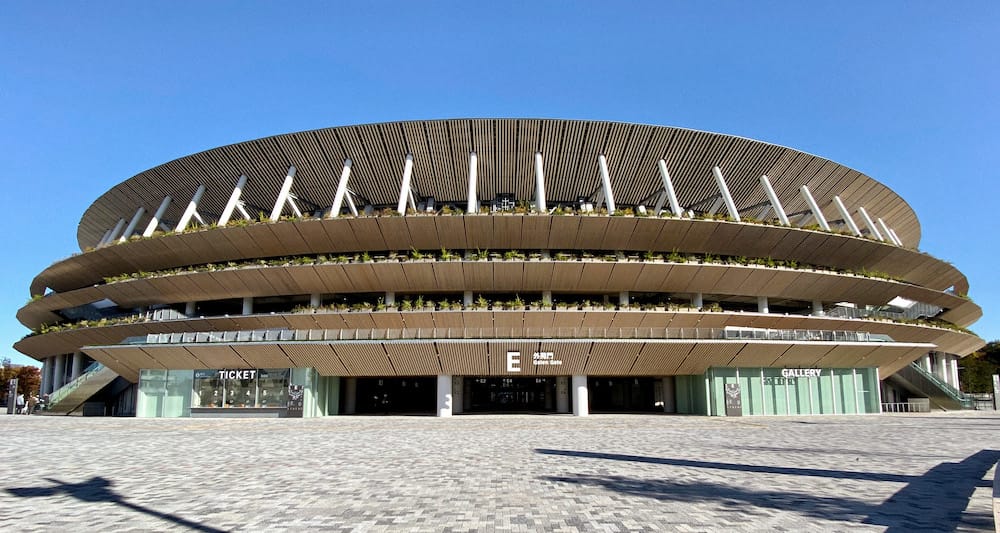
National Stadium © JAPAN SPORT COUNCIL
Kengo Kuma: Onomatopoeia Architecture
The Bundeskunsthalle showcases models of some of Japan's most iconic buildings by the renowned architect
"Onomatopoeia does not position architecture as something architects impose from above, but rather places it and its users on equal footing. Architects don't command architecture—they move through it alongside the people who inhabit it. Onomatopoeia becomes a kind of primal voice, manifested at a physical and tangible level." Kengo Kuma
Running from March 8 through September 1, 2024, the exhibition "Kengo Kuma: Onomatopoeia Architecture" features roughly two dozen models of the Japanese architect's most landmark works. At its heart is the dialogue between people and materials—and Kuma's distinctive approach of using onomatopoeia, or "sound painting," as a design tool. In Japanese, onomatopoeia often employs doubled syllables that make language itself resonate. Kuma harnesses onomatopoeia to categorize his projects and as a design language from conception through completion: from material selection to the building's overall construction. Rather than following rational logic, he lets the essence of the material guide him. Drawing from onomatopoeia—the invention of words that echo the sounds and qualities of what they name—Kuma transforms physical sensation into form, giving tangible shape to his vision of sustainable architecture, where materials find new purpose and people reconnect with the tangible world around them.
Kuma's projects center on wood, paper, and metal—traditional Japanese materials—reimagined through his own contemporary lens. In his vision, surfaces engage not only the eye, but also our senses of smell and touch. The exhibition showcases models of his landmark buildings, inviting visitors to experience the acoustic qualities of different materials. Highlights include a temporary five-meter-tall aluminum pavilion and an experimental installation—a delicate wooden sculpture designed to evoke the onomatopoetic sounds of "tsun tsun" and "zure zure."
His design philosophy is inherently tactile, sensory, and deeply sensual. He thinks in terms of flow and rhythm—musical qualities that infuse his work. Kuma's buildings often possess an unexpected lightness or sense of movement, which he traces back to his musical sensibility. By minimizing concrete, his structures appear to rest delicately on the ground. Kuma calls himself a "materialist"—in the truest, most physical sense of the word.
Born in Yokohama in 1954, Kengo Kuma has designed buildings across the globe—from Japan to Europe, North America, China, and Australia. This exhibition is adapted from the Palazzo Cavalli-Franchetti presentation, originally created for the 2023 Architecture Biennale.
More News
40 Jahre Stiftung Deutscher Architekten
Jubiläumsfeier im Düsseldorfer Medienhafen
Steinstraße Siebzehn
Die Gruppenausstellung Steinstraße Siebzehn versammelt…
Übertourismus
Haus der Architektur präsentiert Ausstellung
Euroshop 2026: Kraftvolles Statement
Messestand setzt auf Aufenthaltsqualität, Emotion und…