


On the Sun Deck
Nestled into the hillside landscape, this kindergarten offers nature-rich play spaces with commanding views.
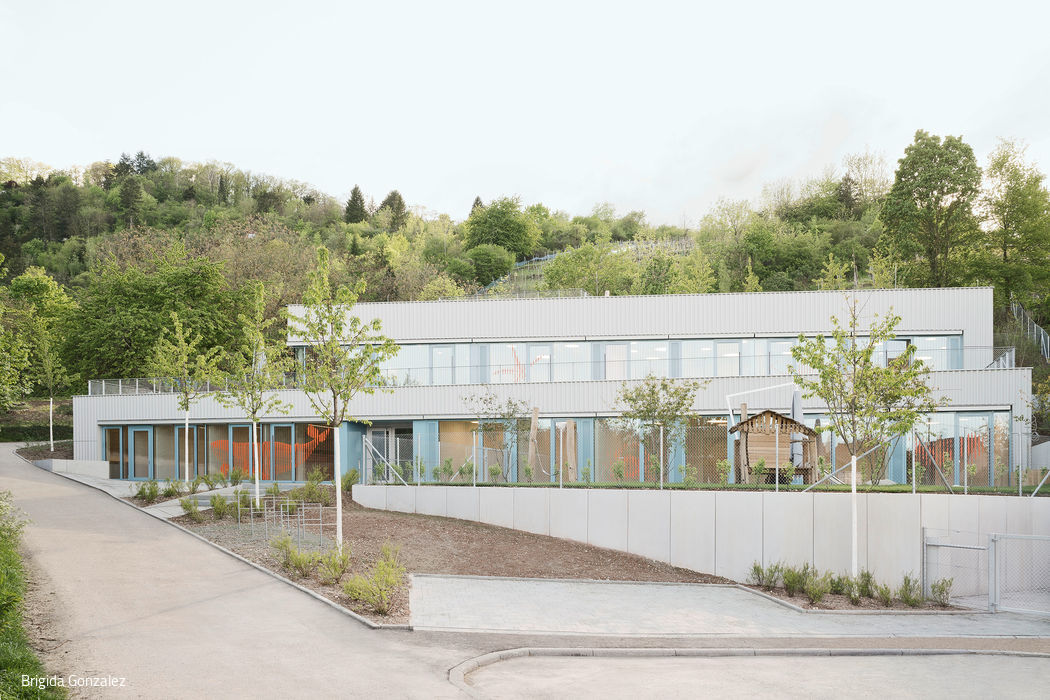
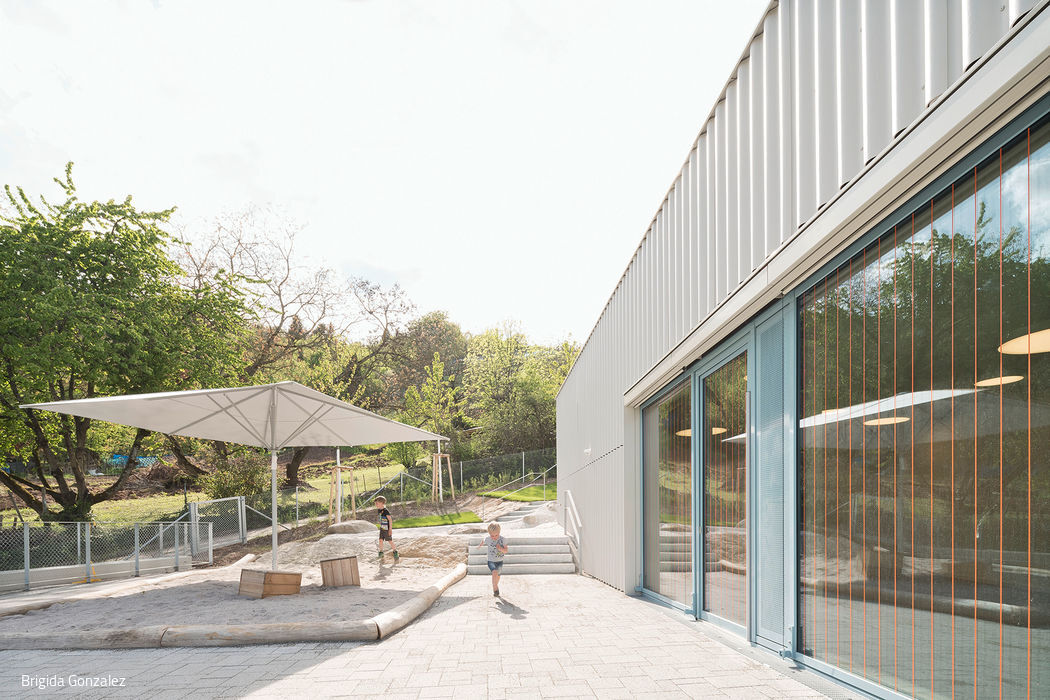
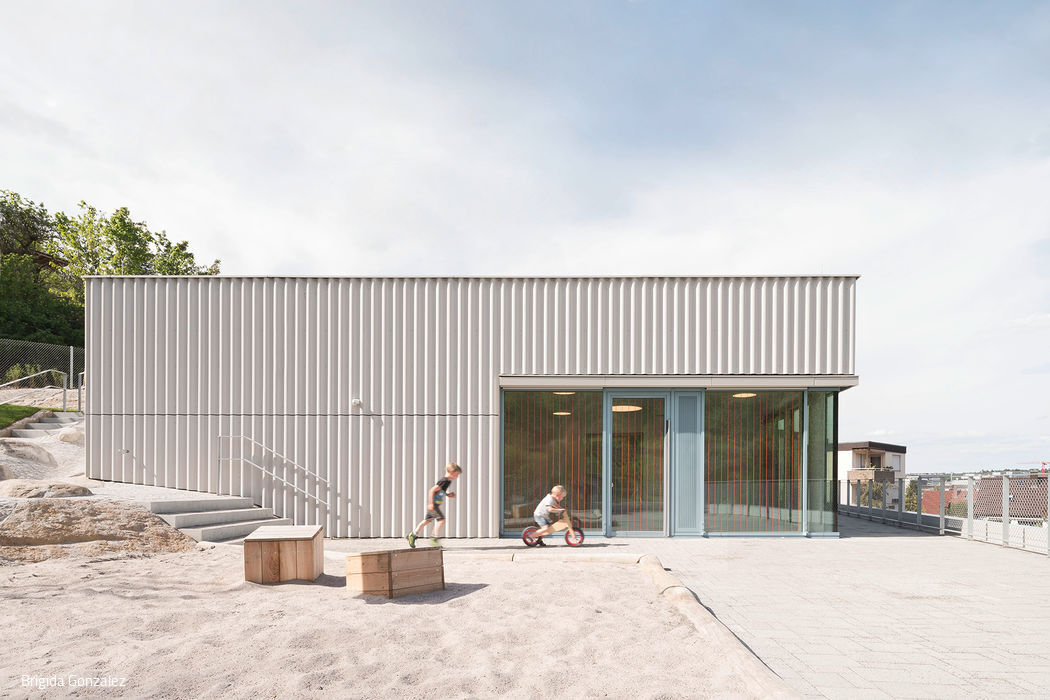
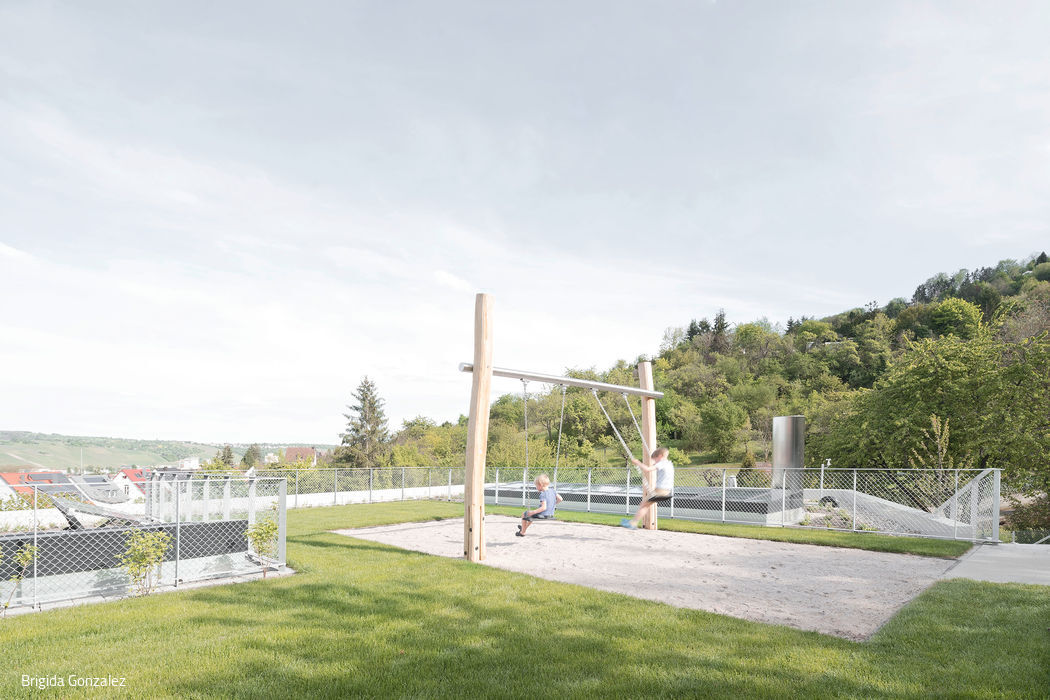
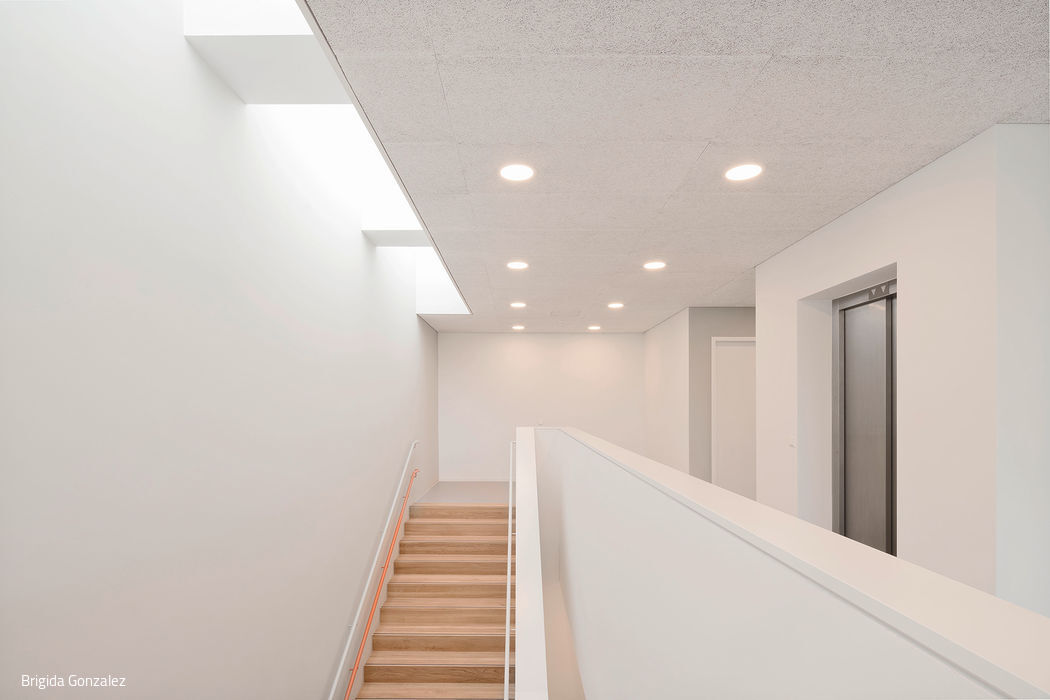
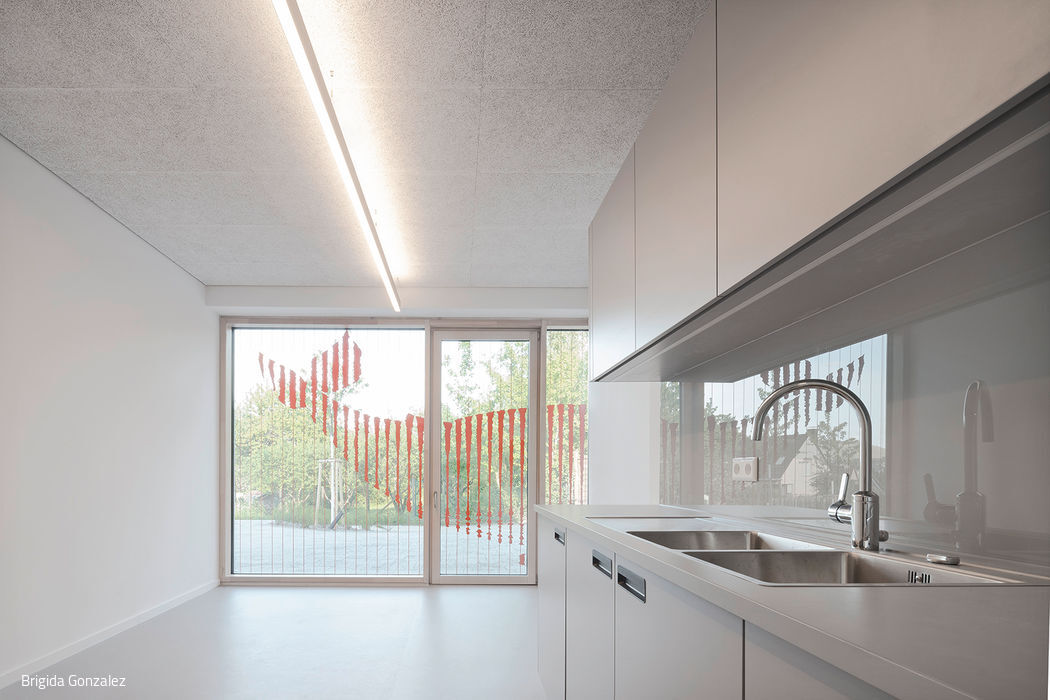
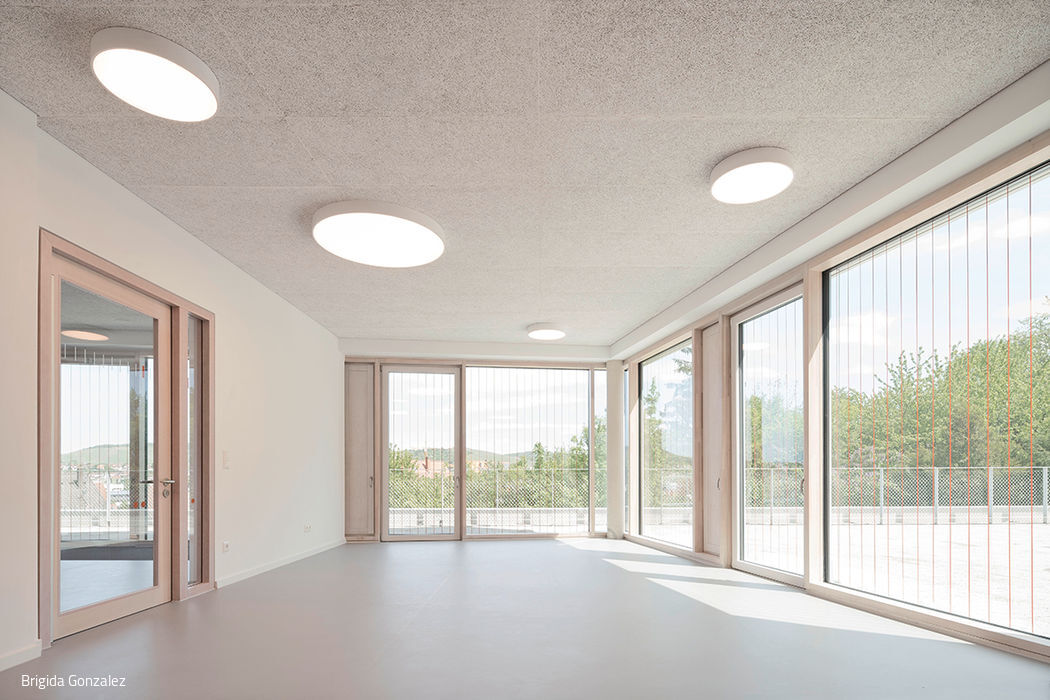
Major cities continue to face significant shortages in early childhood care capacity. Stuttgart commissioned this daycare center to address that need, positioning it at the threshold between urban development and open countryside—commanding views of the Neckar Valley, vineyard slopes, and the Rotenberg burial chapel. The City of Stuttgart, represented by its Building Authority, serves as the client.
Reichel Schlaier Architects drew their design concept directly from this distinctive setting: the two-story structure nestles into the slope, its verdant roofs transforming into accessible play terraces. The valley-facing facades—clad in soft grey fiber cement panels—echo the rhythm of vineyard walls stepping down the hillside. Utility areas and corridors, discreetly embedded within the slope, receive natural daylight through strategically positioned skylights. The hillside elevation houses all group rooms, rest areas, and movement studios, their expansive floor-to-ceiling glazing dissolving the boundary between interior and landscape. Operable glass doors and retractable awnings allow these generously proportioned spaces to expand outdoors and adapt to the sun throughout the day. Vibrant orange accents punctuate the restrained palette, while externally printed windows protect the rich local bird population from collision. Ground-floor spaces for younger children open onto a sun-shaded terrace with lawn, sand play, and toddler swings—naturally edged with berry hedges. Upper-floor group rooms access a generous roof terrace featuring sandboxes and a mud kitchen, with the play structure and swings offering panoramic valley views. A cascading water play zone winds across the steep slope below, connecting both levels with flowing stone paving and integrated steps. Cherry trees, willows, and native plantings frame the entire landscape, with every planted terrace and slope available for exploration. Skylights and safety barriers thoughtfully separate play zones from technical and natural areas, while photovoltaic panels and ventilation systems nestle discreetly within flourishing perennial beds. Interior and exterior spaces flow seamlessly together—separated only by glass that opens completely when needed—allowing children to engage with nature and landscape through all their senses.
Photography Credits:
Brigida González
www.brigidagonzalez.de
(Published in CUBE Stuttgart 02|22)



Harmonious Dialogue
A New Campus Building Embodying Anthroposophical Architecture at a Waldorf School
The most exclusive trade show for architects in Stuttgart!
Mark your calendar: October 25th & 26th
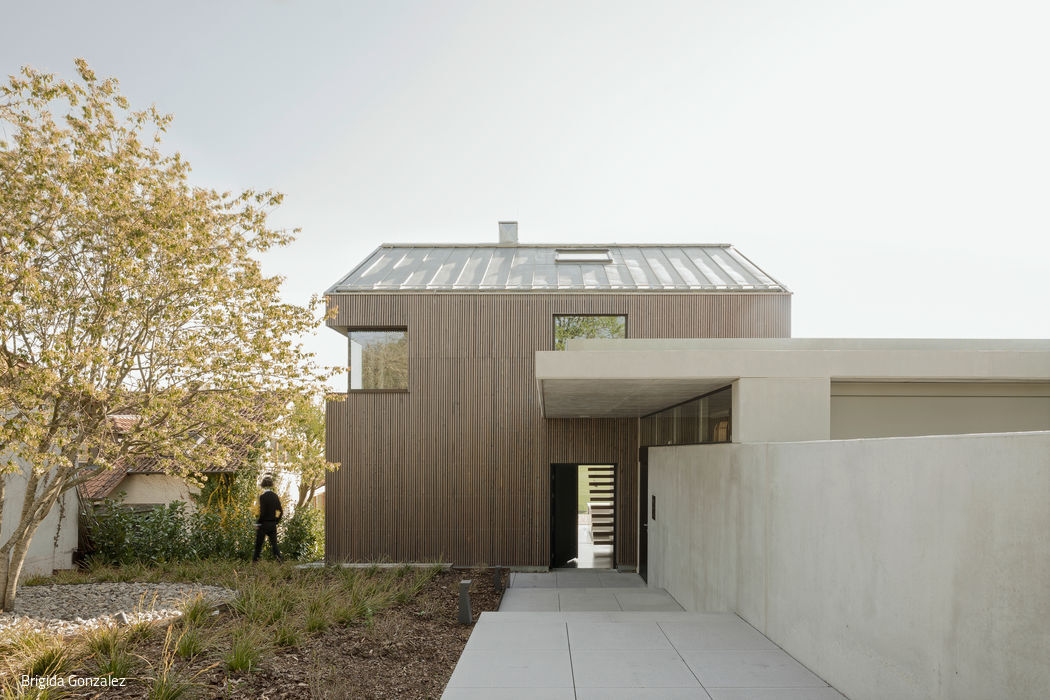
Inside Out
Striking wall panel provides clear structure in detached house on a slope
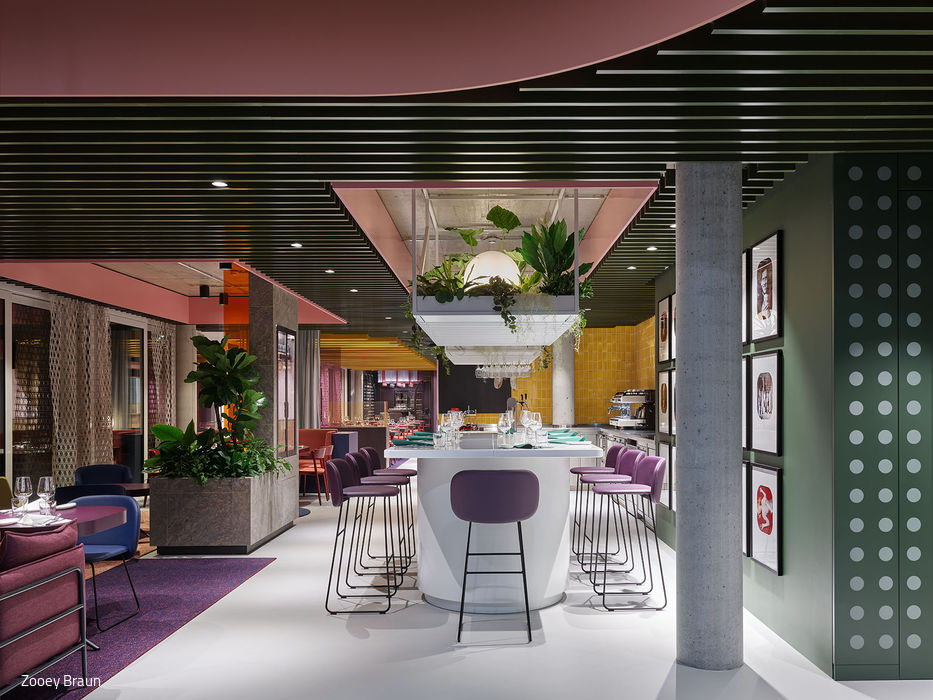
A Textile Adventure
La Visione restaurant—where inspired design and distinctive interiors come together.