


Park of Movement
Revierpark Vonderort in Oberhausen: A Holistic Approach to Landscape Design


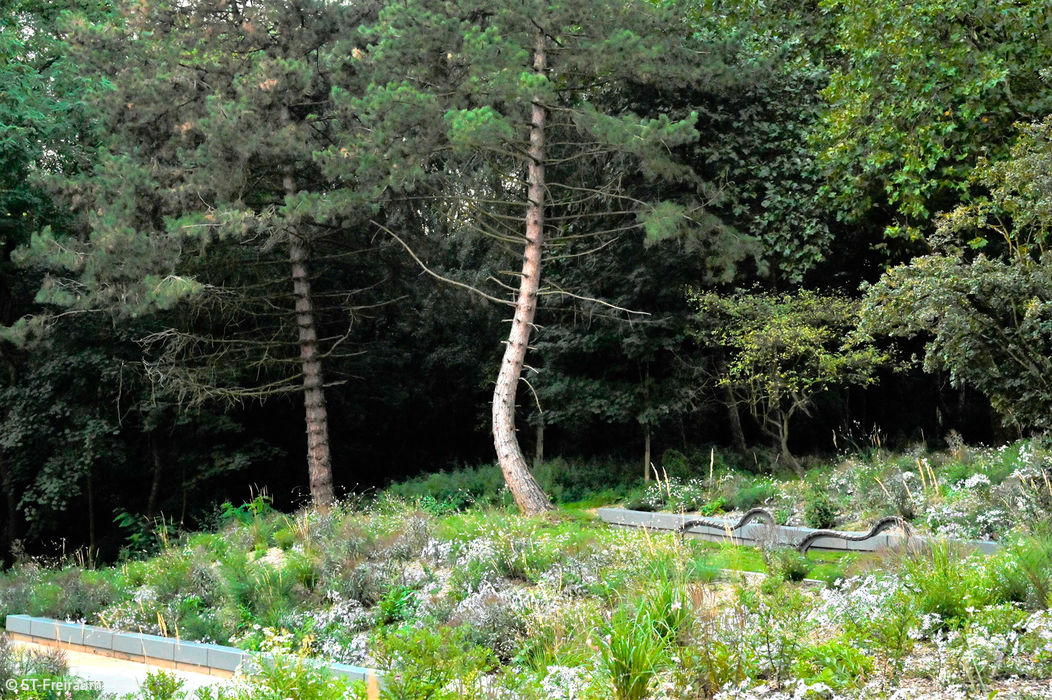


Revierpark Vonderort is one of five regional parks in the Ruhr area. It was created in the 1970s according to designs by Gustav and Rose Wörner. As part of the "Future and Homeland Revierparks 2020" initiative, the 32-hectare site was revitalized and redesigned. The landscape architects at ST-Freiraum, commissioned with the planning, took a holistic approach based on integrating open spaces optimally, enhancing recreational, play, sports, and educational offerings, and creating accessible infrastructure that enables use by all segments of the population.
The park is divided into northern and southern sections, each with its own guiding concept. The Naturloop—a nature education and movement trail consisting of ten stations that combine environmental learning with physical activity—serves as the connecting element. The northern section, with its impressive beech forest, centers on the theme "Sport and Movement." Its focal point, the Funsportarena, features an extensive climbing course with natural boulders. The arena walls are formed by elliptically arranged, red-painted robinia posts. The centerpiece is a Multirock equipped with a terrace deck, combining climbing rocks, smooth concrete walls, and overhanging sections. Complementary offerings promoting movement and coordination include outdoor trampolines, balance elements, an inclusive seating platform, and a boules court. "Preservation and Enhancement" defines the southern character. Here, the objective was to preserve the southern forecourt with its heritage-listed raised planting beds and the existing staircase providing access west of the recreation center. A serpentine-curved footpath provides barrier-free access through the southern parkland. The area features intensively planted perennial beds rich in variety and spectacular viewpoints. Along the promenade, seating invites visitors to linger; table tennis tables and chess tables were retained and upgraded. A recreation lawn accommodates relaxation, play, and occasional park events, bounded to the east by a dense band of shrub vegetation. Moving southward, the vegetation becomes increasingly woodland-like, eventually surrounding the pond installations. At the northern shore, a path was expanded into a plaza and augmented with a cantilevered concrete walkway. From benches beneath a large maple tree, visitors can occasionally spot kingfishers hunting in the distance. Within a clearing in the prominent beech forest, a circular seating area provides a gathering space for education and nature experiences. Park pathways are illuminated by dimmable LED spots mounted on curved stem-like light poles. The lighting design ensures that individual park sections can be independently illuminated as needed, allowing unused areas to remain dark at night. The execution emphasizes sustainable and economical construction methods. For example, excavated soil was used to model the serpentine field, and reclaimed brick paving was repurposed in other locations.
Photos:
ST-Freiraum
(From CUBE Ruhrgebiet 02|24)
Families at the Center
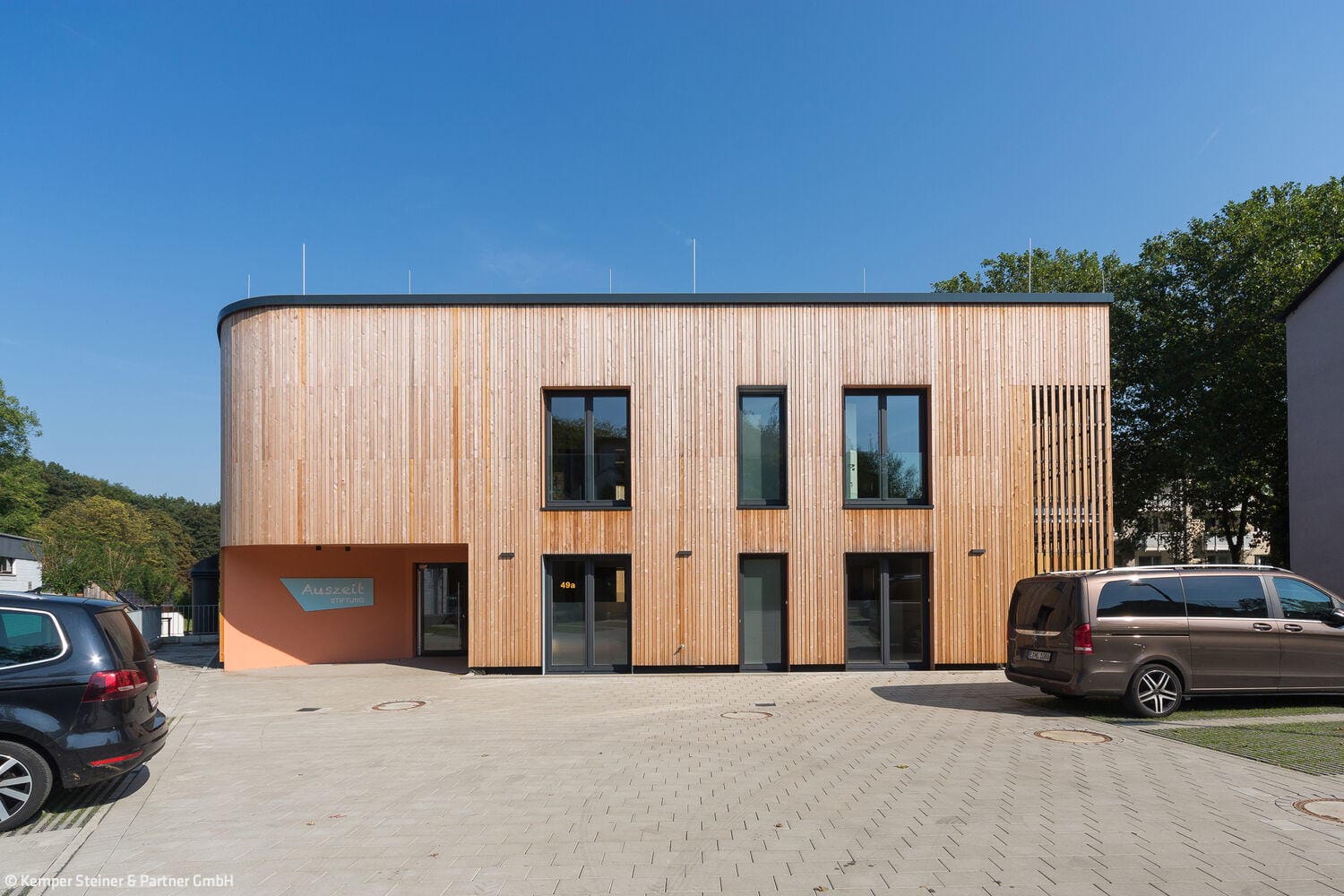
A new building designed to meet the specialized needs of short-term residential care for children requiring support

In Dialogue with the Landscape
Three apartment buildings in Mülheim an der Ruhr, designed in dialogue with their natural setting
Urban and Intimate All at Once
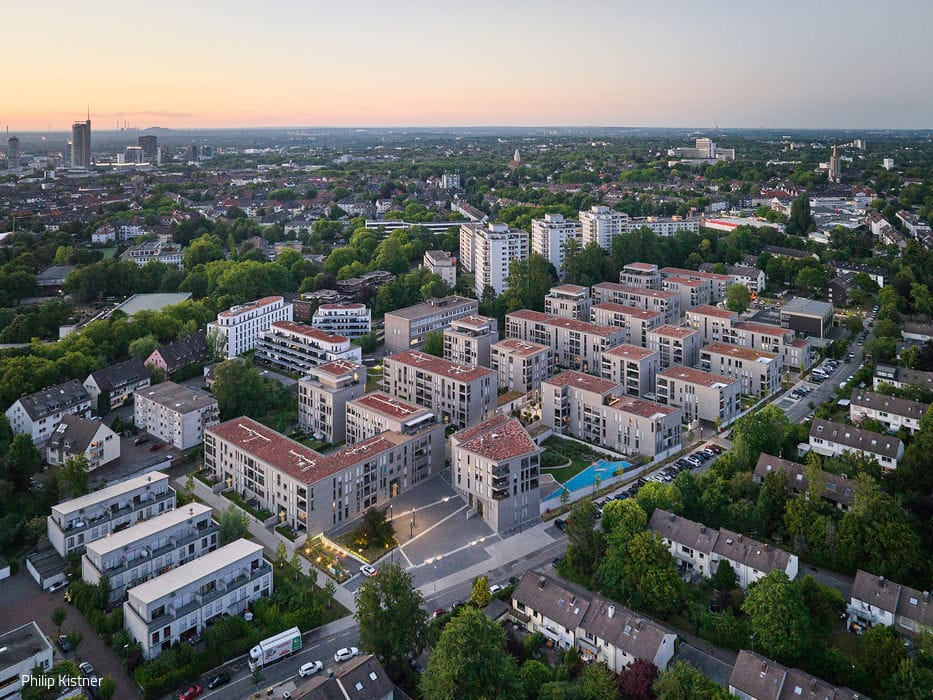
Parc Dunant anchors a former brownfield back into Essen's urban landscape.
No Sacrifice—Just a Change of Direction
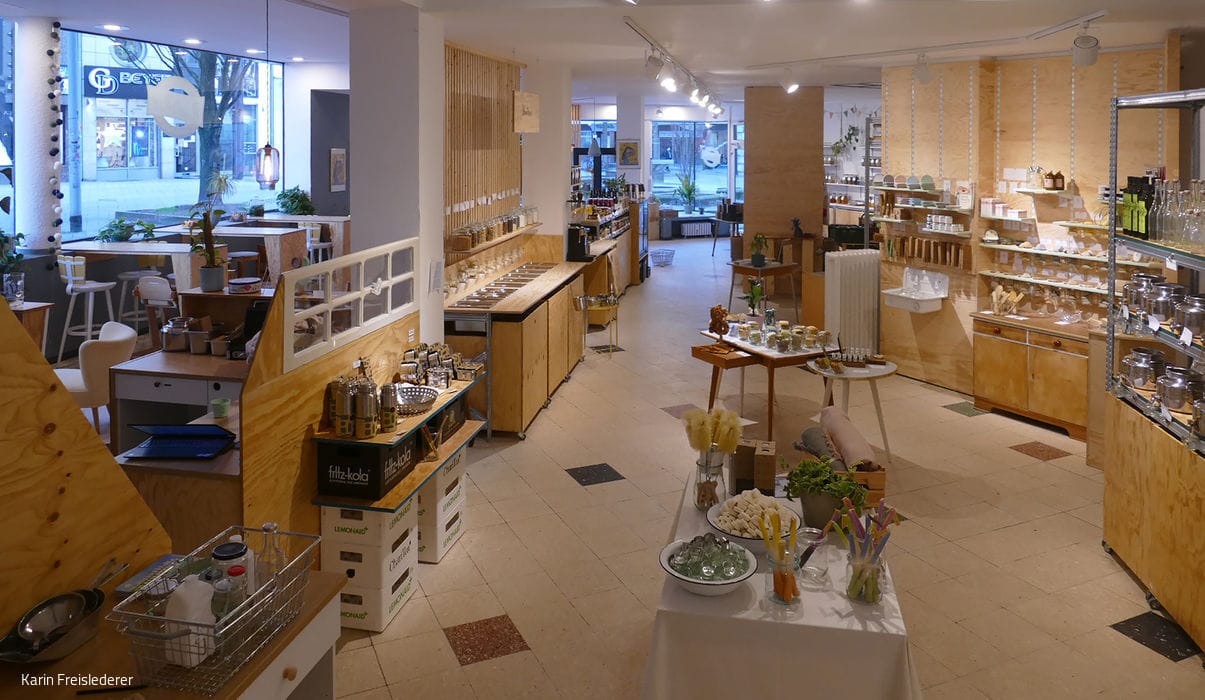
This zero-waste shop in Mülheim an der Ruhr inspires a more mindful approach to shopping