


a special challenge
The Kreuzkirche in Wandsbek: Sensitively restored to radiant beauty
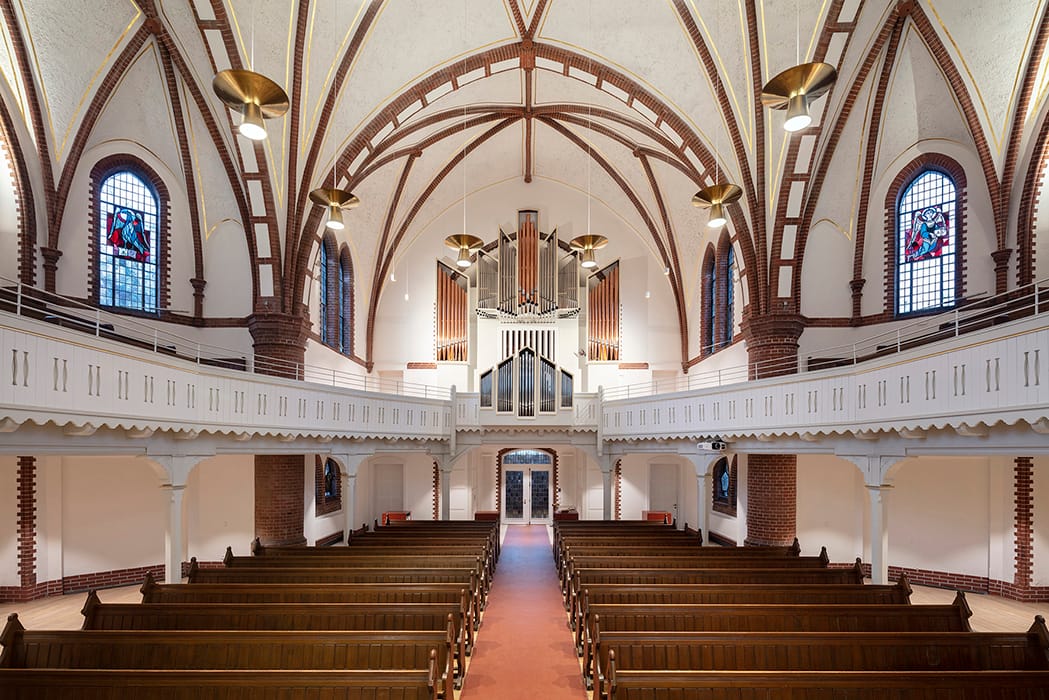
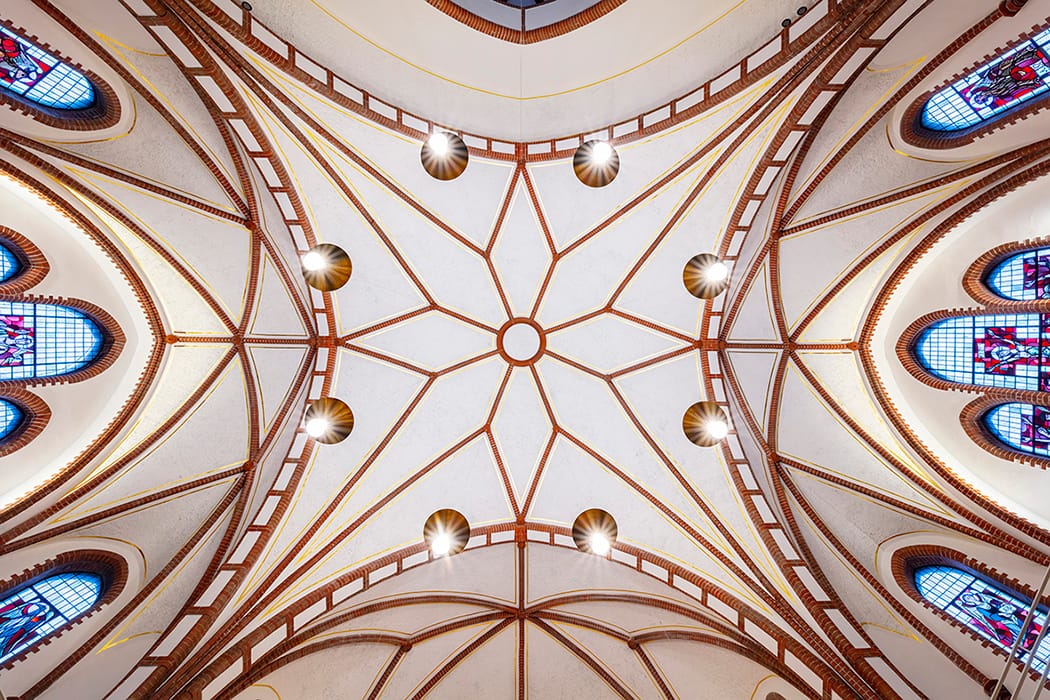
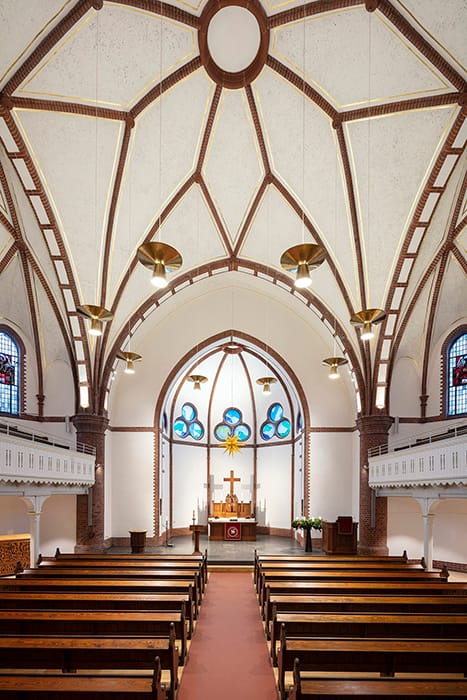
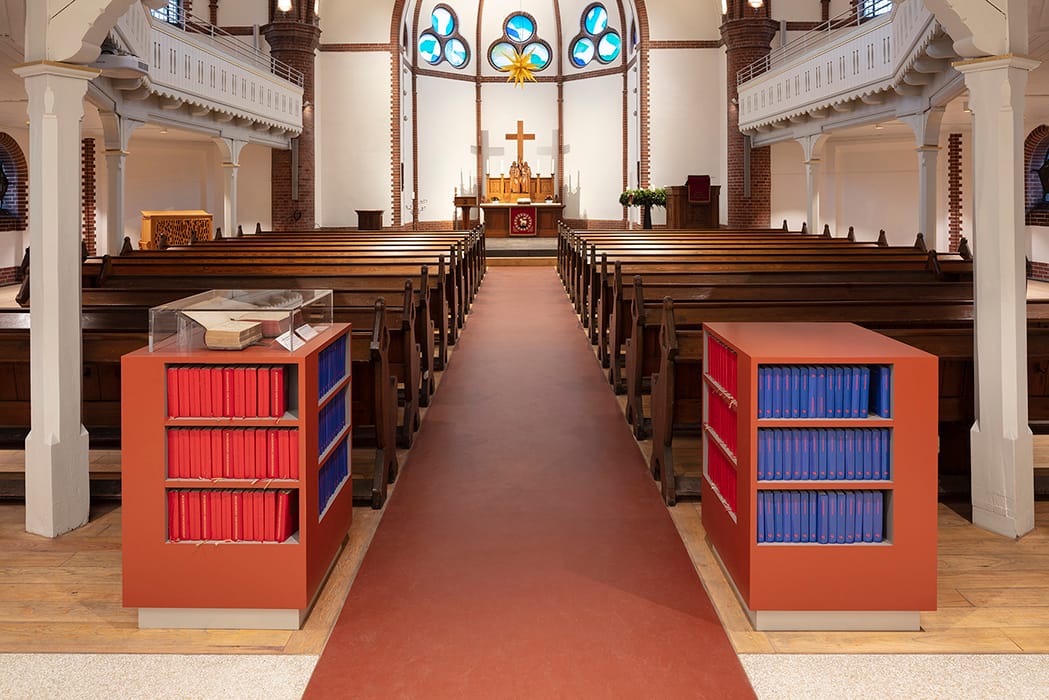
Hamburg's rapid industrialization fueled explosive population growth, which in turn sparked a wave of church construction throughout the city. Among these was the Kreuzkirche in Wandsbek, erected between 1908 and 1910 to designs by Fernando Lorenzen. The floor plan follows a Greek cross with short arms and a commanding central crossing crowned by a star vault. This architectural arrangement creates a powerfully centralized interior space, an effect amplified by the encircling wooden gallery. Over the church's 100-plus-year history, it has undergone countless alterations and restorations—thirteen of them following World War II alone.
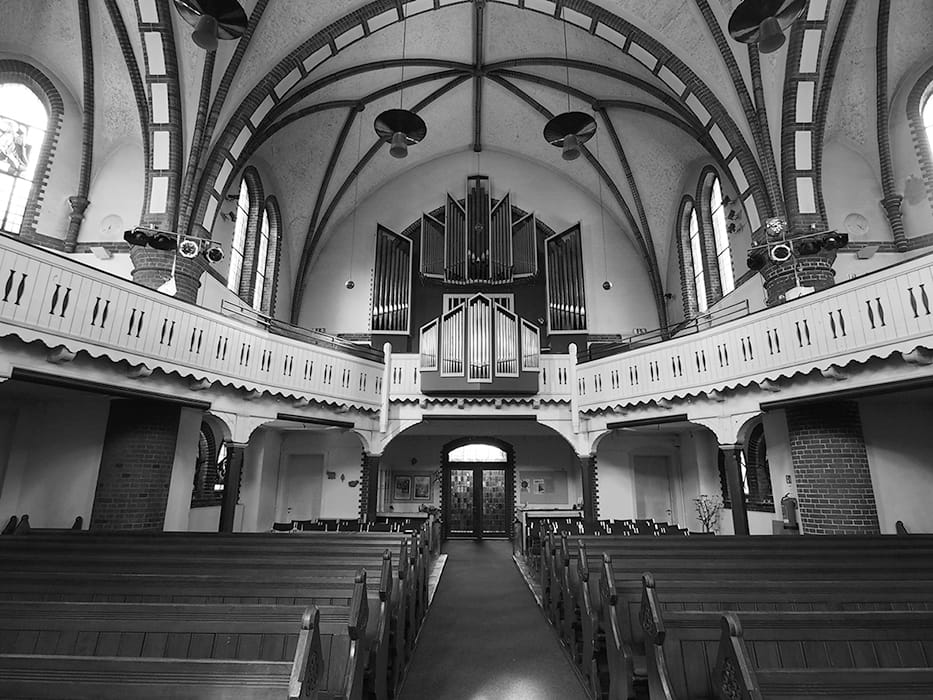
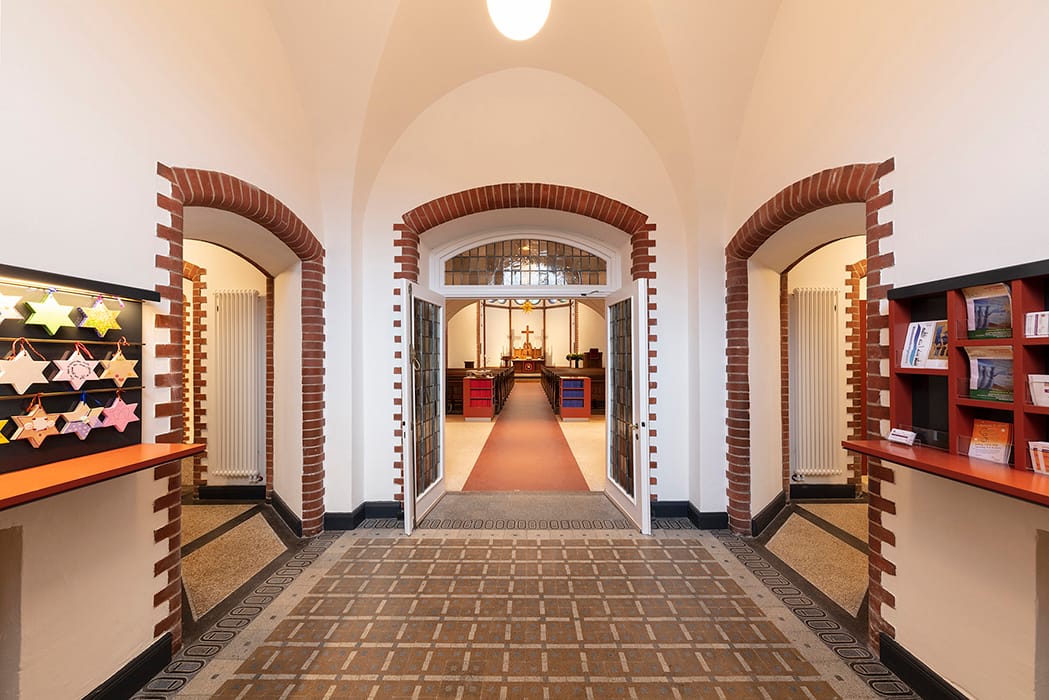
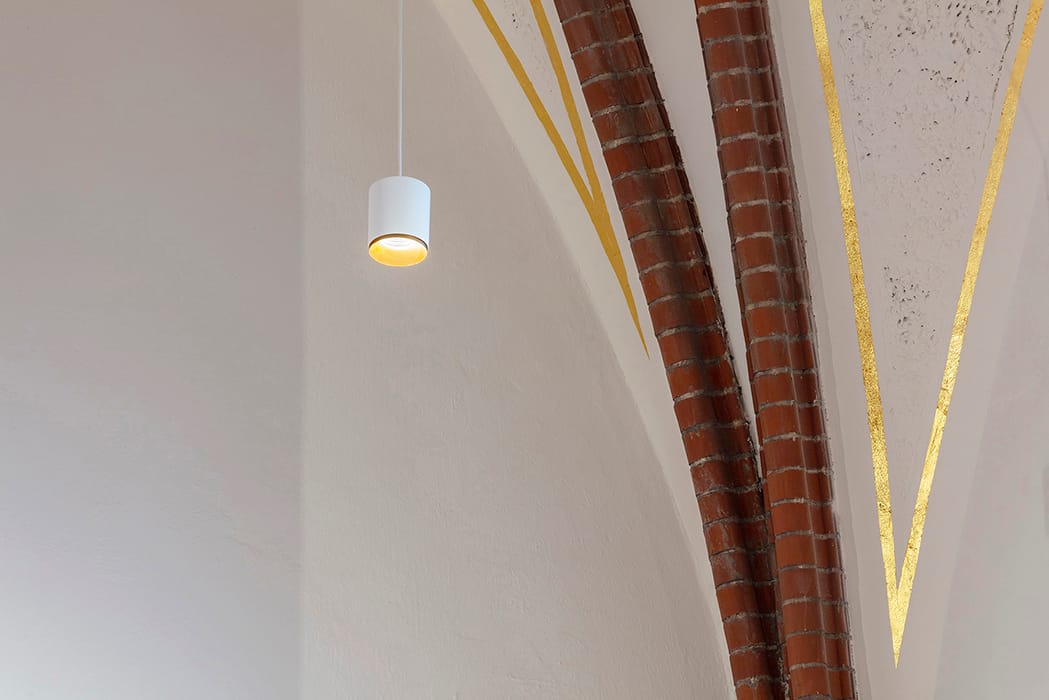
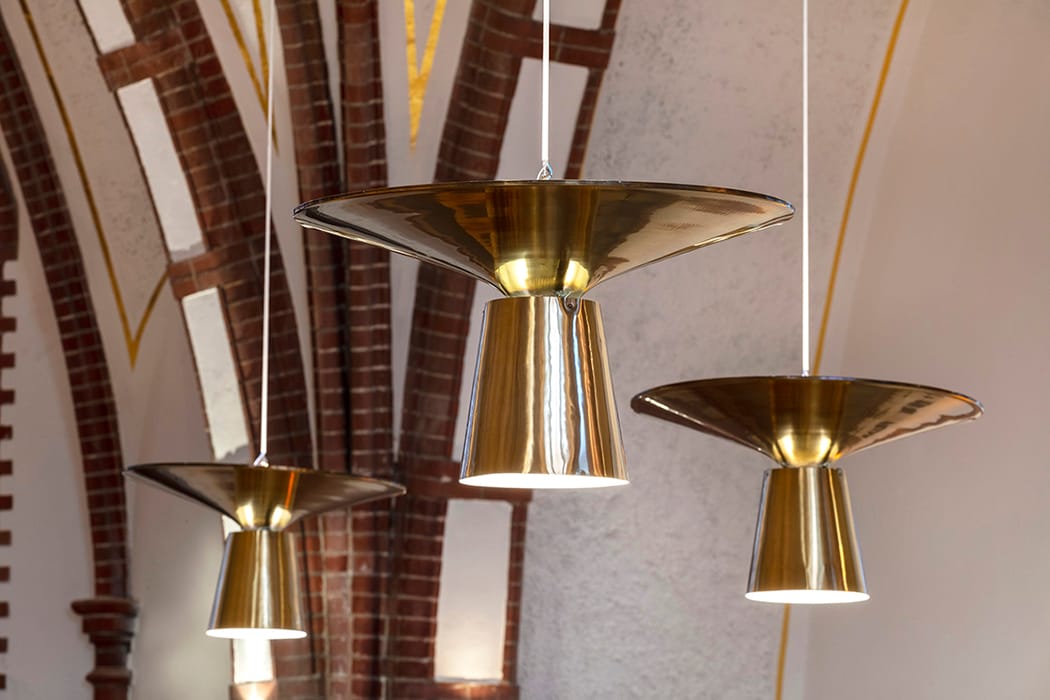
Architects Johannsen and Partners undertook an ambitious transformation: to restore and reimagine this austere, partially compromised interior as a luminous, solemn space that draws the eye skyward. The catalyst was severe mold contamination, particularly devastating around the organ. The inadequate heating system gave way to underfloor heating combined with convector units. All carpeting was removed and floorboards reset flush to create a seamless nave floor. The existing terrazzo was restored and refined. In the altar area, polished dark mastic asphalt—nearly indistinguishable from the original terrazzo—now floors the space. The altar itself moved closer to the congregation, while the pulpit found its rightful historical position, resting on a platform of tinted exposed concrete. The organ received a comprehensive cleaning and tonal enhancement. Its facade gleams with fresh colour. Makeshift installations at the nave entrance were removed and replaced with custom built-ins and wooden storage units housing technical equipment, furnishings, and hymnals. The entire electrical infrastructure was modernized with carefully selected new lighting.
A strategic colour palette transformed the entire church into a brighter, more unified space—bringing the nave and altar area into visual harmony. The vaults' rough cement plaster, along with their smoother ribs and gilt accent lines, were treated with silicate paints. Restorer Christiane Maier investigated the gallery balustrade's original colouring, informing a refined white and light grey scheme that reinforces the church's new luminous character while creating chromatic continuity with the vaults and walls above.
Photography Credits:
Daniel Sumesgutner
www.sumesgutner.de
(Published in CUBE Hamburg 04|22)

Strength and Solidarity
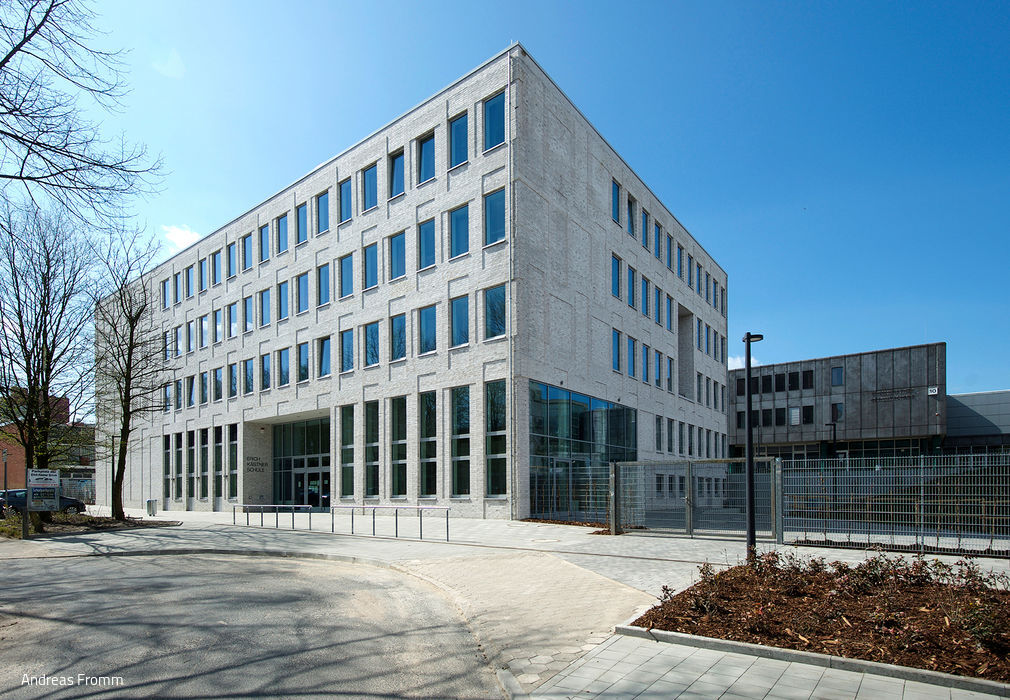
The Erich Kästner School's new main building gives architectural form to values and guiding principles.
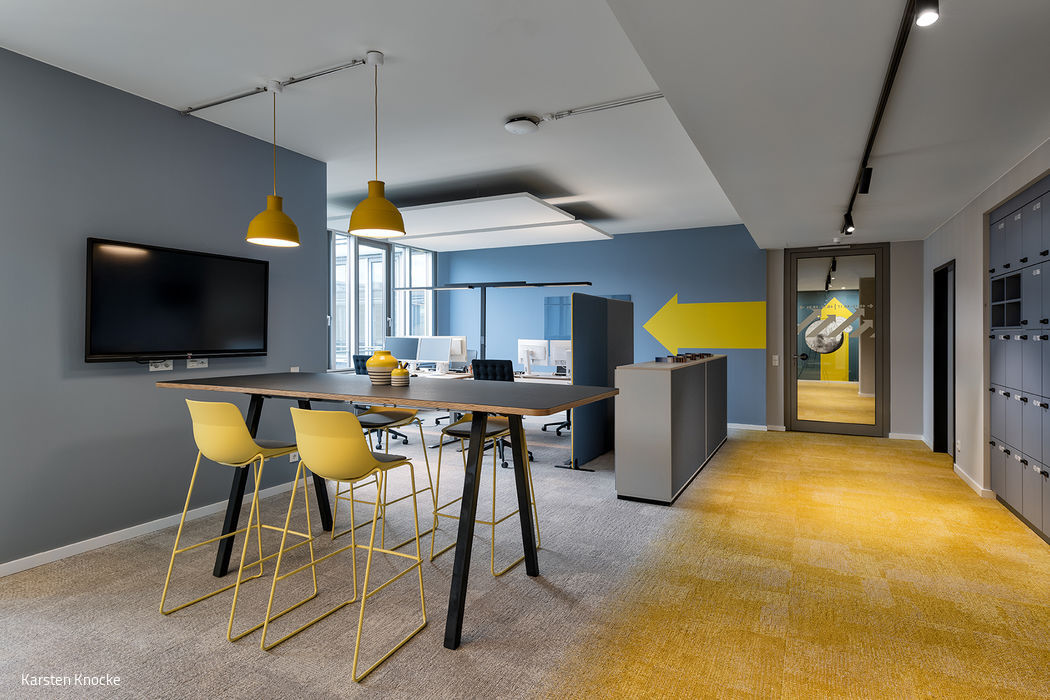
Space is the Place
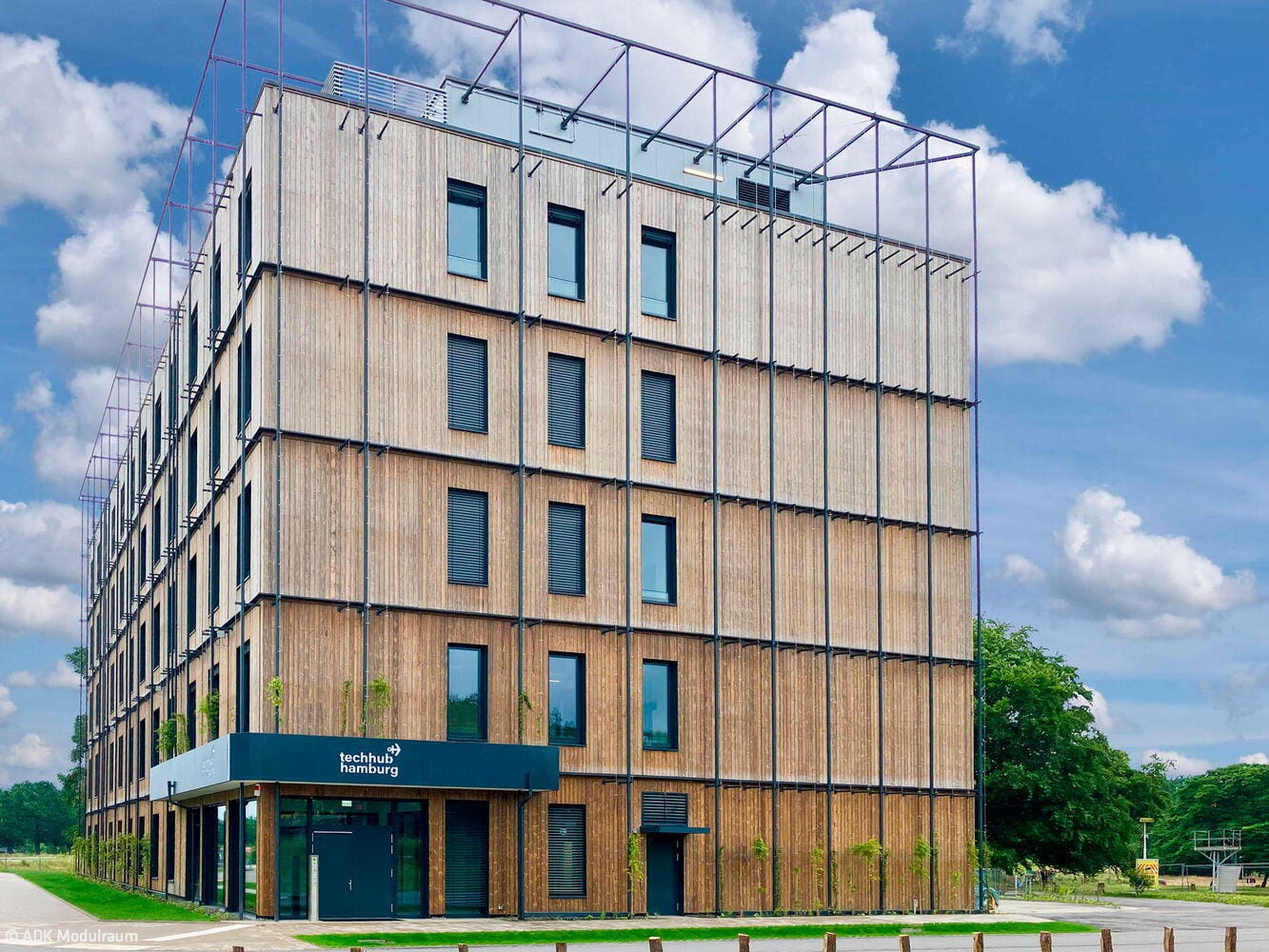
Challenges became the catalyst for a bold new corporate culture and identity.
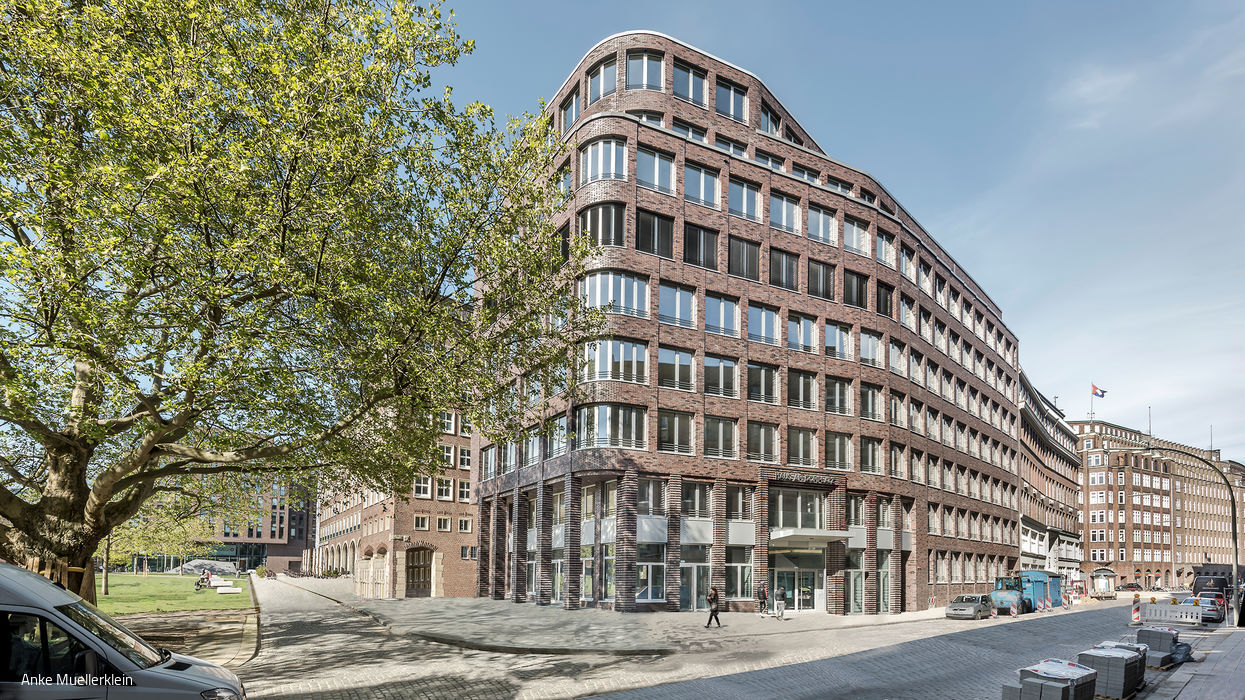
An Office Building for Today
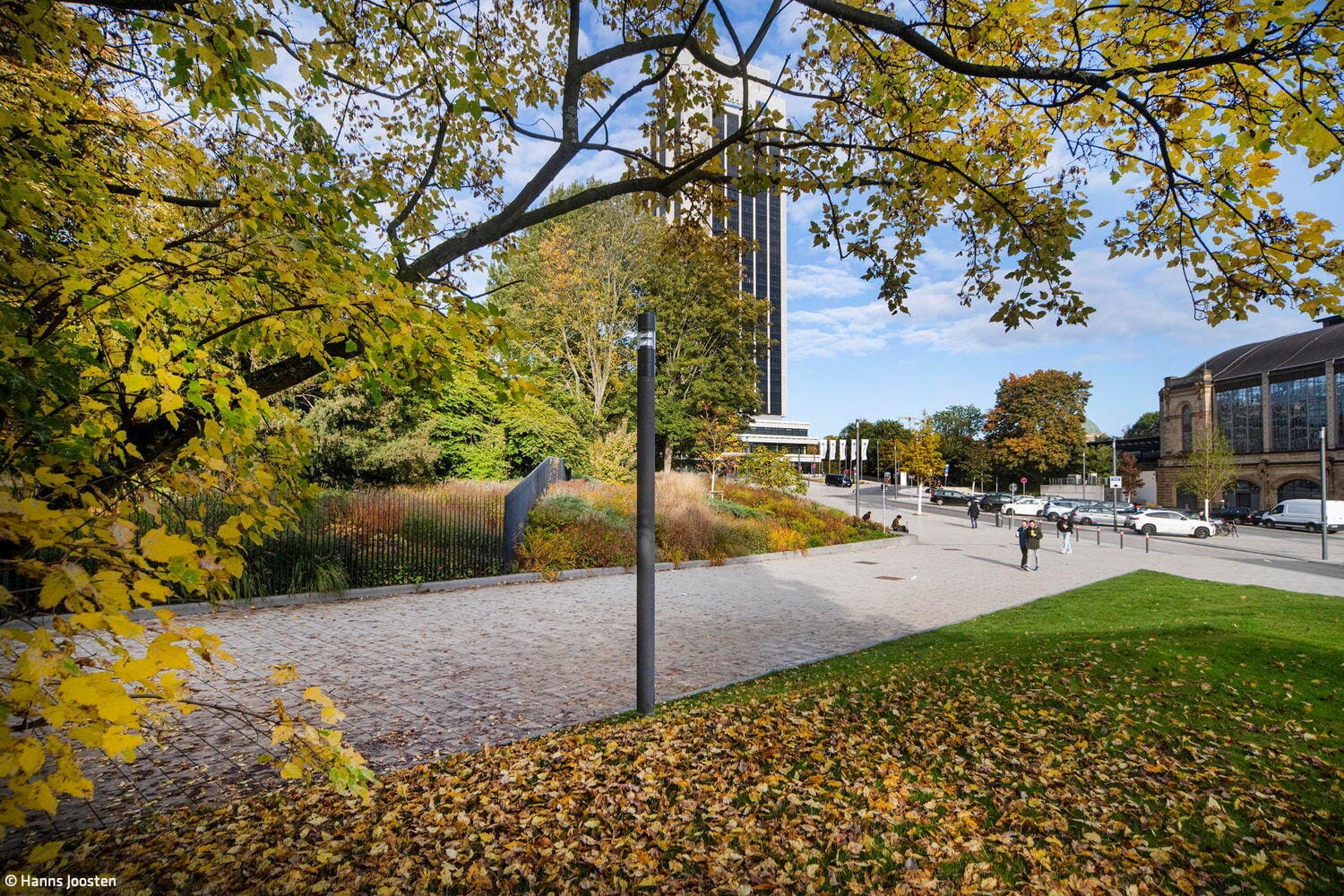
The house on Cathedral Square is a successful piece of urban regeneration.

A Peaceful Retreat in the Urban Hustle
The Hotel Europäischer Hof's pool and spa have undergone complete renovation and redesign.