


Luxury liner on the River Spree
Dockyard – a forward-looking office building in Friedrichshain

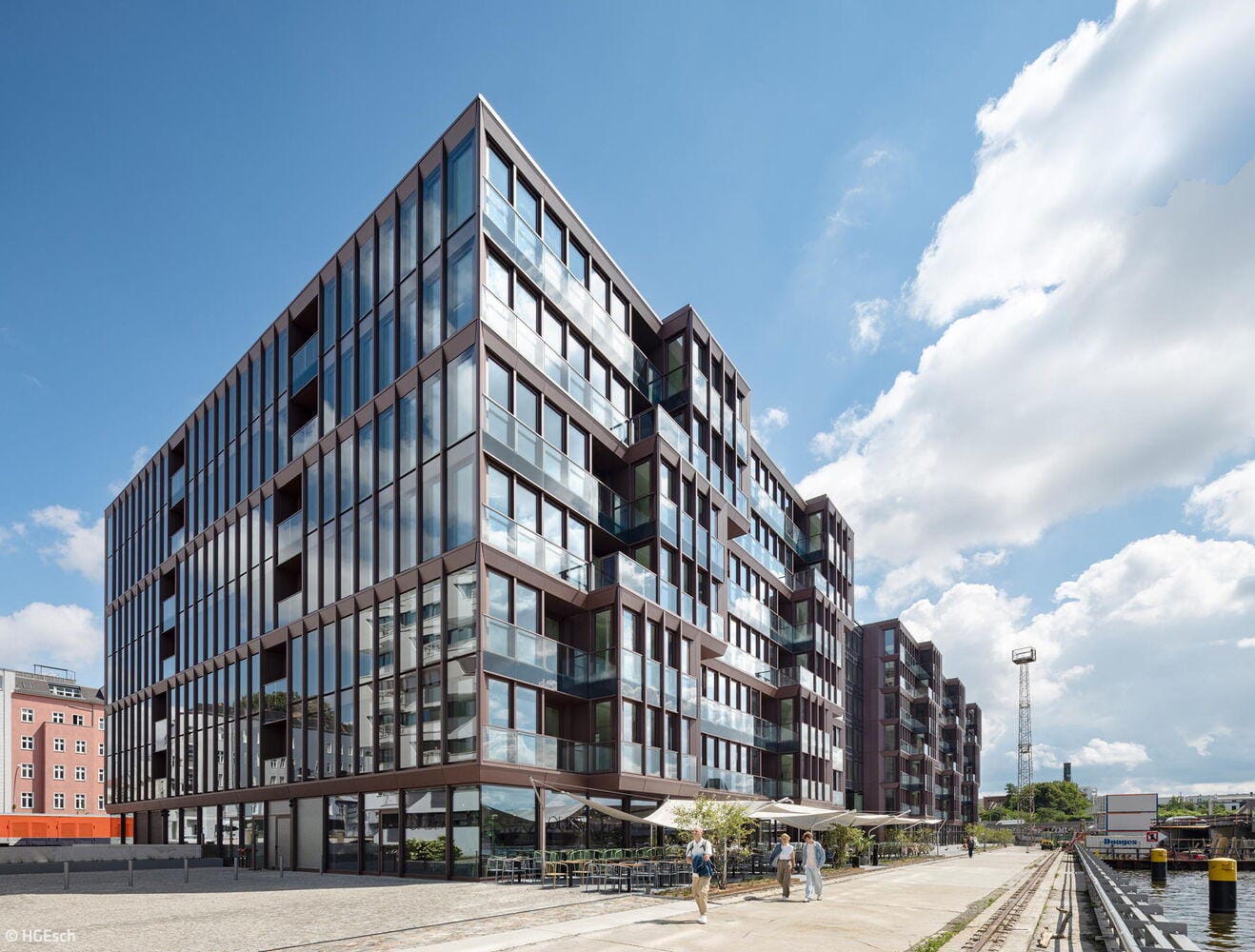
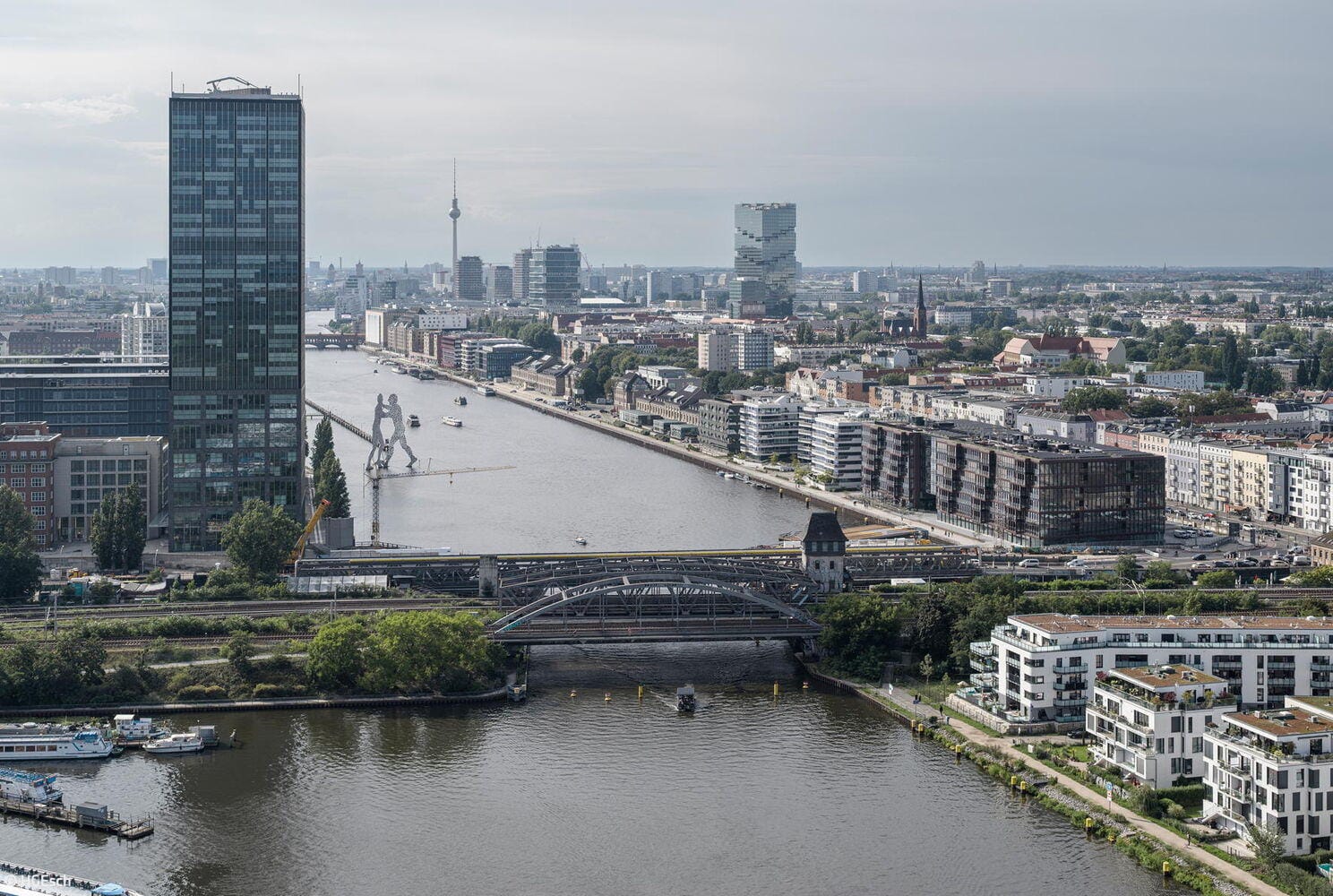
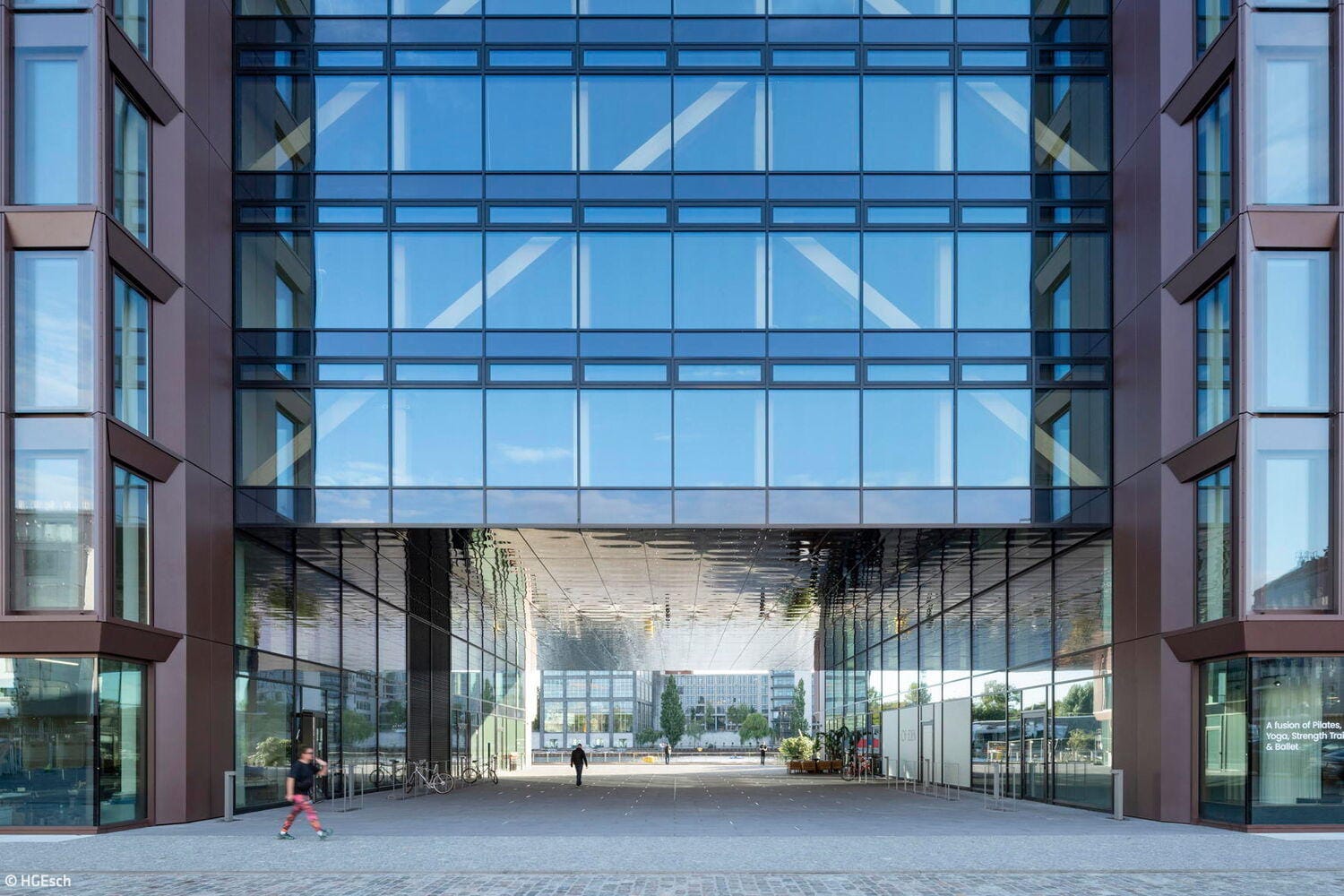
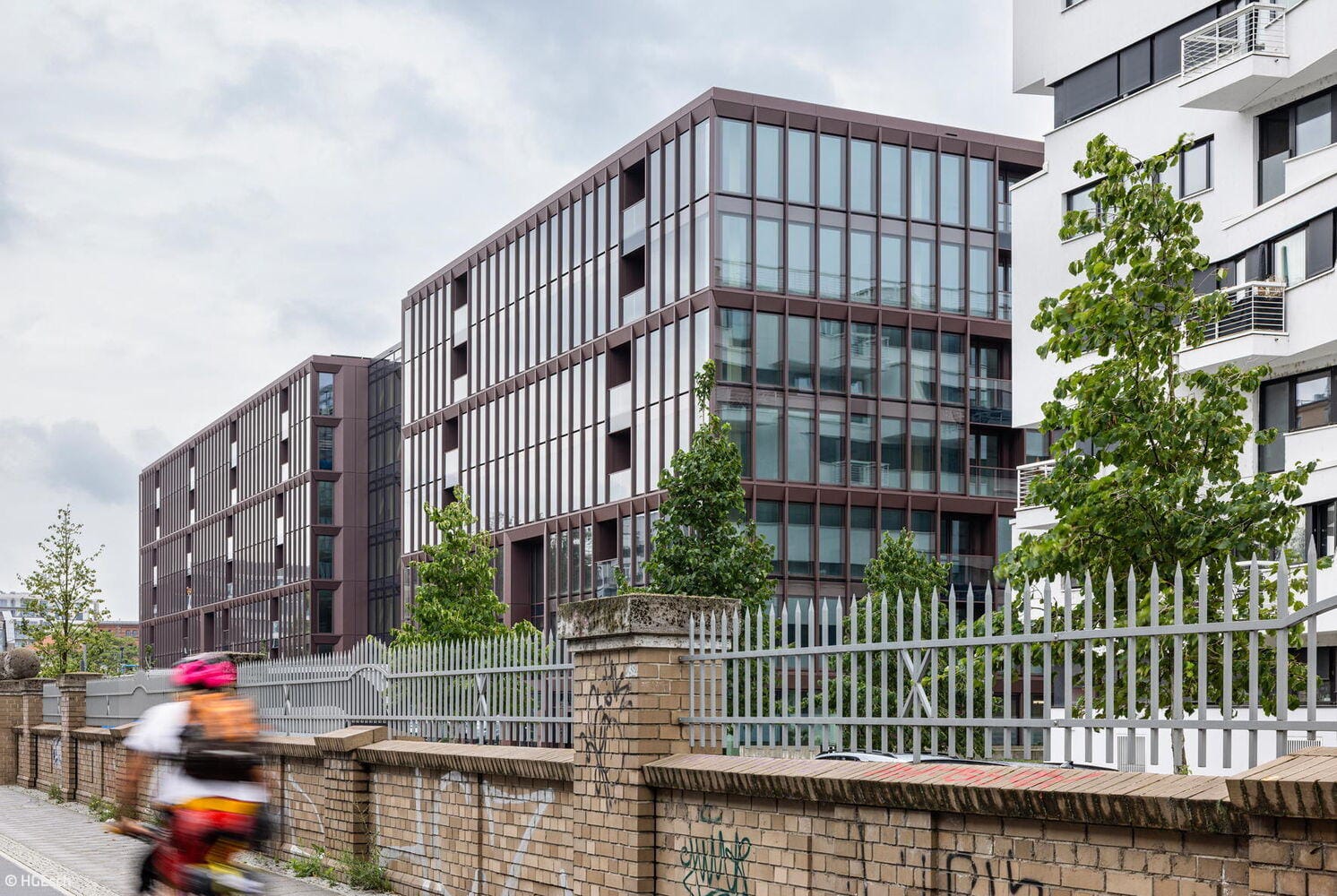
The ship is still in the docks – and will remain there. The supposed luxury liner "Dockyard" is actually a progressive, state-of-the-art office building on Stralauer Allee, between Oberbaum Bridge and Treptower Park, on the site of the former East Harbour. The building was constructed on the last undeveloped plot of land at Stralauer Allee 15–16, covering an area of 13,400 m². The new building is a seven-storey office building constructed using a hybrid timber construction method, located directly on the corner of Elsenbrücke and opposite the striking Allianz Tower on the other bank of the Spree.
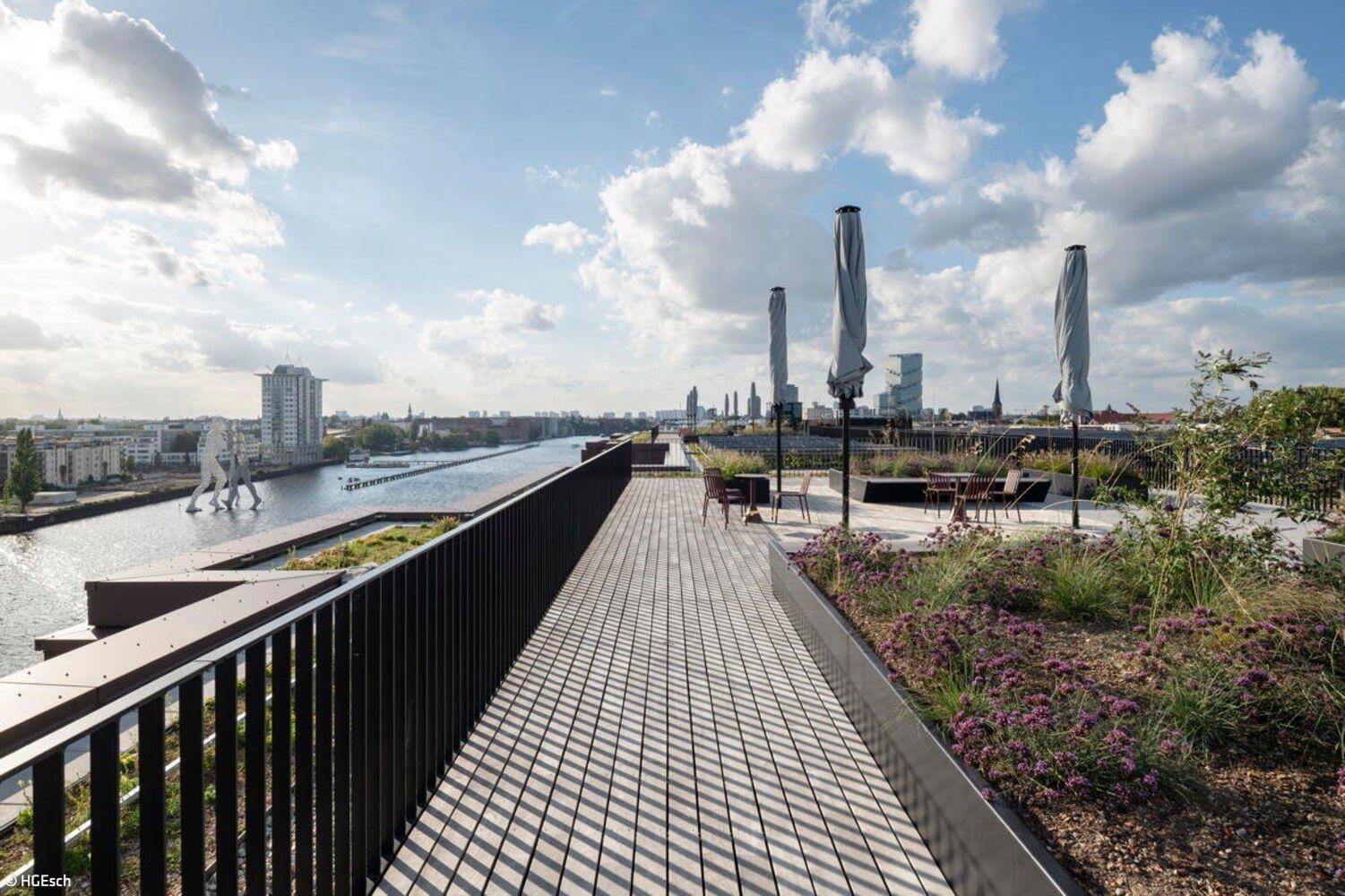
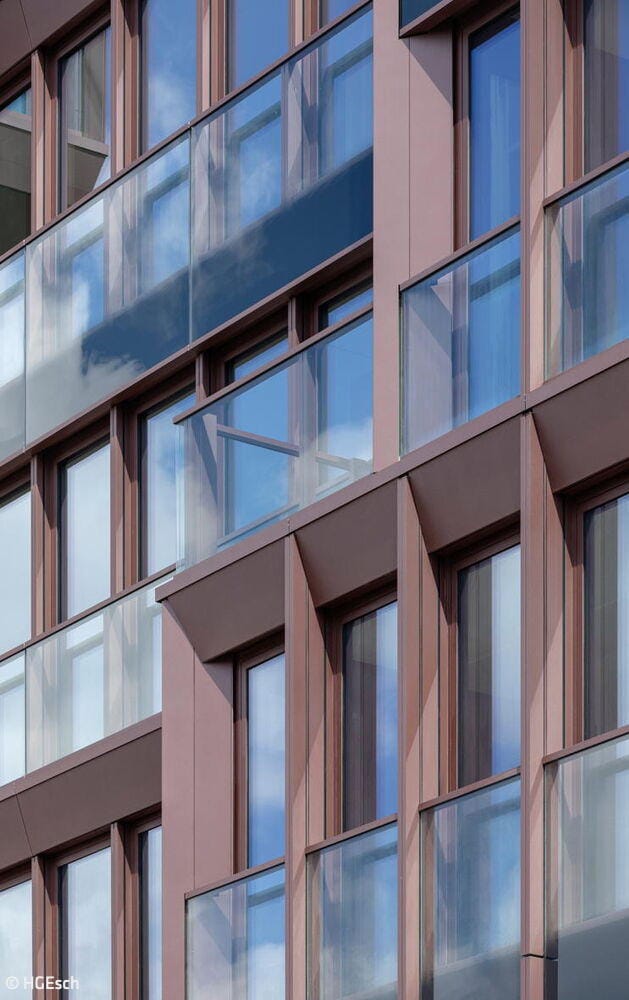
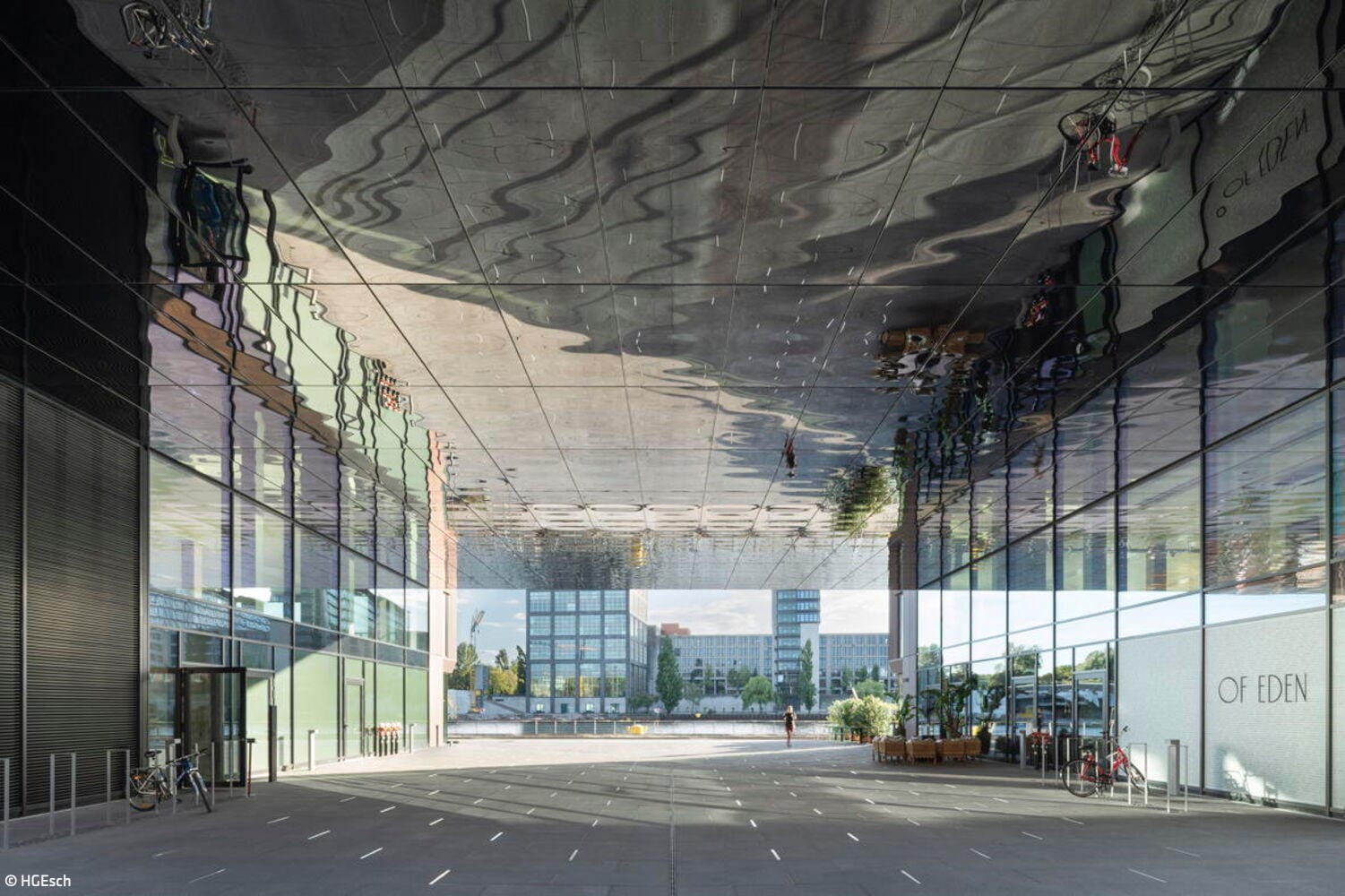
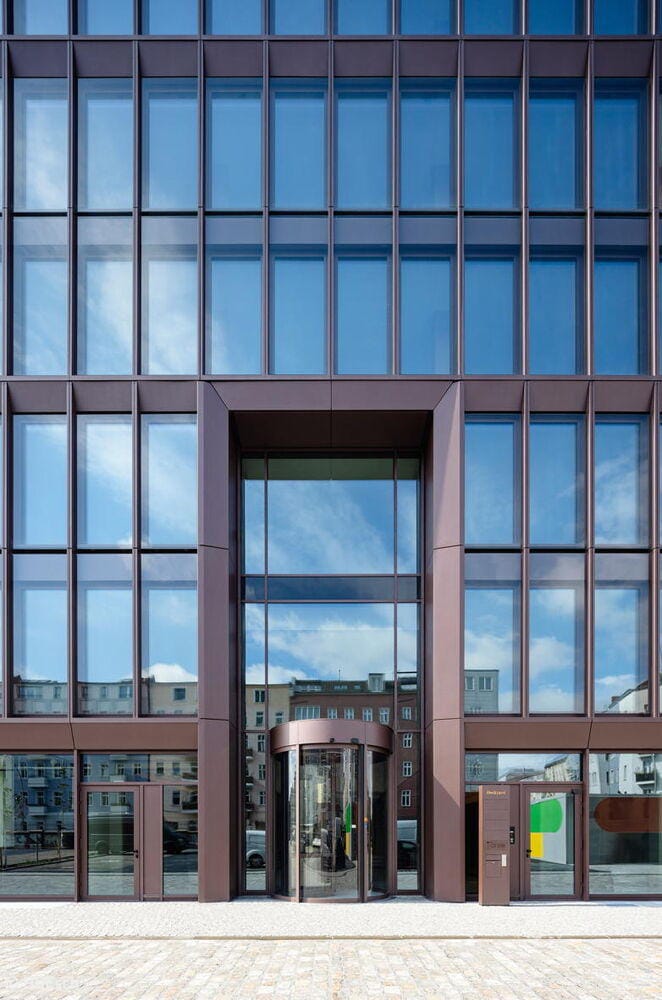
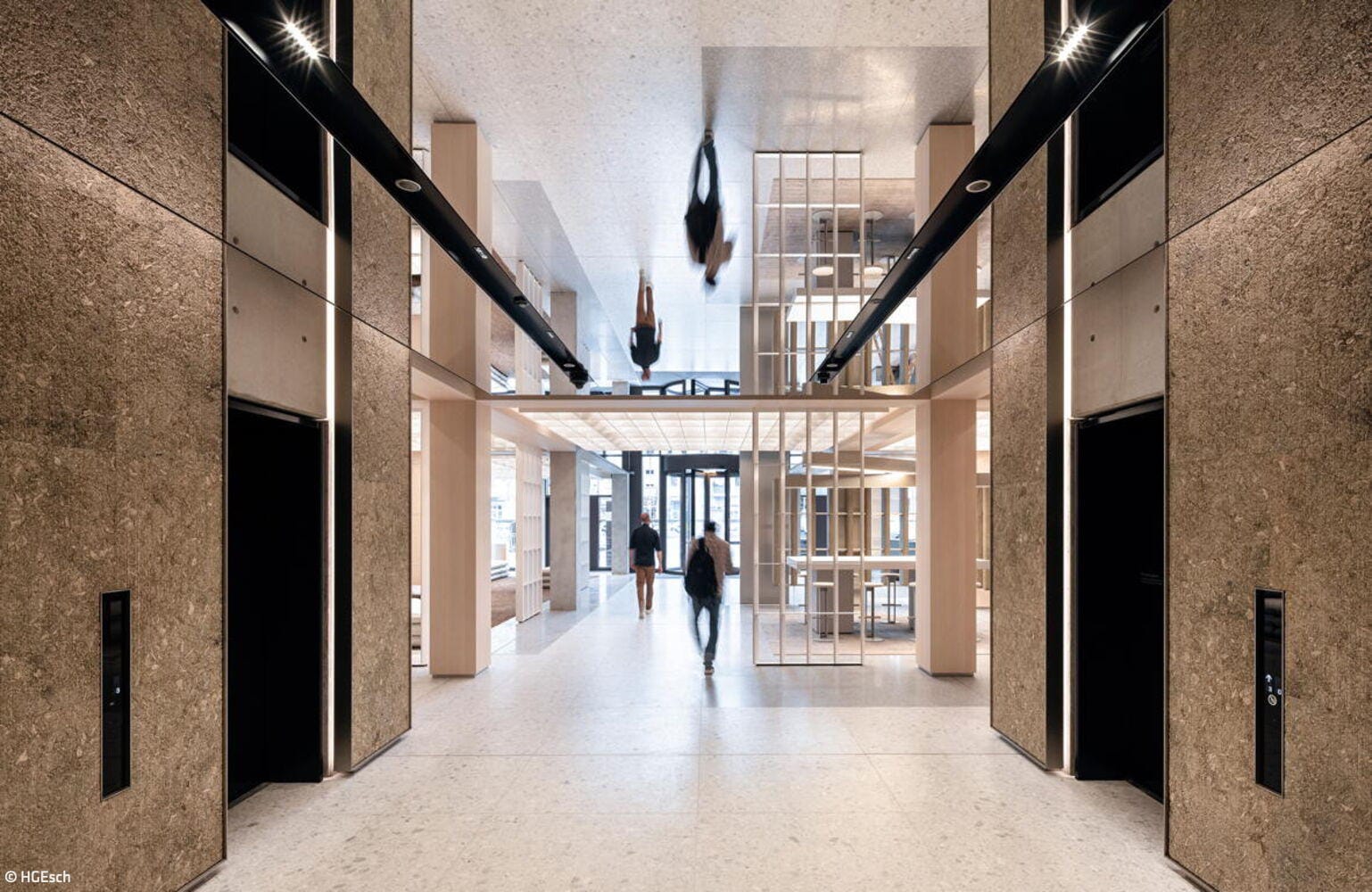
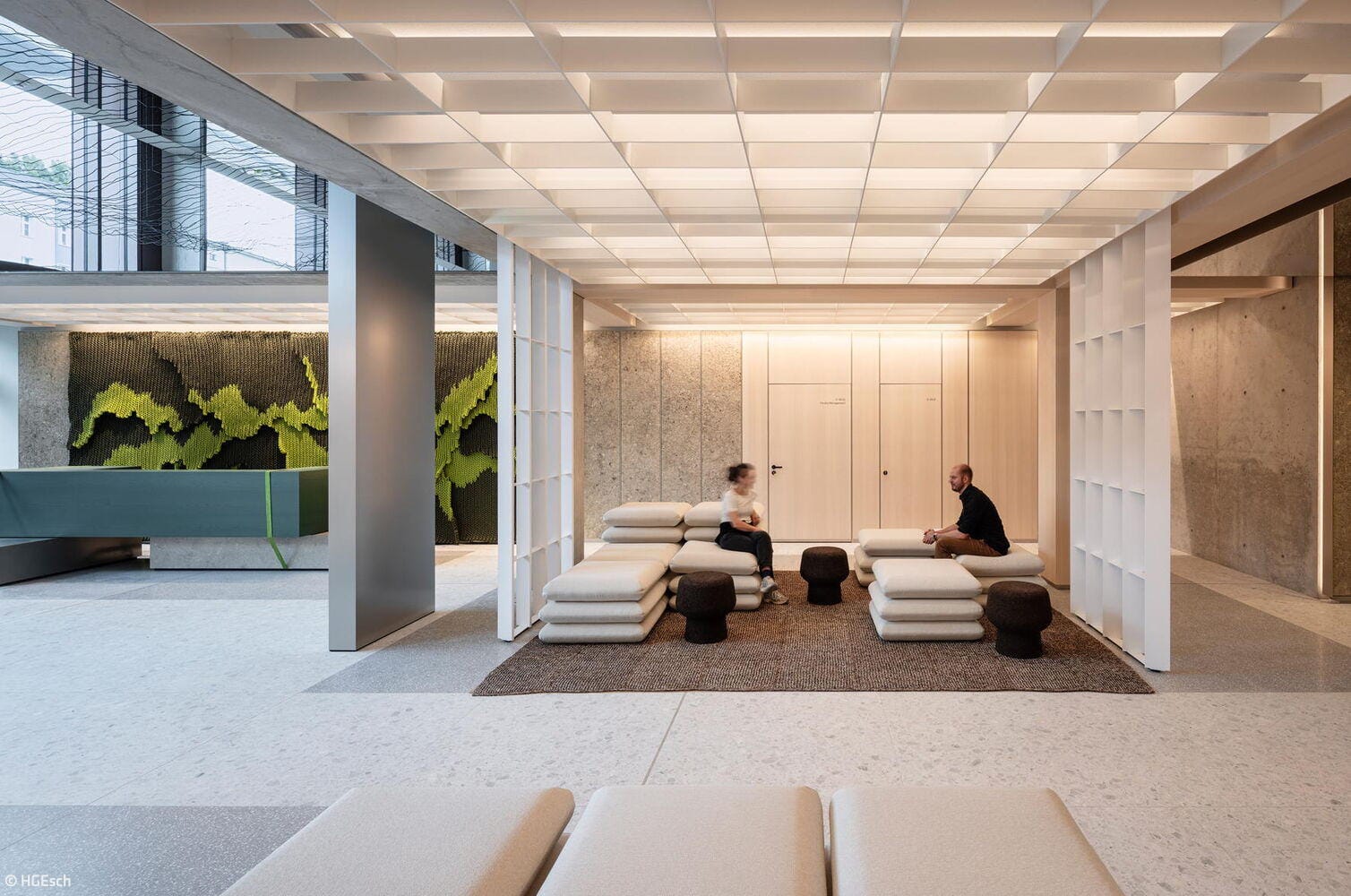
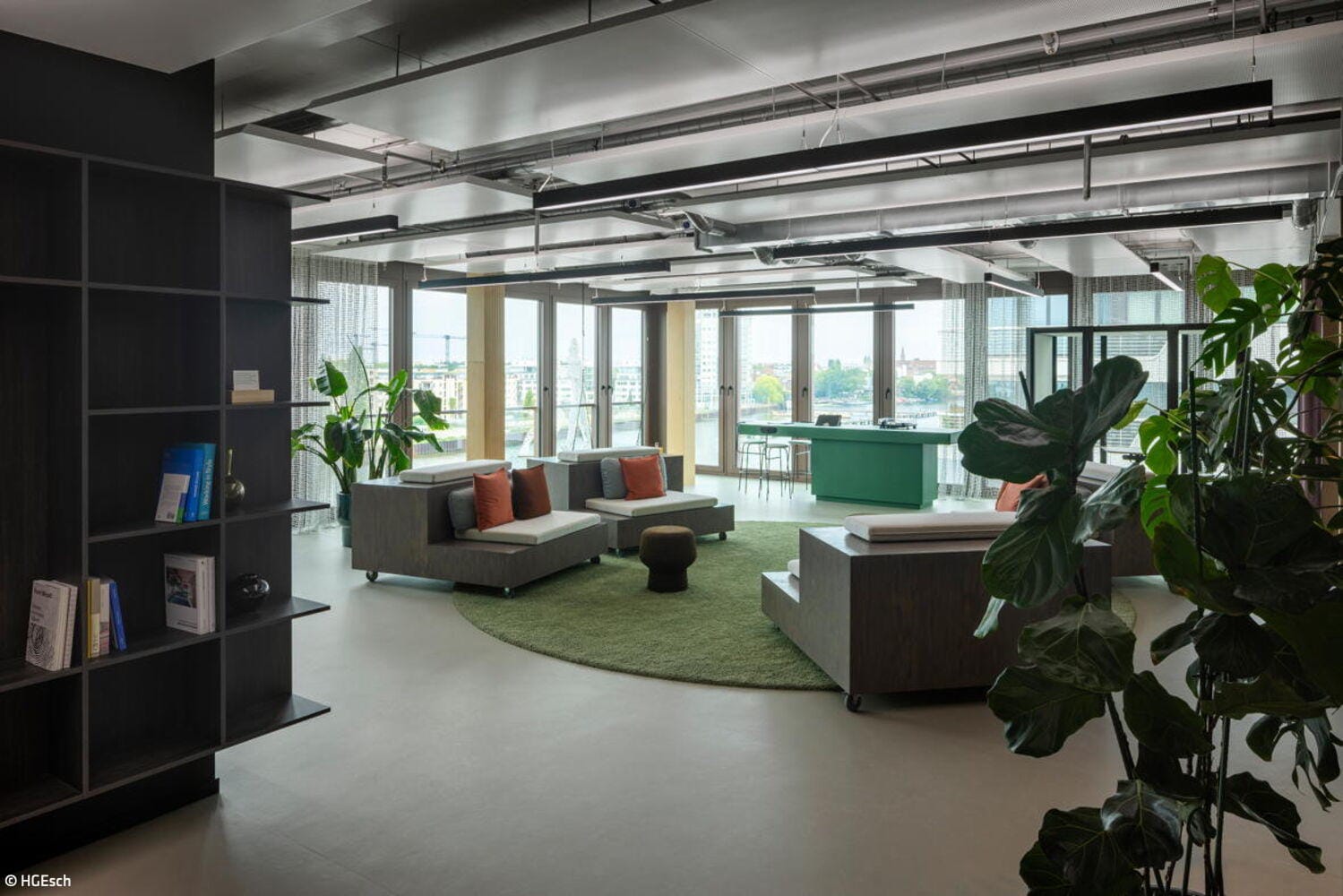
At first glance, the unified facade suggests a single, closed building block—but this is a visual deception. In reality, two structures stand here: a square and a rectangular volume, connected by a bridge building that aligns flush at the top while remaining open at the base. The ceiling of this passage is clad in mirror-polished stainless steel, reflecting the dynamic play of light across the Spree River. A basement garage equipped with electric charging stations provides parking for staff. Throughout all three building sections, the interplay between wood and concrete has been meticulously calibrated. From the first floor upward, the ceilings employ HBV hybrid construction: wood and concrete are rigidly bonded together, allowing each material to perform according to its strengths—wood absorbs tensile forces while concrete resists compressive loads. The basement and ground floors feature conventional concrete ceilings. Each of the two main buildings is accessed through its own entrance, leading into a generously proportioned lobby with an impressive ceiling height of nearly seven meters. From there, stairs and elevators connect to the upper floors. A distinctive feature of the project is the extensively planted roofs and terraces with seating areas offering views across the Spree and the opposite riverbank. The facades consist of floor-to-ceiling glass windows extending to the sixth floor, articulated by cornices and pilaster strips at regular intervals. Along the south facade facing the Spree, staggered, projecting square bay windows with balconies provide additional sculptural depth. On the remaining elevations, recessed loggias break up the facade planes. Six of the seven stories are designed for office use. Open-plan layouts allow tenants to configure spaces according to their specific needs. The ground floors are partly allocated to commercial uses—retail, restaurants, and similar establishments. The design vocabulary has been fully developed: landscape architects Topotek 1 oversaw the design of the exterior grounds. Art interventions are integrated throughout—in outdoor areas, lobbies, and on individual floors. From the outset, sustainability and future-proofing stood at the center of the project conception. The wood-hybrid structure significantly reduces energy demand, while the systems for heating and electricity are engineered from the start for zero-emission operation, drawing exclusively on renewable sources: solar energy, geothermal heat, and ambient air. The building is further equipped with an ice storage system that, in winter, harnesses energy released during the freezing process, and in summer, serves as thermal storage for excess heat. This integrated approach enables nearly carbon-neutral building operations.
Photos:
HGEsch
www.hgesch.de
(Published in CUBE Berlin 04|25)

Lakeside House
Refined geometry, striking presence
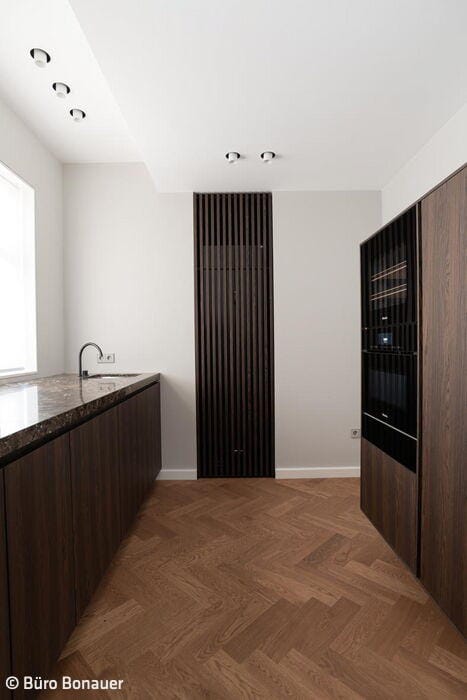
When Spaces Speak
A Timeless Penthouse Emerges in the Former "House of Children"
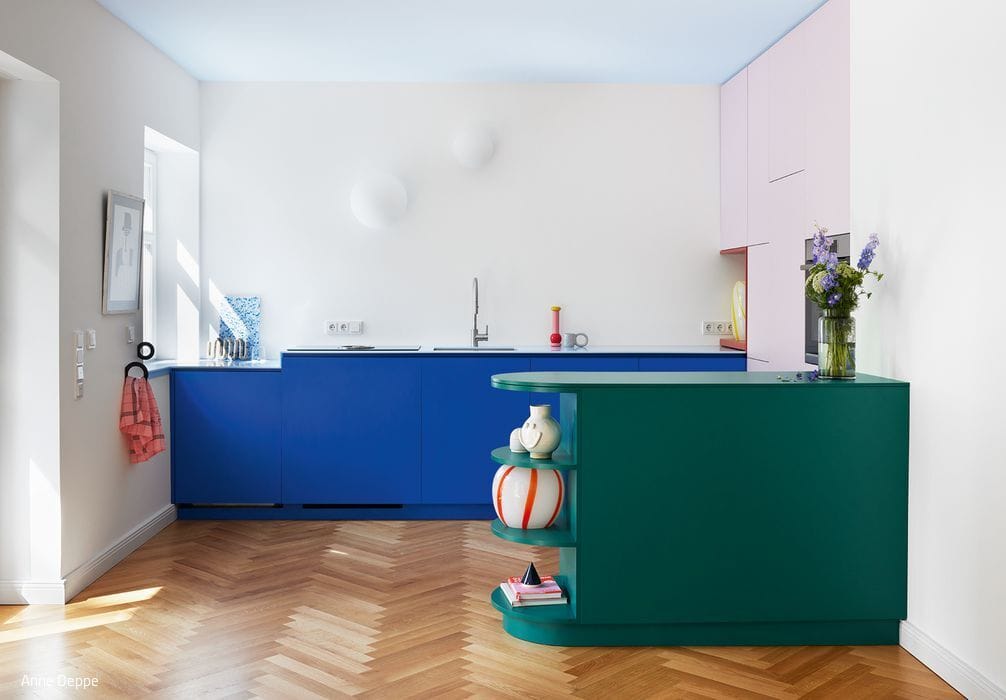
Geometric and Colorful
The furniture and room concepts created by Sina Gwosdzik and Jakob Dannenfeldt bring joy to everyday spaces.
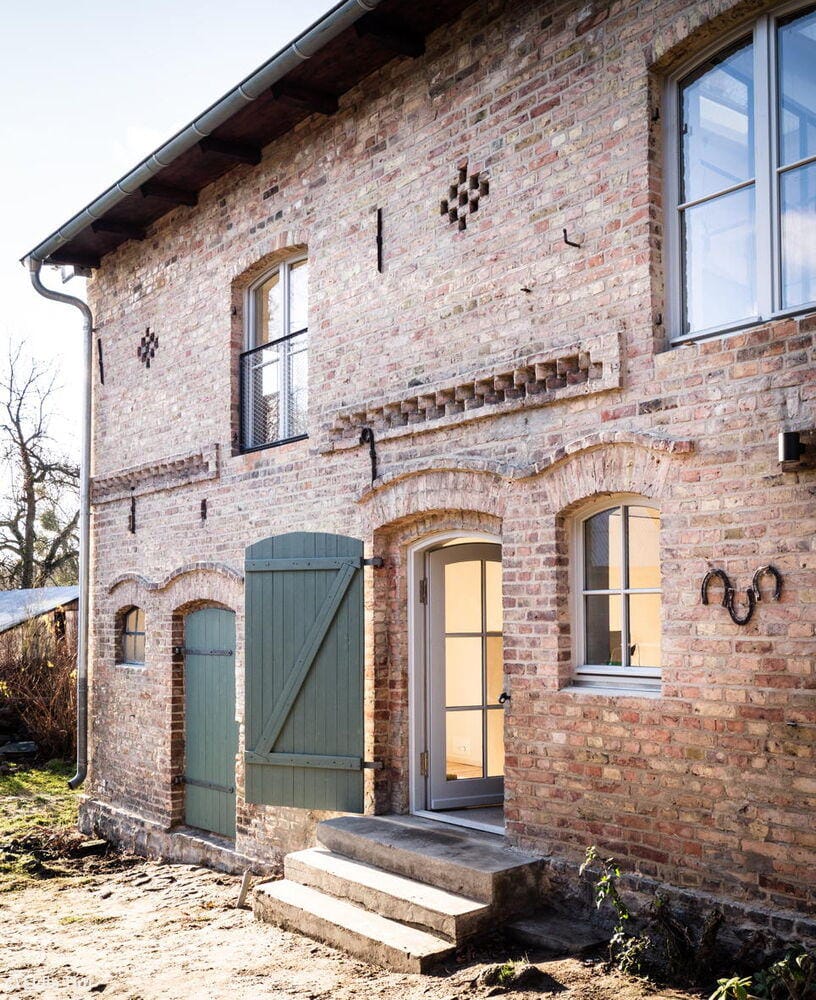
From Barn to Residential Building
Heritage-sensitive conversion of a historic agricultural structure