


Grafental Meets White City
The result is a vibrant urban landscape that feels organically evolved—one where each building tells its own architectural story.
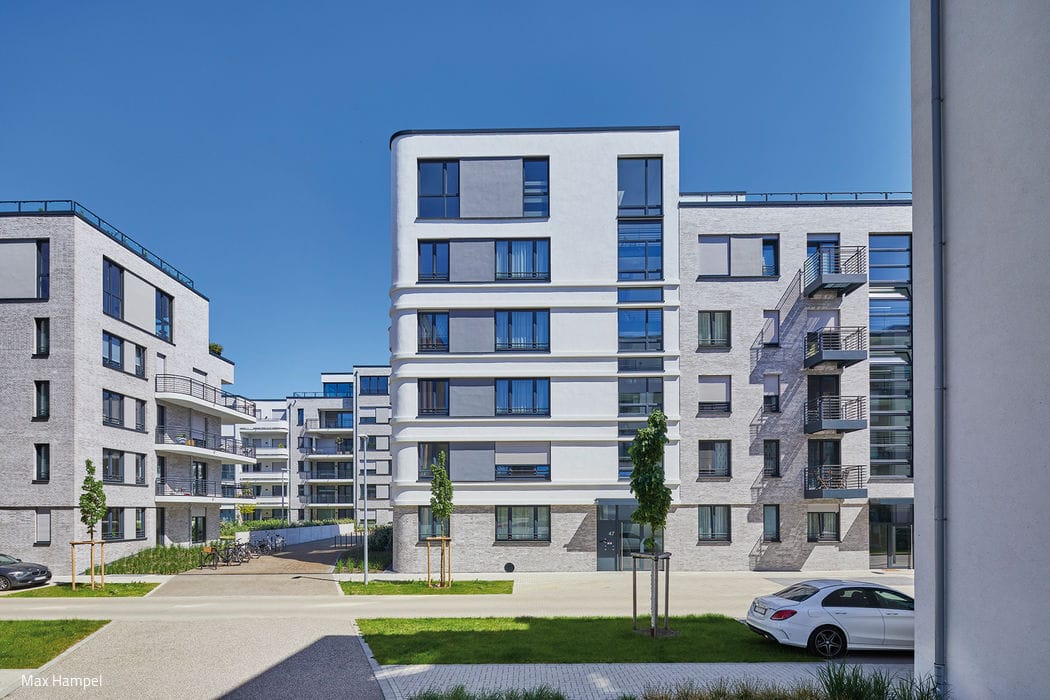
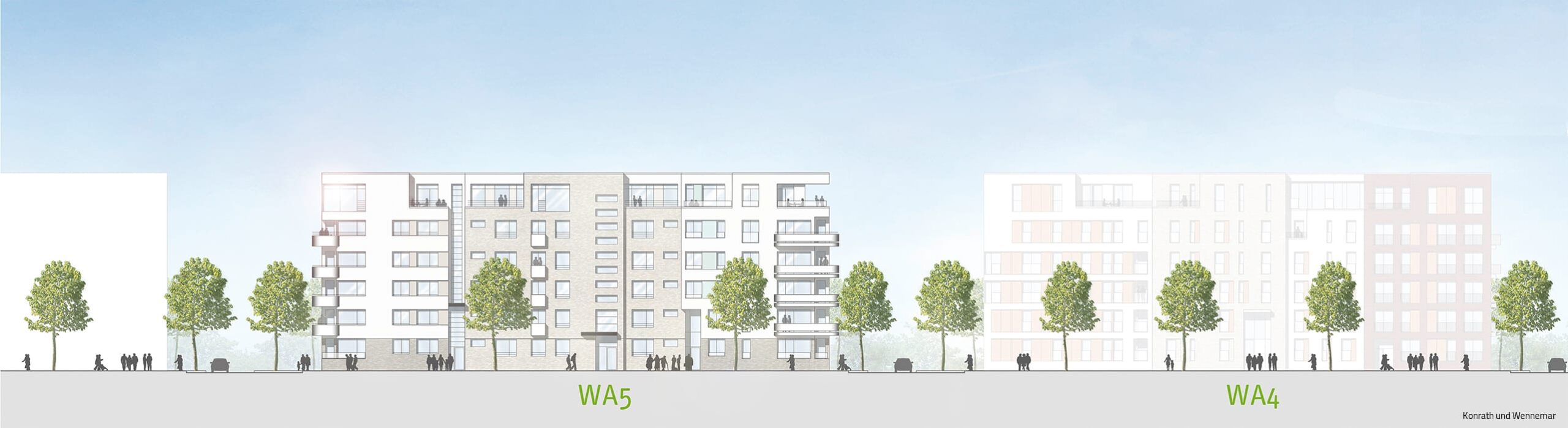
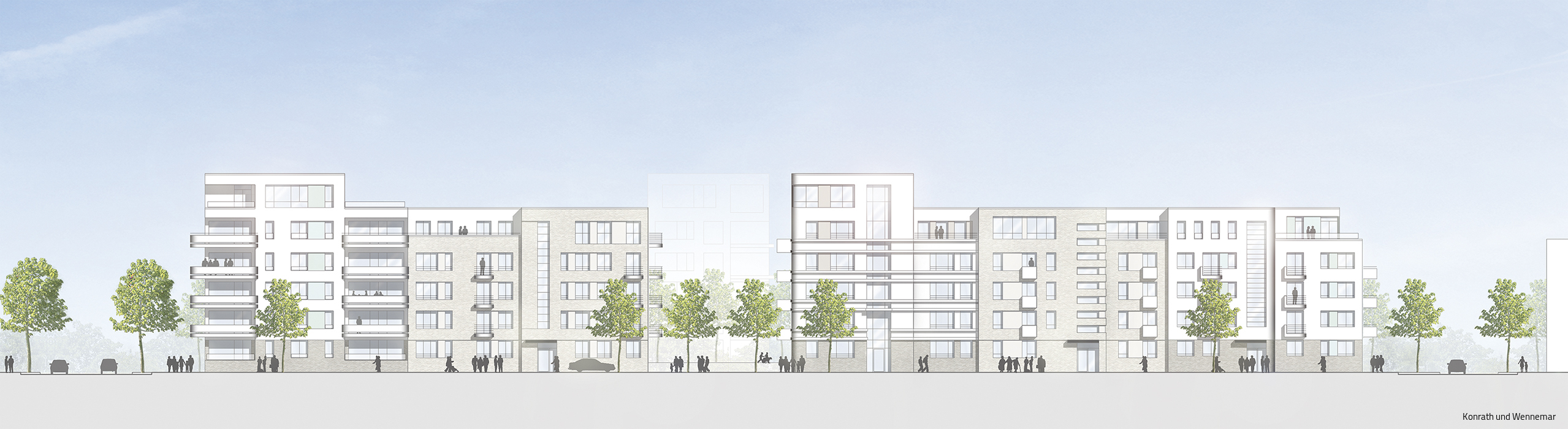
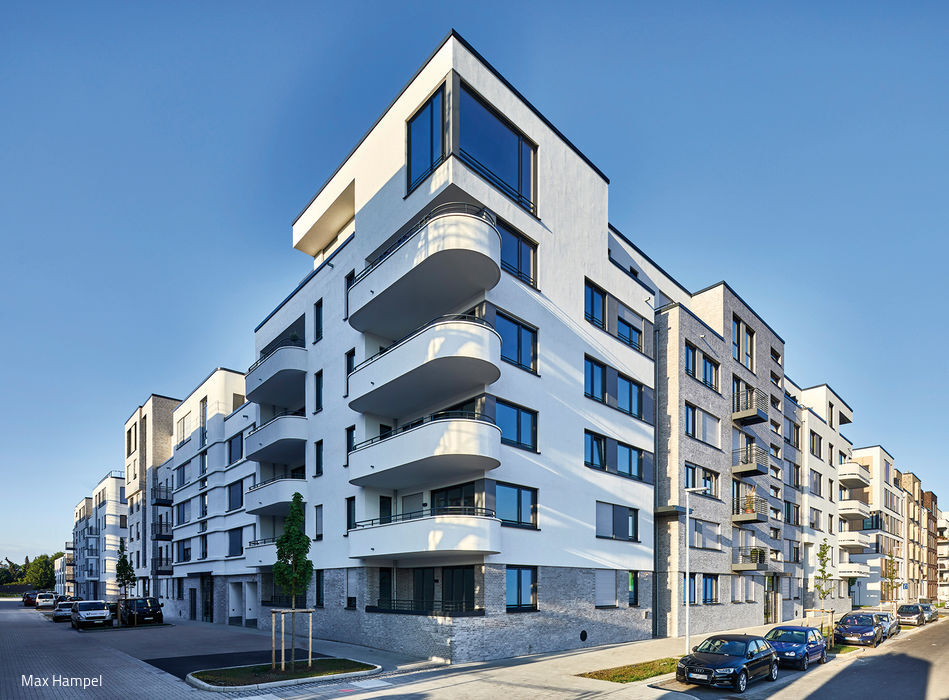
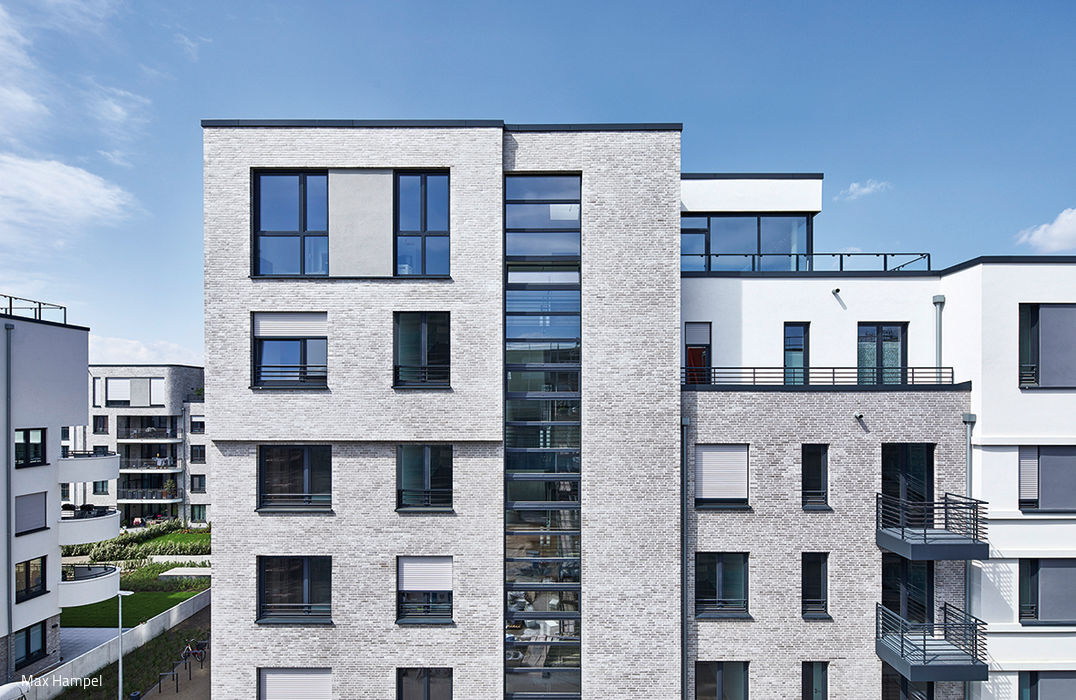
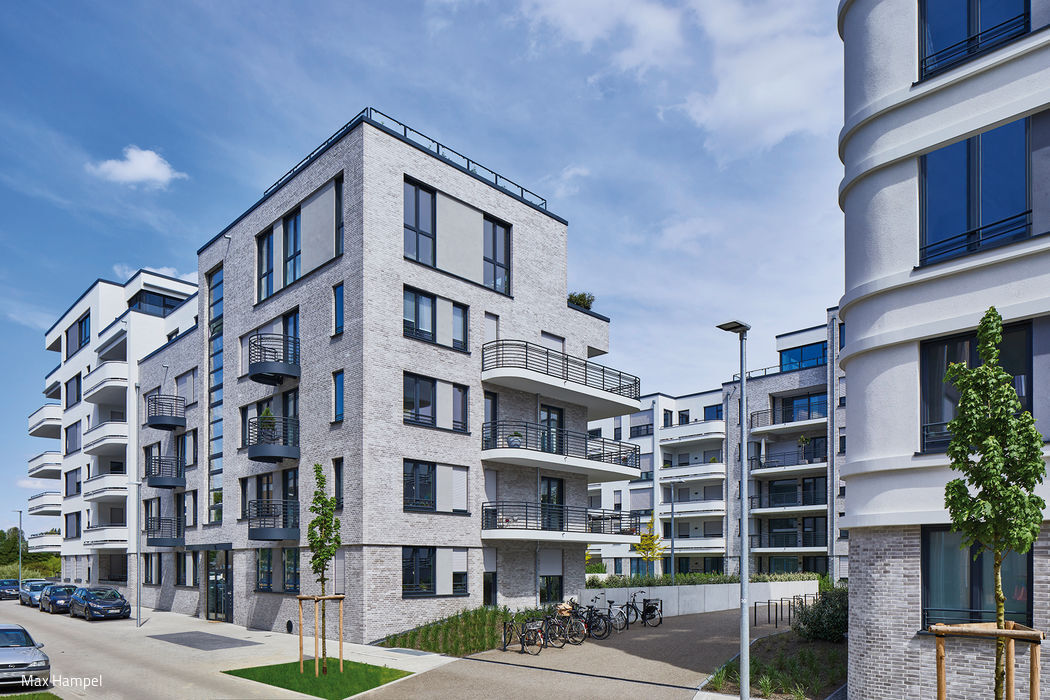
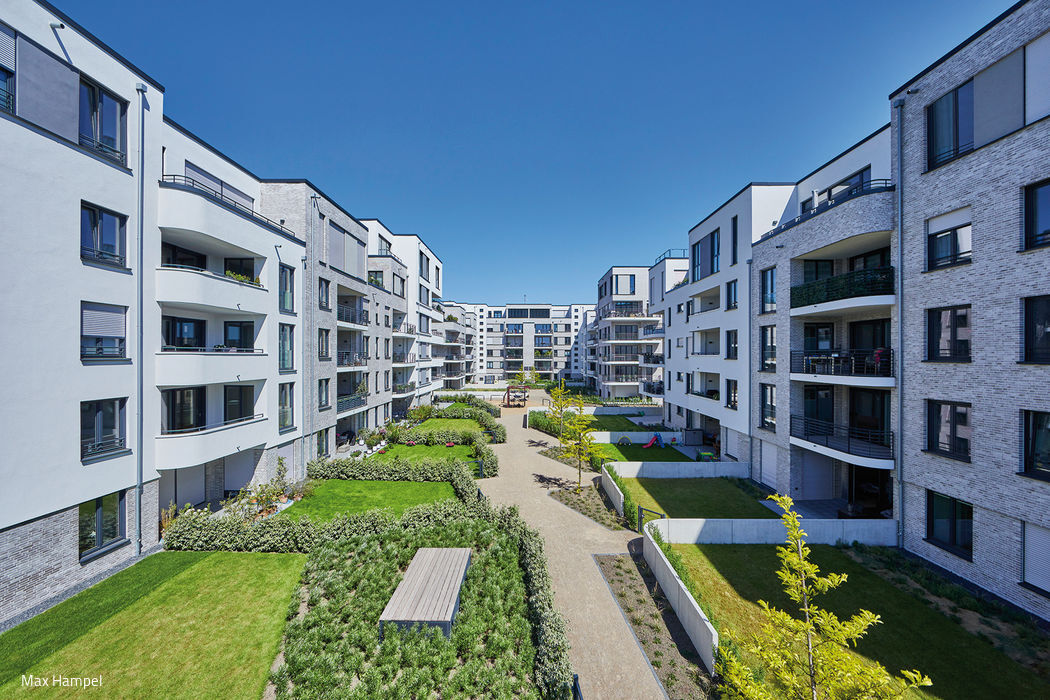
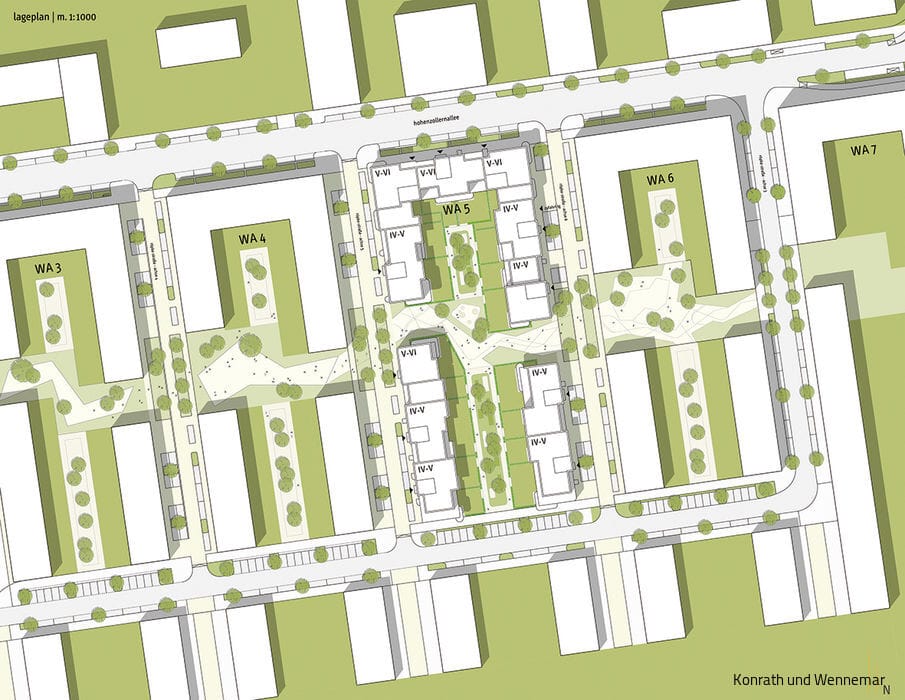
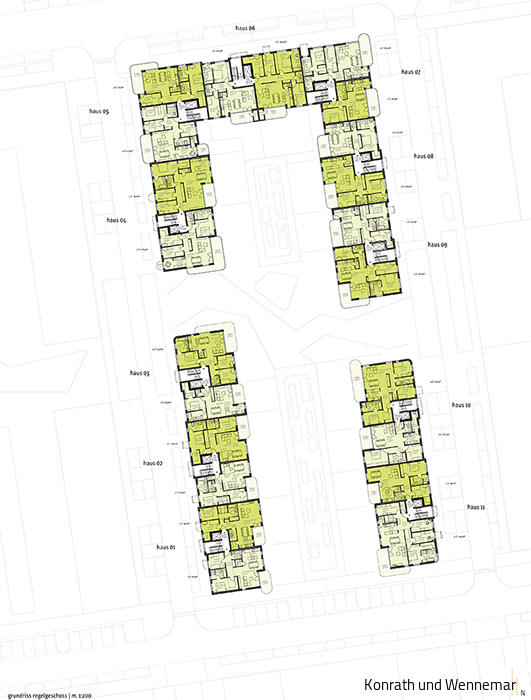
Since 2015, Grafental has been transforming a former industrial site in Düsseldorf's eastern district into a thriving neighbourhood of approximately 1,600 residences, anchored by a central park. The fifth phase introduces roughly 109 apartments within a single perimeter block—a contemporary interpretation of the Wilhelminian-era urbanism that defined classic inner-city quarters. Here, the block's buildings are carefully articulated as individual structures, each with generous, often two-storey entrance portals that establish distinct addresses along Grafentaler Straße. These welcoming entry points create the impression of a naturally evolved urban fabric, where each building possesses its own distinctive character. This approach embodies an essential principle of thoughtful urban design: a human scale that feels intuitive, inviting, and unmistakably familiar.
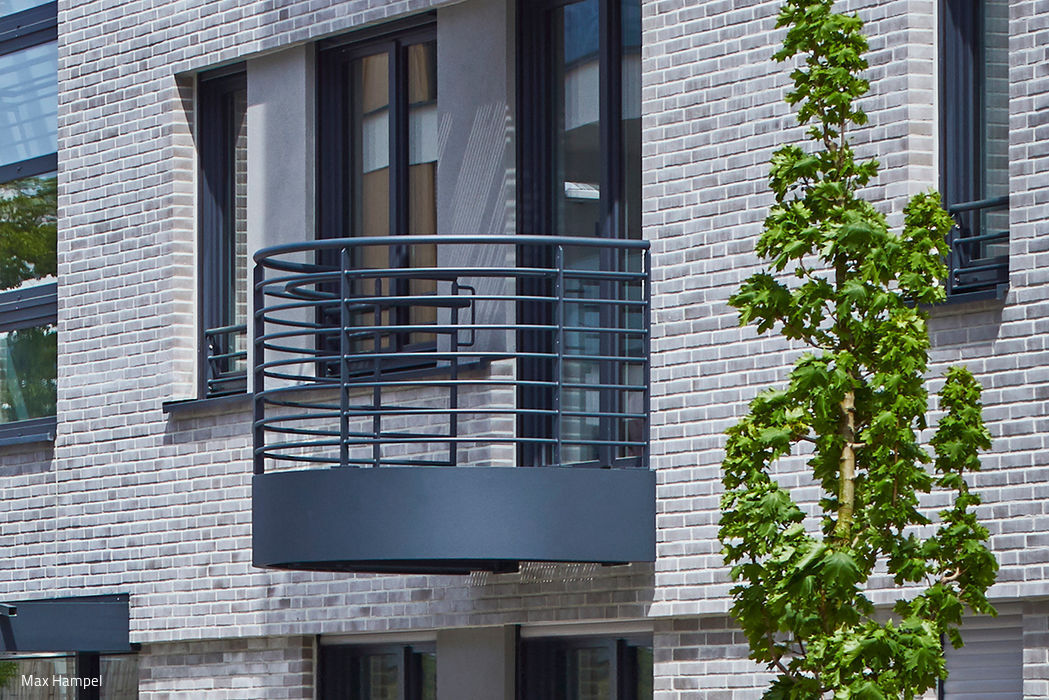
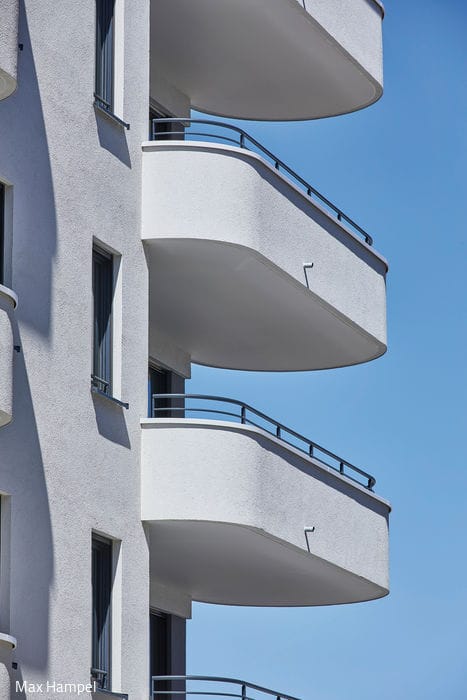
Tel Aviv—a Mediterranean metropolis—seamlessly blends coastal living with architectural diversity rooted in classical modernism and the international style of the 1940s and 1950s. The city's signature language—marked by sweeping curves and crisp white cubic geometries—inspired the design philosophy behind block WA5. Created by Düsseldorf-based architects Konrath und Wennemar as a conscious homage to its Israeli developer, the design crystallises a distinctive formal vocabulary. The projecting, rounded loggias serve as the façade's defining element, anchoring the scheme to modernism's essential formal principles. Penthouses positioned in the upper storeys are strategically set back, introducing a richly articulated roofline with proportioned glazing that reads seamlessly through the elevation. Equally compelling are the vertical stairwell windows—dynamic elements that anchor the compositional arrangement of each building's façade. Both the rendered and clinker-based structures share a grounding in a robust brick plinth, ensuring both buildings develop an aged elegance. This plinth acts as the unifying design gesture, drawing the individual structures into a cohesive ensemble. By extending a half-storey above grade, the base elegantly accommodates an underground car park while artfully defining the surrounding public, semi-public, and private outdoor spaces. The loggias themselves maximize privacy through generous spacing and integrated screening panels—a commitment to intimate, uncompromised living.
Photography Credits:
Max Hampel
www.maxhampel.com
(Published in CUBE Düsseldorf 02|21)
From Fragmented to Generous
A Striking Transformation: Complete Modernisation Delivers Dramatic Results
Everything in a Box
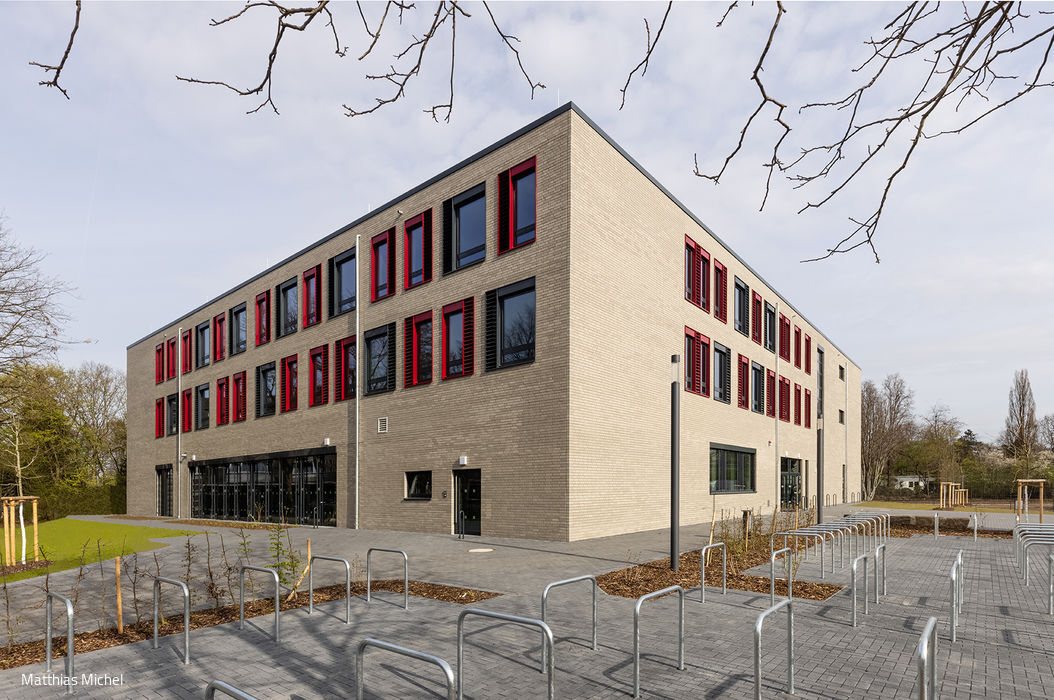
A compact three-storey extension for a comprehensive school in Neuss unites cafeteria, foyer, and classrooms under one efficient design.
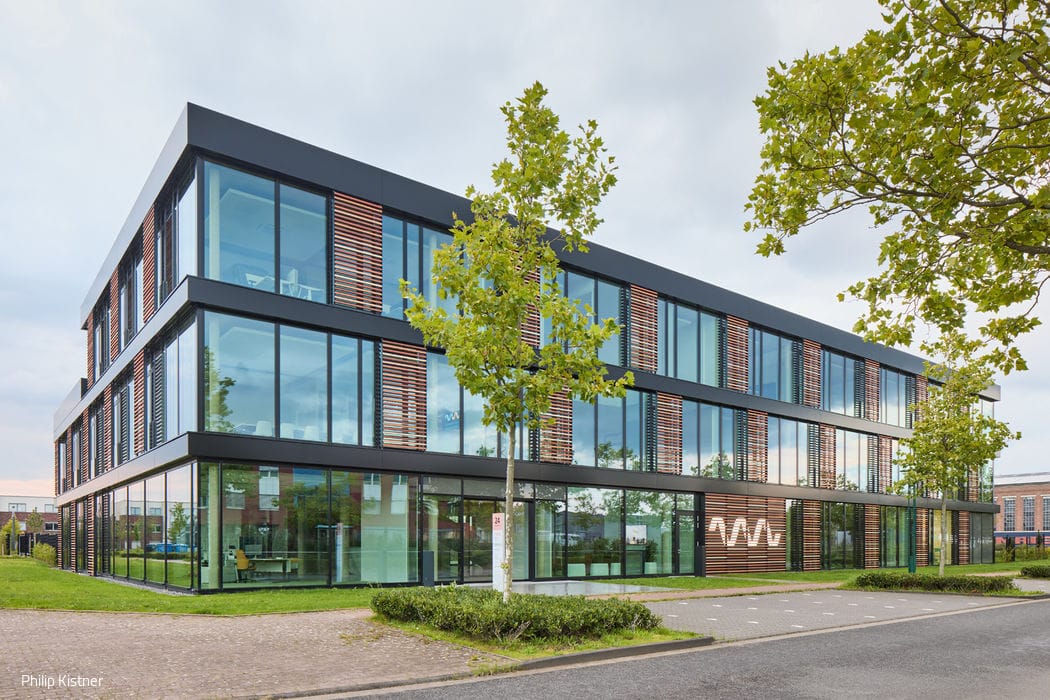
Transparent Lightness
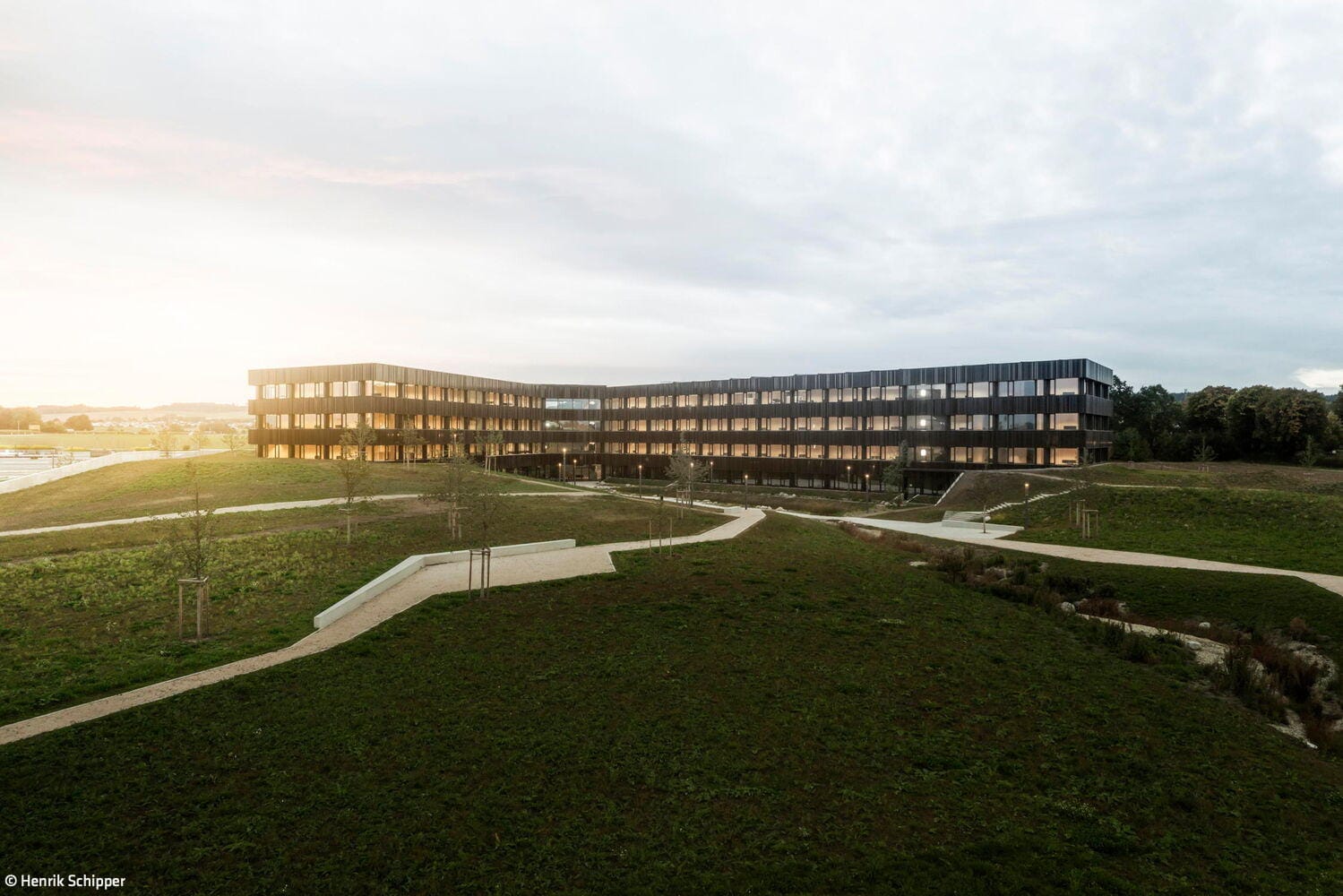
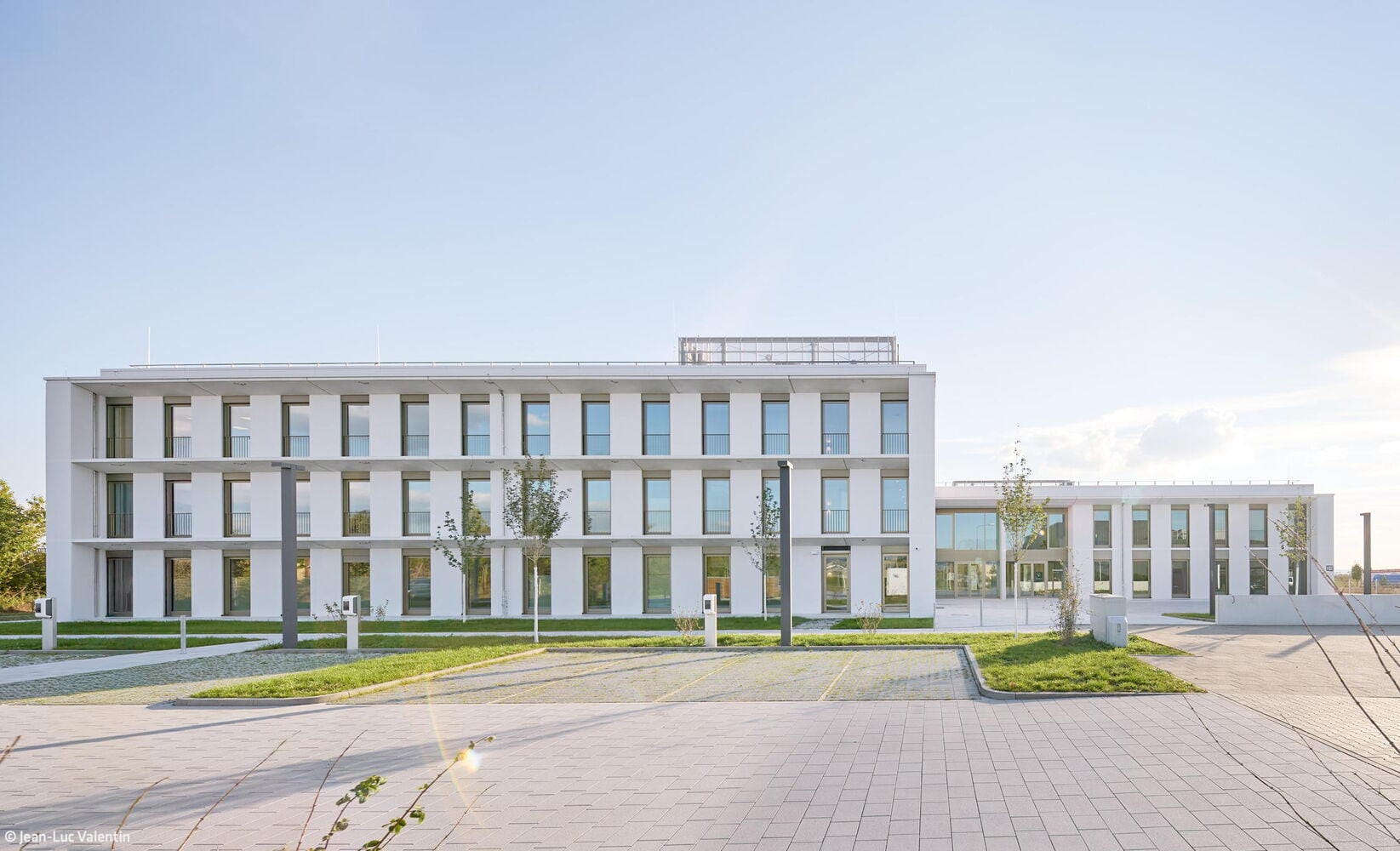
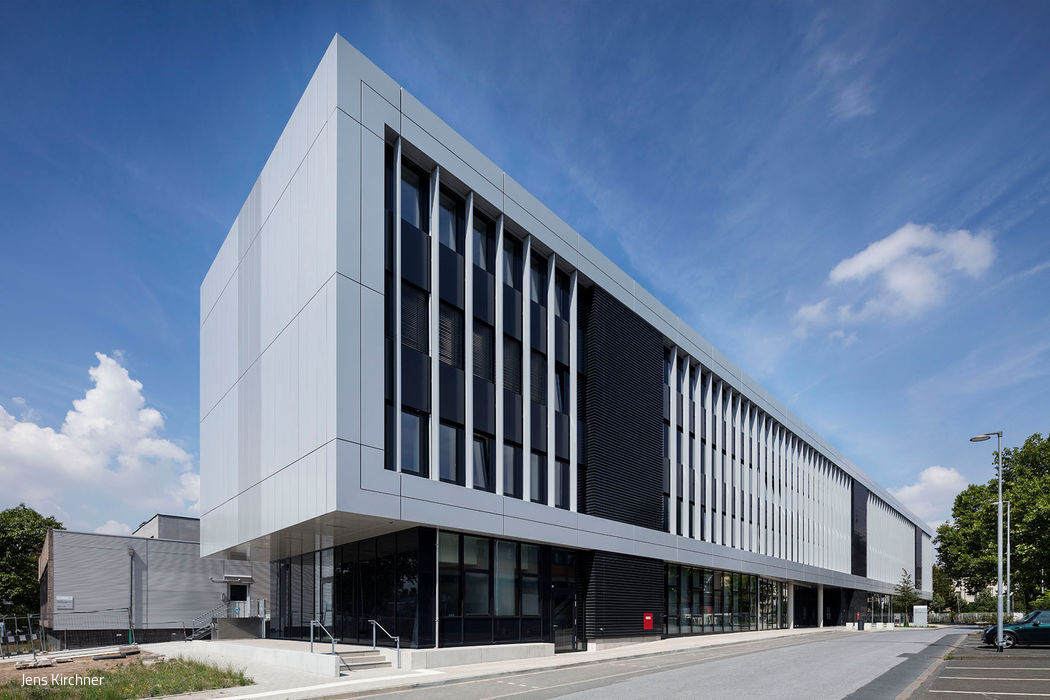
A new energy company headquarters in Willich embodies openness and flexibility.
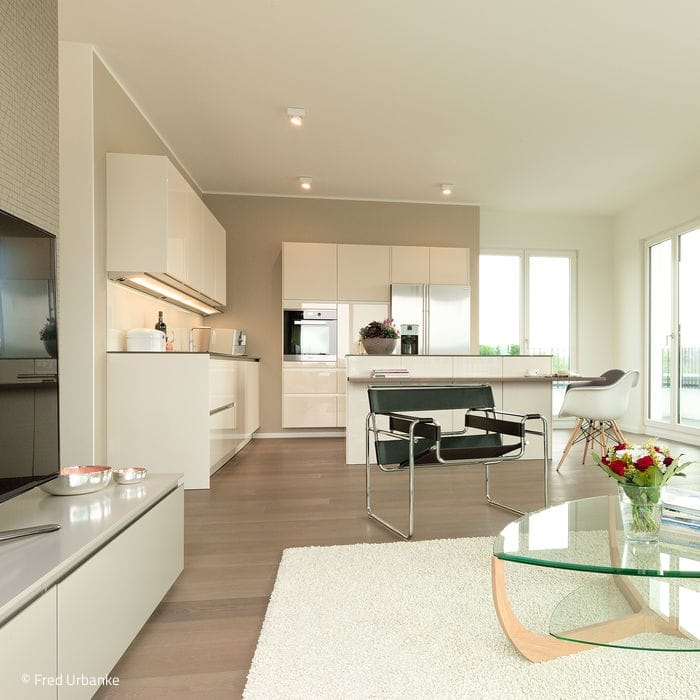
Arrive and Unwind
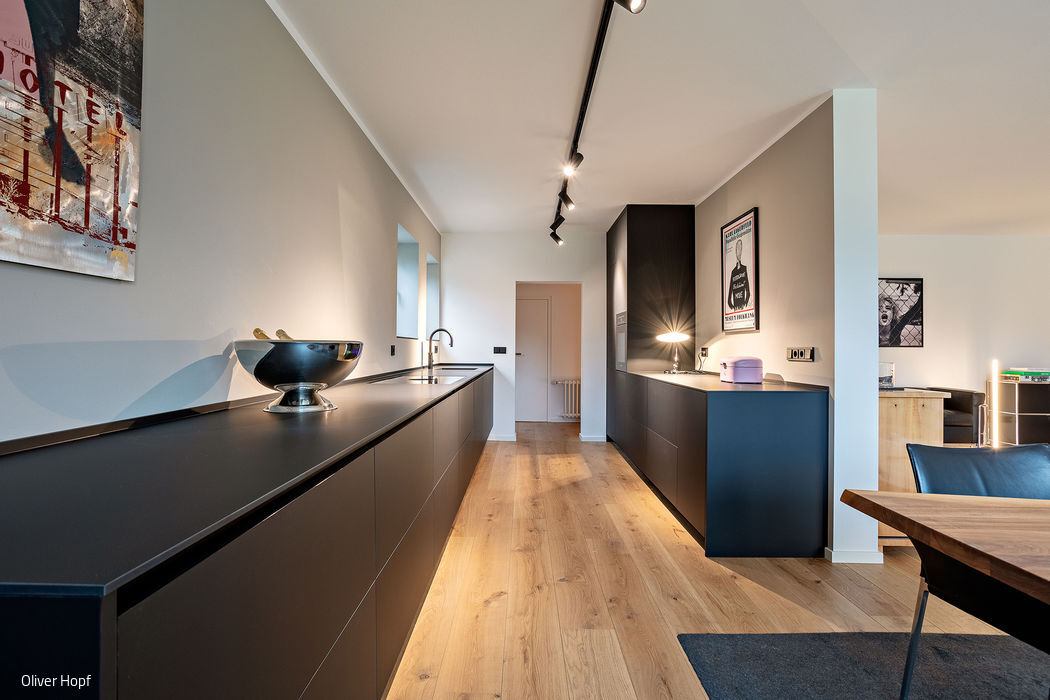
A pied-à-terre designed for openness—whether you're here alone or with family.