


Harmonious, complementary, and adaptable
GGS Lörick gets a new extension building featuring a central assembly hall
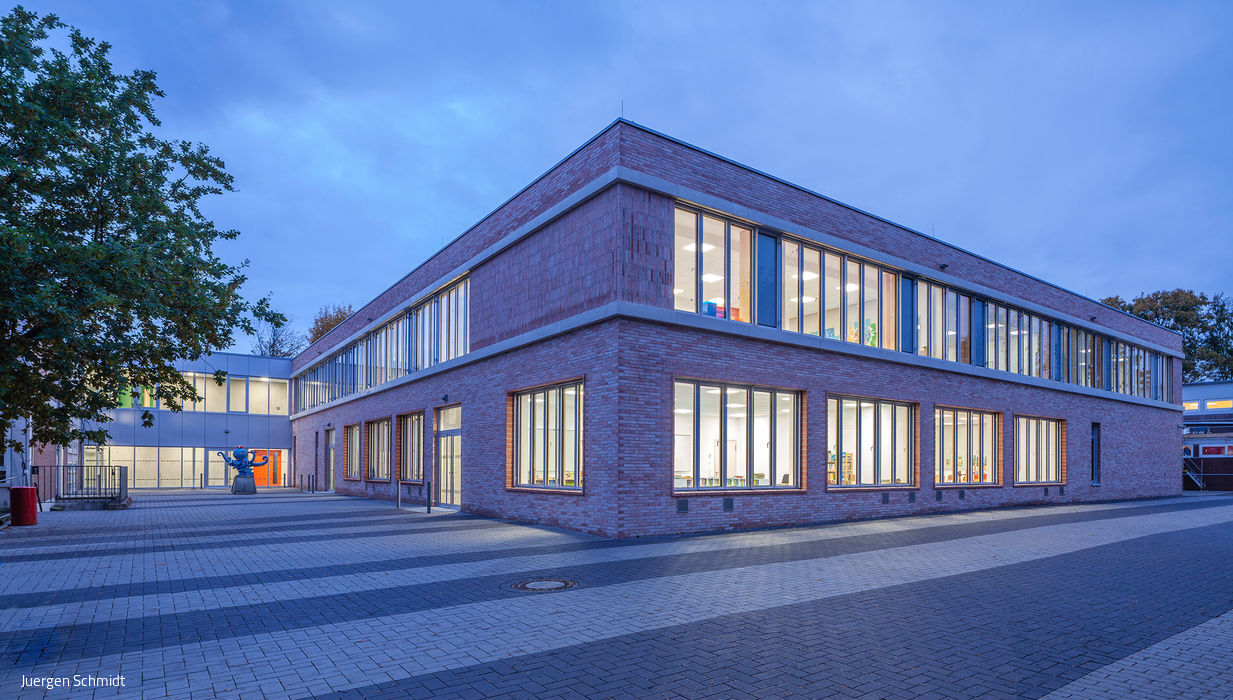
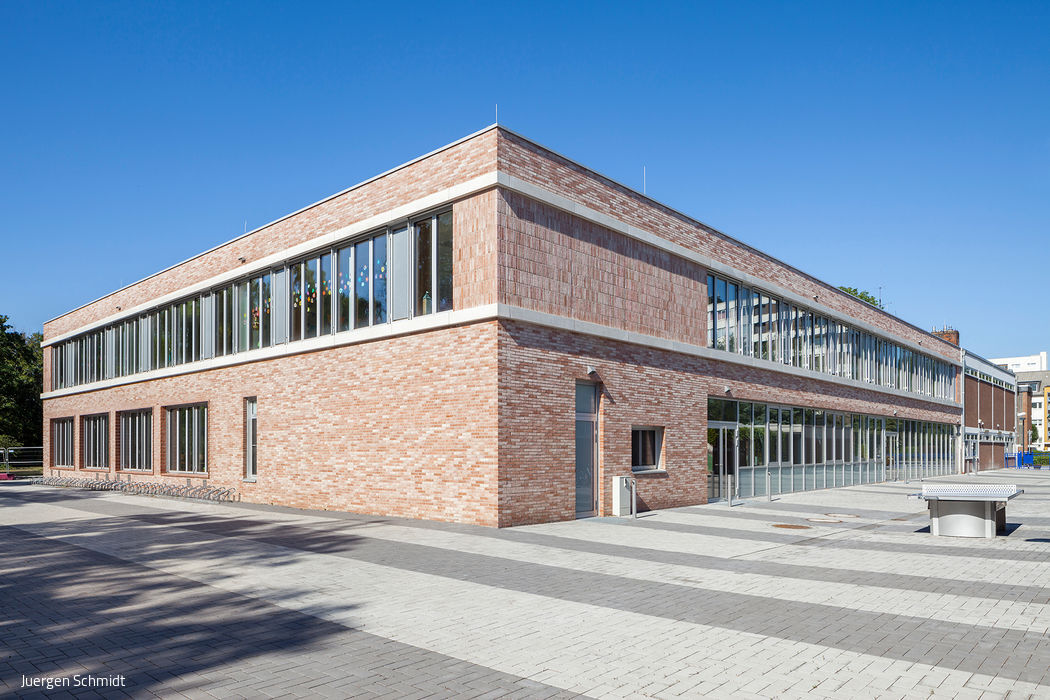
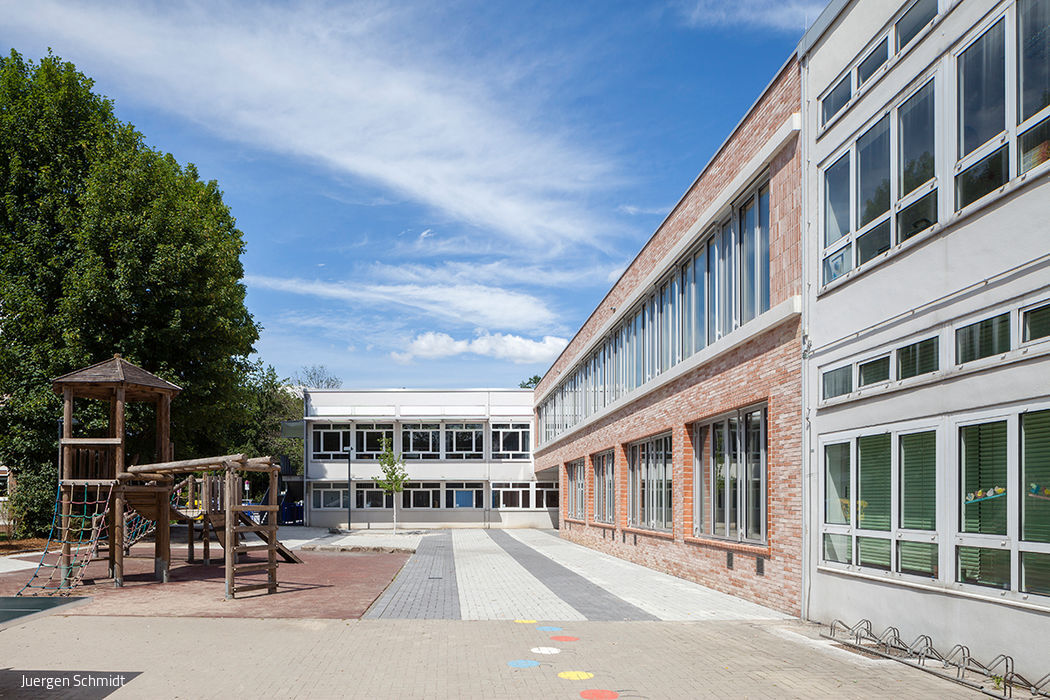
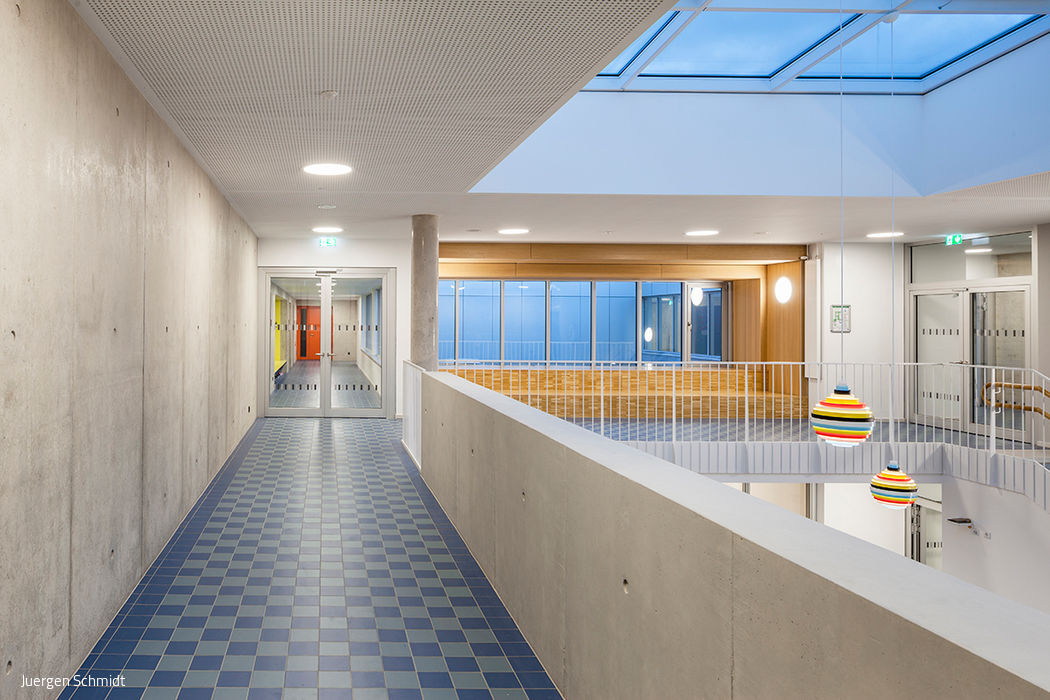
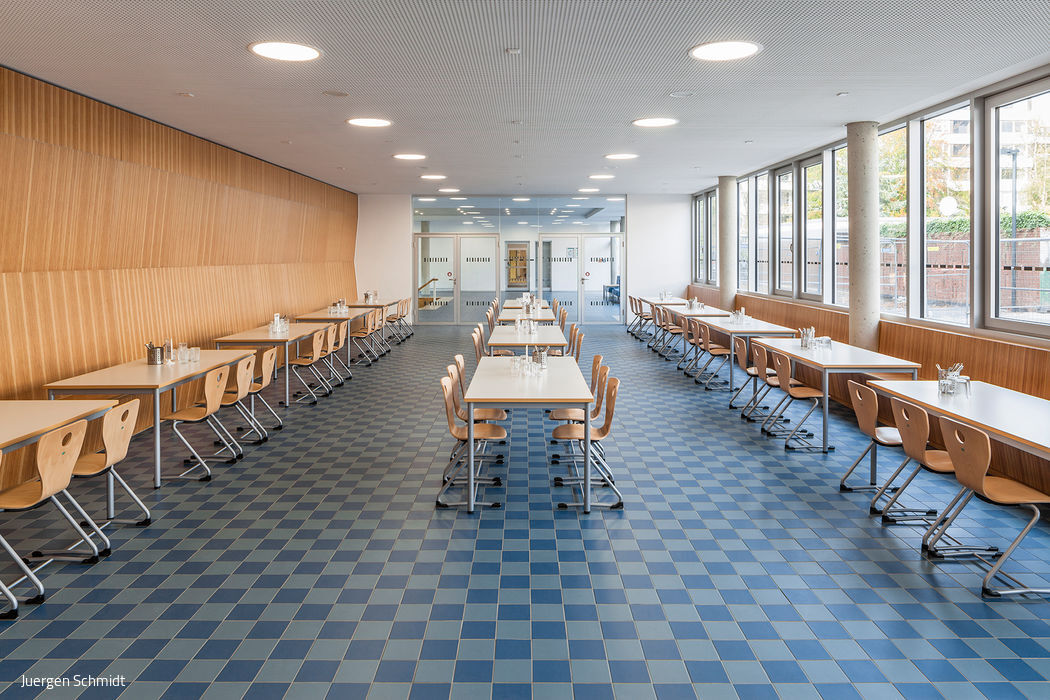
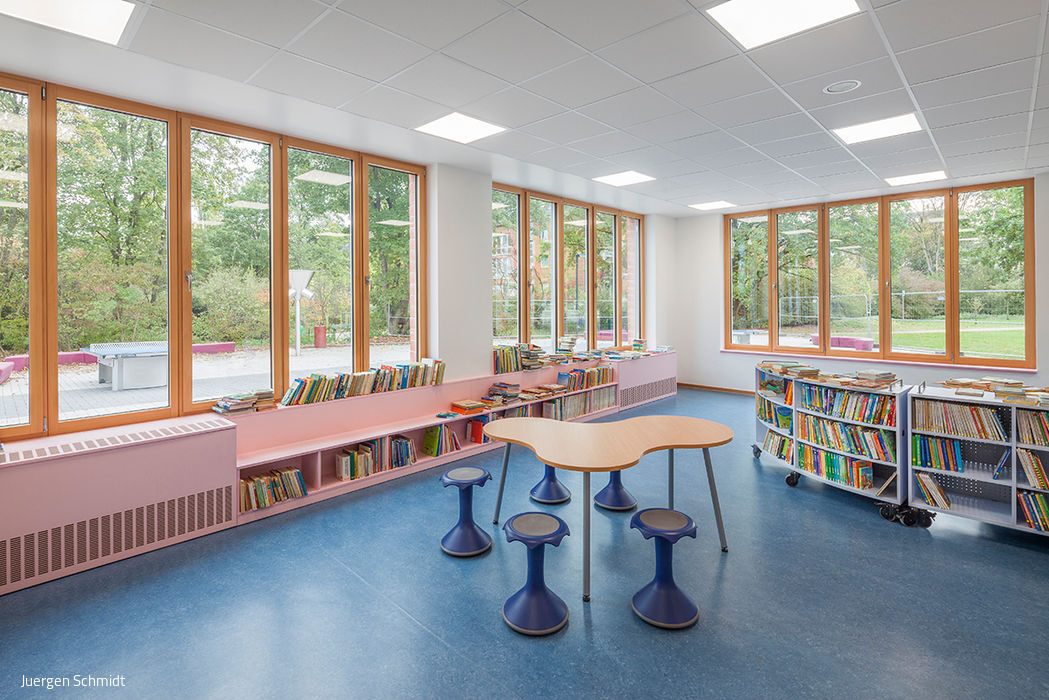
Rising enrollment in left-bank Rhine development areas necessitated expanding the Lörick Community Primary School on Wickrather Straße from two to four classes. The 1960s building complex, typical of its era, comprises multiple one- to two-storey structures linked by open corridors. Bochum-based architects Klein + Neubürger devised a design that respects the existing classroom wing's courtyard concept while seamlessly integrating the new construction into a unified ensemble. Several aging single-storey facilities—the library, break-time restrooms, milk distribution point, and covered walkways—were demolished to make way for the expansion.
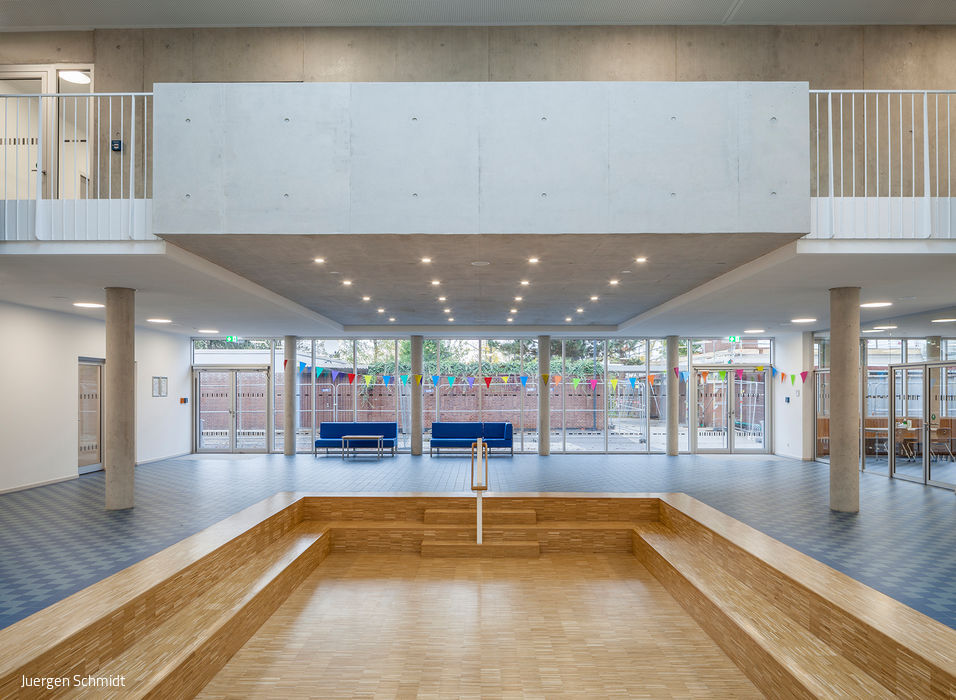
The school is accessed through a central entrance hall in the new wing, from which the canteen and music room branch directly. Folding sliding walls create the flexibility to open these spaces into a unified assembly hall. The entrance hall's open design features an atrium-style tiered seating area, naturally illuminated by skylights extending down to ground level. This hall has become the school's new heart, fostering diverse spatial and visual connections throughout. The ground floor also accommodates the all-day program, library, and multipurpose rooms, each positioned to open directly onto the playground. Upstairs, four of eight classrooms follow the "Classroom Plus" model, arranged around a central airspace and interior courtyard. The remaining four classrooms occupy the existing building, which gained universal accessibility through a new lift in the extension. Solid construction techniques govern the new building's design, with floor heights calibrated to match the existing structure. Public spaces—the assembly hall and canteen—feature expansive glazing, while continuous window bands light the upper floors and integrate decentralised ventilation units. These systems manage all aspects of classroom climate control: ventilation, passive night cooling, and heating. Interior finishes feature coloured tile and linoleum flooring, plastered walls, and exposed concrete accents with tiled cloakroom niches. The existing buildings underwent thoughtful transformation as well: the singing hall in the administration building's upper floor became a staff room with supporting spaces, positioned for direct access to ground-floor administration. Achieving universal accessibility required raising the floor to align with the classroom building's upper level. A central open staircase and upper-floor gallery serve as the school complex's main circulation hub, optimally integrated with the existing stairwells to satisfy fire safety requirements. Inclusive design includes accessible restrooms and shower facilities.
Photography Credits:
Jürgen Schmidt
www.juergen-schmidt-fotografie.de
(Published in CUBE Düsseldorf 04|20)

The Dynamic Eight
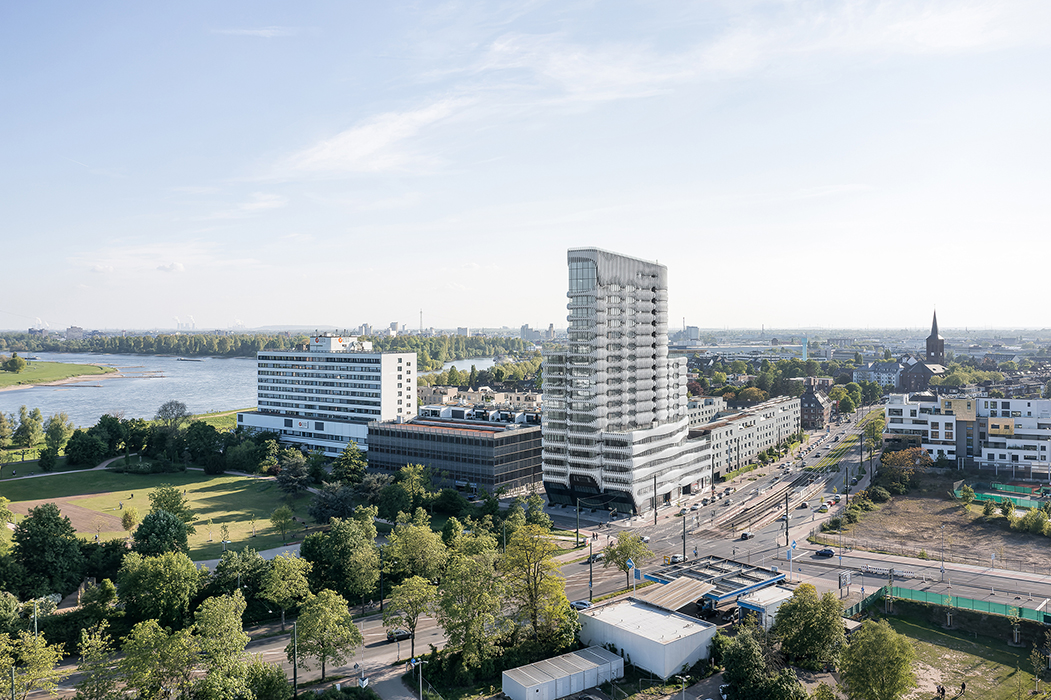
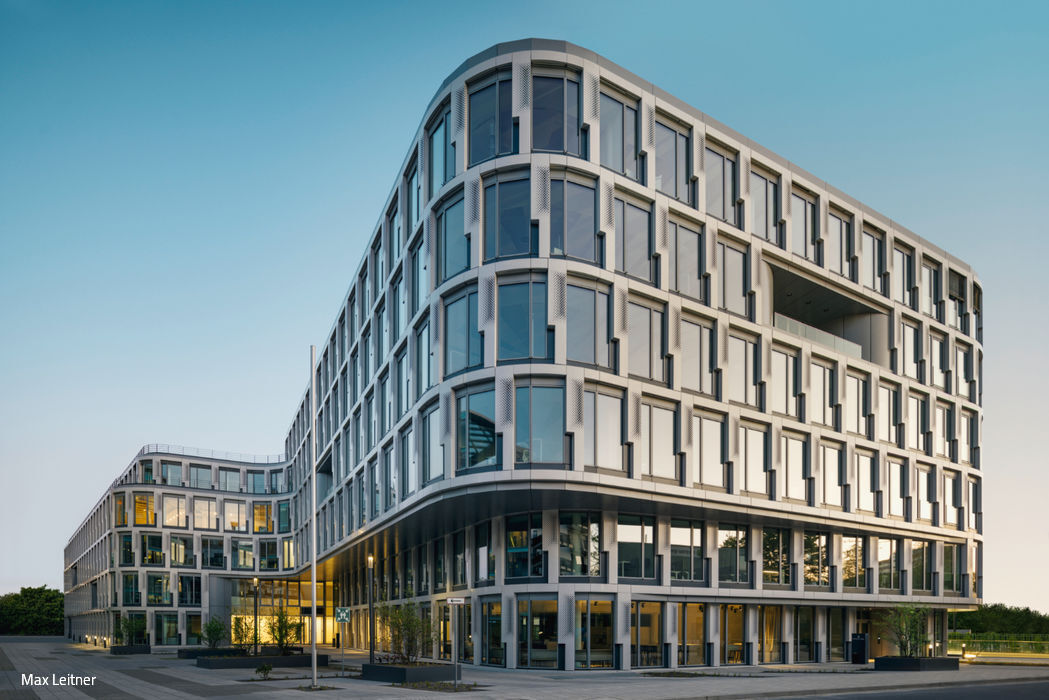
The building, designed for Hamburg-based Becken Development, draws its form from the urban context.
Blue-Green Entrance
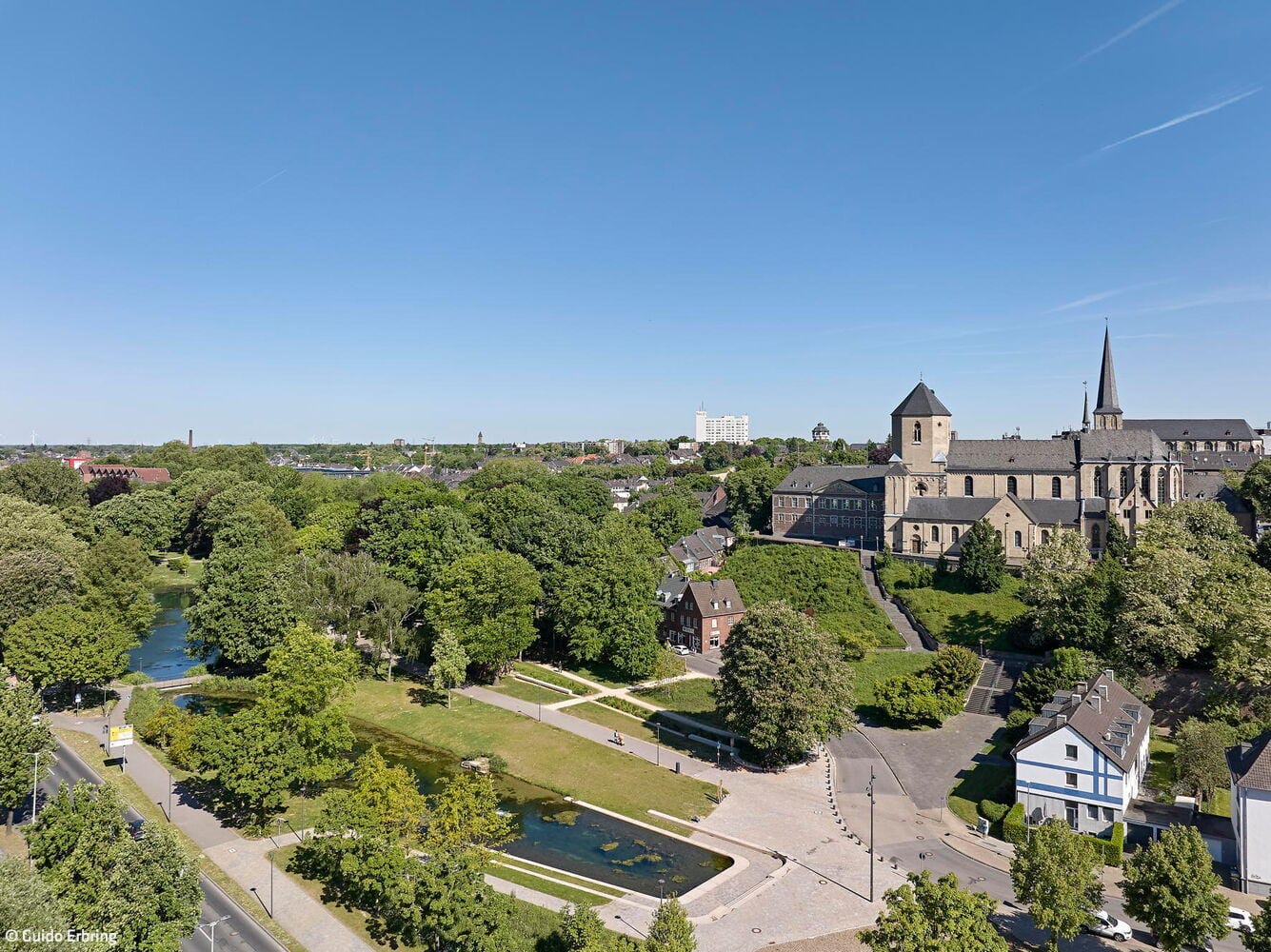
The Geropark in Mönchengladbach has undergone a comprehensive transformation, combining revitalization with strategic expansion.
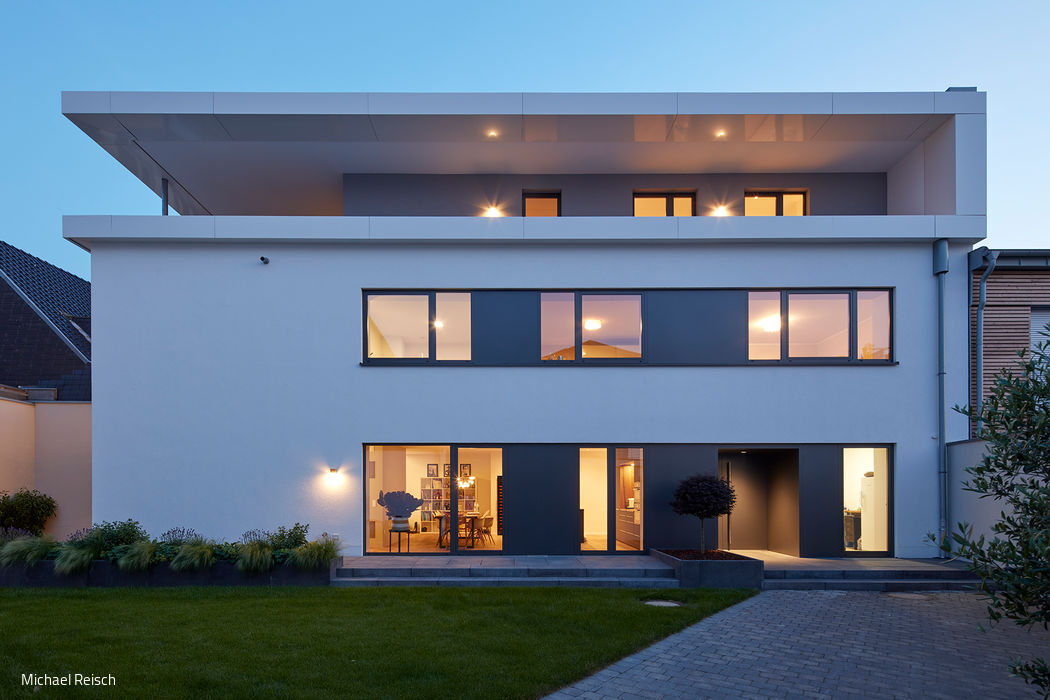
Transformation in the Backyard
The old malt house of a former brewery is being transformed into a spacious residential oasis.
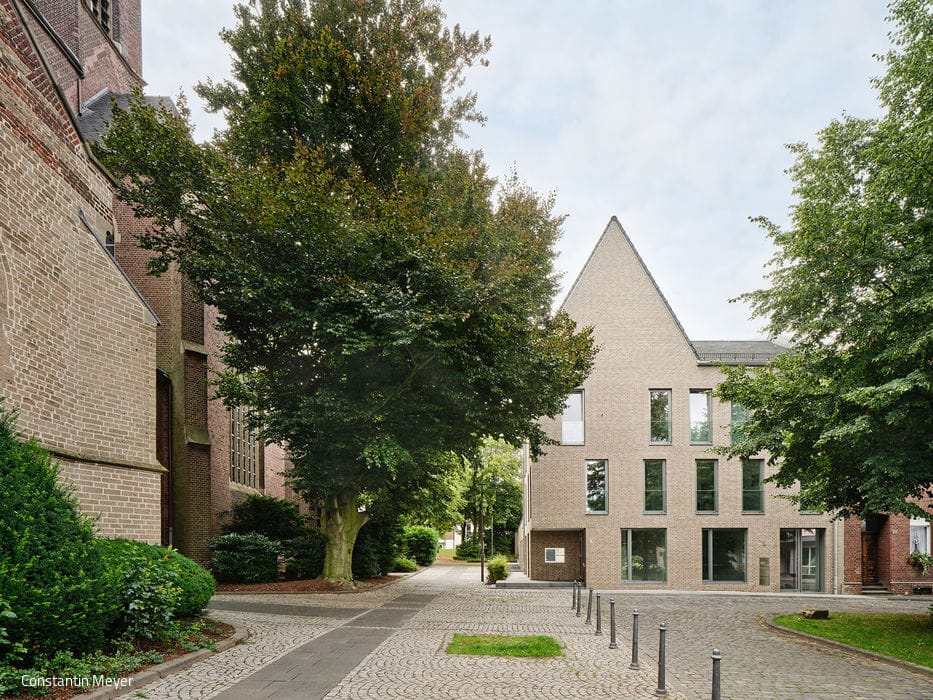
Thoughtfully Integrated
A multifunctional community centre that demonstrates refined urban design sensibility