


Refined Simplicity
A 1960s residence in Büttgen undergoes sustainable renovation and architectural reimagining
For decades, the prevailing philosophy among builders—particularly for post-war single and two-family homes—was straightforward: demolish and rebuild rather than renovate and adapt. Yet residential construction has undergone a fundamental shift in recent years. After all, homes built between the 1920s and 1970s represent roughly 20 percent of Germany's total housing stock. When these buildings can be thoughtfully renovated to meet contemporary living standards, the benefits are clear: vacant properties are reactivated, unnecessary demolition is avoided, and an attractive alternative to sprawling new development on undeveloped land emerges.
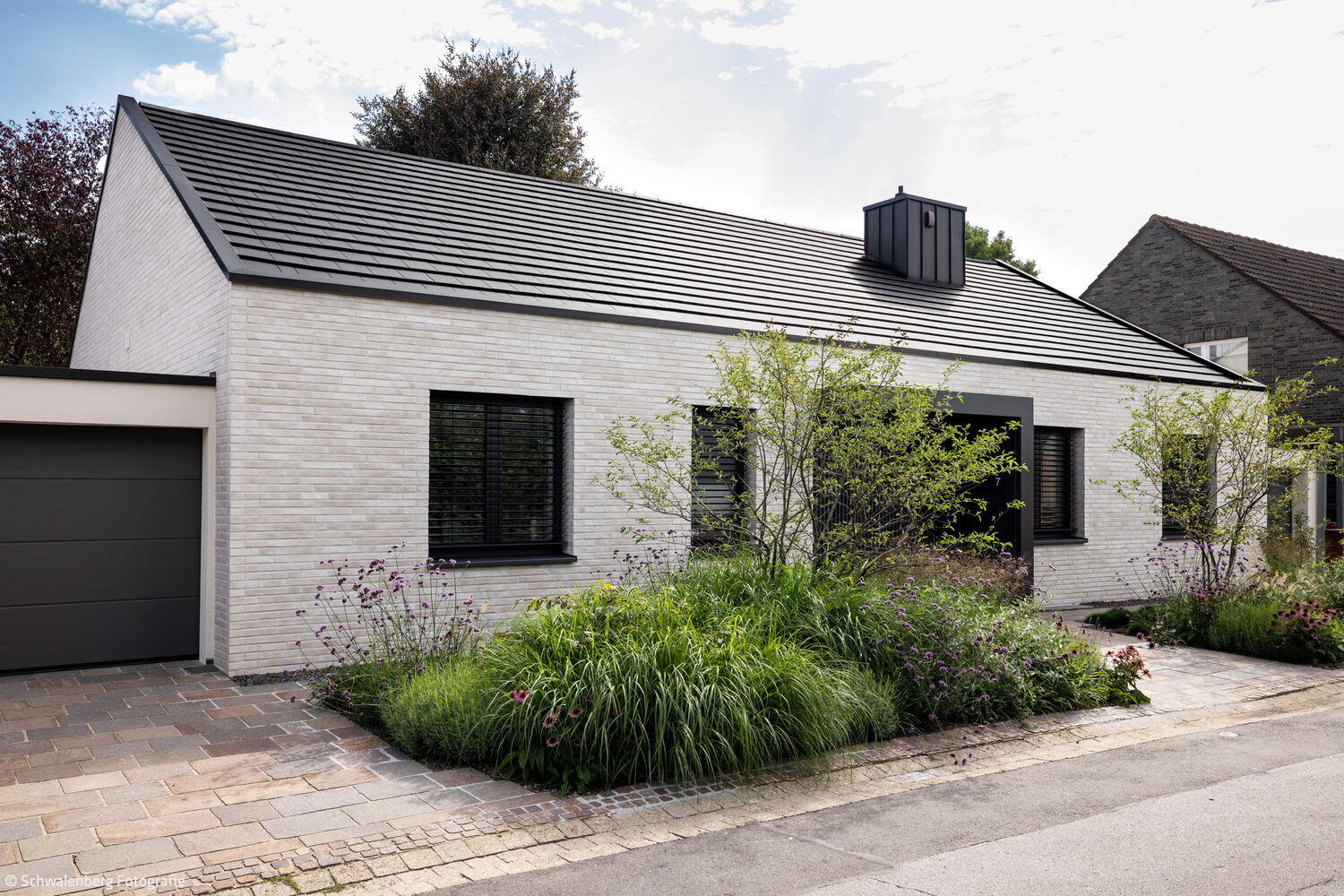
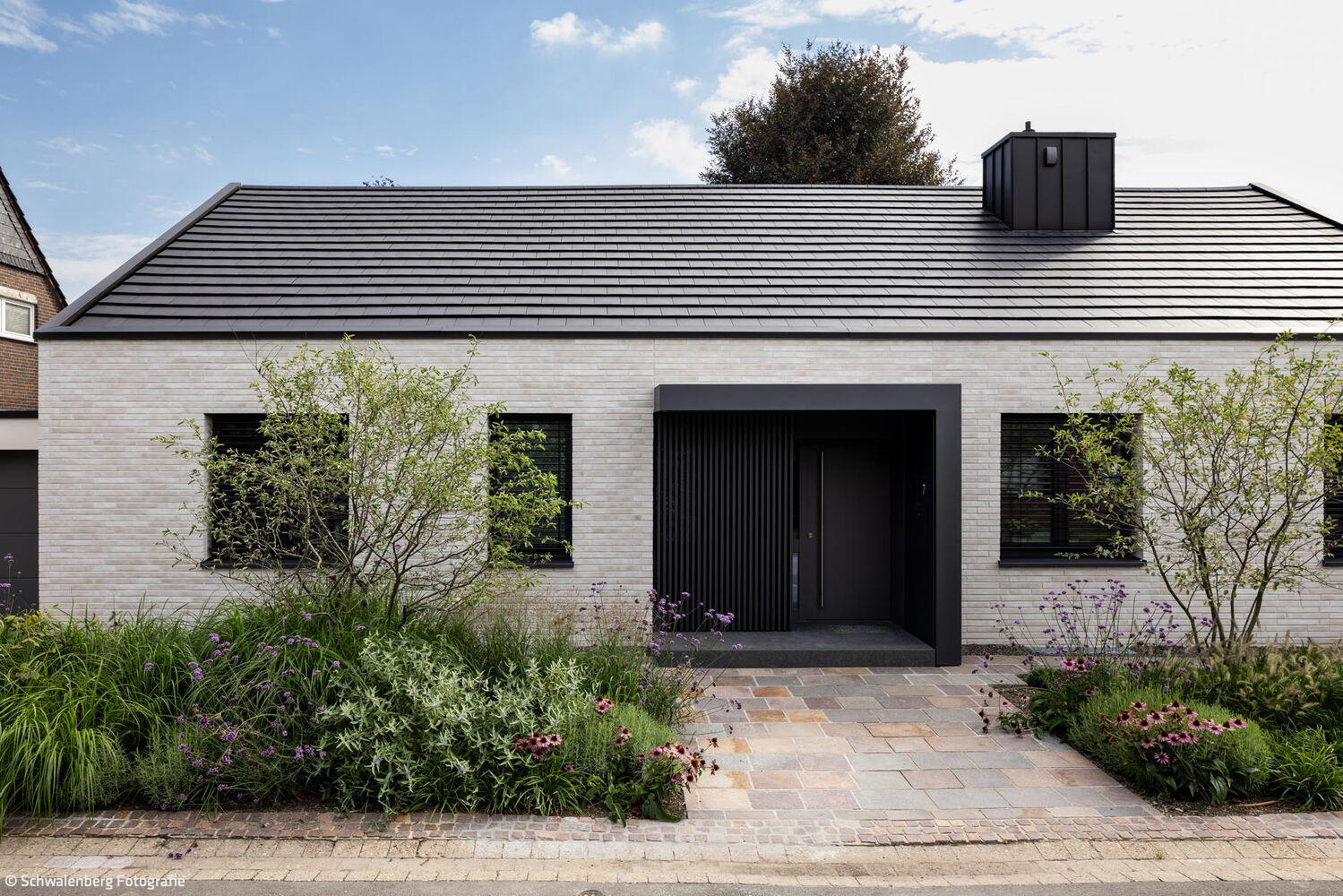
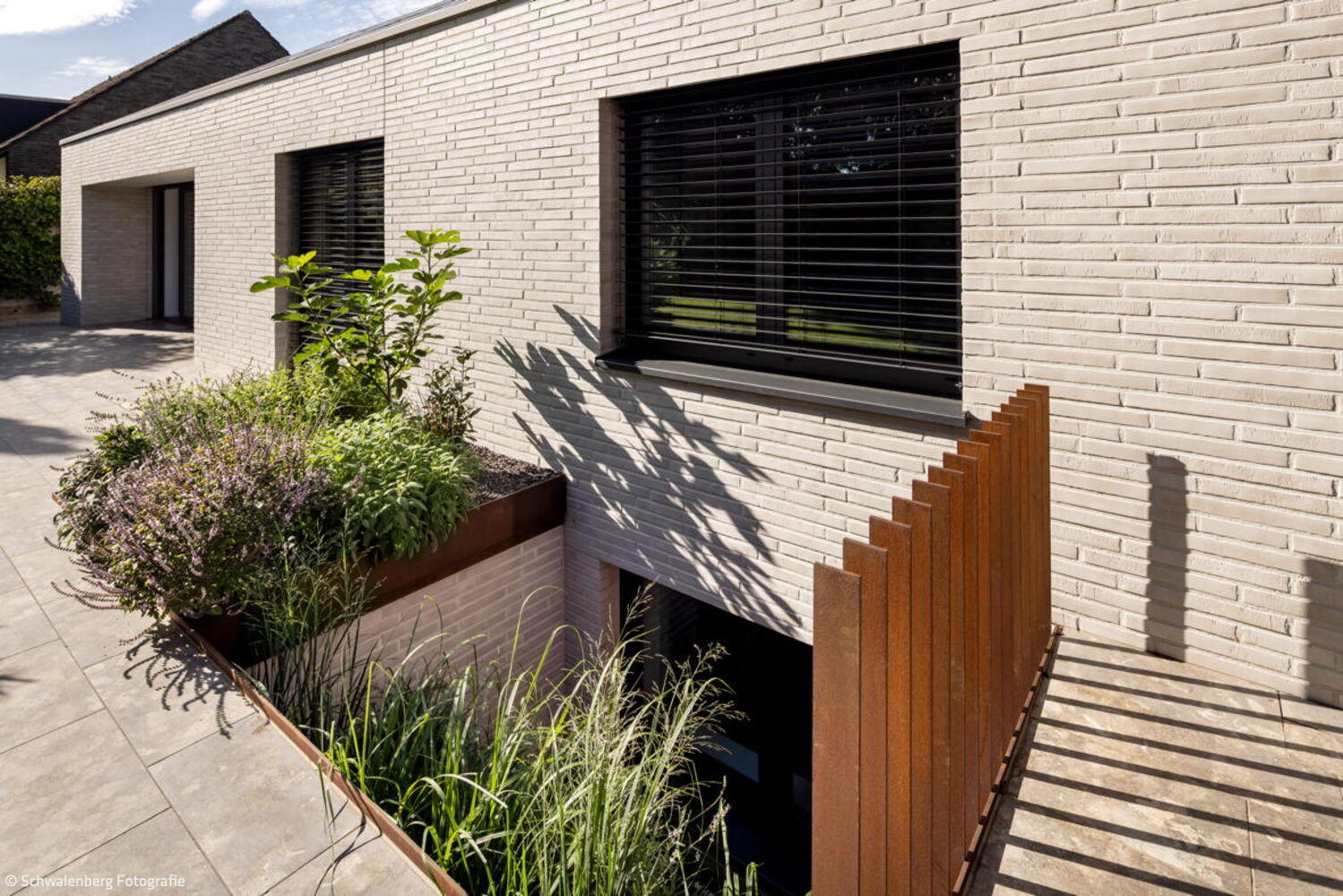
A compelling case study is the renovation of a 1960s home in Büttgen, completed by Düsseldorf-based Döring Dahmen Joeressen Architects. Beyond addressing energy efficiency, the project presented an opportunity to give the building a contemporary visual identity. The roof conversion proved particularly transformative: the era-typical hipped roof was replaced with a gabled form and flat clay tiles, while the overhang was simultaneously reduced. These moves establish a refined, modern appearance while preserving the home's visual dialogue with neighboring houses throughout the settlement. The existing window openings were enlarged and outfitted with premium powder-coated aluminum frames in a sophisticated dark finish—a striking contrast to the light, newly insulated masonry façade with its distinctive elongated brick pattern. Beyond these primary interventions, a carefully curated palette of enduring, timeless materials defines the exterior: Corten steel and locally sourced natural stone were introduced in the newly created garden-facing lightwell, infusing the basement sauna and fitness suite with natural daylight.
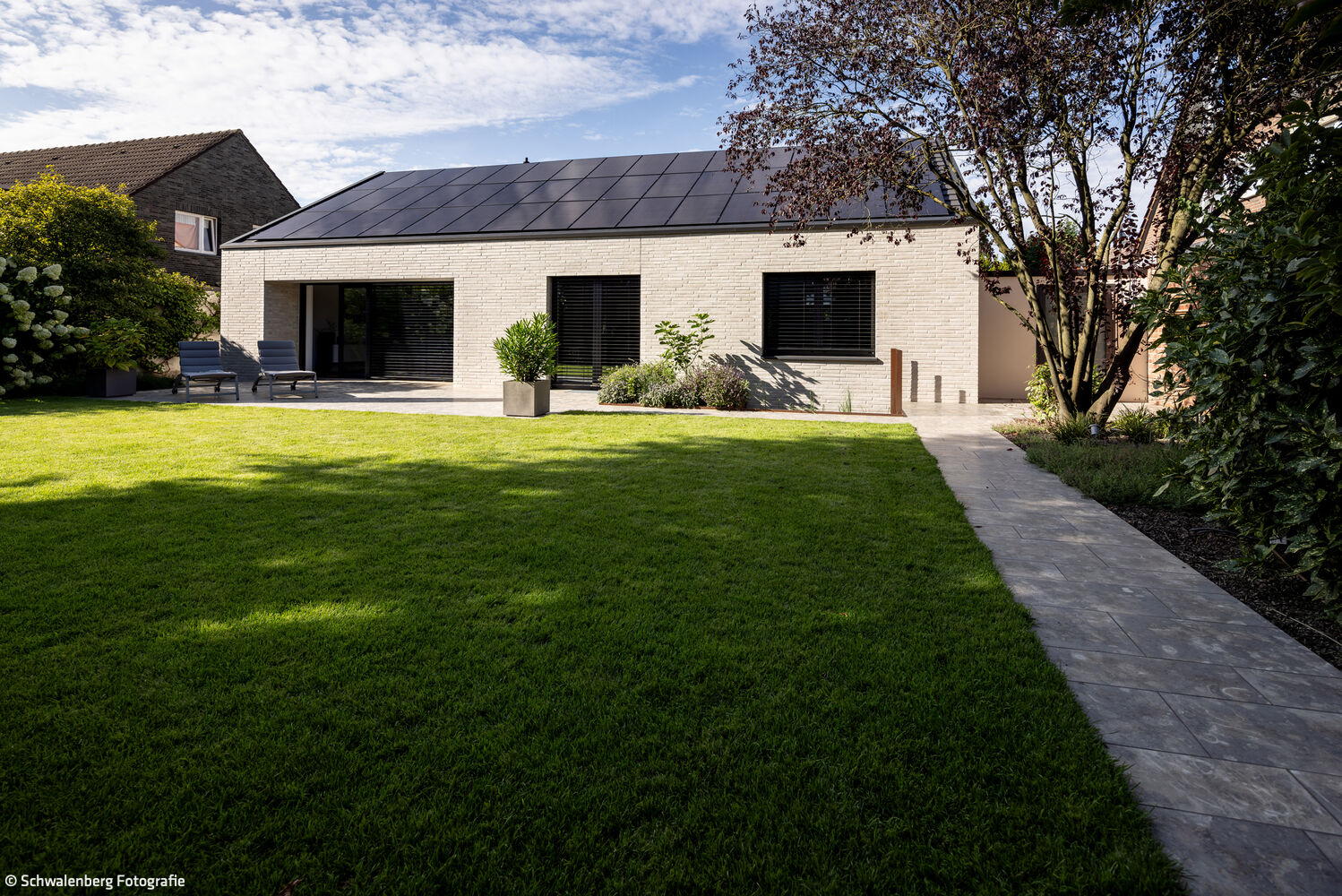
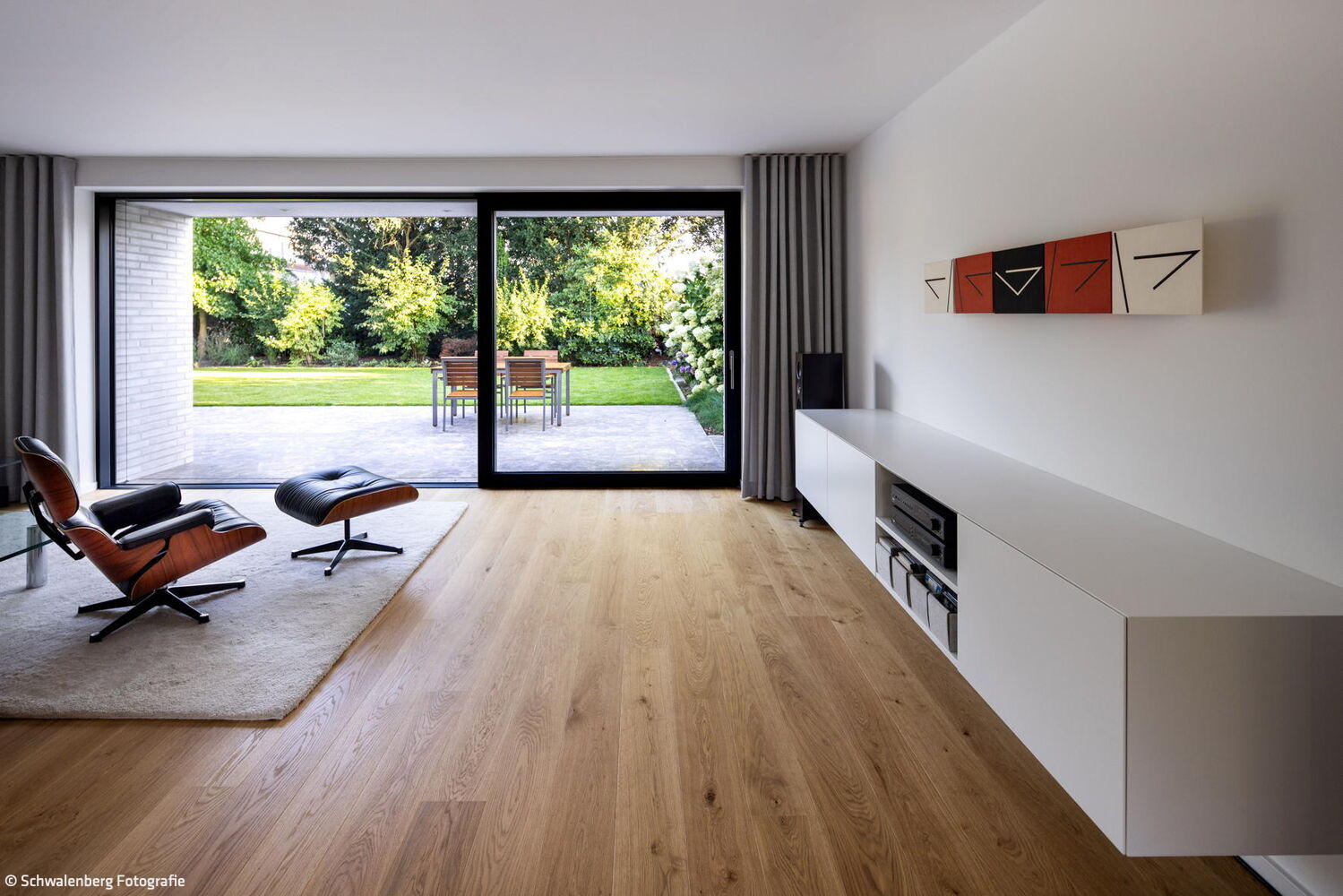
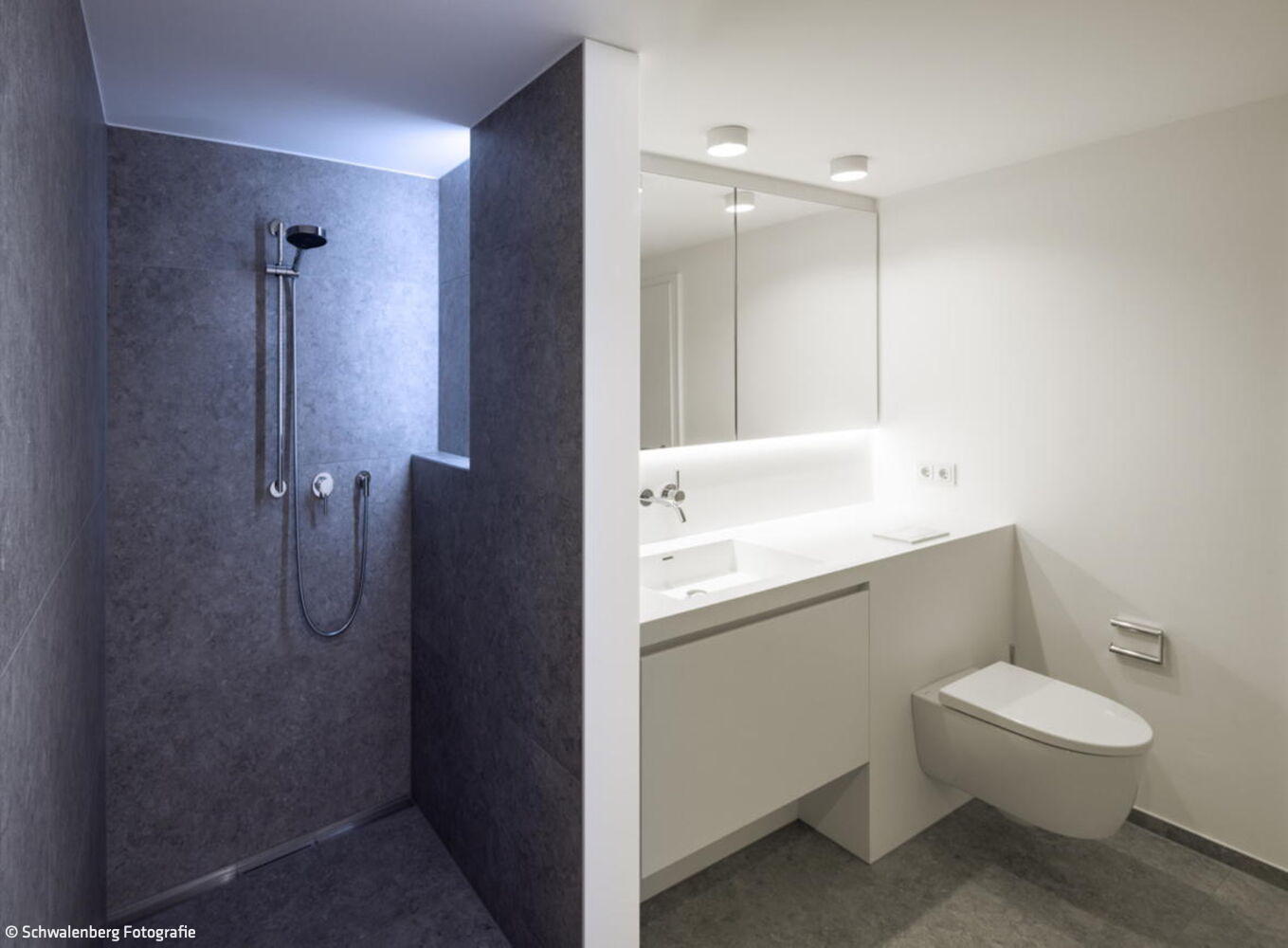
The enlarged window openings flood the interior with light, creating bright, welcoming living spaces finished with light oak flooring throughout and basalt tile in the bathrooms. Each built-in element was custom-crafted by a skilled carpenter in close collaboration with the homeowners and the design team. Energy performance is handled elegantly: a new heat pump operates primarily through a roof-mounted photovoltaic system paired with battery storage. Outside, the established garden—respecting its mature trees and existing character—was enhanced through thoughtful landscaping improvements without altering its fundamental layout. A single garage was modestly extended to shelter delicate plants and provide winter quarters for the vintage beach chair.
www.ddj.de
Photos:
Schwalenberg Photography
www.schwalenberg-fotografie.com
(Featured in CUBE Düsseldorf 02|25)
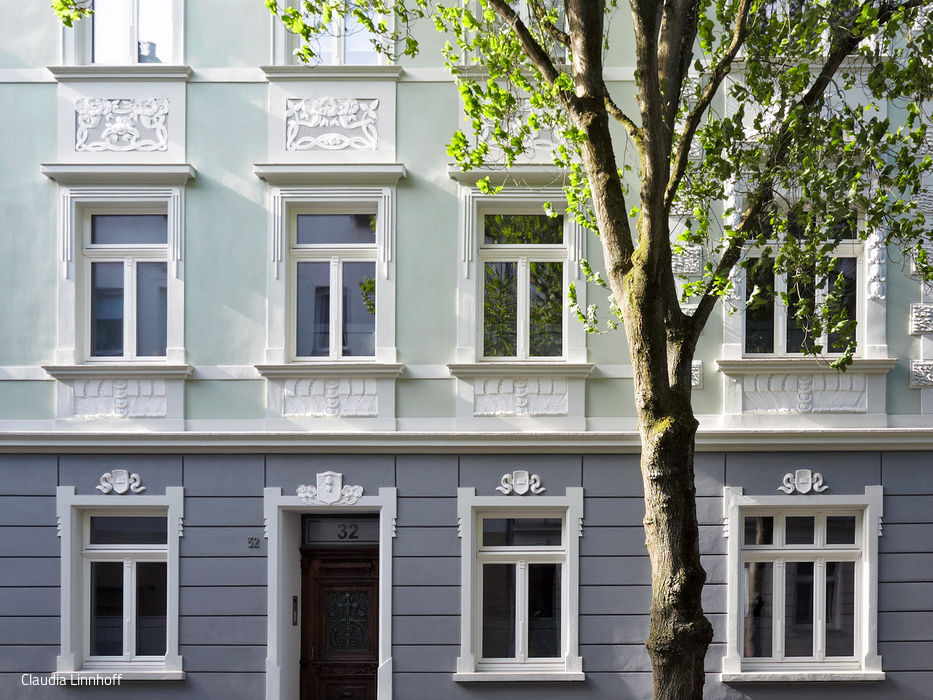
A Labor of Love
How precision, care, and creative vision transform a Wilhelminian mansion into vibrant new life
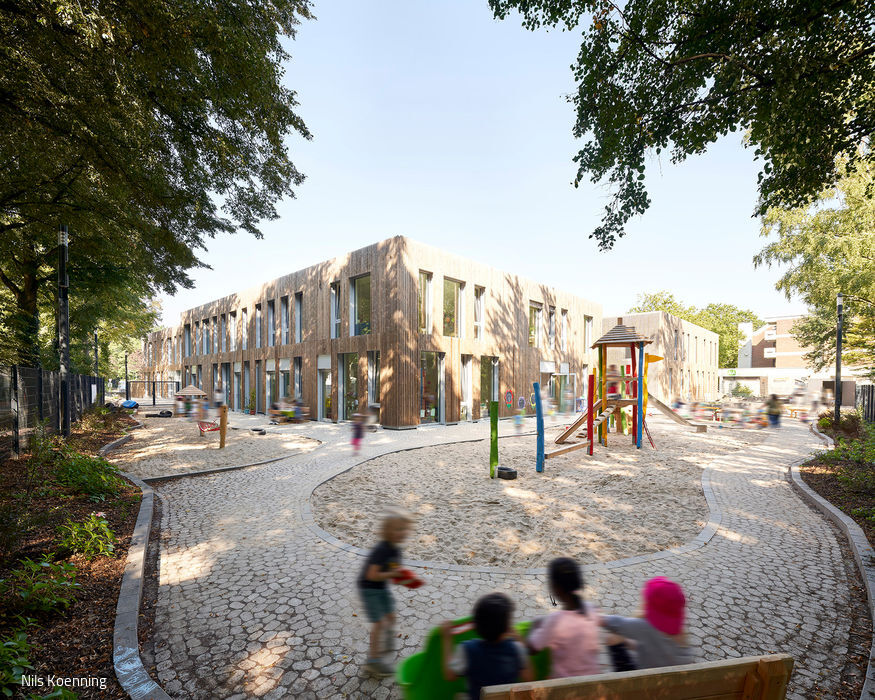
Built Participation
The new SOS Children's Village in Garath draws its strength from shared community spaces.

Recovery Beneath the Linden Tree
Grafenberg's LVR-Klinikum Unveils a New Psychiatric Centre
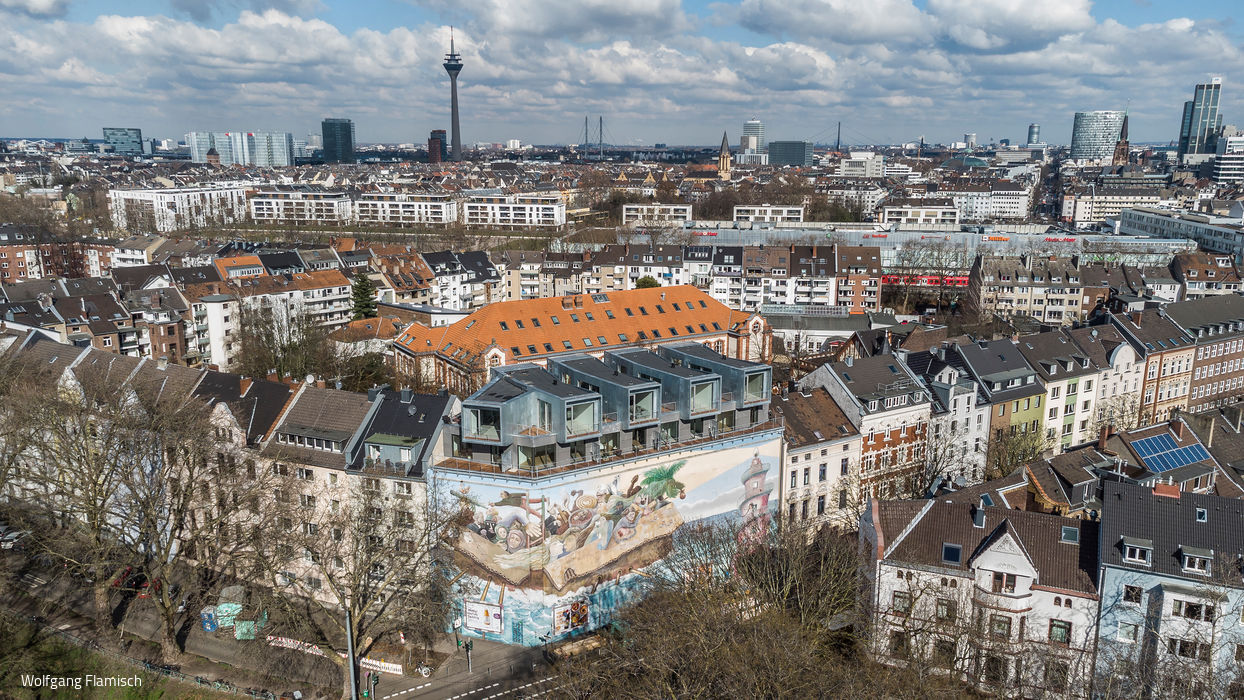
Transformative Roofscape
Through strategic expansion, the Bilker Bunker becomes one of the city's most distinctive residential destinations.