


Advancing Health
A One-of-a-Kind Research Facility: The DIfE's Groundbreaking New Building
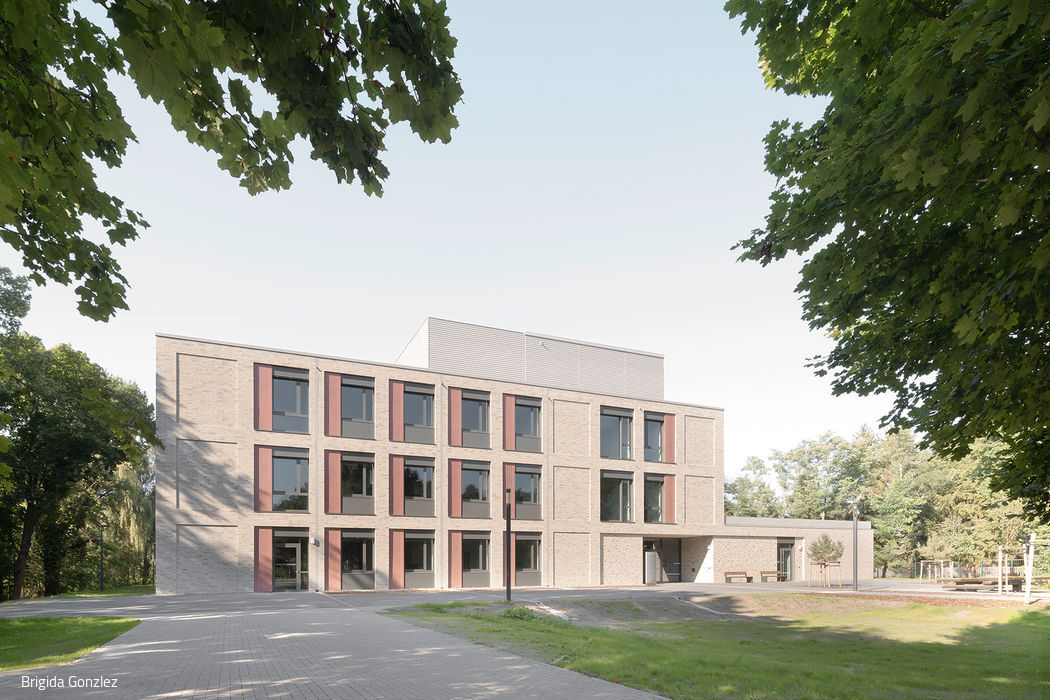

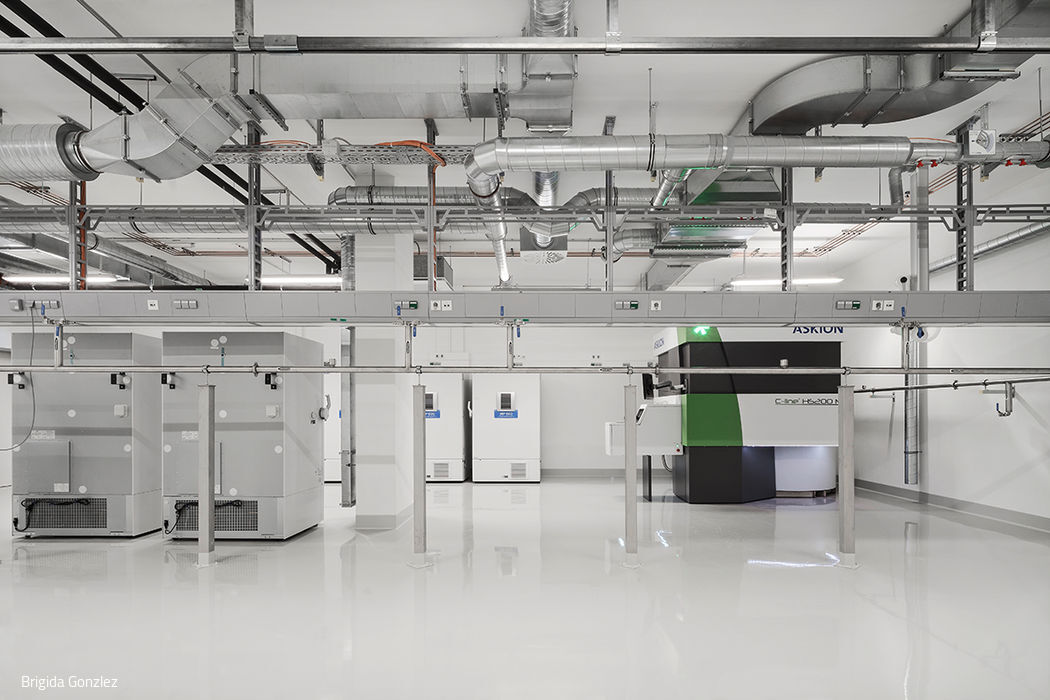


Since the 1950s, Bergholz-Rehbrücke—a small community near Potsdam—has been a center for research into the relationship between nutrition and health. The German Institute of Human Nutrition (DIfE) and its campus occupy a central position in this residential neighborhood, their multiple buildings and mature trees anchoring the institute within the single-family home landscape.
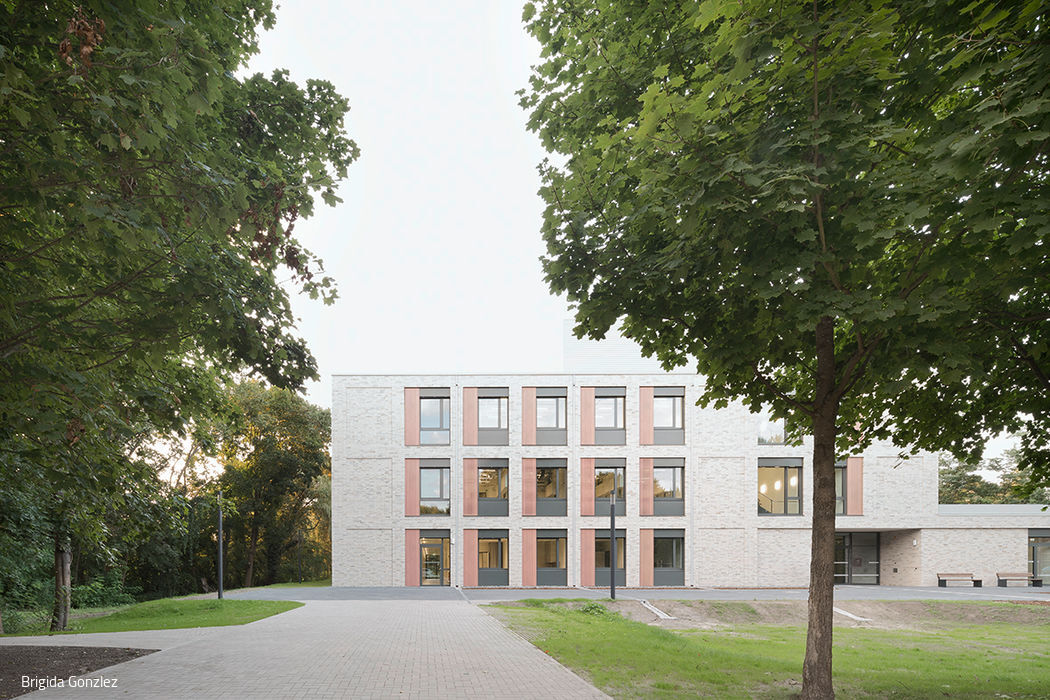
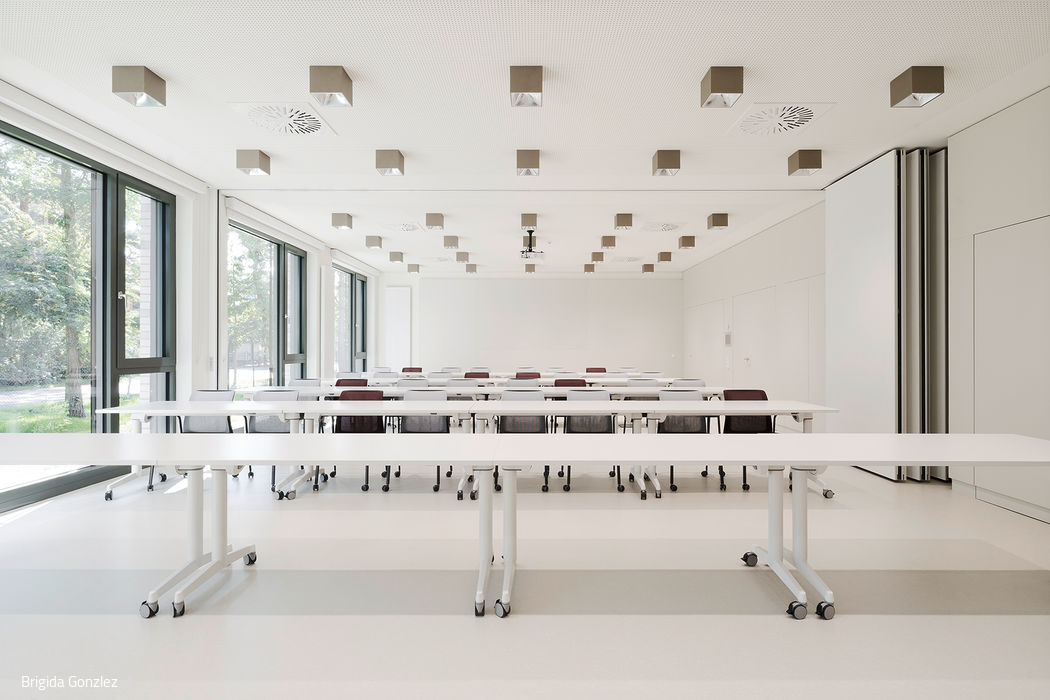
Opened in September 2021, this new building consolidates previously dispersed departments and streamlines the institute's operations. Named after Nobel laureate Gerty Cori, the structure stands as a distinctive addition to the existing campus. As a uniquely comprehensive research facility in Germany, the DIfE combines experimental basic research with clinical and epidemiological investigation. The new building's spatial organization deliberately bridges scientific research and medical practice. At its core is a human study center—complete with examination rooms, primary laboratory, and data management—serving clinical research needs. A biomaterial bank handles sample preparation and archiving, while a dedicated experimental wing houses chemical and molecular biological analysis capabilities. Administrative offices and a multipurpose commons for seminars and conferences round out the program. The ground-floor placement of the examination center, seminar spaces, and biobank necessitated expanded basement-level footprint. To accommodate this, a single-story wing extends from the main three-story structure, accessed through the same central entrance. This extension houses the conference facilities, which can operate independently of research activities when needed.
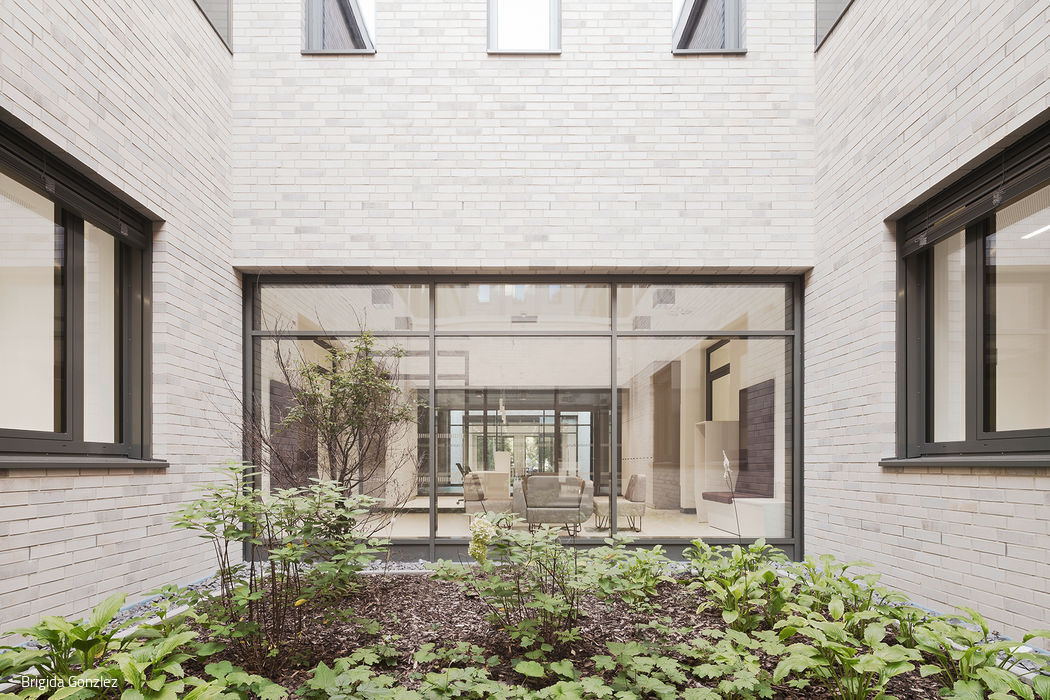
How does nutrition shape longevity and health? What drives obesity and its frequent companion, type 2 diabetes? How do physiological and psychological factors shape our eating behavior? The DIfE's researchers pursue answers to these and related questions. For study participants to feel secure and engage willingly in research, the institute and its building must project both professionalism and trustworthiness. Public-facing areas employ a warm, inviting color palette. Green courtyards punctuate the interior, creating visual relief while enhancing wayfinding.
The exterior forecourt, furnished with welcoming seating, greets scientists and visitors alike. Through its distinctive yellow-grey clinker brick—characteristic of Brandenburg—and carefully proportioned windows, the new building echoes the existing institute structures while complementing the residential character of the surrounding neighborhood.
Photography:
Brigida González
www.brigidagonzalez.de
(Featured in CUBE Berlin 01|24)
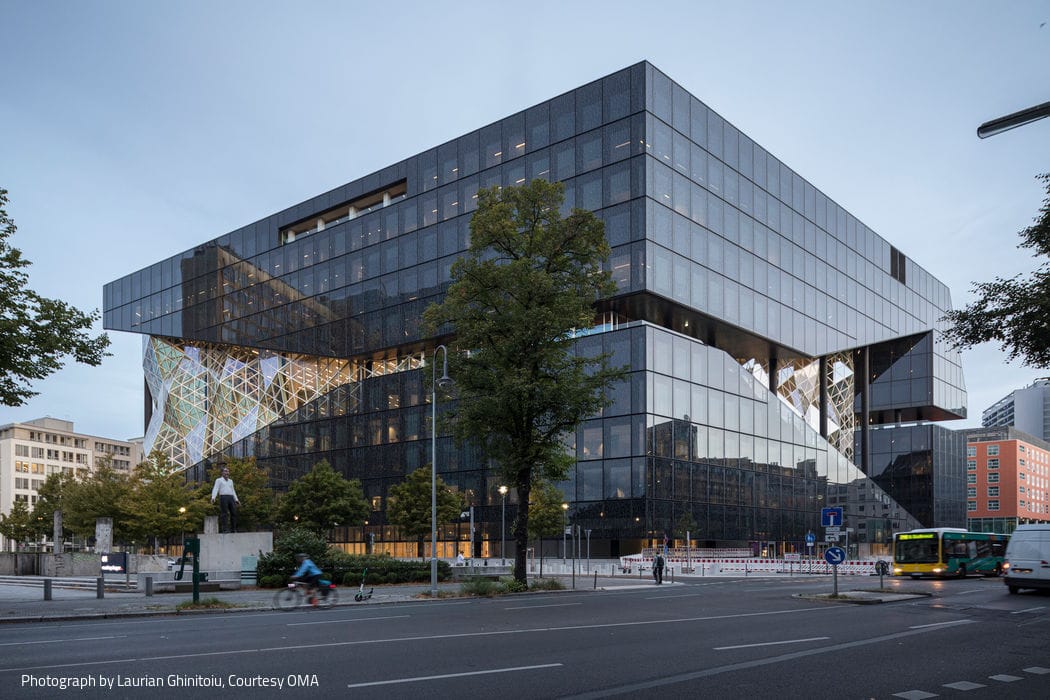

Orankesee: Living Reimagined
Thoughtful Densification: Four Point Towers Transform Weissensee
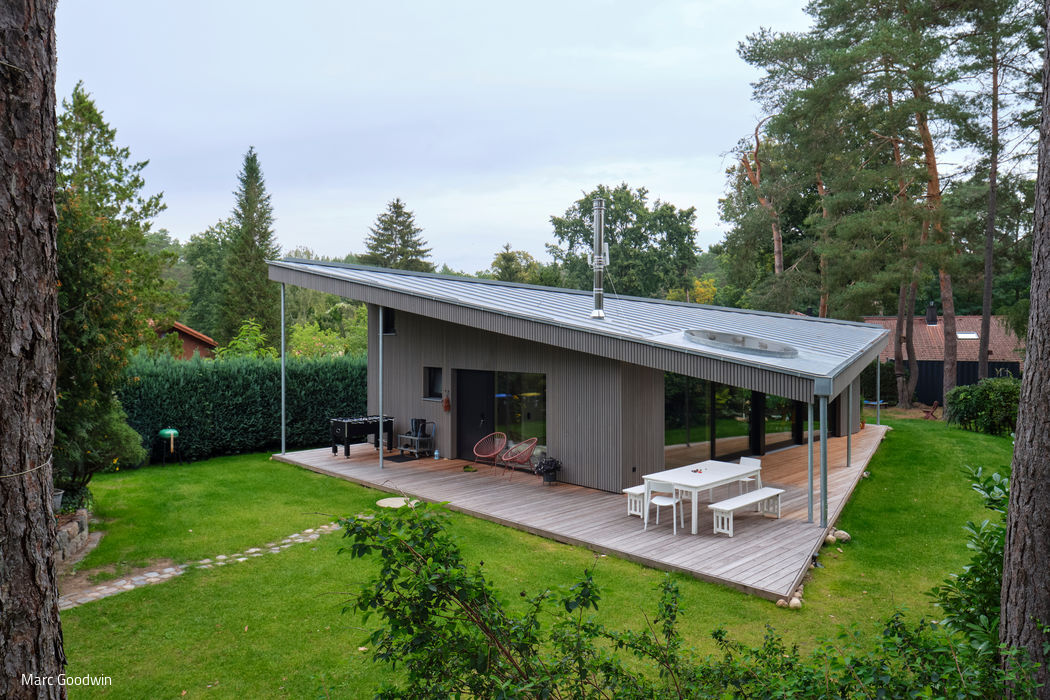
Full-time or part-time living
A Place of One's Own—At Last
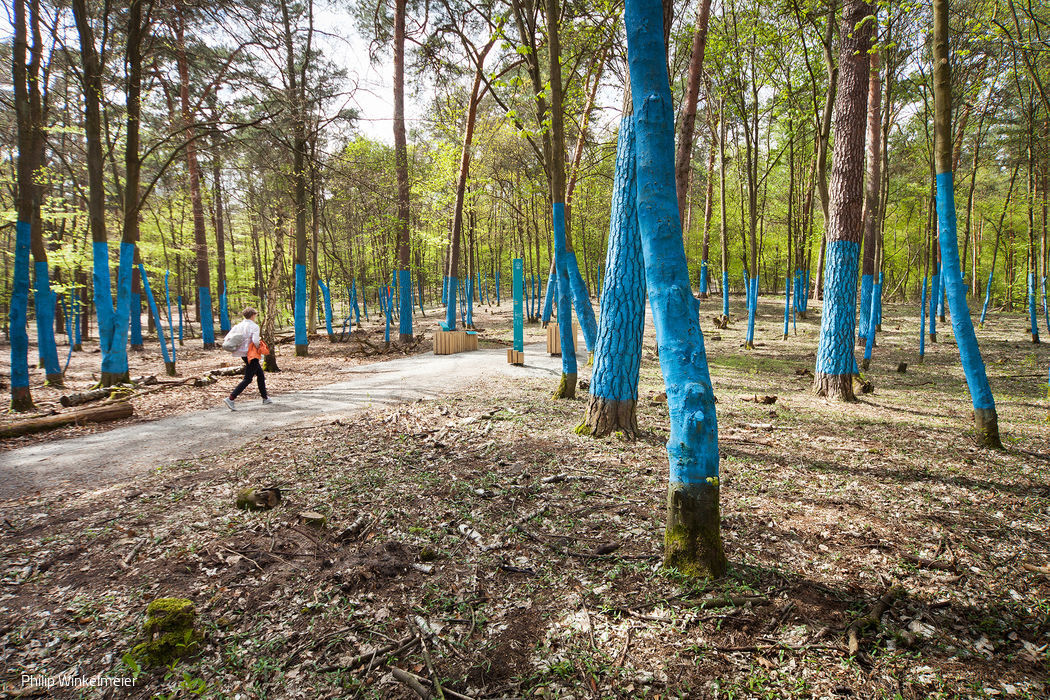
Learning in the Forest
Trees. Forests. Climate. – An Interactive Exhibition in Grunewald
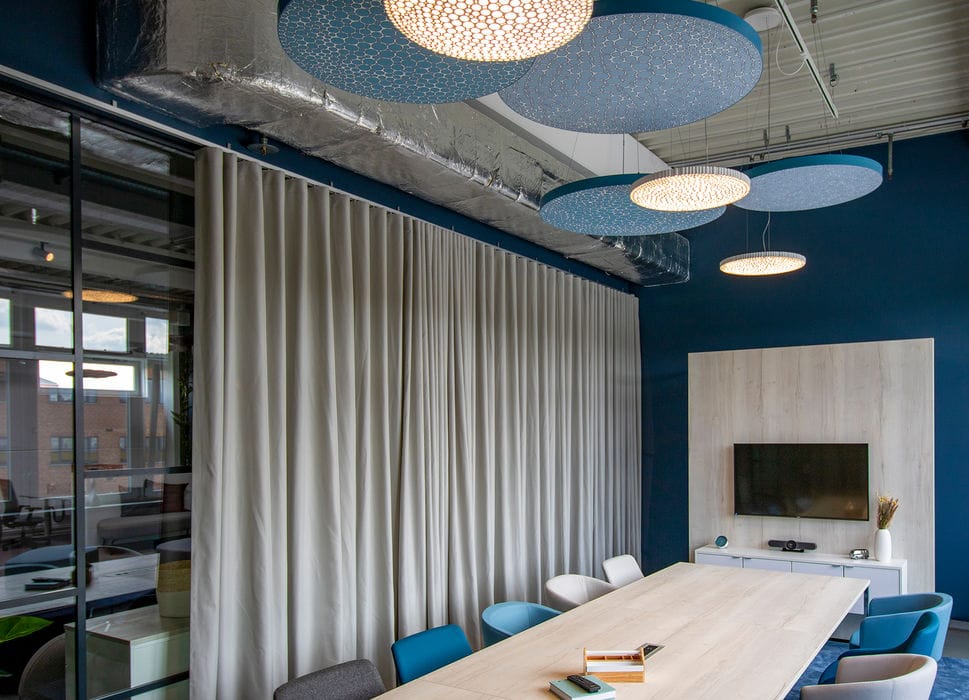
Coming to Berlin
From Lighting to Flooring: Netzwerk Berlin Presents Innovative Spatial Solutions