


Hanseatic identity in fired clay
The renaissance of clinker architecture

If you let your gaze wander over the urban canyons of northern Germany's cities, you will quickly notice a recurring pattern: red brick dominates the landscape. Long considered a purely pragmatic building material or a relic of industrialisation, red brick is now experiencing a remarkable revival in contemporary architecture. This is no longer simply a matter of referencing historical models such as the Speicherstadt or the Chilehaus. Rather, architects and builders are rediscovering the plastic power and haptic quality of fired clay. Modern residential and commercial buildings use clinker bricks to bridge the gap between Hanseatic building tradition and contemporary design requirements.
Rethinking the legacy of Fritz Schumacher
At the beginning of the 20th century, Hamburg's chief building director Fritz Schumacher coined the term "clinker" as the material that defines the character of the city. His buildings showed that brick does not have to appear monotonous. Variations in the masonry bond, the use of shaped bricks and deliberately placed joint patterns created facades of high graphic quality.
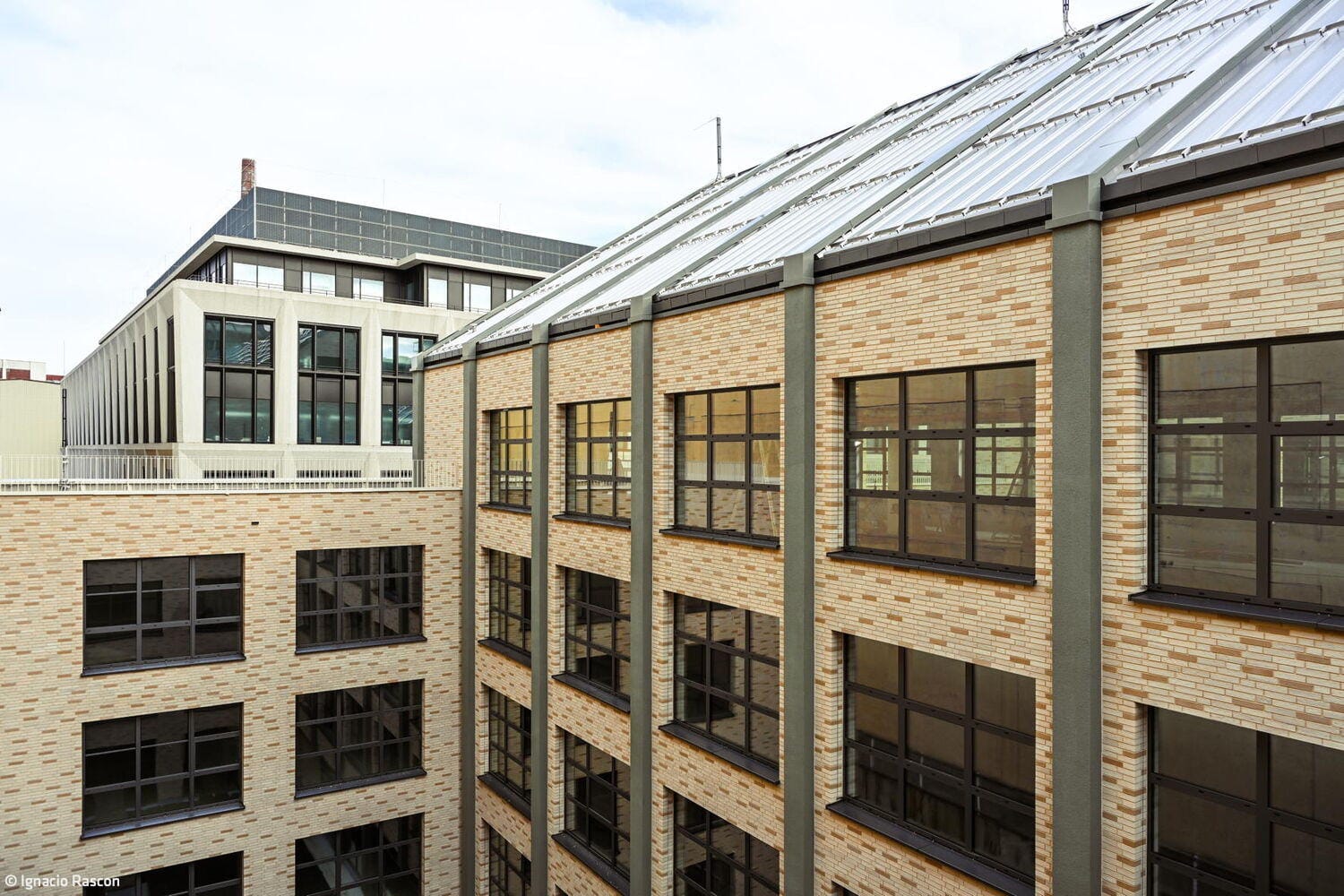
Today's designs are reviving this attention to detail. Instead of smooth plaster façades, which quickly weather and lose their lustre in the damp climate of northern Germany, planners are focusing on the liveliness of brick cladding. Special formats are often used: extra-long brick formats emphasise the horizontal, while relief-like masonry structures create an interplay of light and shadow. This gives a building a different appearance depending on the position of the sun and the weather conditions. Many glass and metal façades lack this depth, which is why the use of this archaic material is often perceived as a treat for the urban eye.
Haptics as the antithesis of digital smoothness
In an environment increasingly dominated by screens and smooth surfaces, the human eye longs for texture. Clinker bricks offer precisely this tactile experience. They are uneven, feature subtle colour nuances and tell the story of their manufacturing process. Each brick is unique. It is this imperfection that makes it so appealing. Especially in inner-city redensification projects, the material helps to integrate new buildings organically into established neighbourhoods. A modern cube appears less like a foreign body when its shell speaks the material language of the surrounding Wilhelminian-style buildings.
At the same time, today's technology allows for designs that were previously unthinkable. Clinker facades are constructed as curtain-type, rear-ventilated systems that meet the highest energy standards. They act as a robust protective shell for the insulation, thus contributing to the longevity of the property.
Stable value thanks to patina
A decisive argument for the widespread use of brick in upmarket residential construction is its ageing process. While plaster becomes dirty and concrete turns grey, clinker develops a patina. Over the years, it often becomes even more beautiful and dignified. In the property industry, a high-quality clinker brick façade is therefore considered an indicator of intrinsic value. It signals to the observer and potential buyer that the building was constructed with durability in mind rather than for quick effect.
In Hamburg in particular, where wind and rain place heavy demands on building envelopes, bricks prove to be the most durable choice. The initially higher construction costs are offset over the decades by lower maintenance expenses.
Aesthetics of joints and colour
The colour palette is no longer limited to classic reddish brown. Different firing processes and the addition of minerals result in bricks in light sand tones, deep anthracite or even greenish shimmering nuances. Architects use this range to visually structure parts of buildings or set accents. The colour of the joints also has a massive influence on perception: dark joints make the surface appear homogeneous and solid, while light joints emphasise the individual bricks and the grid pattern.
This architectural quality ensures the long-term appeal of neighbourhoods. Those who live in such an environment benefit from an atmosphere that exudes history while still offering modern comforts. Demand for living space in properties designed in this way remains high in the Hanseatic city. Prospective buyers looking for or wishing to sell a property with architectural appeal often require specific market knowledge. Experienced estate agents in Hamburg offer expert advice in this area.
Experienced estate agents in Hamburg offer expert advice in this area.
A Successful Synthesis
Villa: Where landscape, luxury living, and technical innovation converge

Enhanced transparency and quality on the job site
App for Sharing Documents and Plans Across Project Teams

Light with Purpose
Bjørn + Balle
Simplicity with Purpose
Anker Studio