


Brick Construction – Past and Present
Schöneberg's former post office complex reveals the remarkable range and possibilities of brick as a building material.
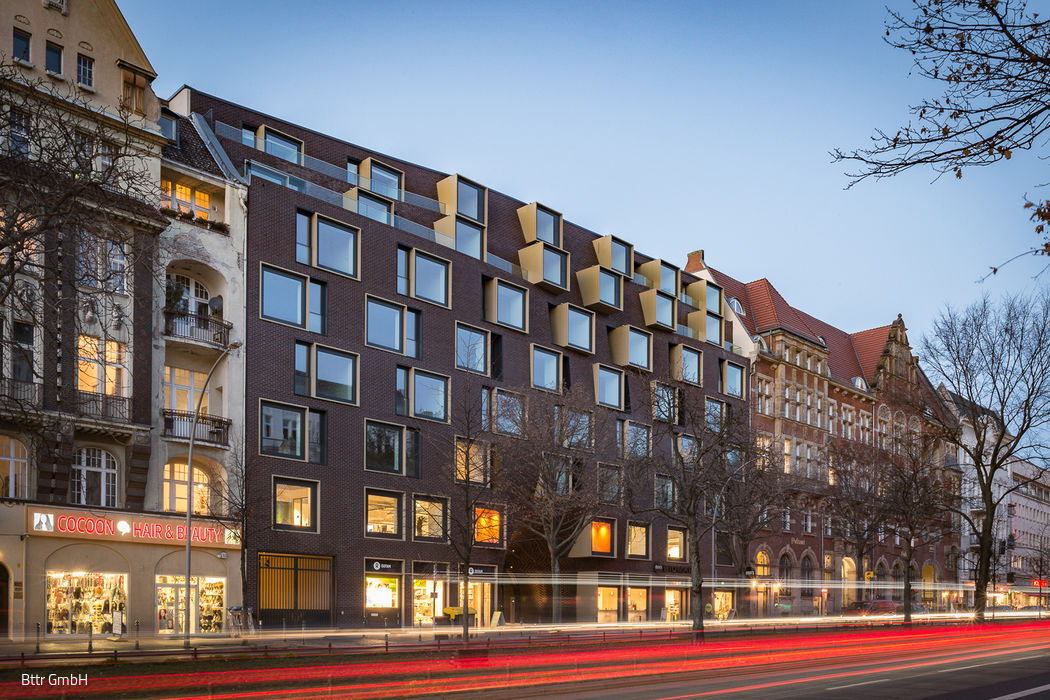


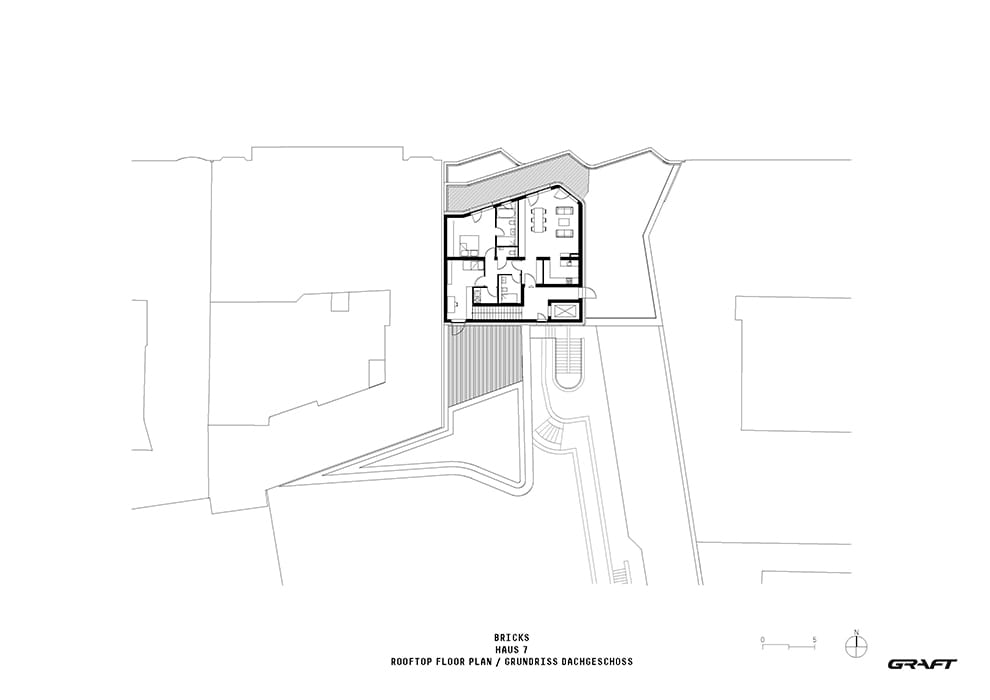


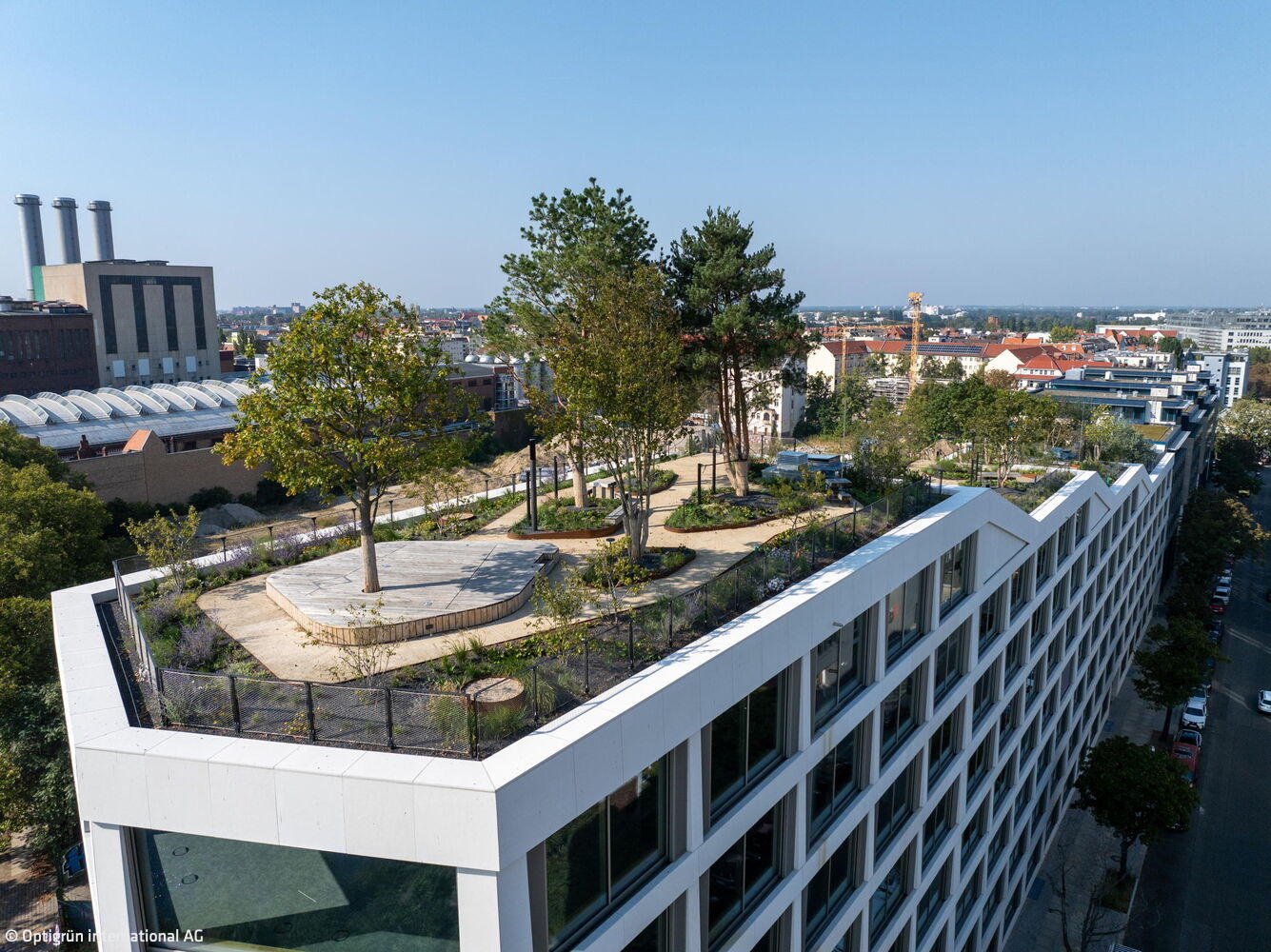
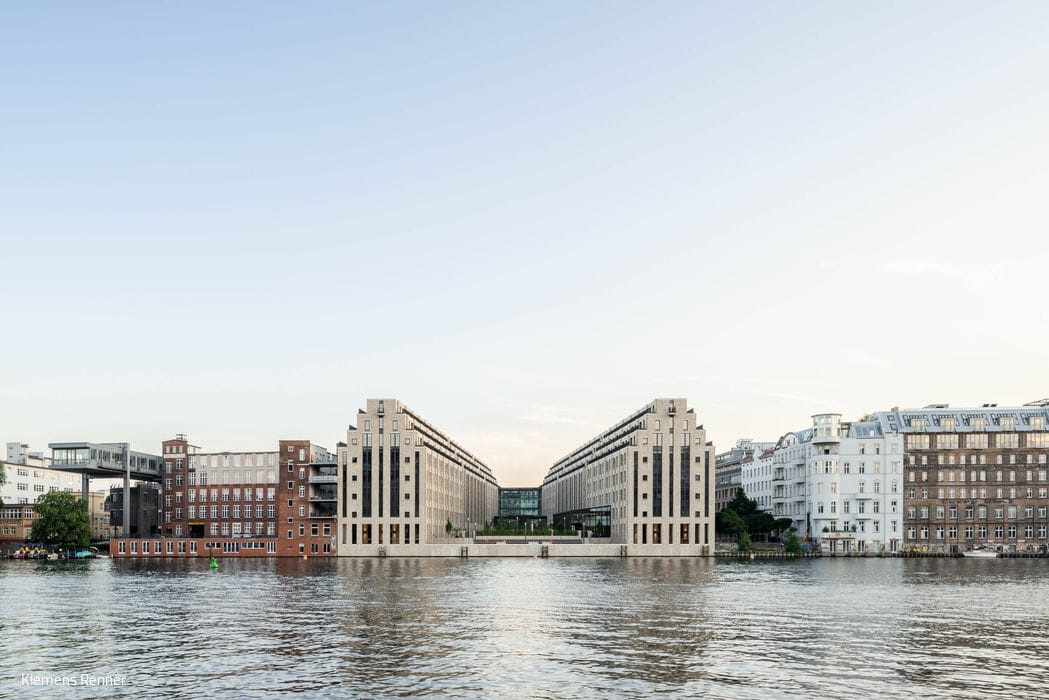
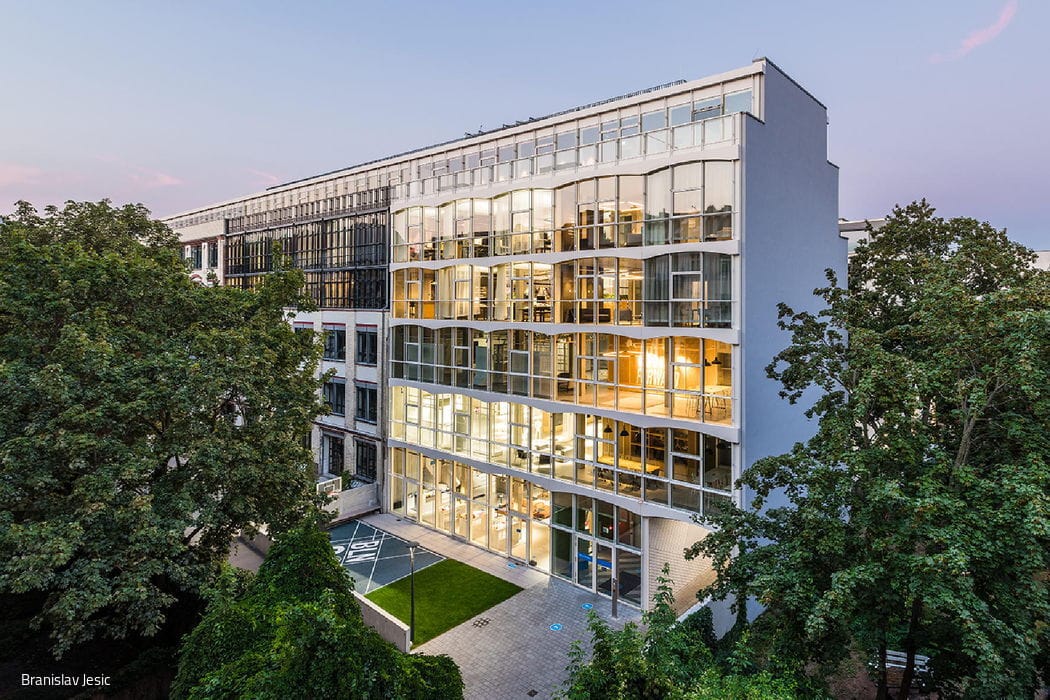
"Bricks," a heritage-protected post office complex by Graft Architects, stands as a testament to the firm's ambition in contemporary design. Spanning Schöneberg's Hauptstraße and Belziger Straße through a series of interconnected inner courtyards, the project represents one of the most intellectually demanding undertakings Thomas Willemeit, a founding partner at Graft, has led in recent years. The original post office, designed by city architect Otto Schmalding, rose between 1905 and 1920—a Renaissance Revival composition of brick and sandstone. A decade later, Schmalding introduced a telegraph exchange, creating a stark contrast: a massive, three-meter-high windowless hall for telephone operators. Where the front facades retained historicist ornamentation, the rear demonstrated a daring shift—an all-brick aesthetic that prefigured Hamburg's iconic Chilehaus. Here, historical language transformed into abstraction; decorative patterns emerged purely through the rhythm of projecting and recessed brickwork, signaling modernism's first steps. By the 1930s, a third structure arrived—a fully realized brick modernist building. Remarkably, a single site contains the complete narrative of brick construction across three distinct eras. The architects' mandate was equally ambitious: preservation of existing fabric, strategic interventions, and doubling overall volume. Today, offices, private universities, and restaurants occupy the complex. The former telephone operators' hall demanded particularly inventive transformation. "It was a great gift that this space wasn't subdivided into office floors," Willemeit reflects. "We introduced a gallery level with training rooms below, yet the spatial generosity remains palpable." Previously utilitarian roof surfaces underwent careful restoration. New residential buildings complement the ensemble. The new building's street façade embodies contemporary brick expression, while curved balconies define the Belziger Straße elevation. "We wanted to demonstrate brick's modern possibilities—even its capacity to curve three-dimensionally," Willemeit notes. Staggered roof windows, each oriented distinctly, punctuate the composition. As autumn leaves fade, sunlight reveals the tiles' chromatic range, the façade shifting its character every few minutes. A genuinely compelling sight.
Photography Credits:
Bttr GmbH
(Featured in CUBE Berlin 04|20)
Old building newly supplemented
Gertrudshof: War-Damaged Industrial Complex Fully Restored
Award-winning
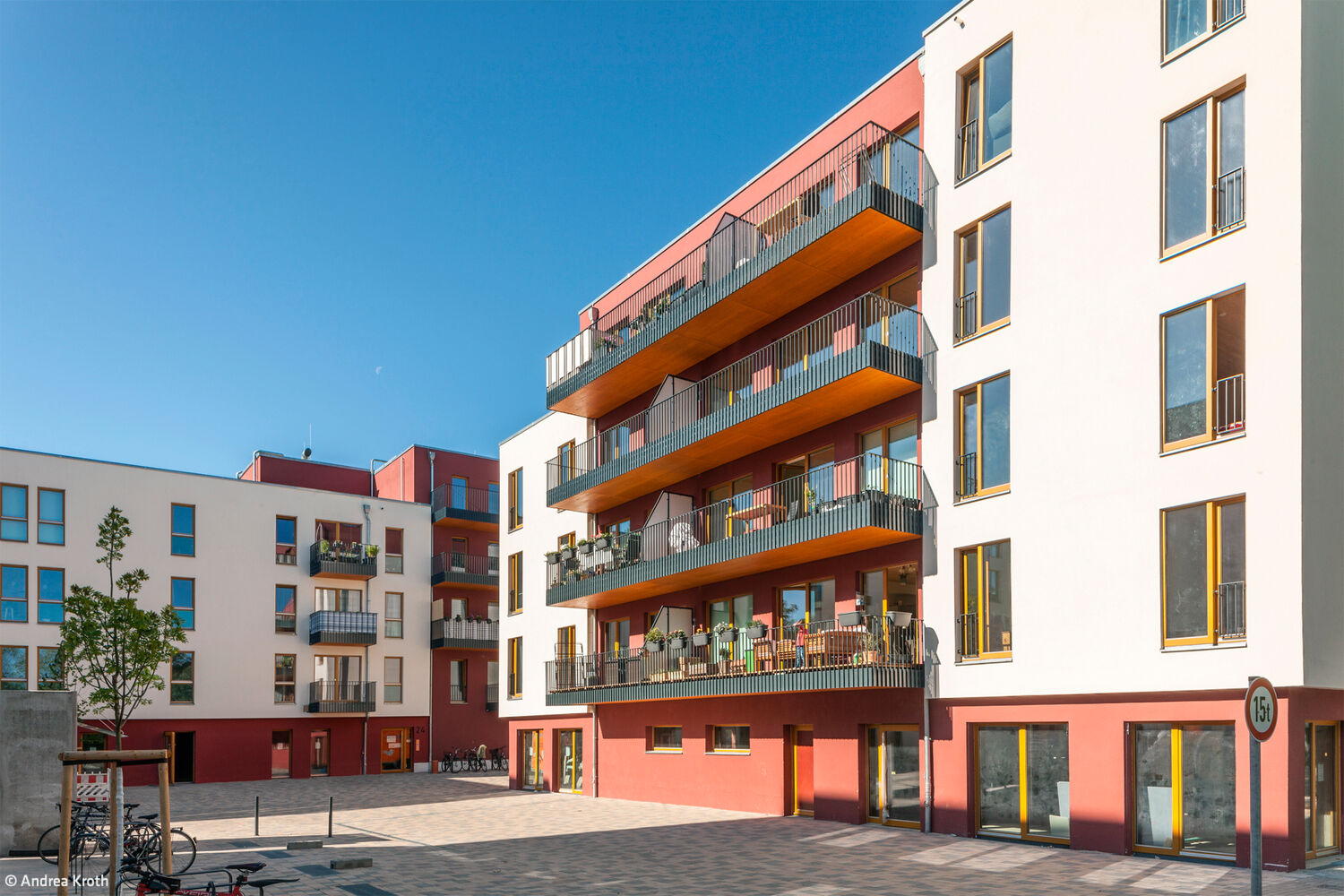
A residential neighbourhood in timber-hybrid construction – exemplary in every way

The Yellow Wonder
Restructuring of the former BUFA site
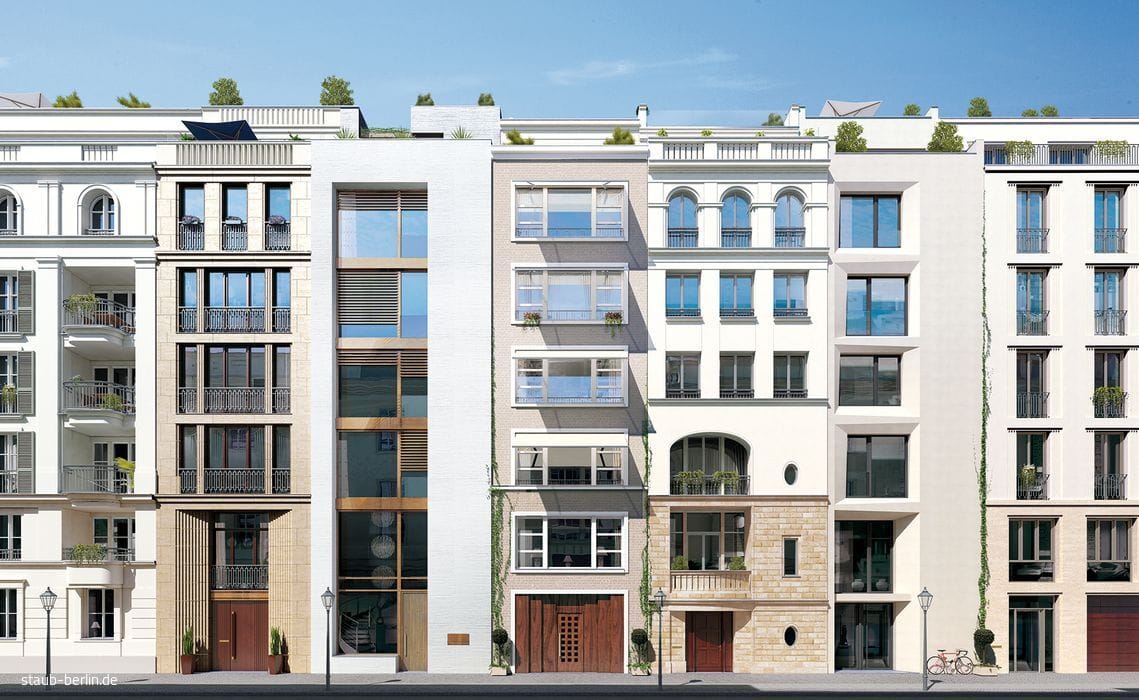
New in classic form
The Oberwallstraße townhouse earned the BDA Berlin Audience Award.