


Reimagining Space
A music hall transforms into a multifunctional House of Culture(s)
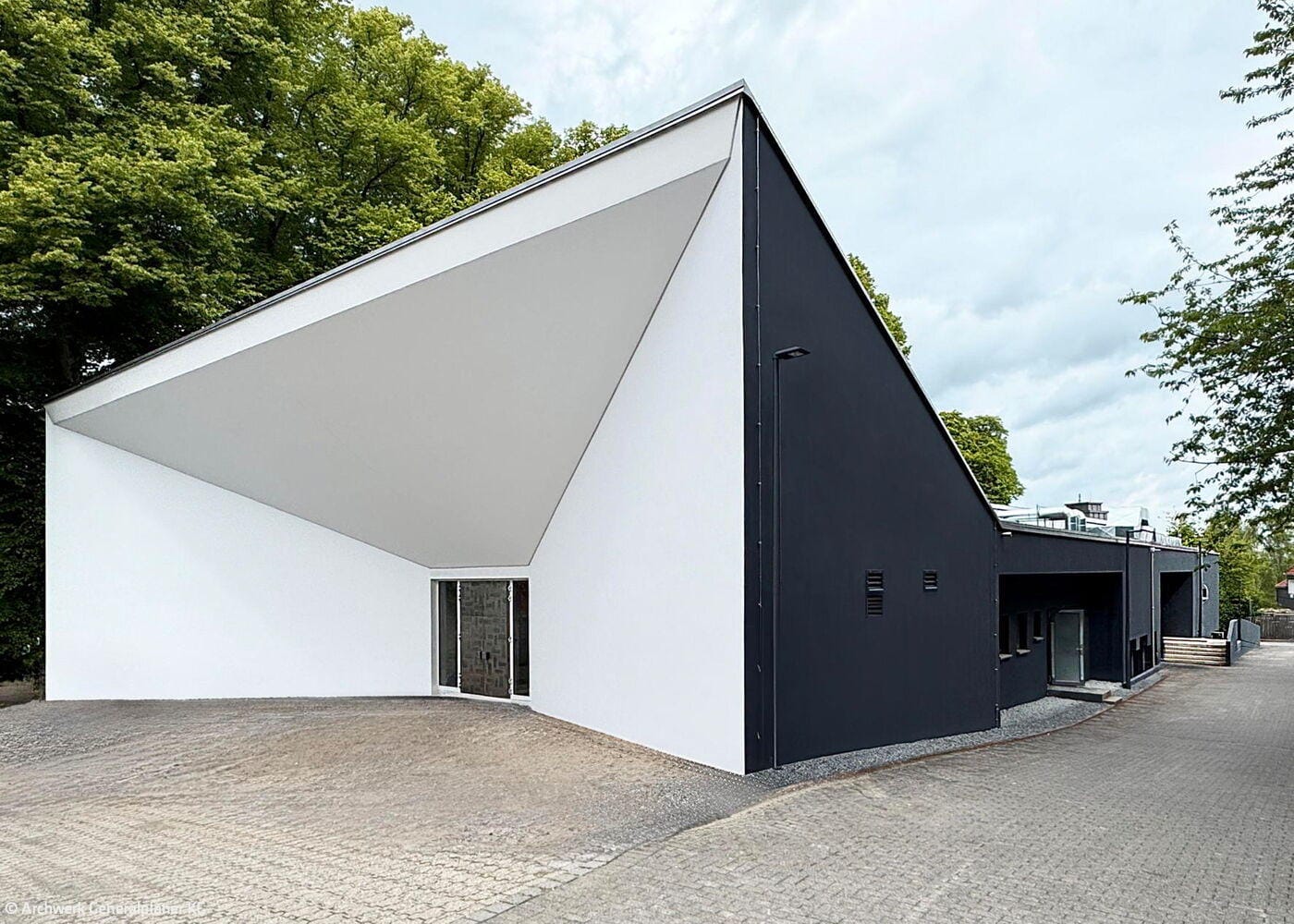
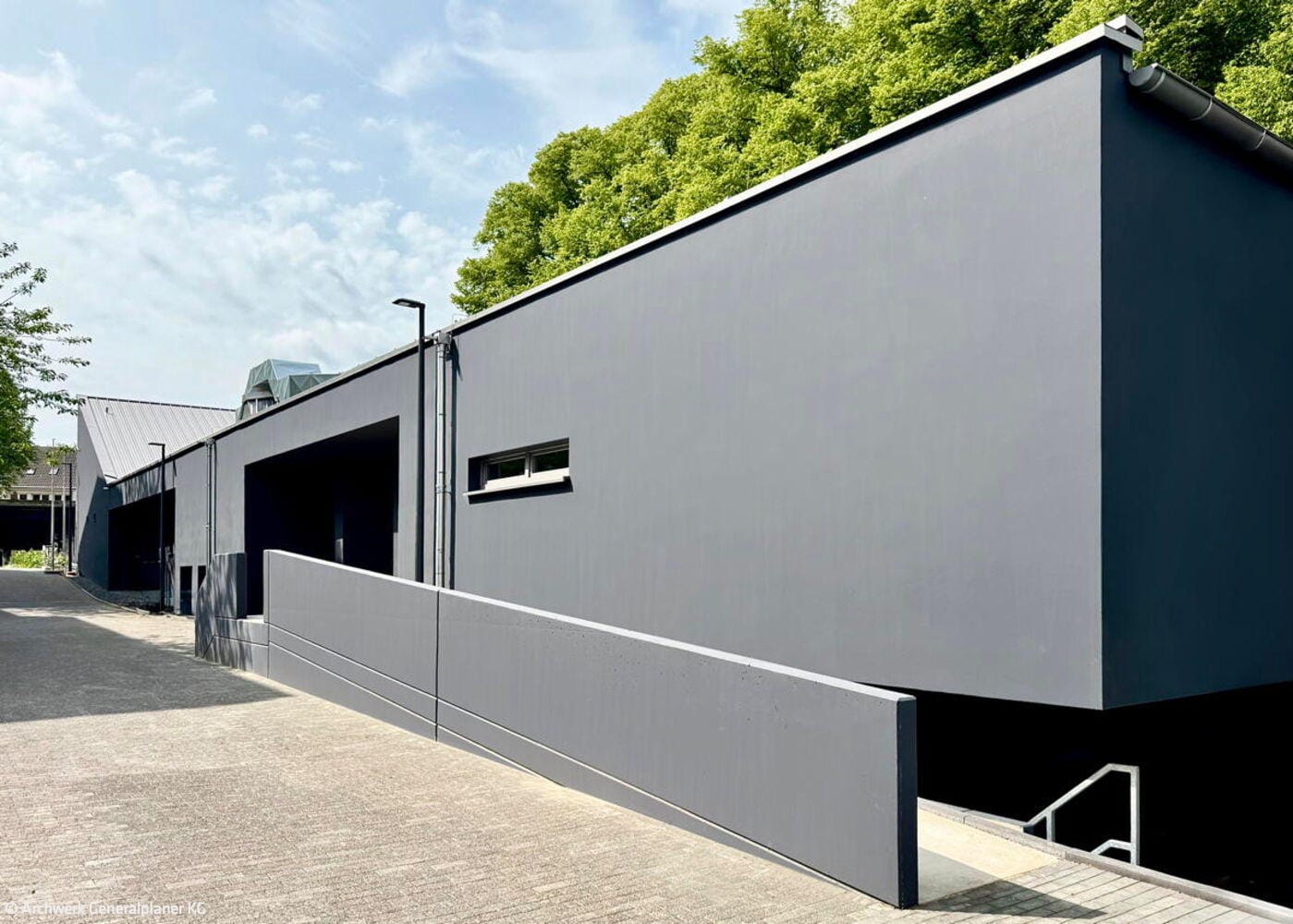
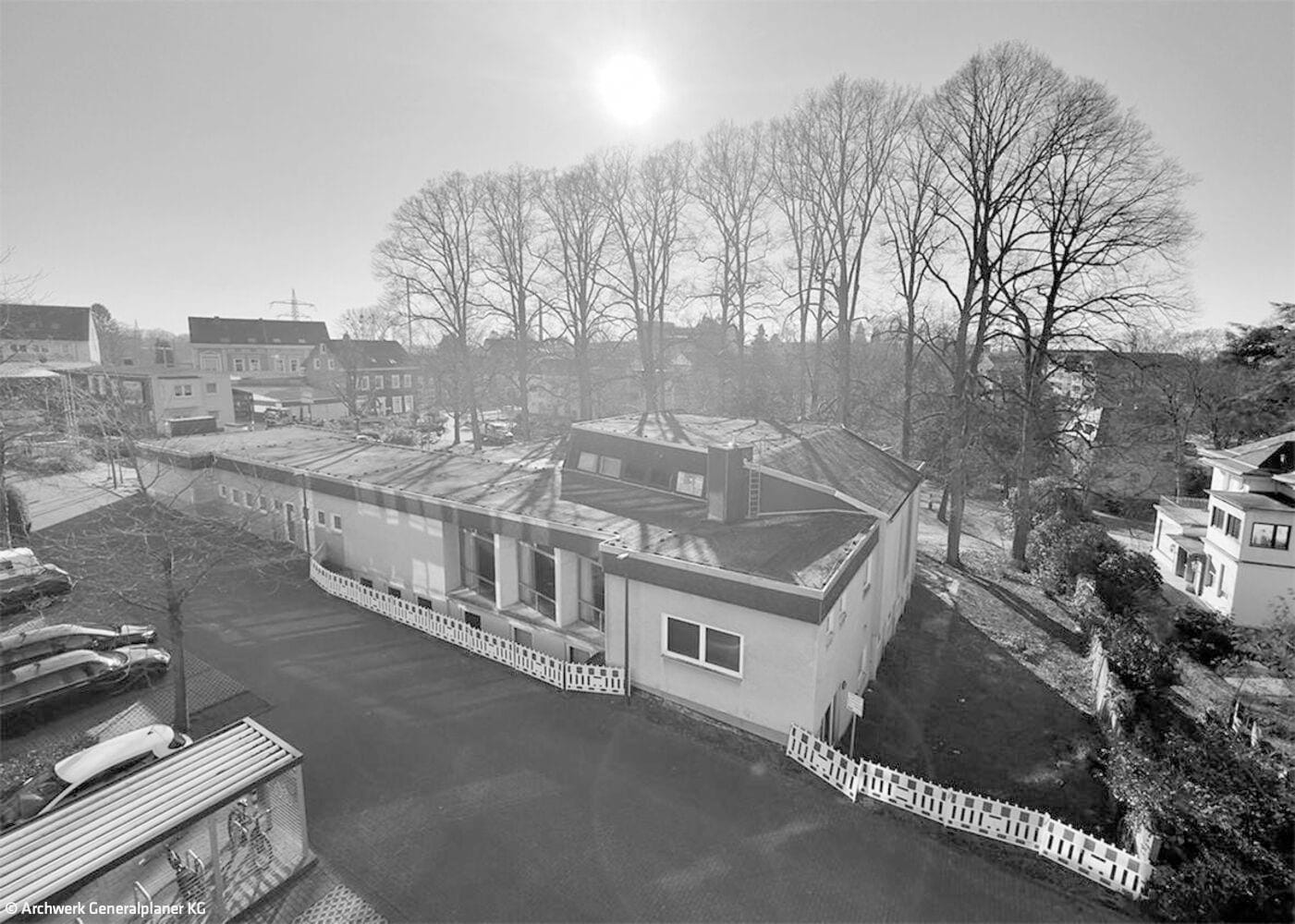
For over 50 years, the Haus der Kunst (House of Art) has anchored cultural life in Burscheid, nestled between the town hall and a small park. The aging structure was slated for renovation as part of Regionale 2025, with an ambitious goal: transform it into a vibrant, multifunctional concert and events venue—strengthening the town's thriving music scene. Burscheid, a small town in the Bergisches Land region, boasts an impressive musical heritage, including Germany's oldest amateur orchestra. The winning team—Bochum-based planning office Archwerk and Professor Krenz Architekten—rose to the challenge with a thoughtful design that preserves the existing concert hall while introducing a new spatial sequence that extends the building's presence into the urban landscape.
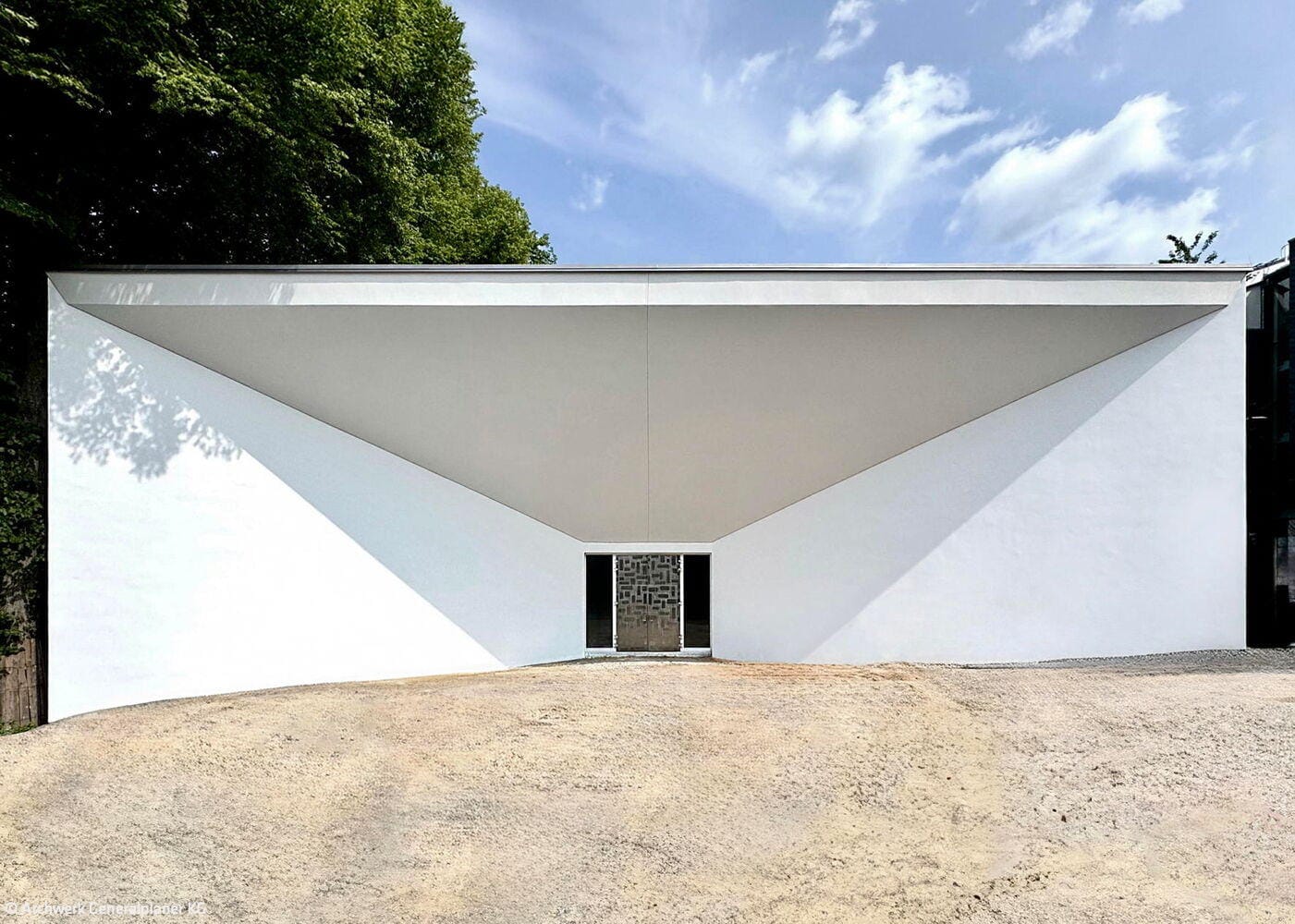
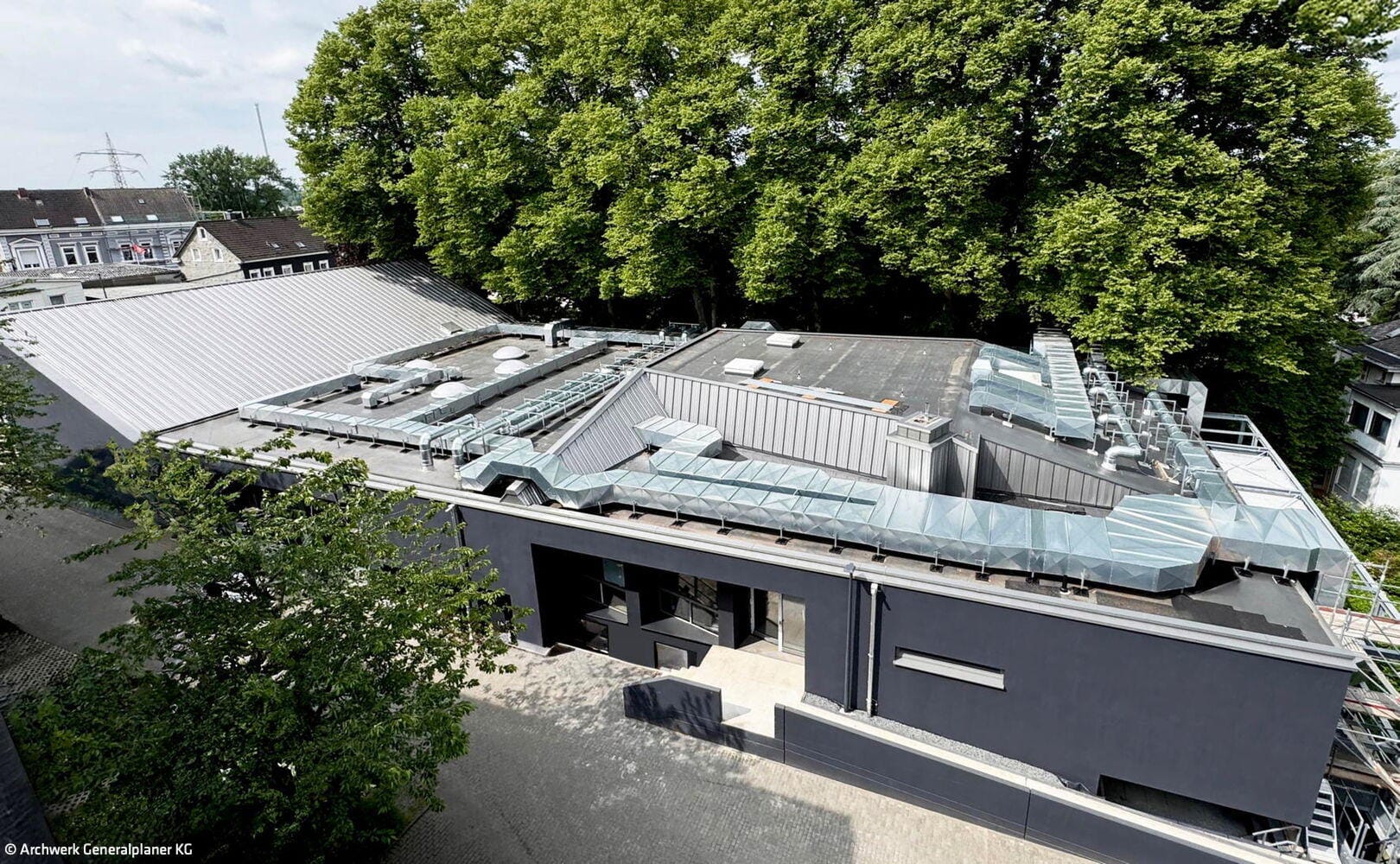
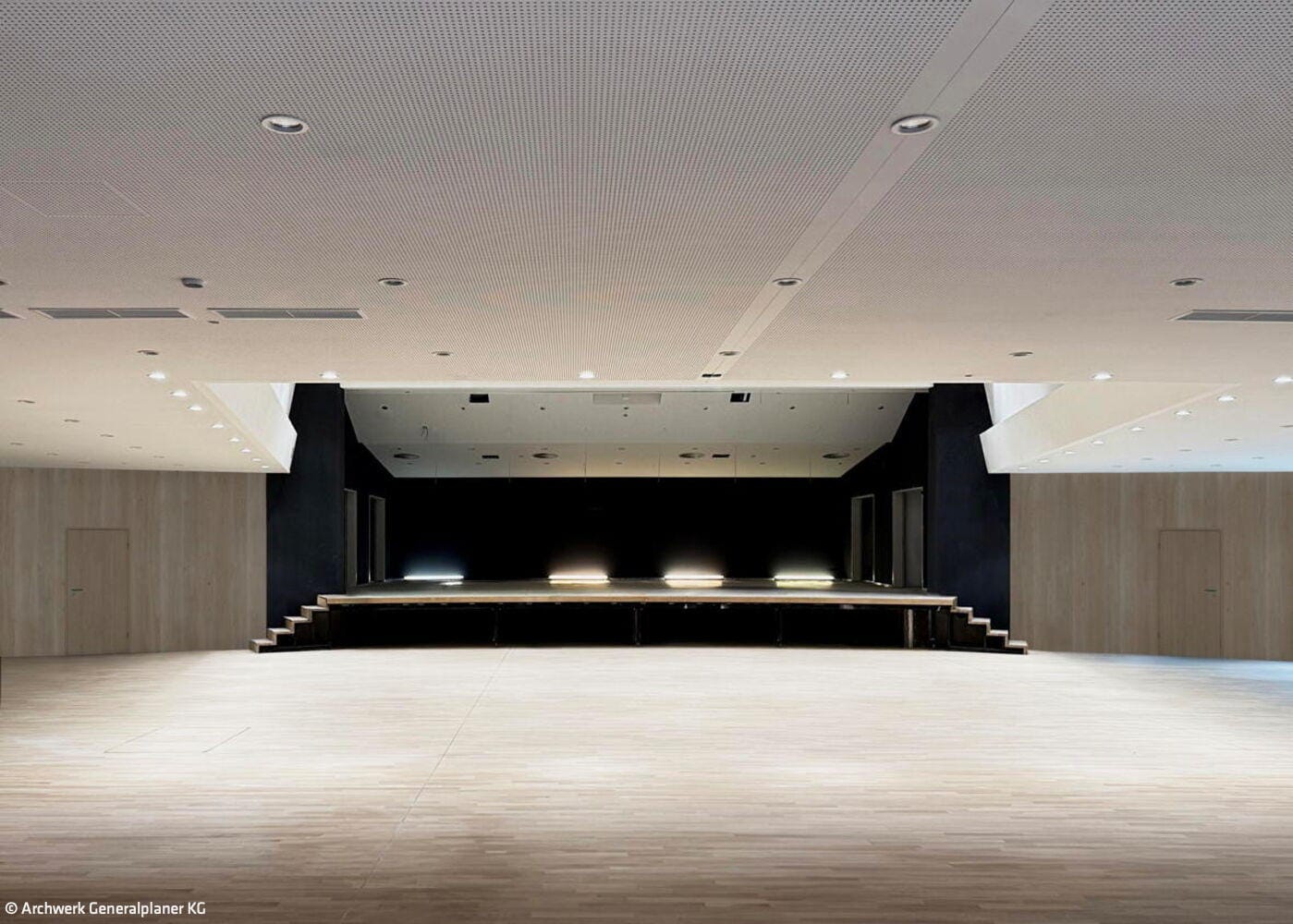
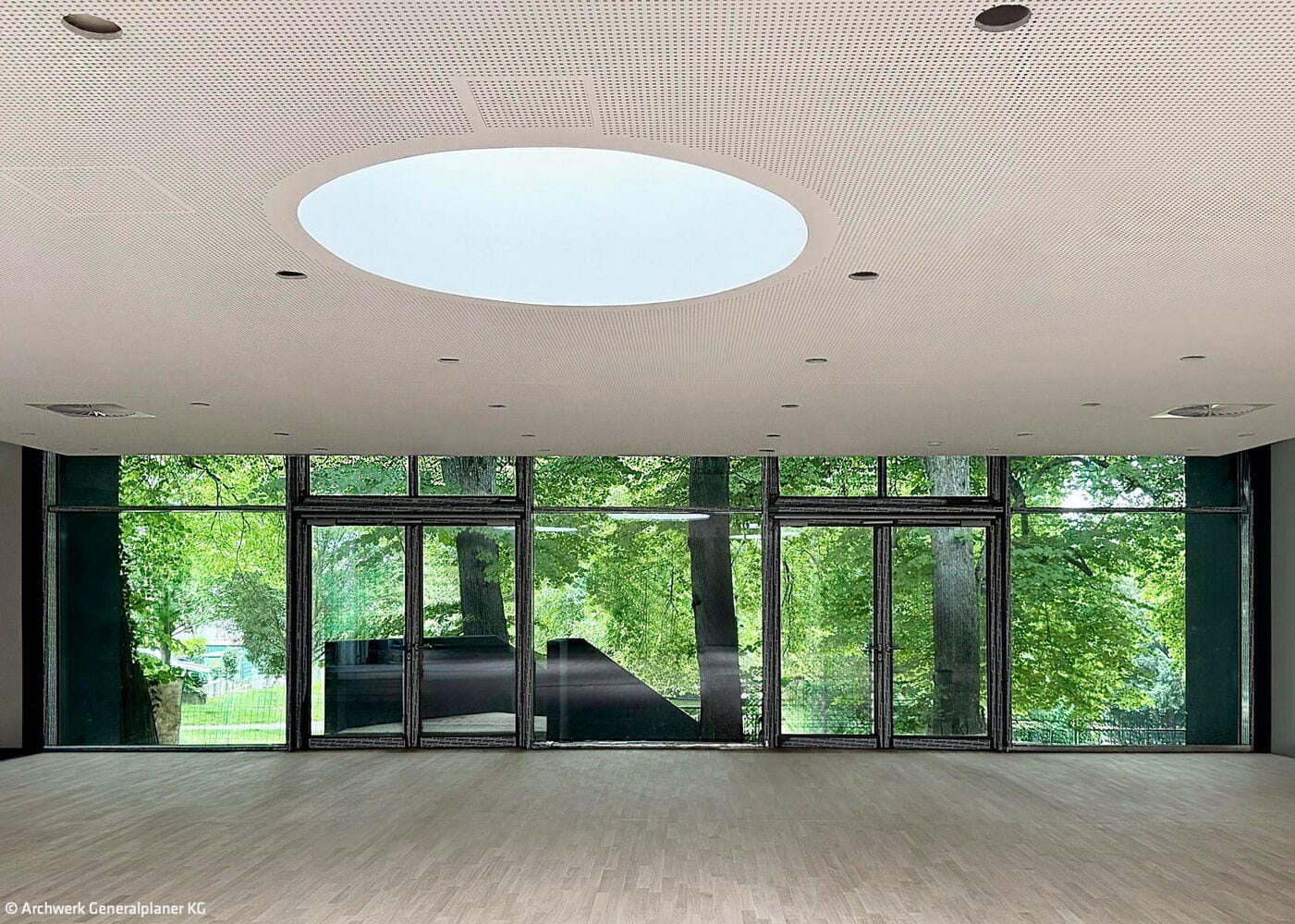
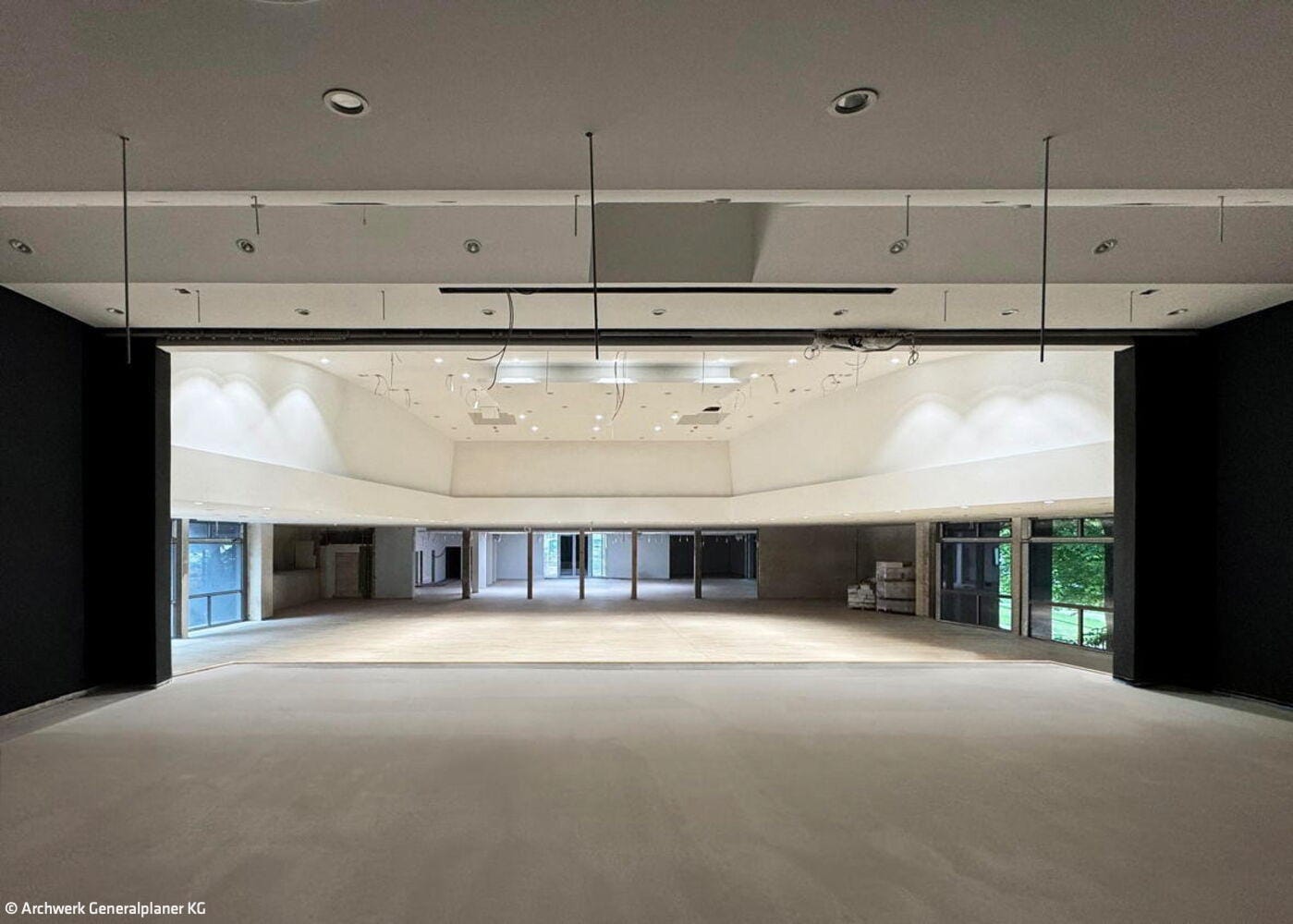
Completed in 1971 from designs by architect Hans Brandt, the original building already possessed qualities reminiscent of Hans Scharoun's spatial philosophy: a central music hall that dissolves boundaries between inside and outside, a sculptural integration of façade and roof, and distinctive details like the wood cladding. Functionally, the light-filled hall had been exceptionally well conceived and executed. The design strategy was clear: preserve this architectural gem as the heart of the new House of Culture(s), expand it thoughtfully, and in doing so, conserve embodied energy and resources. The generous forecourt before the L-shaped structure provided the perfect opportunity to establish a new axial sequence: beginning with a sculptural new entrance pavilion housing cloakrooms and facilities, its funnel-shaped form creates a striking new gateway to the urban plaza. Beyond this sits a flexible foyer topped with circular skylights—seamlessly connectable to the main hall to expand capacity from 400 to 660 seats. The stage itself was enlarged to accommodate larger orchestral formations, with both stage and seating designed for maximum flexibility, allowing the performance area to pivot as needed.
A governing principle: existing room heights determined the proportions of all new spatial additions. Existing sightlines were enhanced and extended—most notably, the foyer opens via glass walls to a mature tree-lined axis in the adjacent park, connected by a new bridge that descends to an amphitheatre-like staircase. The acoustic materials that defined the original interior—travertine floors and plaza surfaces, figured wood wall panels—were retained and carried through the new work. Remarkably, a portion of the original entrance door's sculptural form was reincorporated as the main entrance. On the energy front, the entire building was retrofitted with external insulation across façades, roofs, and floor slabs. A gas engine heat pump handles base loads for heating and hot water, supported by a gas boiler for peak demand.
Photography:
Archwerk Generalplaner KG
(Published in CUBE Cologne Bonn 04|25)

Craftsmanship and Design
Kim Becker specializes in interior, product, and furniture design.
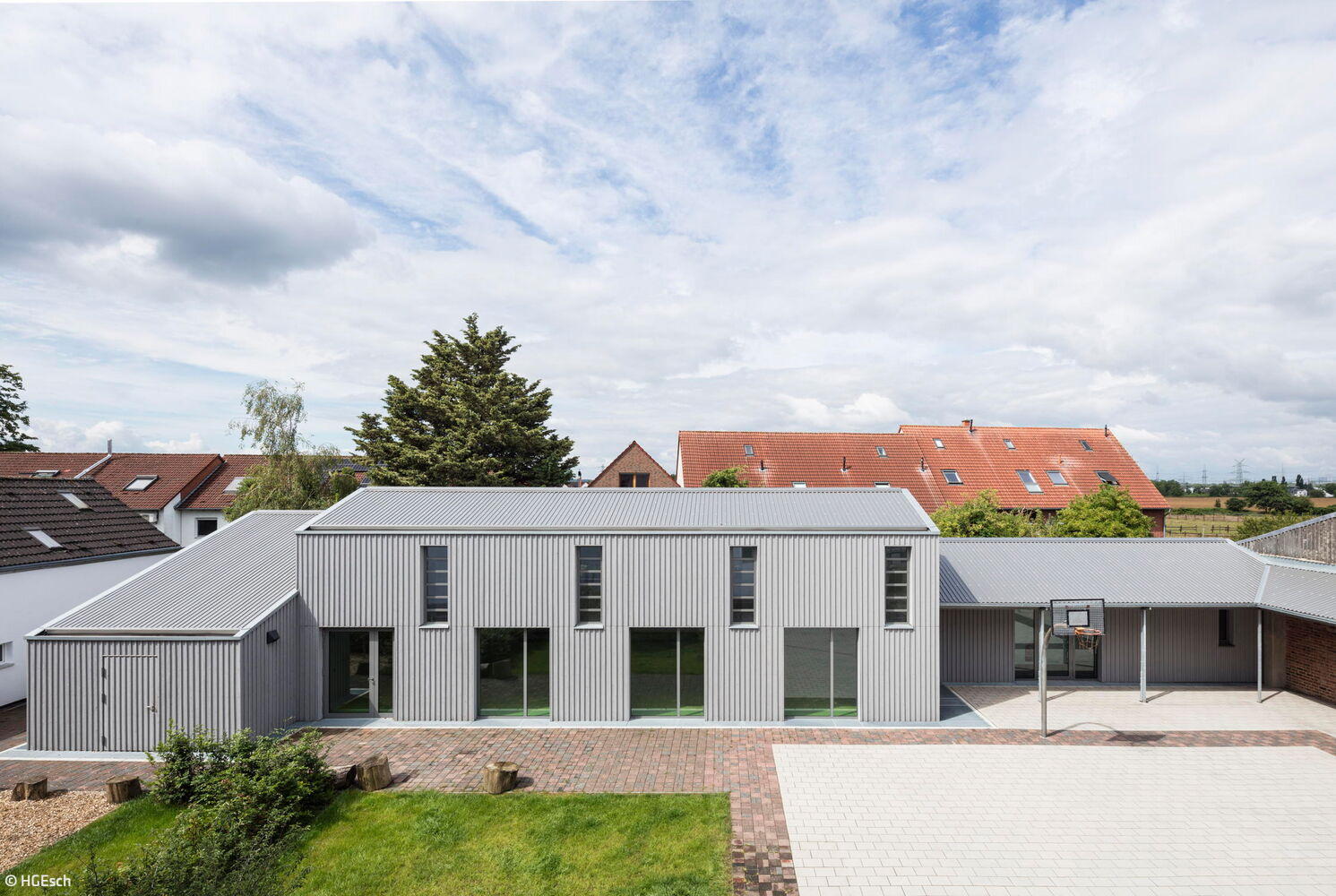
Simple and Thoughtful
A play and movement pavilion in Alt-Widdersdorf demonstrates the lasting potential of timber construction

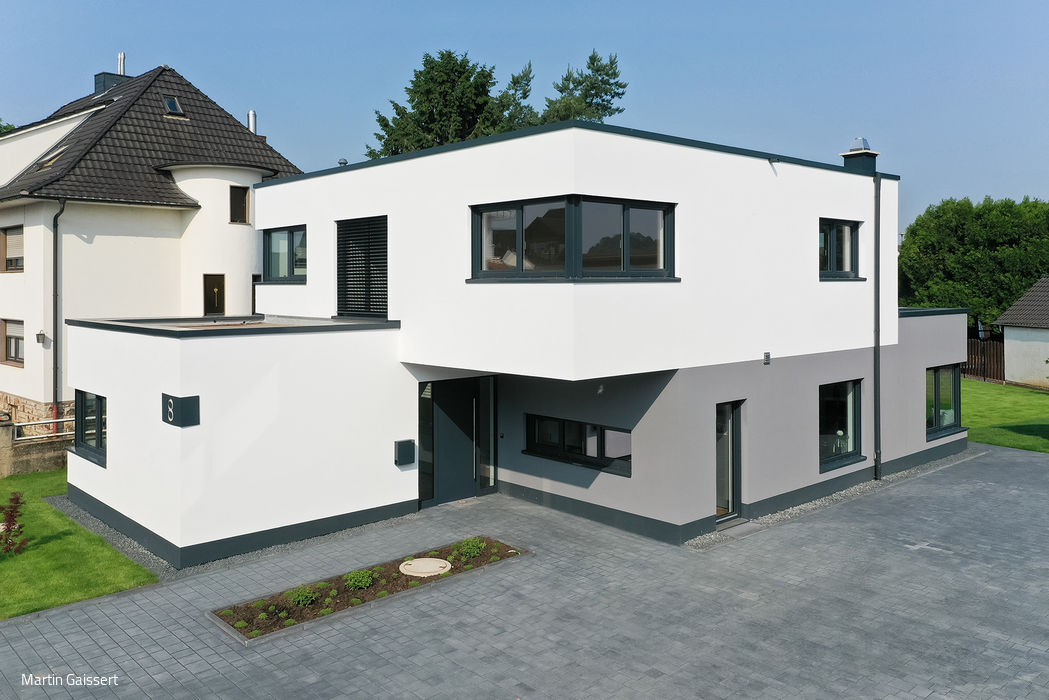
Interior and Exterior in Dialogue
A family home that dissolves boundaries between indoors and out