


Putting a Face to Change
Derendorf gains a striking new architectural landmark
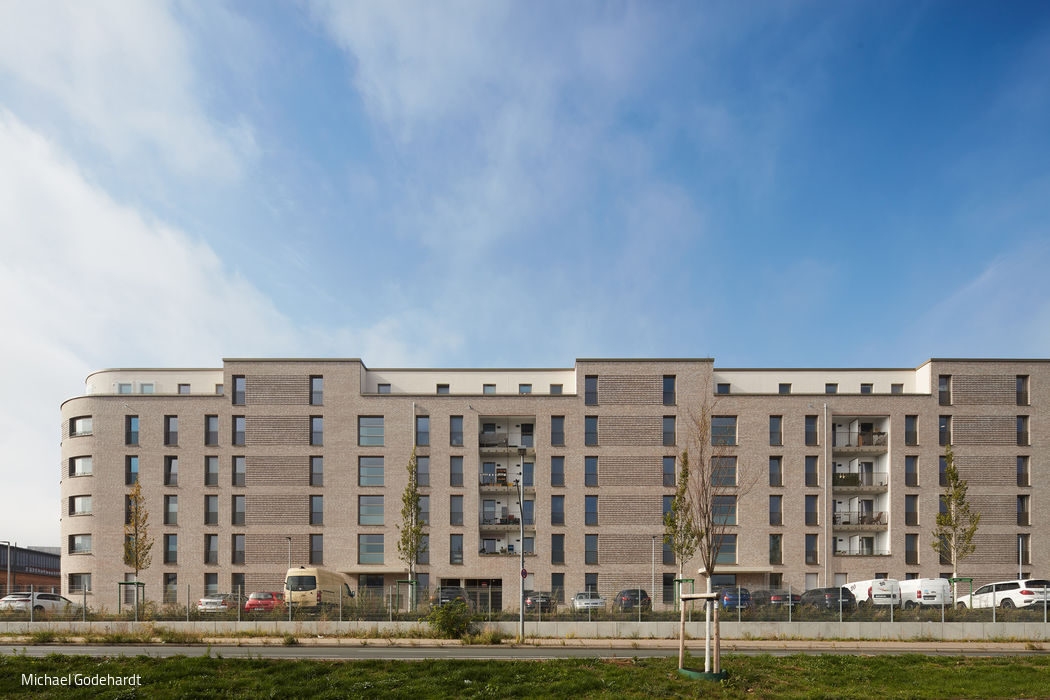
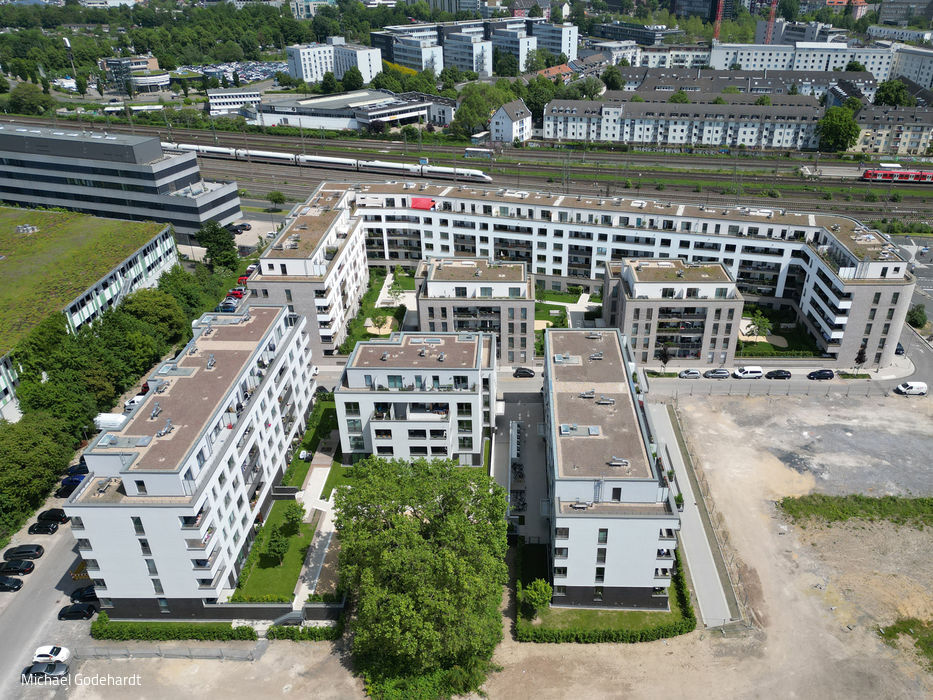
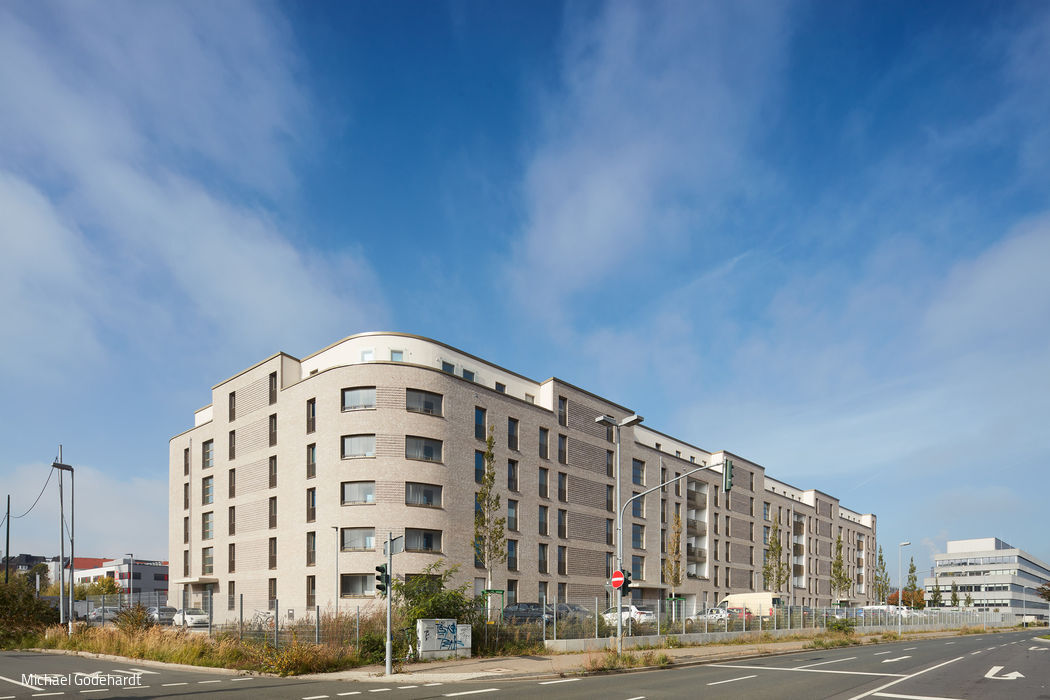
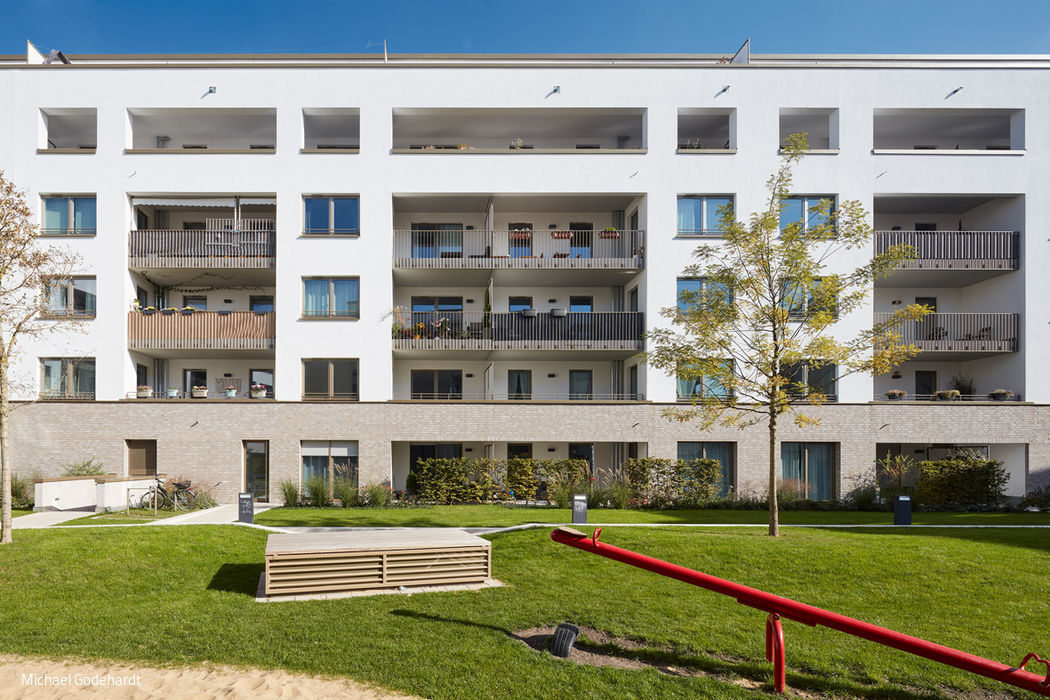
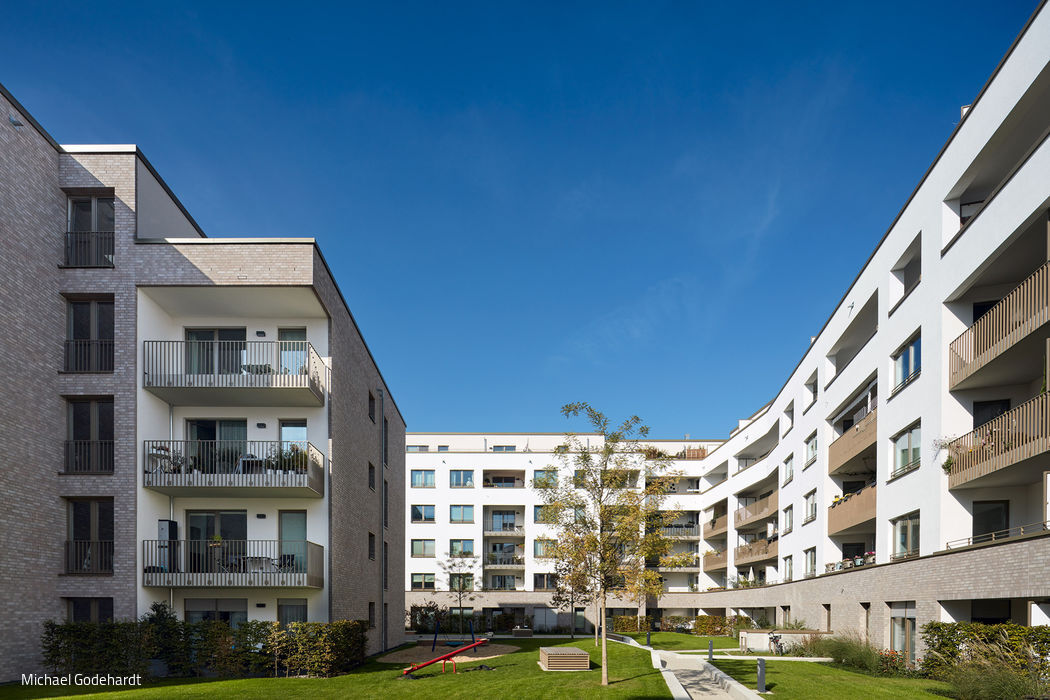
Over the past several years, the Derendorf district has undergone a remarkable transformation—from a former industrial hub into a vibrant, centrally located destination for services, education, and residential living. Working within this dynamic context from 2017 to 2022, Tor5 Architects from Bochum realized the Schlösser site across two construction phases. This former brewery location was developed for three housing cooperatives: Düsseldorfer Wohnungsbaugenossenschaft (DWG), Wohnungsgenossenschaft Düsseldorf-Ost (Wogedo), and Beamten-Wohnungs-Baugenossenschaft (BWG).
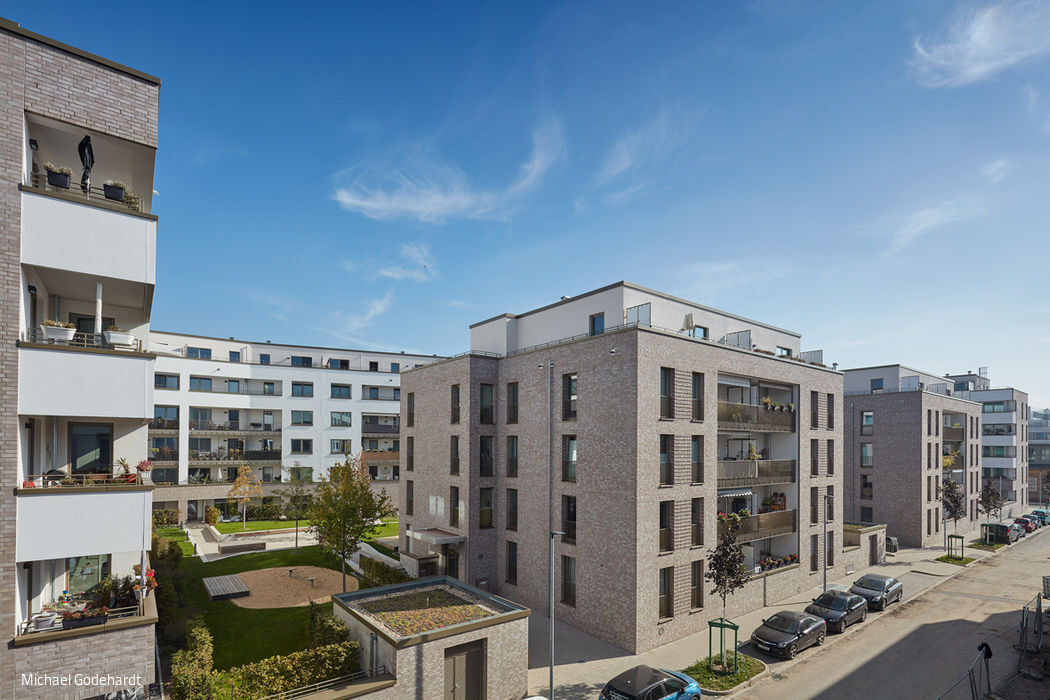
The approximately 9,500 m² site accommodates a new neighbourhood with 215 apartments ranging from two to five rooms, of which 81 are affordable housing units. Given the proximity to railway tracks, sound insulation was paramount from the start and integrated into every phase of design and construction. The architects positioned the buildings to create a protective C-shaped perimeter that encloses a serene inner courtyard—the natural focal point for residents. The courtyard opens toward the west to maximize daylight, with just two lower point buildings completing the form. Between these structures, carefully landscaped gardens interspersed with play areas and resident gardens foster an inviting, livable environment. Below the entire development, a basement level houses the parking garage, storage cellars, and technical facilities.
Solid brick façades define the aesthetic, with staggered upper stories and recessed loggias finished in a thermal insulation composite system—their white surfaces providing a refined counterpoint to the warm brick. The rounded corners add an unexpected architectural softness throughout. The second construction phase introduced two building blocks flanking the north and south edges, plus an eastern point block that mirrors those from the first phase, thoughtfully expanding the urban design language established earlier. Every apartment is fully accessible, featuring underfloor heating, wood-look vinyl flooring, and tiled kitchens and bathrooms. Humidity-controlled exhaust systems in bathrooms work in concert with humidity-responsive fresh air elements in the windows. District heating serves the entire complex. All flat roofs—including the parking structure—are extensively green and function as retention roofs, naturally managing stormwater during heavy downpours.
Photography:
Michael Godehardt
www.michaelgodehardt.de
(Published in CUBE Düsseldorf 01|24)
A Masterful Building Sculptor
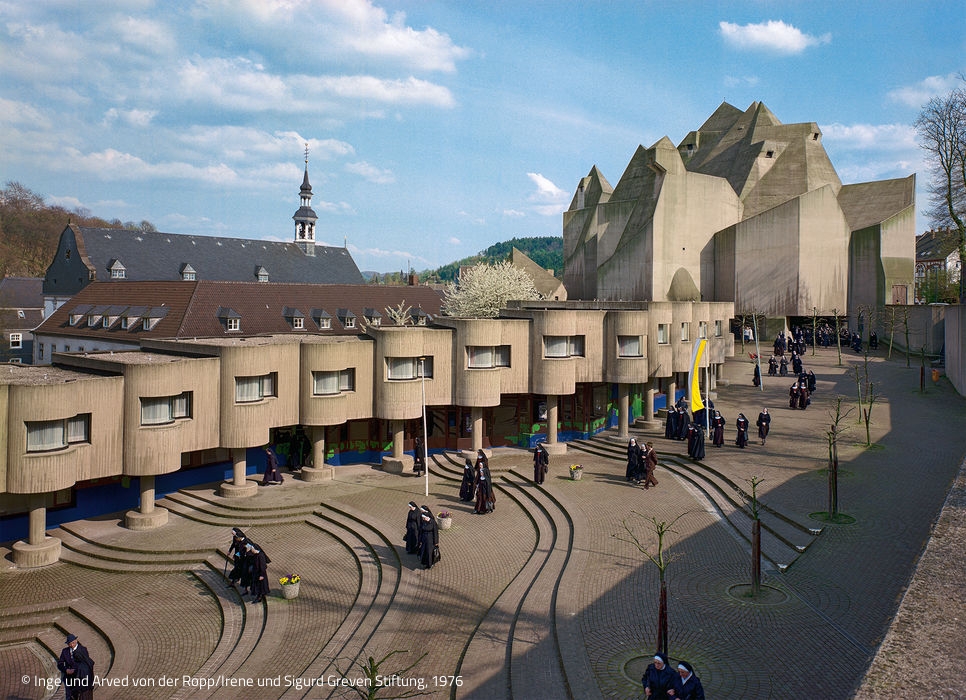
Architect Gottfried Böhm Turns 100
Inside and Outside Reconnected
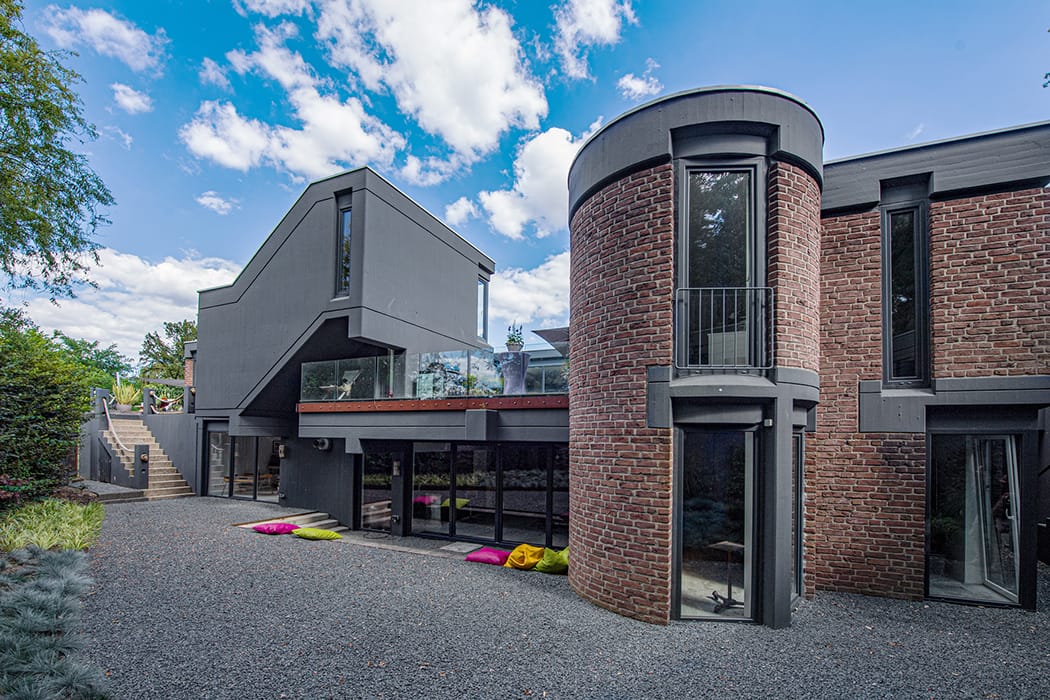
A Spacious Lörick Bungalow Reimagined and Expanded
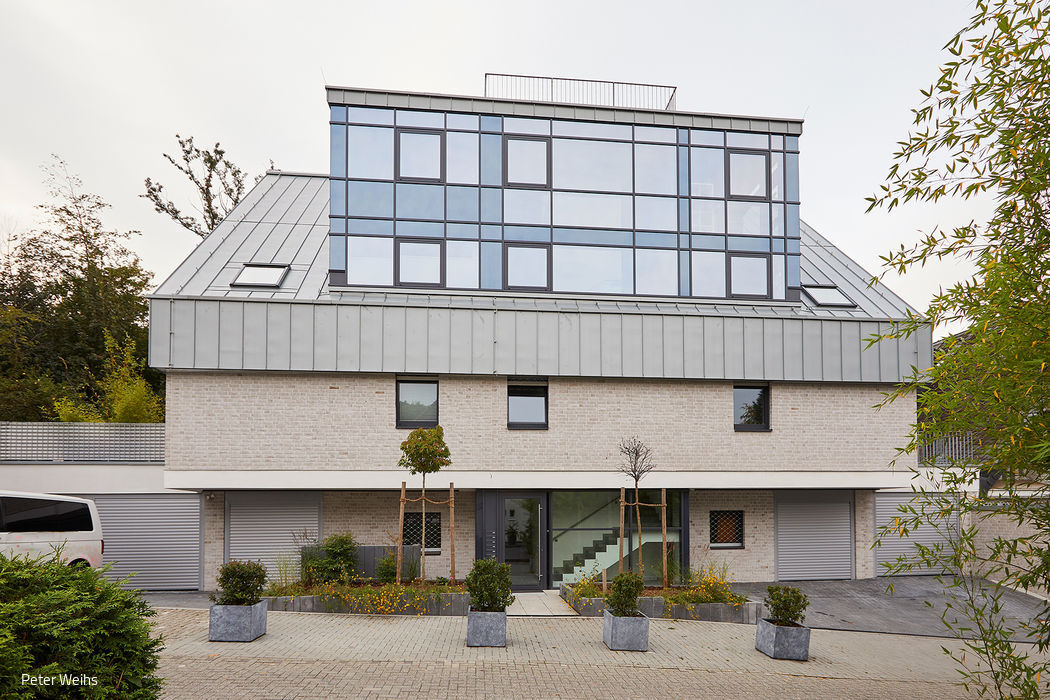
Traditional Living Reimagined
From Two-Family Villa to Multi-Generational Home

Circular Materials Revolution
"The Cradle" in the Media Harbour represents a landmark project in circular construction.