


Blending new with old
The deliberately restrained design allows the eye to linger on the art and the Rhine.
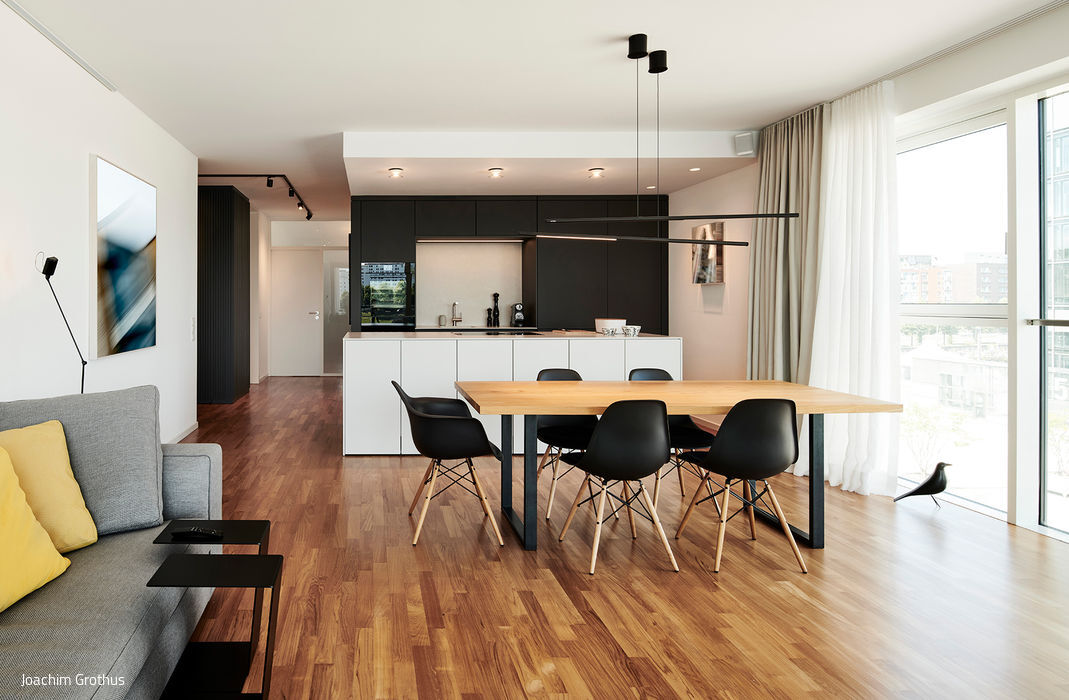




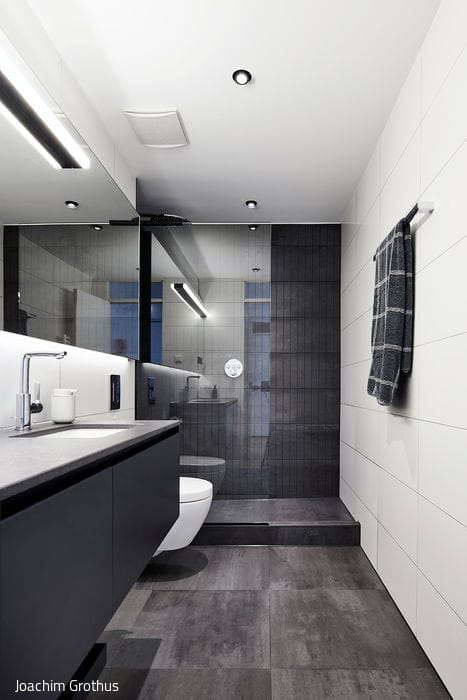
Spaces shape us. They evoke emotion—ideally, a sense of ease and comfort. That's exactly what happened when our client visited friends whose home had been designed by Brandherm + Krumrey. Impressed by what he experienced there, he commissioned the same firm to reimagine his own apartment. Their approach was thoughtful: they layered new elements over the existing structure, resolved spatial inefficiencies, and refocused attention toward the Rhine flowing beyond the windows.
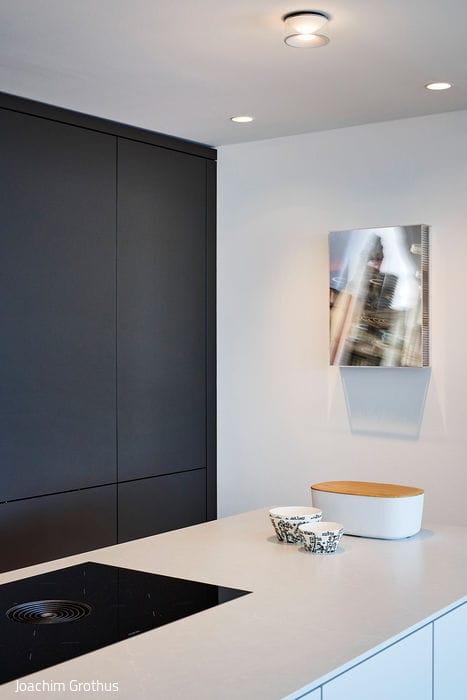
The river view came naturally, thanks to generous windows dressed with flowing curtains. The real challenge lay in seamlessly integrating new interventions with the old—unifying surfaces and materials without a trace. The kitchen's worn tile floor gave way to new parquet that glides effortlessly into the existing wood. A restrained palette of anthracite and white brought clarity throughout; the elimination of awkward niches and protrusions further refined the spatial experience. Where niches remained, they were absorbed into built-ins or reimagined as distinct rooms. A storage closet now nests discreetly within the kitchen cabinetry, its door color-matched to disappear. The generous wardrobe niche evolved into an optionally open room; when closed, a full-height mirror conceals its sliding door and expands the sense of space. Dark-stained paneling with delicate slats became the project's signature—a motif that echoes throughout, adding layers of visual depth. In the bedroom, it plays against the bed's headboard, which wears grey upholstery and playfully references the paneling's vertical rhythm, though reimagined and transformed. The muted terracotta-red linen wallpaper above adds richness and tension, giving the headboard both substance and airiness.
Generous windows flood the space with natural light by day. A carefully calibrated lighting design extends this logic—layering illumination, balancing brightness and shadow, and strategically framing the artwork that inhabits the space. The art itself competes gently with the Rhine's steady presence beyond the glass. It's almost as though the interior exists primarily as a frame through which to experience the landscape.
Photography Credits:
Joachim Grothus
www.joachimgrothus.de
(Featured in CUBE Magazine Cologne Bonn 02|22)

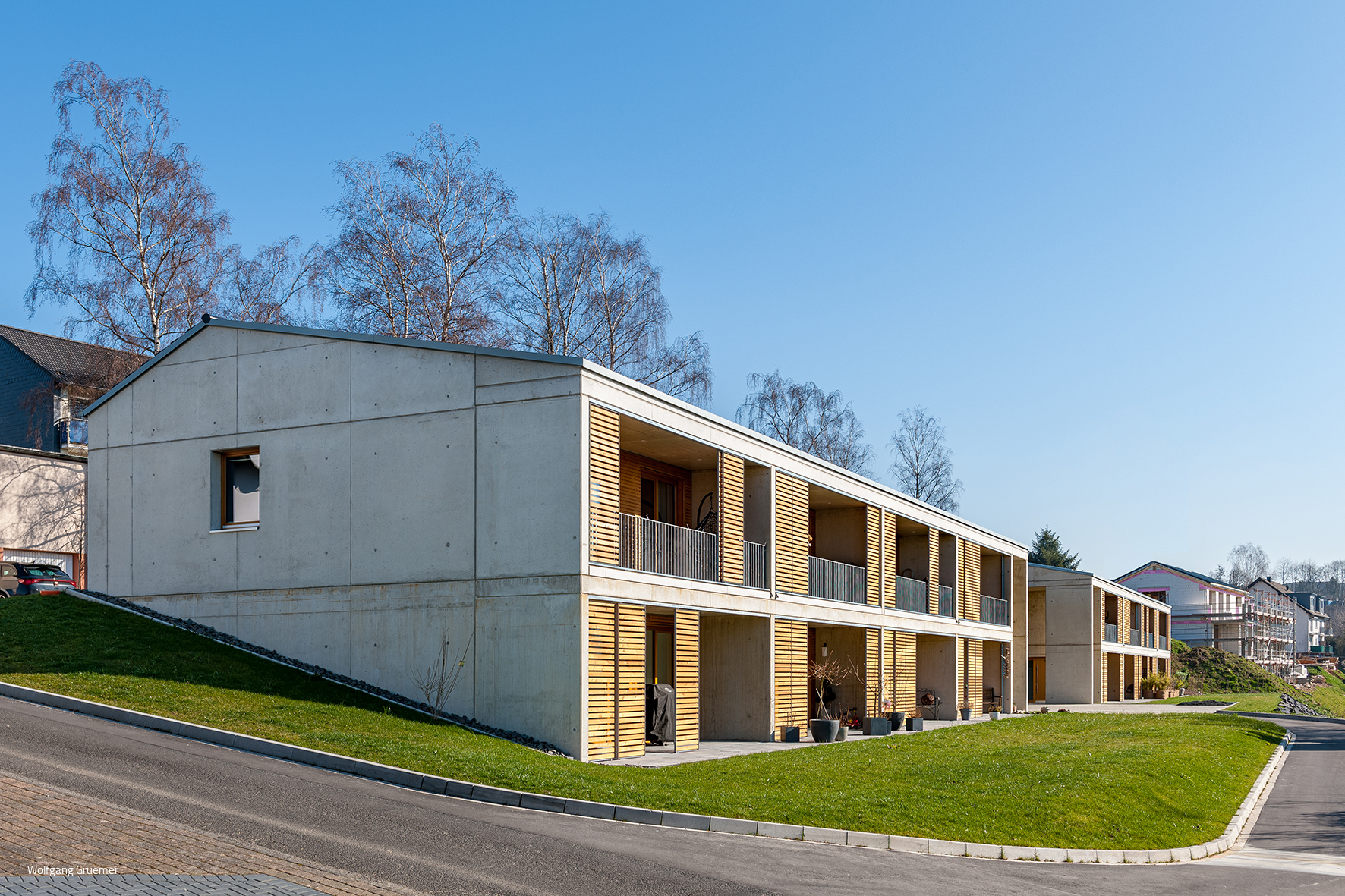
Highly Efficient on the Slope
Two residential buildings fill a gap—both contextually and architecturally
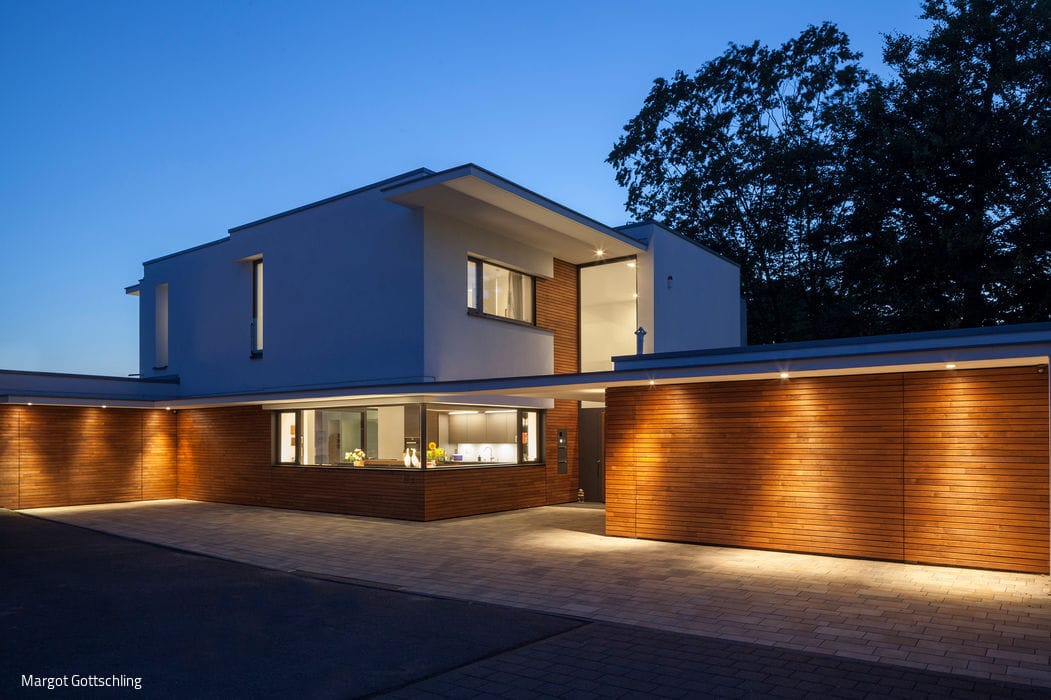
Window to the World
Generous Entertaining Spaces Meet Private Retreats
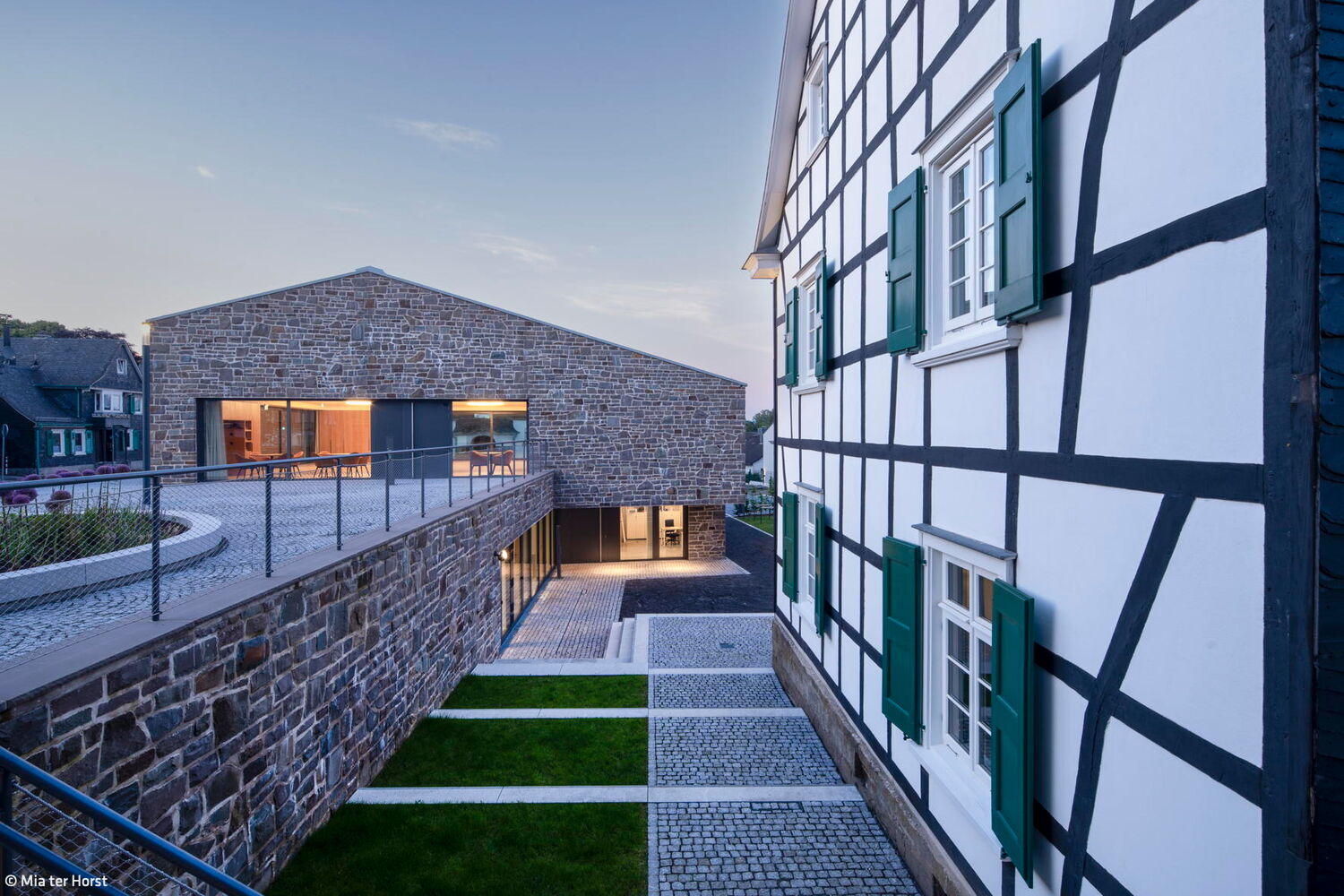
Built Topography
A Community Centre in Bergisch: Weaving Heritage and Community Together
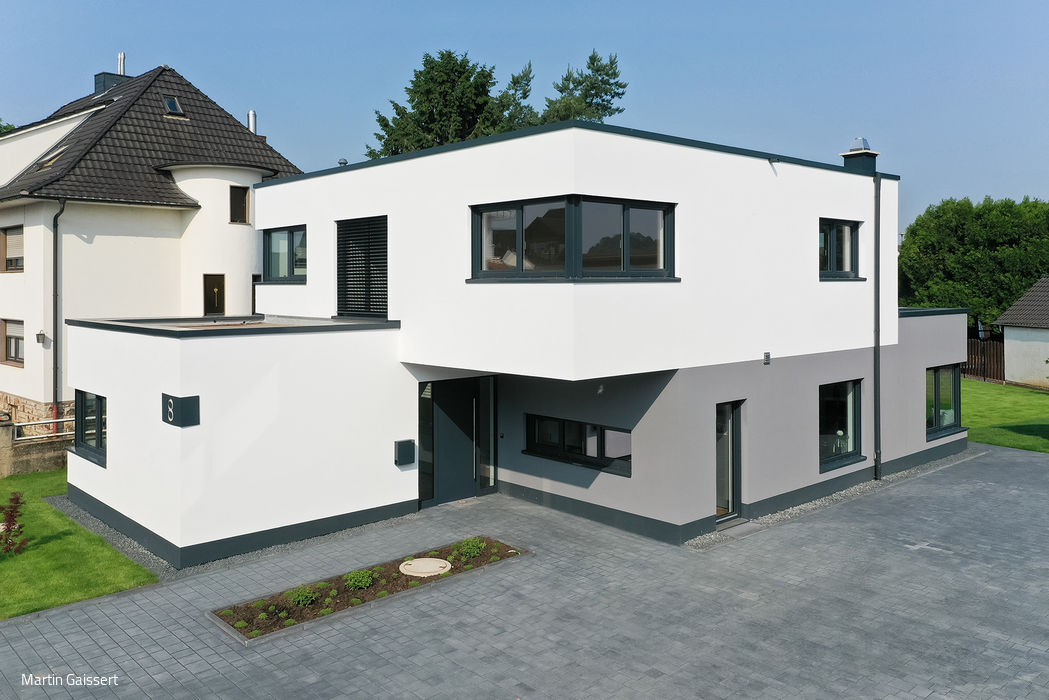
Interior and Exterior in Dialogue
A family home that dissolves boundaries between indoors and out