


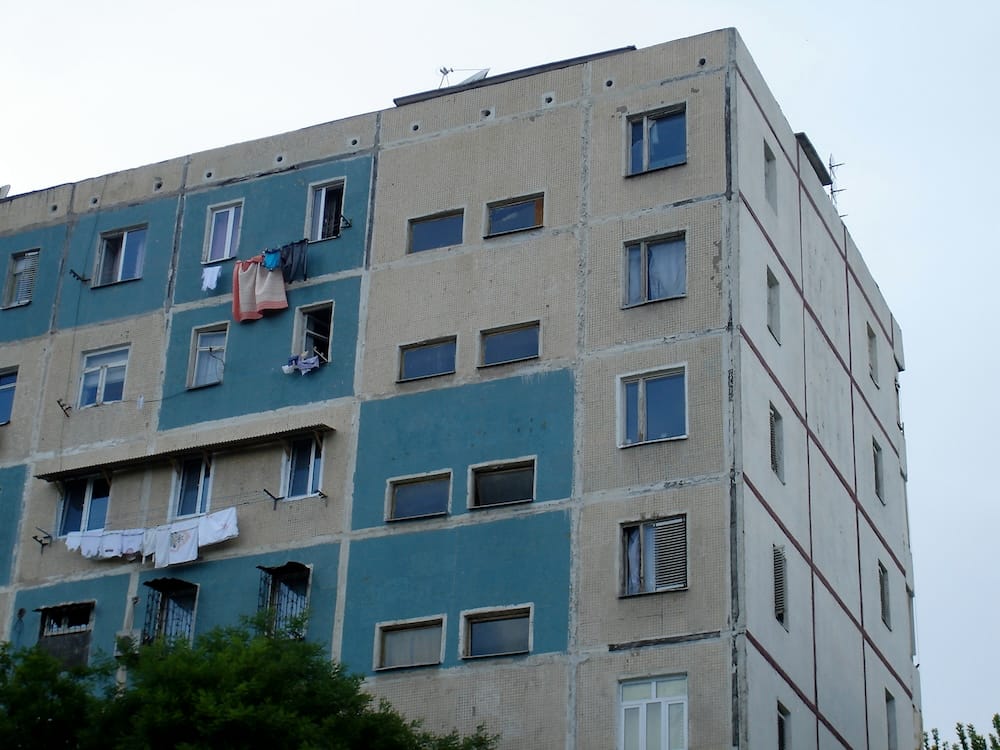
Andrea Pichl, Untitled, 2014, from: Club Future, 2014
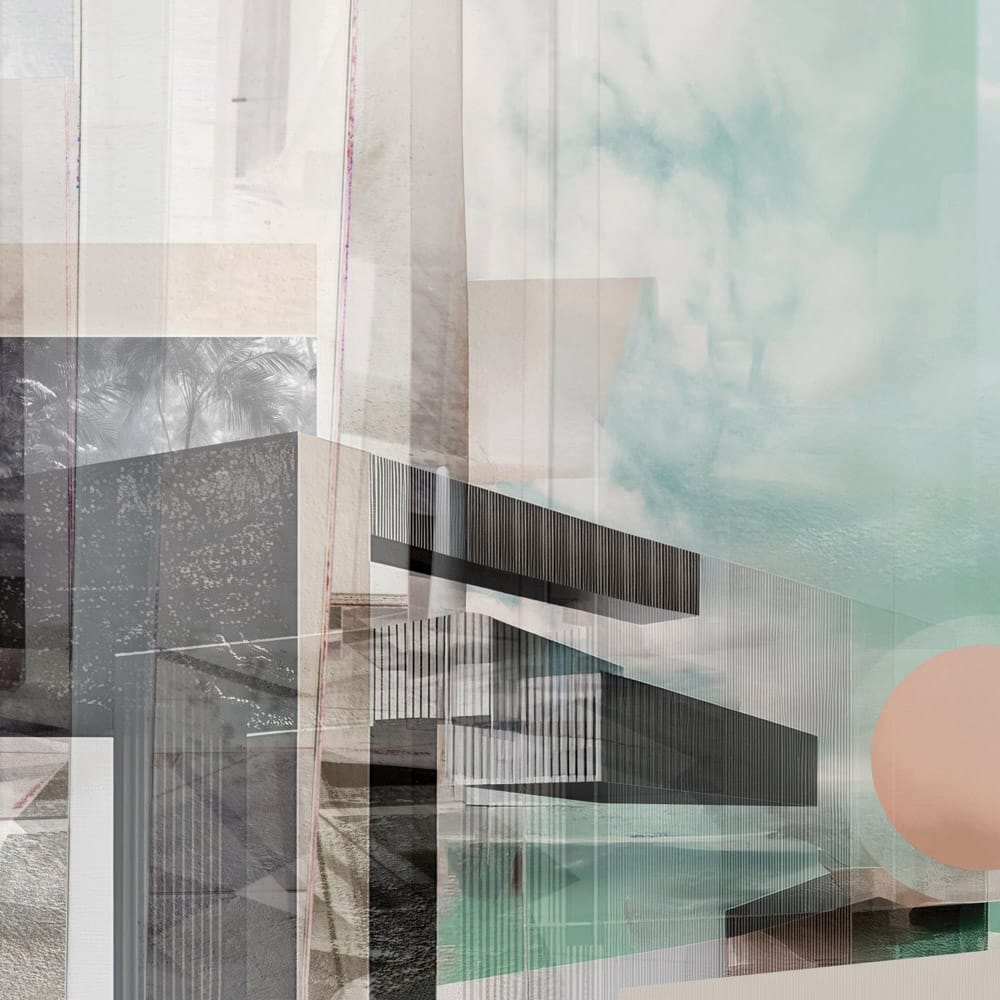
Astrid Busch, Urban Utopia #01, 2025, © Astrid Busch, VG Bild-Kunst, Bonn 2026 (Detail)
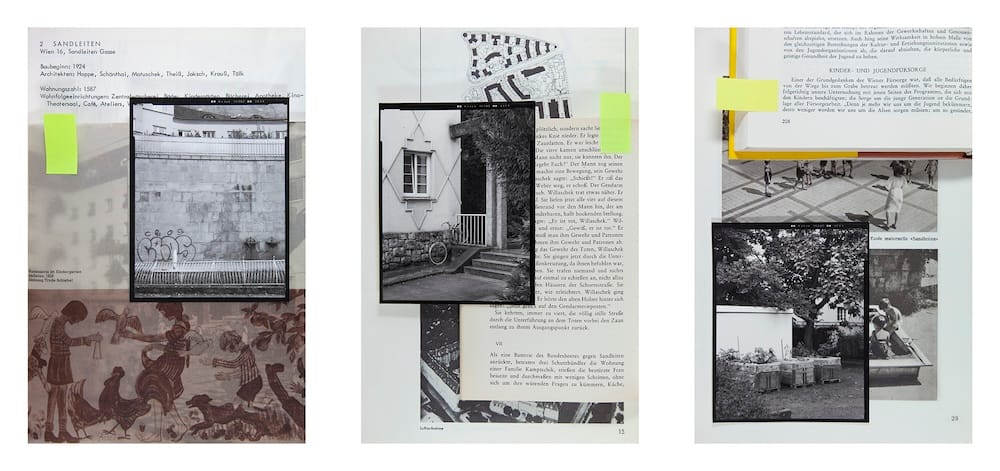
Fig. 1, 2 and 3: Karina Nimmerfall, The Third City (Red Vienna), 2017–2022 (Details, Sandleitenhof)
How Do We Want to Live?
Exhibition focuses on coexistence in the city
"How do we want to live?" With this guiding question, the Kunststiftung DZ BANK presents an exhibition by the same name from June 3 to October 3, directing our attention to how we live together in cities. Against the backdrop of current urban development projects, the exhibition brings together artistic perspectives on architecture, public spaces for gathering, and nature, as well as humanity within the city. What do we need to collectively design diverse spaces in ways that foster greater satisfaction in living together? The housing shortage and the affordability of housing preoccupy people in major cities throughout Germany, Europe, and the world—but equally important is the question of how we can shape community life and create livable environments.
Four immersive installations stand at the center of the exhibition in the Kunststiftung DZ BANK's exhibition space. They engage directly with these very questions. Astrid Busch (*1968 Krefeld, West Germany) investigated Neues Frankfurt on behalf of the foundation, celebrating its centennial in 2025. Karina Nimmerfall (*1971 Deggendorf, West Germany) explores the diverse courtyards of "Red Vienna" (1919–1934), which continue to enable moderate rental developments to this day. Moving between the city center and outlying districts around Paris, Heike Baranowsky (*1966 Augsburg, West Germany) examines prefabricated housing estates, while Andrea Pichl (*1964 Haldensleben, East Germany) brings together panel buildings from both the former East Germany and beyond.
All these positions reveal how deeply architecture and urban development are intertwined with social questions. Historical, political, and social housing concepts continue to shape our major cities today. They encourage us to reimagine urban coexistence: What conditions do we need to collectively design diverse spaces in ways that enable us to live together contentedly? Urban planning solutions influence our sense of inhabiting space—they determine where we gather and where community emerges. Cooperative models, in which a business is managed collectively, can demonstrate alternative solutions to housing affordability that enable both social and economic participation. In the context of climate change, nature becomes once again an integral part of future urban planning. How can we create green oases of tranquility even in urban centers—spaces that prevent summer overheating, provide habitat for our animal neighbors, and simultaneously offer places for recreation and community?
Additional artworks expand our perspective on built space by addressing aspects of lived community and cultivated nature. Lilly Lulay (*1985 Frankfurt am Main, West Germany) develops a dynamic collage of Istanbul, composing a new vision of the city. Klaus Merkel (*1940 location unknown, German Reich) and Olivo Barbieri (*1954 Capri, Italy) demonstrate how even seemingly permanent stone expresses evolved structures. This interconnection of nature and architecture is complemented by constructed plants by Dieter Huber (*1962 Schladming, Austria) and longing-infused places by Beate Gütschow (*1970 Mainz, West Germany), Peter Hutchinson (1930 London, United Kingdom – 2025 Provincetown, Massachusetts, USA), and Talisa Lallai (*1989 Frankfurt am Main, West Germany). The question of how humans and animals move through these spaces is addressed by Eyal Weizman (*1970 Haifa, Israel) and Christian Nicolas (*1971 Beesel, Netherlands), as well as Jitka Hanzlová (*1958 Náchod, Czechoslovakia).
More News
A Milestone for Tourism and Sustainable Mobility
The Ahr Valley looks forward to the opening of the Ahr Valley Railway
Olympics in Focus
Hamburg has a special milestone awaiting in 2026 and a...
BDA Masters 2025
FIVE WINNERS, TWO NOMINEES' PRIZES
Creating Spaces Against Loneliness
Two Munich Initiatives Receive Funding