


"Planet Ocean": Gasometer Unveils Immersive New Exhibition
Celebrating the beauty of Earth's oceans and the remarkable life they sustain
Beneath the ocean's surface lies a seemingly endless realm of majesty—magnificent creatures, breathtaking colors, and mysterious depths that have captivated humanity for centuries. The ocean calls to us, a place where adventure and freedom beckon, yet it remains a symbol of the unknown. And indeed, the oceans still hold their secrets. Though water covers 70 percent of Earth's surface, the vast majority of our seas remain unexplored.
Starting March 15, "Planet Ocean" invites you into these enigmatic depths. As an immersive experience, the Gasometer unfolds across three exhibition chapters, revealing the remarkable diversity of underwater worlds through large-format photography and film—some never before seen—original specimens, immersive soundscapes, and groundbreaking animation. Jeanette Schmitz, managing director of Gasometer Oberhausen, conceived the exhibition as an integrated whole: "Our new exhibition functions as a comprehensive model, drawing on multiple sensory pathways to deliver an unprecedented window into the world's oceans."
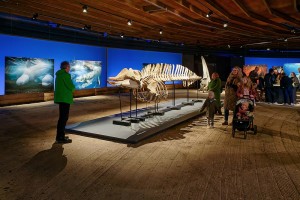
On the ground floor, a harlequin octopus glides playfully through the Mayotte lagoon while two fluffy gentoo penguins huddle together. Tiny shells gleam proudly in their own display case, and a friendly humpback whale named Willi extends a warm welcome at the entrance. Curators Jeanette Schmitz and Thomas Wolf present a fascinating portrait of a little-known underwater realm—one that extends far beyond fish, marine mammals, and sea turtles to encompass vibrant coral reefs, photosynthetic algae, and entire forests beneath the waves.
At the heart of the exhibition sits "Sound of the Deep," a specially commissioned audio installation by composer Chris Watson. This immersive, circular soundscape crackles and resonates as visitors encounter the vibrant world beneath the waves: living coral reefs, hunting orcas, and Weddell seals singing beneath Antarctic ice. The revelation? The ocean is far from silent. Sound travels with remarkable intensity underwater, carrying acoustic waves vastly farther than through air. This sensory journey begins at the Rhine's mouth in the North Sea and descends into the Antarctic depths. Developed by Oceans21 and refined by Watson in collaboration with sound artist Tony Myatt and light artist Theresa Baumgartner, this installation was created exclusively for the Gasometer.
Water is the foundation of all life on Earth. Yet this precious resource faces mounting pressures—from climate change to overfishing to ocean pollution—pushing marine ecosystems to their breaking point. The exhibition's second chapter confronts these challenges head-on, exploring human impact and the vital work of marine conservation and research. The German Oceanographic Museum serves as a trusted partner, lending scientific expertise that anchors the exhibition's message.
Modern technology now allows us to track the ocean's constant transformations in remarkable detail. The "Ocean Twin"—an interactive globe developed by the Environmental Systems Research Institute (Esri)—visualizes this data as a dynamic geographical information system. Inside the Gasometer, visitors can layer different datasets together, creating an interactive portrait of our seas. Through immersive "what-if" scenarios, you can explore firsthand how human actions reshape one of Earth's most vital natural systems.
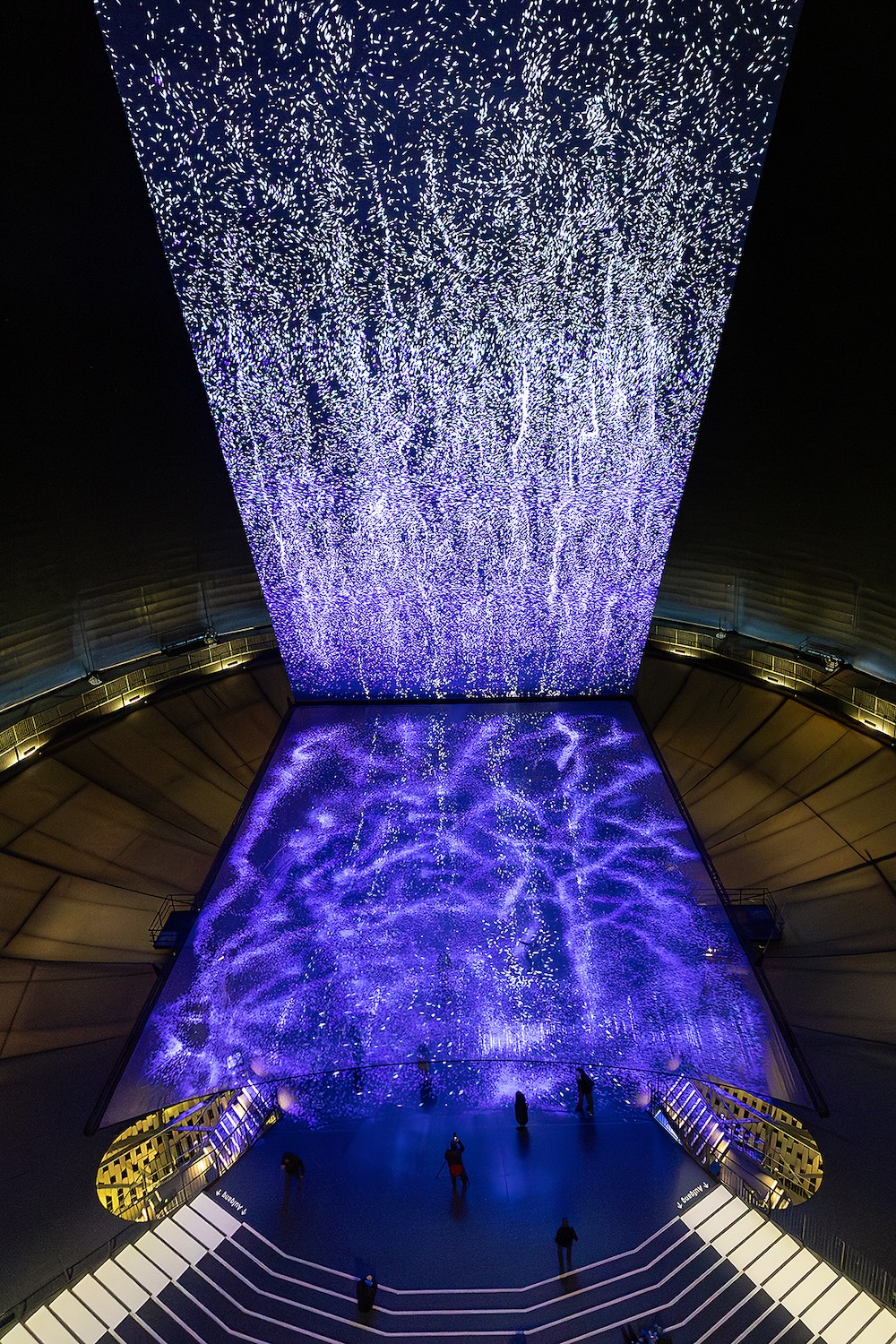
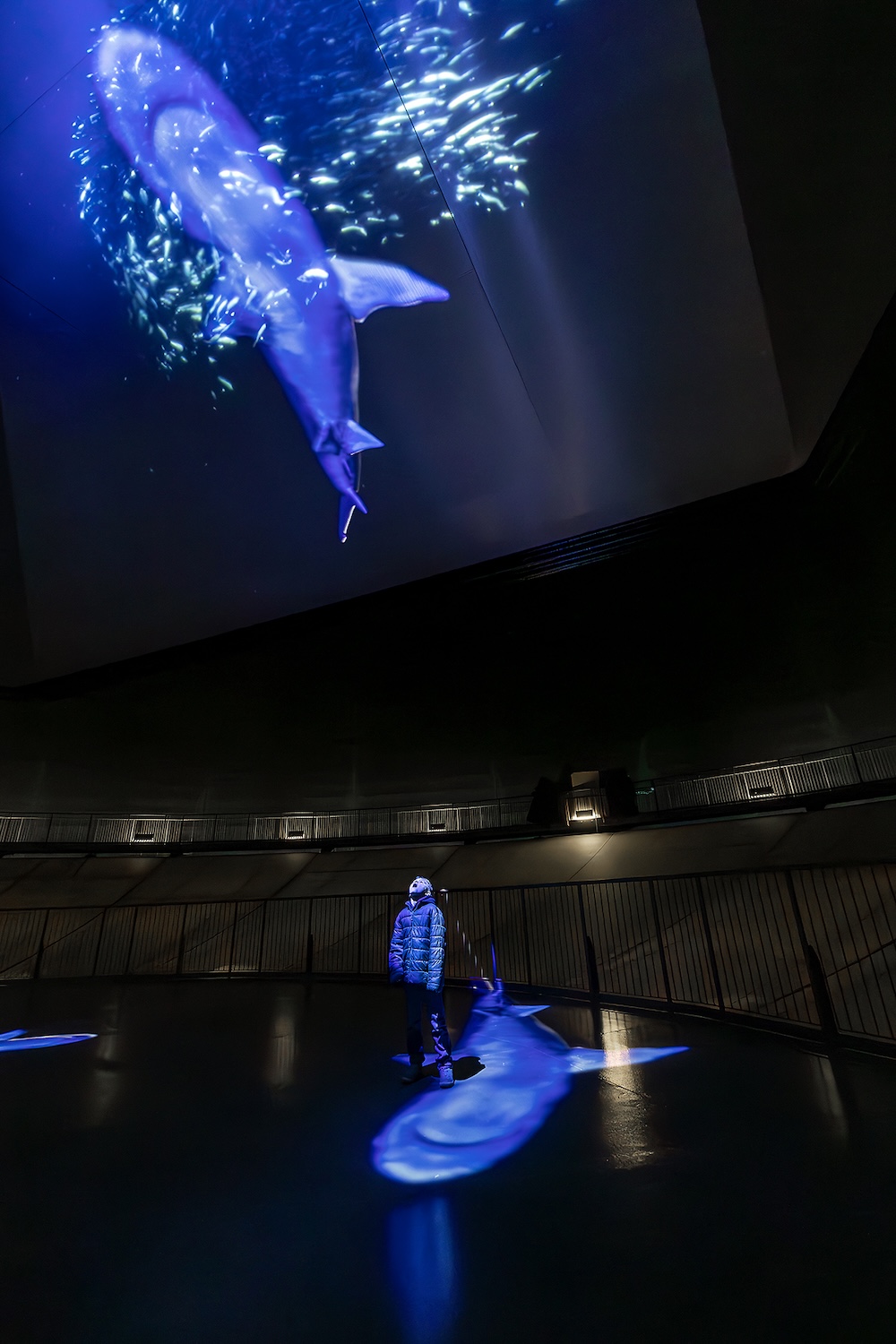
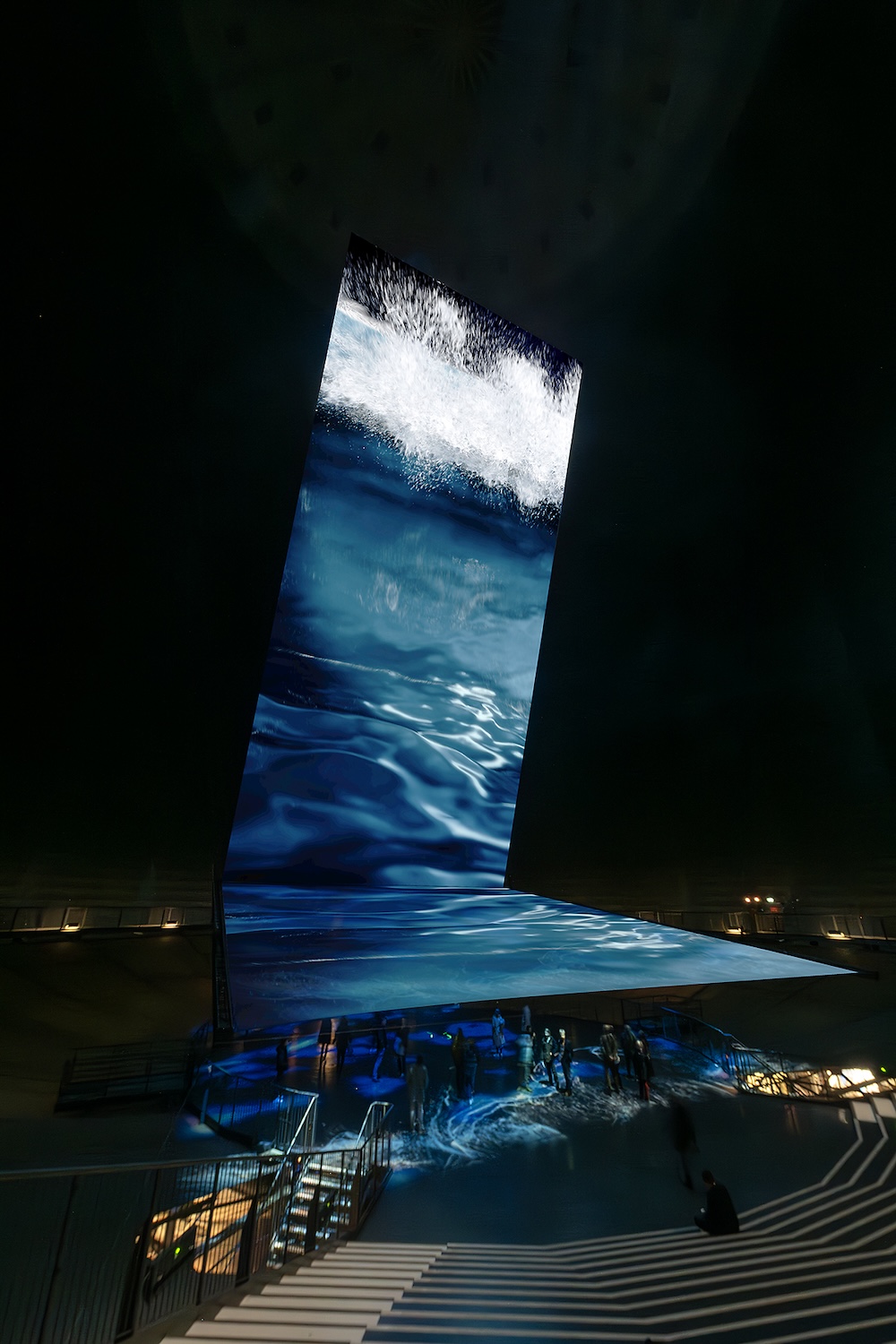
The exhibition's pièce de résistance is "The Wave," an immersive cinematic installation that dominates the space with a 40-meter screen soaring into the Gasometer's vast dome. Two interlocking surfaces, spanning over 1,000 square meters, transform into a visual experience as massive walls of water rush toward you in breaking waves. Venture deeper, and you'll find yourself swimming among vast schools of fish, gliding alongside graceful jellyfish, and face-to-face with ocean giants in their true scale.
The striking computer-generated imagery was crafted by Ars Electronica Solutions, pioneers in designing interactive, multisensory experiences. To prepare, the Austrian team built a virtual water basin containing over six million cubic metres—the foundation for months of meticulous development. The result is a stunning underwater realm brought to life across the world's tallest indoor screen, powered by seven Epson laser projectors delivering 30,000 lumens each. Curator Nils Sparwasser explains: "Our wave sculpture—developed with Ars Electronica and composer Rupert Huber of Tosca—delivers an entirely immersive experience that's truly unique to the Gasometer."
The audio experience rises to the same heights. For this exhibition, the renowned GEO expert and documentarian Dirk Steffens serves as narrator, guiding you intimately through each chapter. Want to dig deeper? Selected photographs unlock expanded insights from the GEO editorial team—a simple click away. And returning favorites like children's audio guides also make a comeback, as Jeanette Schmitz explains: "Visitors of all ages will enjoy our carefully produced audio adventures as Gasolo, our Gasometer ghost, leads them through each exhibition space."
"Planet Ocean" runs at Gasometer Oberhausen from March 15 through December 30, 2024.
The exhibition runs Tuesday through Sunday, 10 a.m. to 6 p.m.—and Mondays during German public holidays and North Rhine-Westphalia school breaks. Purchase tickets online or at the box office. Adult admission: €14 (concessions €11). Family packages: €33 for two adults and up to five children (ages 6–17); €28 for one adult and up to two children (ages 6–17). For details, visit www.gasometer.de
"Planet Ocean" is realized by Gasometer Oberhausen GmbH in collaboration with the German Oceanographic Museum and supported by the German Postcode Lottery. Additional partners include Epson, Esri, Energieversorgung Oberhausen (EVO), and NABU NRW. WDR 5 and GEO serve as media partners.
Most exhibits come from our partner institution, the German Oceanographic Museum Foundation. We also gratefully acknowledge loans from the Ruhr Museum Essen, the LWL Museum of Natural History Münster, GEOMAR Helmholtz Centre for Ocean Research, TU Bergakademie Freiberg, LEGOLAND Discovery Centre Oberhausen, and the Federal Institute for Geosciences and Natural Resources (BRG).
More News

MAX40
Architekturpreis für junge Architekt:innen

Fantasies of „the Other“
Exoticizing architecture in Stuttgart from the 19th century…
Rental Housing and the Housing Question
Exhibition at Tuntenhaus
The City is the Sport
Cities in motion: examples from across Europe