


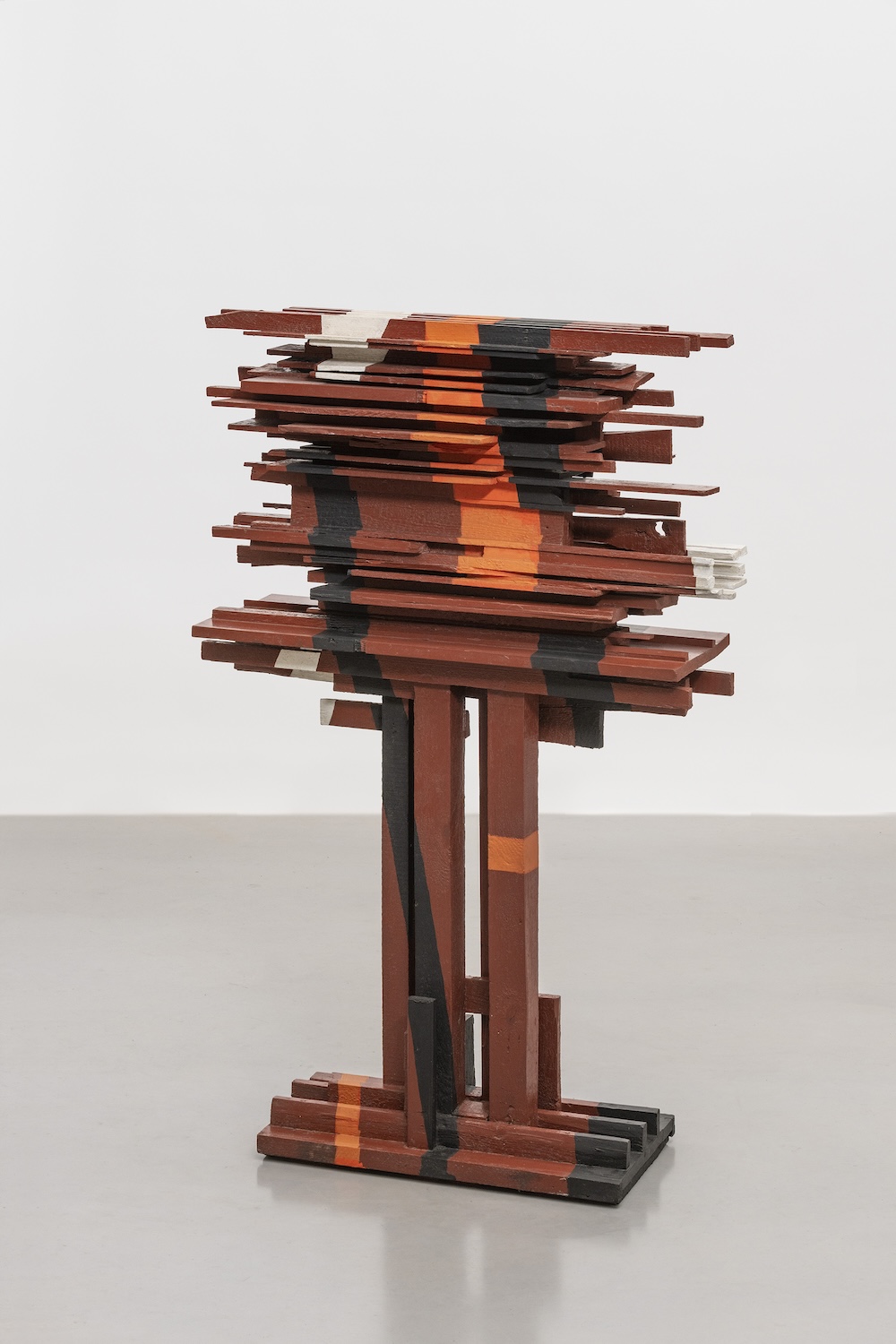
Otto Herbert Hajek Farbwege 64/3, 1964 Wood, painted, 152 x 90 x 36.5 cm O.H. Hajek Art Foundation at the Kunstmuseum Stuttgart © VG Bild-Kunst, Bonn 2023 / Photo: Frank Kleinbach

Otto Herbert Hajek Farbwege 65/12, 1965 Wood and steel, painted, 220 x 107 x 48 cm O.H. Hajek Art Foundation at the Kunstmuseum Stuttgart © VG Bild-Kunst, Bonn 2023 / Photo: Frank Kleinbach

Otto Herbert Hajek Untitled, 1970 Silkscreen print, 64 x 61.4 cm O.H. Hajek Art Foundation at the Kunstmuseum Stuttgart © VG Bild-Kunst, Bonn 2023 / Photo: Frank Kleinbach

Otto Herbert Hajek City Sign Stuttgart, 1969/1974 Kleiner Schlossplatz, Stuttgart saai I Archive for Architecture and Civil Engineering, KIT Karlsruhe, O. H. Hajek Works Archive © VG Bild-Kunst, Bonn 2023 / Photo: Robert Häusser
Otto Herbert Hajek
Exhibition at Kunstmuseum Stuttgart
Otto Herbert Hajek (Kaltenbach [Nové Hutĕ], CZ 1927–2005, Stuttgart) stands as one of Germany's most significant artists of the 20th century. His artistic legacy continues to define Stuttgart's urban character: over 50 sculptures and "art in architecture" projects created throughout the city, where he lived from 1947 until his death. The Kunstmuseum Stuttgart itself shares a remarkable chapter with Hajek—in 1969, he transformed the often-debated Kleiner Schlossplatz into a vibrant gathering place through visual art. The interplay between art and built environment became the animating force of his practice, realized through commissions for public spaces and architectural interventions worldwide—in Adelaide, Australia, and Montevideo, Uruguay, among others. Hajek conceived his outdoor sculptures as "markers" capable of transforming amorphous urban space into places of encounter and meaning for city dwellers. Throughout his career, he remained committed to infusing public space with art as a way to enhance its quality and foster genuine community connection. Yet reducing Hajek's practice solely to this socio-political and cultural dimension would miss the fuller picture. His nearly five decades of artistic work encompass a multifaceted multimedia oeuvre that resists easy categorization. The comprehensive holdings of the O.H. Hajek Art Foundation—established by the artist himself in 2003—and the Otto Herbert Hajek Art Foundation of Sparda-Bank Baden-Württemberg provide the essential resources to move beyond such narrow interpretations.
The Kunstmuseum Stuttgart exhibition traces the sculptor's artistic evolution through 60 works presented chronologically, deliberately breaking down traditional genre boundaries. By bringing sculpture, painting, and graphic art into direct dialogue, the show reveals the remarkable range of Hajek's geometric-constructive visual language—a formal vocabulary he developed painstakingly over decades and tested across multiple media. His early figurative bronzes, reliefs, and linocuts explore religious themes with echoes of German Expressionism, yet simultaneously, works infused with modernist abstraction were already emerging. Beginning in the mid-1950s, Hajek embraced Informalism: the delicate bronzes of his Raumknoten (Space Knots) and Raumschichtungen (Space Layers) series are defined by an interplay between grid-like structures and organic forms. The exhibition presents these works alongside ink drawings, including rarely displayed letters where gestural marks dance across dense colour fields—early intimations of the colour paths to come.
First introduced at documenta III in 1964, the Farbwege (colour paths) represent a defining moment across Hajek's entire artistic trajectory. In these pioneering environmental works, he merges sculptural objects with colour bands that traverse floors and walls, generating a spatial experience that dissolves boundaries between artwork and viewer, object and surroundings. The exhibition showcases works first presented in 1966 at the Esslinger (op) art gallery, where Hajek staged the colour paths concept with striking intensity—the paths didn't simply conclude within the gallery walls but extended outward across the building façade, through city streets to the marketplace, and among existing public sculptures. Beginning in the 1970s, painting became increasingly central to his practice. Yet even here, Hajek relies on a consistent vocabulary of geometric forms anchoring his sculptural work, creating paintings that function as two-dimensional sculptures. Rendered predominantly in red, yellow, blue, and gold, these canvases reveal gestural marks breaking through otherwise uniform colour fields—a nod to his earlier informal experiments—while diagonal elements echo the colour paths themselves. A dedicated gallery space then examines his public realm interventions through documentary film and printmaking, illuminating how he activated urban spaces through art's place-making power. Complementing the Stuttgart presentation, the art collective UMSCHICHTEN has created Platzprobe (Space Test), a temporary intervention on Kleiner Schlossplatz that updates Hajek's fundamental vision: sculptural objects are positioned to probe, enhance, and critically interrogate the space itself.
More News
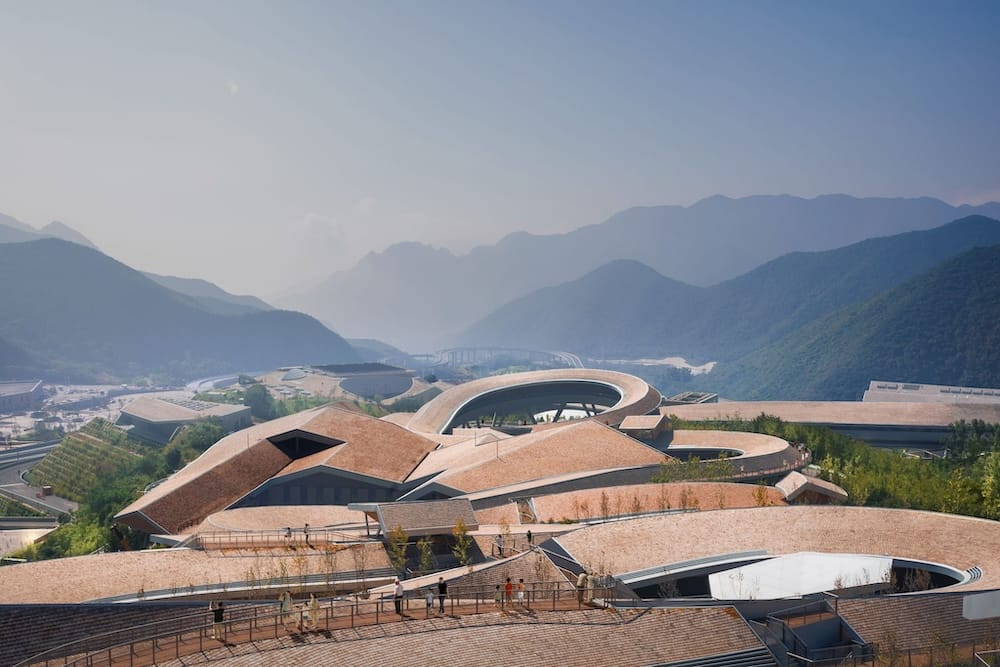
Vital Architecture
Aedes Architecture Forum showcases projects from China
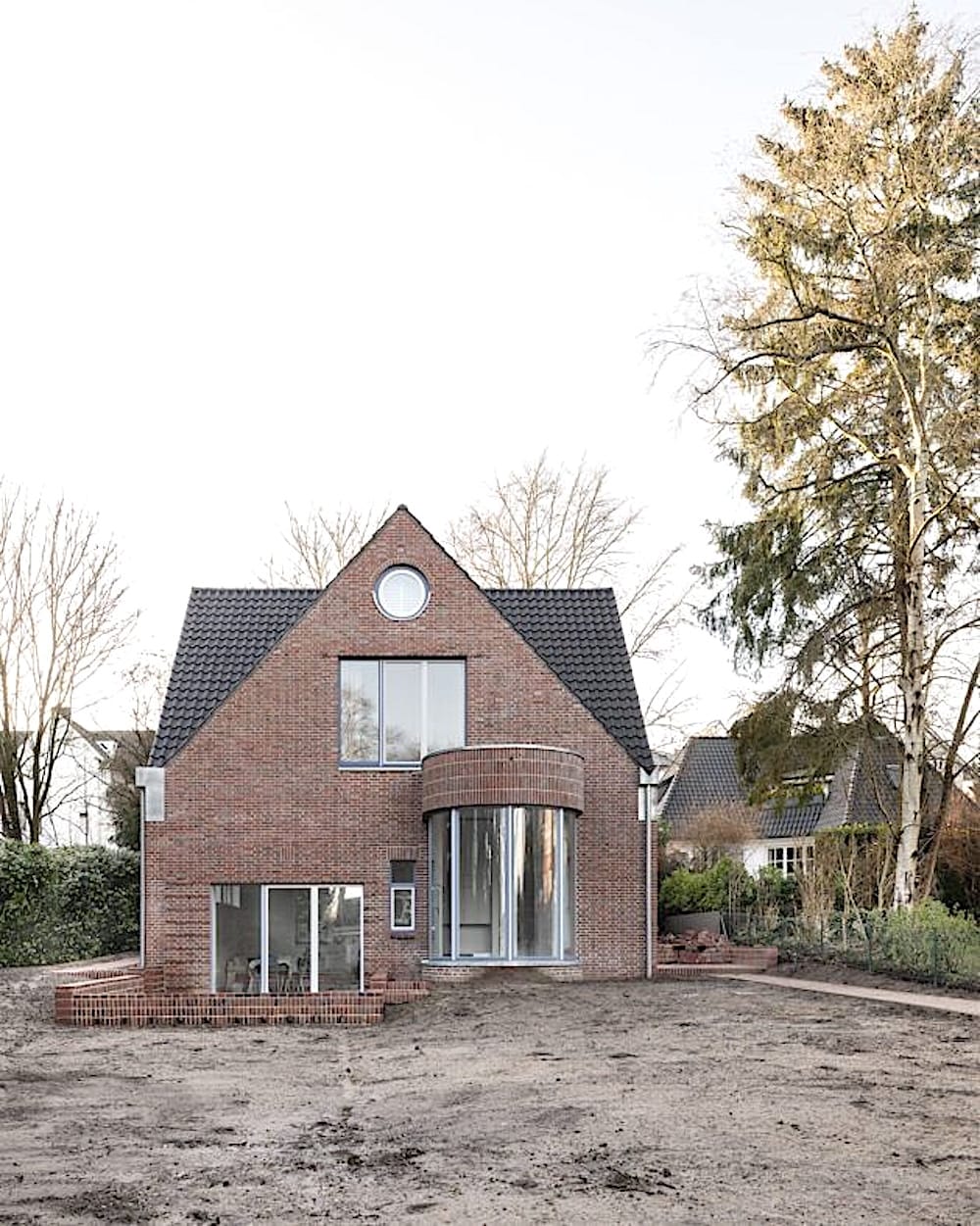
MAX45 2025
Exhibition opening at the BDA Gallery in Hamburg
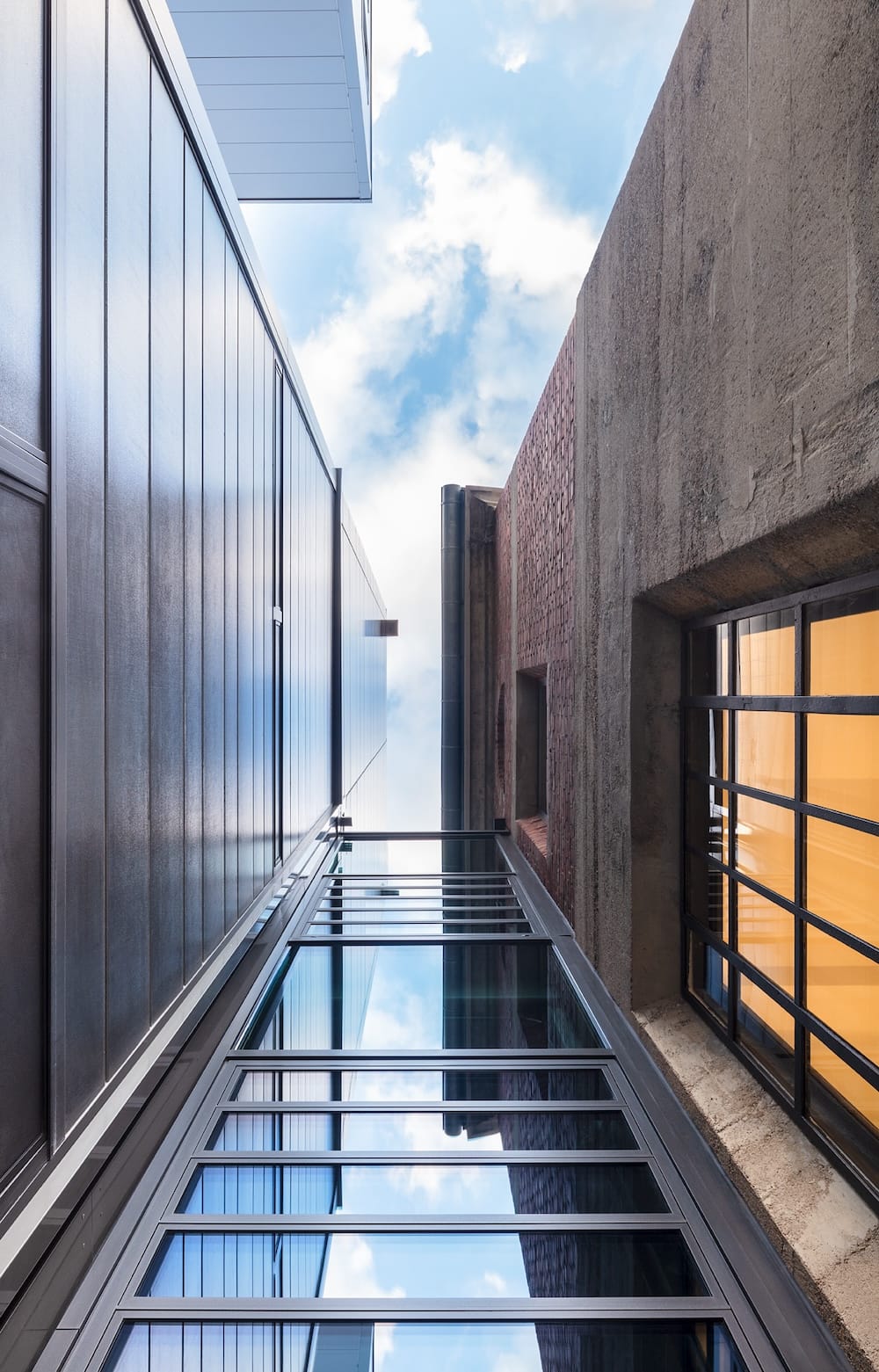
Hans Georg Esch on the Gasteig HP8
Exhibition showcases fresh perspectives on Munich's...

Real estate index climbs 1.8%
Slight recovery despite fragile market environment