


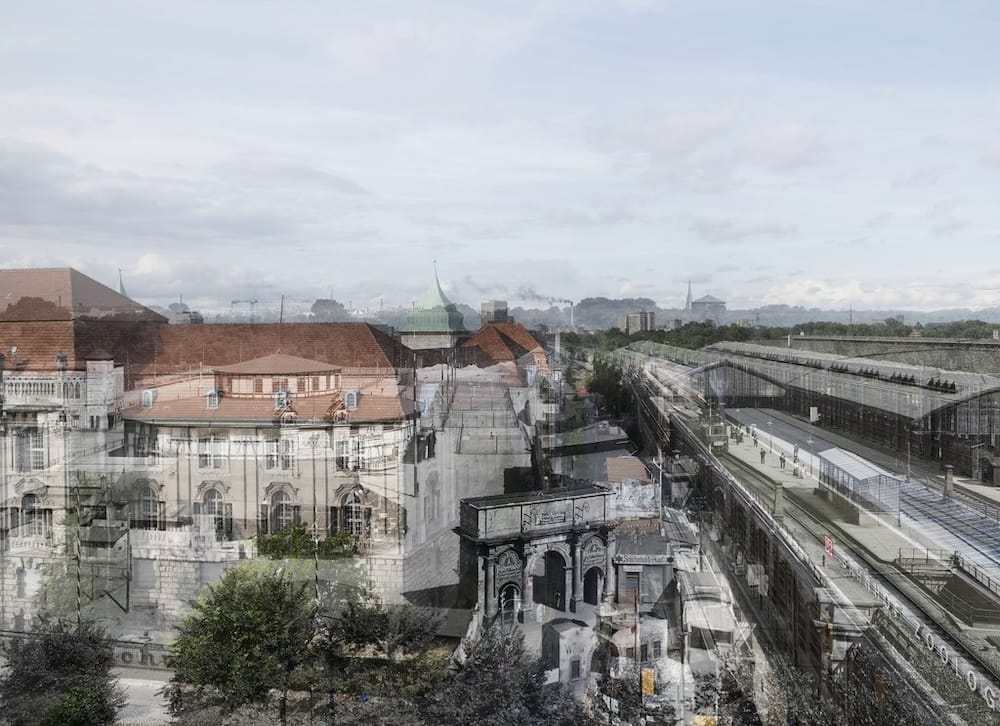
Michael Wesely with Waldemar Titzenthaler: Bahnhof Zoo, Berlin 1898/2023, © VG Bild-Kunst, Bonn 2024
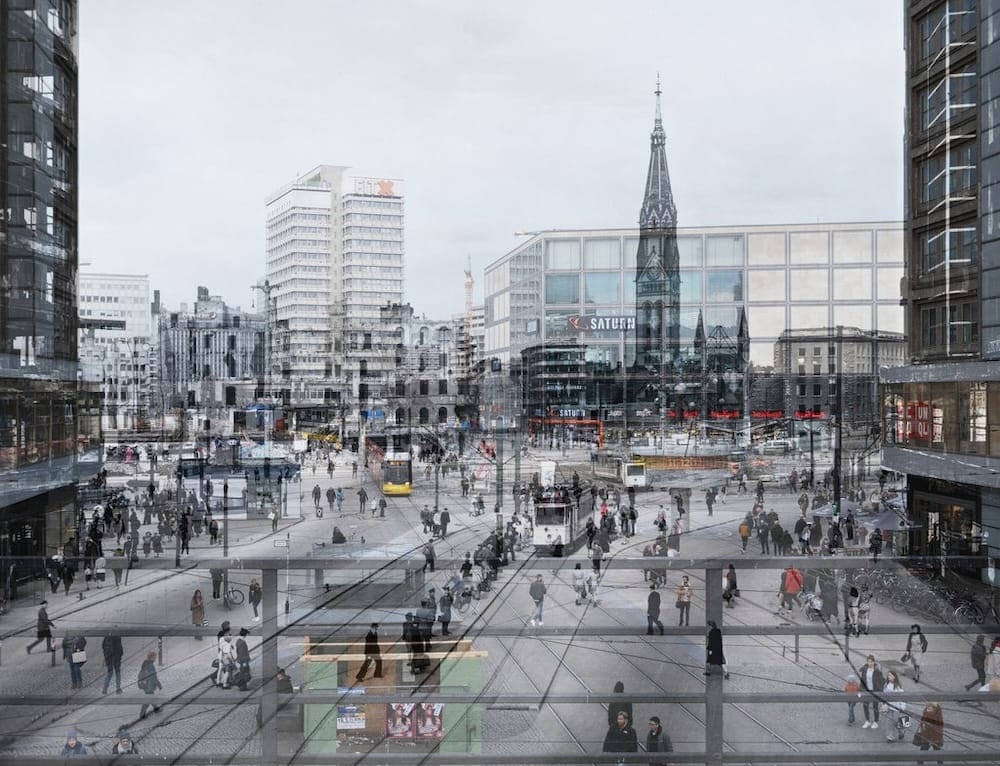
Michael Wesely with Hein Gorny: Alexanderplatz, Berlin 1946/2023, © VG Bild-Kunst, Bonn 2024
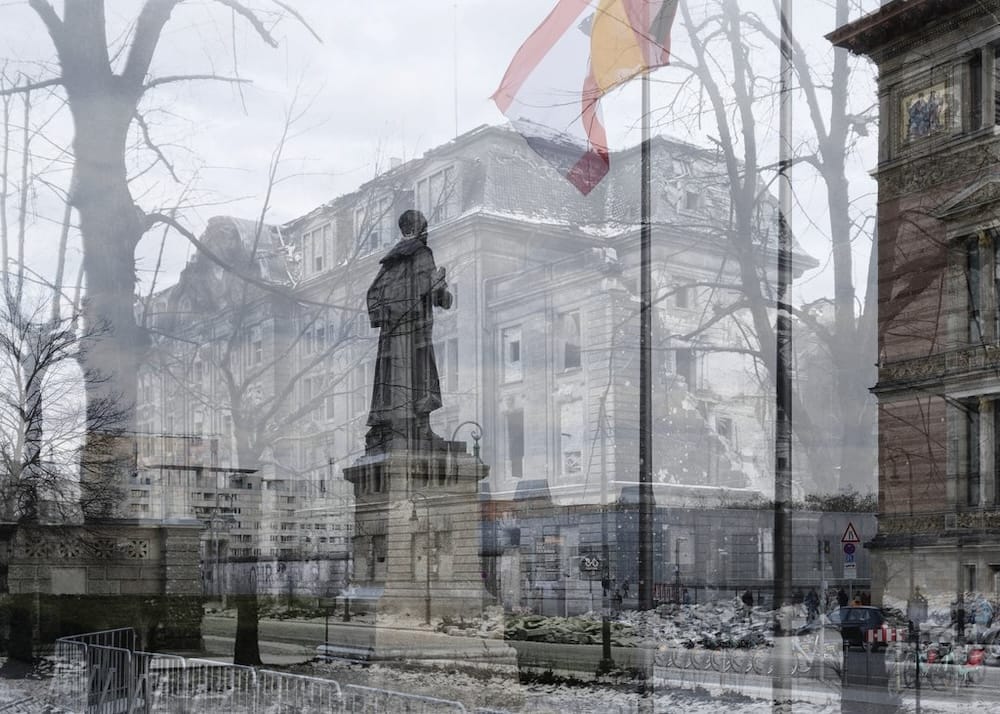
Michael Wesely with Martin Badekow: Niederkirchner Straße, Berlin 1945/2023, © VG Bild-Kunst, Bonn 2024
Michael Wesely. Berlin 1860–2023
Special exhibition at the Art Library
How can the spatial and architectural development dynamics of a city be visualised photographically? How can photography capture time and life at all? In two new series of works, internationally renowned photographer Michael Wesely traces fragments of past realities preserved in historical architectural photographs of Berlin in order to explore the archival dimensions of the medium of photography. For "Doubleday," Wesely superimposes his own photographs precisely over old photographs of Berlin architecture from the 19th and 20th centuries, creating breathtaking leaps in time between then and now. And in the series "Human Conditions," the artist focuses on the traces of human life around 1900 captured in the large-format photographs of the Prussian Messbildanstalt.
Michael Wesely (*1963), a graduate of the Bavarian State School of Photography and the Academy of Fine Arts in Munich, uses his often extreme long exposures to capture processes that span periods of minutes, many hours or even years.
His camera remains fixed, patiently documenting time's passage: people holding still for five minutes, plants blooming and fading across days, architectural structures rising over years. From the outset, Wesely has probed photography's boundaries. At the Munich Academy, he experimented with long exposures—shutter open through entire life drawing classes, lectures, or library sessions. In his transition to digital photography, the camera stays anchored in place, yet now hundreds of daily images are layered together, sometimes across decades. Through extended projects, he has documented the construction of major urban landmarks in Munich, Berlin, São Paulo, and beyond. From predetermined vantage points, he tracked the 2001–2004 renovation of the Museum of Modern Art in New York and Berlin's five-year restoration of the Neue Nationalgalerie.
For his new exhibition at the Museum of Photography, Wesely has devised innovative photographic approaches to capturing time. The "Doubleday" series examines over 150 years of Berlin's architectural and urban history through layered imagery, investigating how the city has been shaped by rupture and transformation. Each work merges Wesely's photographs—taken from identical vantage points—with historical images by renowned photographers: Friedrich Albert Schwartz, Albrecht Meydenbauer, Waldemar Titzenthaler, Max Missmann, Hein Gorny, Martin Badekow, and Rolf Goetze, drawn from the Kunstbibliothek, Brandenburgisches Landesdenkmalamt, Stadtmuseum Berlin, Landesarchiv Berlin, bpk-Bildarchiv, Collection Regard, and private collections. Spanning from Alexanderplatz to the Zoo railway station district, these photographs chronicle the city's defining structures and dramatic chapters—its modernization, wartime destruction, and postwar rebuilding.
More News
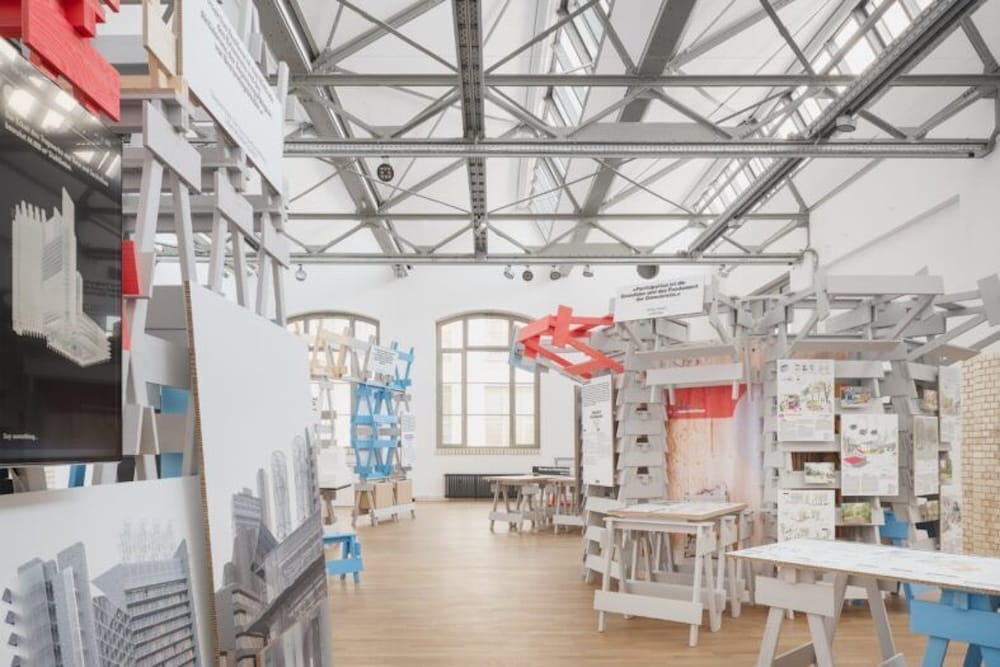
Transformation in Progress. Ten Strategies for Cities and Regions
Exhibition at the German Architecture Center
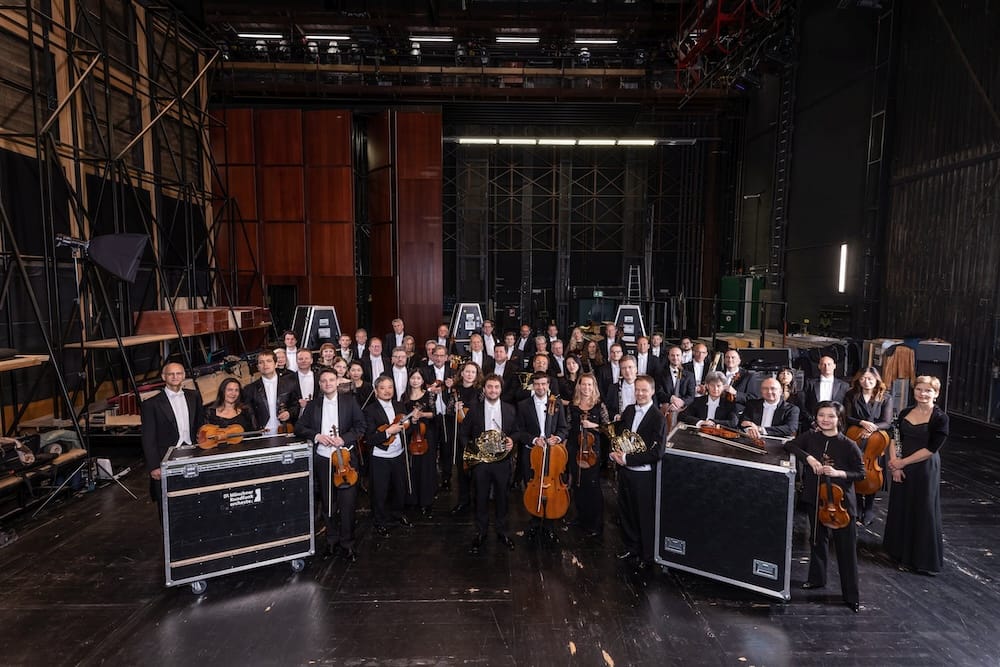
Britische Filmmusiknacht
Konzert im Kurpark Wiesbaden
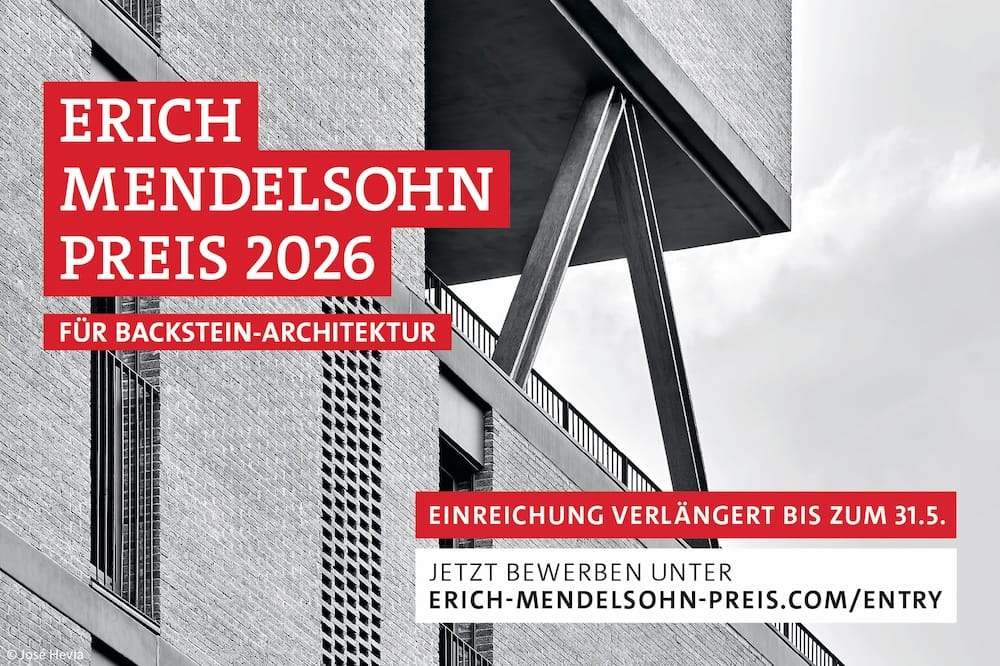
Erich-Mendelsohn-Preis 2026
Einreichungsfrist für Backstein-Architektur verlängert
German Urban Design Award 2027
The application period has begun