


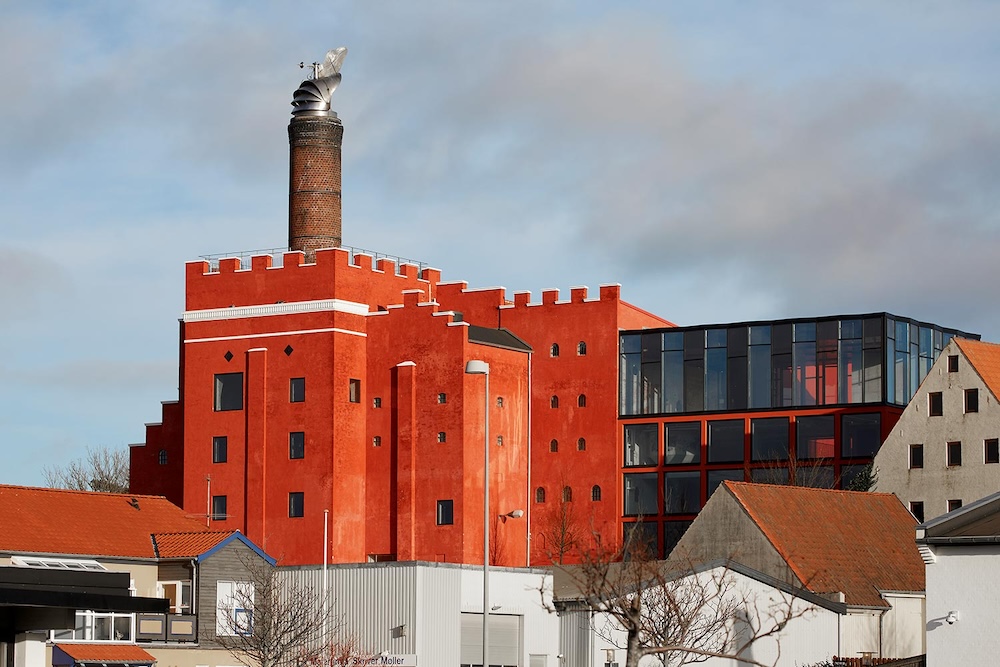
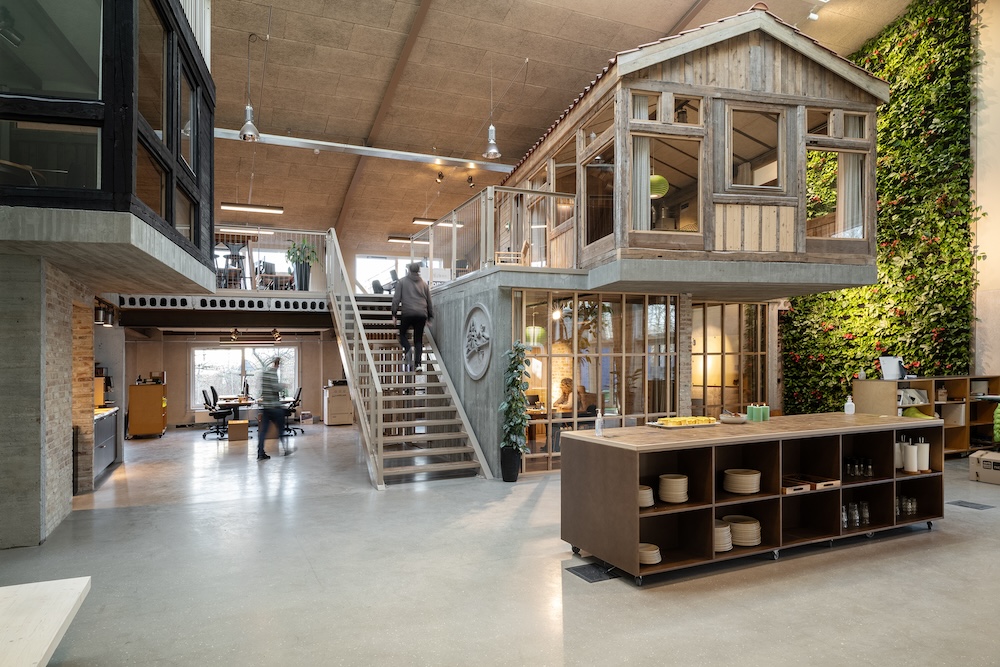
Transformation in Action
Reducing Construction's Carbon Footprint
A substantial share of global CO₂ emissions originates in the production of building materials. This reality presents a compelling opportunity: extending a building's lifespan is far more impactful than replacing it with new construction. Through a new online initiative, Troldtekt spotlights successful transformations and renovations of existing structures. Of every ten tonnes of CO₂ entering our atmosphere, more than one tonne stems from the production and handling of building materials. This points to a crucial path forward: extending the life of materials themselves – whether through thoughtful renovation of aging buildings or reimagining their purpose entirely. Both approaches hold significant environmental promise.
In 2020, Aalborg University's Department of Civil Engineering, Urban Development and Environment (BUILD) analysed the climate impact of materials across 60 newly constructed buildings. The median result: 7.1 kg CO₂ e/square metre/year. A 2022 comparison by the "Rådet for Grøn Omstilling" (Council for Green Transformation) examined eight retrofitted buildings with strikingly different results – just under 3 kg CO₂ e/square metre/year. The climate case for renovation and material preservation is clear. Beyond the numbers, converting historic industrial buildings into residences offers significant design potential. Preserving Heritage and Cultural Values
Troldtekt, a Danish acoustic panel manufacturer, explores building renovation and transformation in a new online feature. The series highlights compelling case studies of successful projects, including an interview with Olav de Linde, founder and CEO of his eponymous real estate firm. Both he and his company have earned multiple accolades for their commitment to material reuse and thoughtful building transformation. "I like to engage in a dialogue with the building itself," de Linde explains. "What inherent values does it possess? What cultural heritage deserves preservation? How can we reimagine its future use? Most buildings are designed for a specific purpose, then adapted for another—and that demands a fundamental shift in thinking." He continues: "Our approach prioritizes retaining the building's original character, form, and narrative. After transformation, you should still recognize the building's authentic origins."
The feature highlights several current projects, including:
– The revamped headquarters of Tscherning, a demolition specialist. The office building showcases recycled materials throughout, including a Troldtekt ceiling salvaged from the original industrial structure. Conference spaces feature materials sourced directly from Tscherning's demolition projects – reclaimed wood, boards, bricks, and surplus acoustic panels from Troldtekt production.
– Sjællandsk Muld, a housing cooperative with a distinctive approach to recycled materials. Its 35 households actively shape their homes by selecting from available recycled components – reclaimed floorboards, kitchen elements, and offcuts from Troldtekt acoustic panels.
– Stenberg Farm near Hudiksvall in eastern Sweden. This 18th-century structure has been thoughtfully converted into eight apartments built to passive house standards with exceptional energy performance. Six of these apartments feature Troldtekt acoustic panels – an essential choice given the dramatic 6.5-metre ceiling heights and concrete-and-oak floors that would otherwise create acoustic challenges.
Built to last 50–80 years or more, Troldtekt acoustic panels resist wear and moisture, making them ideal for buildings reimagined for new purposes. Crafted from Danish wood and cement – a combination that delivers durability – they can be repainted repeatedly without compromising acoustic performance, ensuring they perform as well as the day they were installed.
This durability proved invaluable during renovations of Aarhus Airport and Lula restaurant at Aarhus Harbour, where original Troldtekt ceilings from a former sailing club were preserved through three restaurant iterations – recently refreshed with black paint and performing flawlessly. Troldtekt is advancing an ambitious circular economy vision, developing take-back programmes that extend the life of acoustic panels across multiple cycles. The new online initiative features an article on the company's first recycling systems for wood wool panel residues from both its own production and construction sites, alongside plans for upcycling panels recovered from existing buildings – giving them entirely new purpose.
Explore our complete online resource on renovation and transformation here: https://www.troldtekt.de/themen/renovierung-und-transformation/
More News
Archetypes of Architecture and Landscape
Photo exhibition in the Papierhalle at Wasmuth Verlag
Berlin Plans. Year Zero
Exhibition at the Neuer Berliner Kunstverein
Hans Georg Esch – The Architectural Gaze
Exhibition at the Museum of Applied Arts from 11 June
How Do We Want to Live?
Exhibition focuses on urban coexistence