


Openness as a Design Principle
Historic Character Meets Modern Design
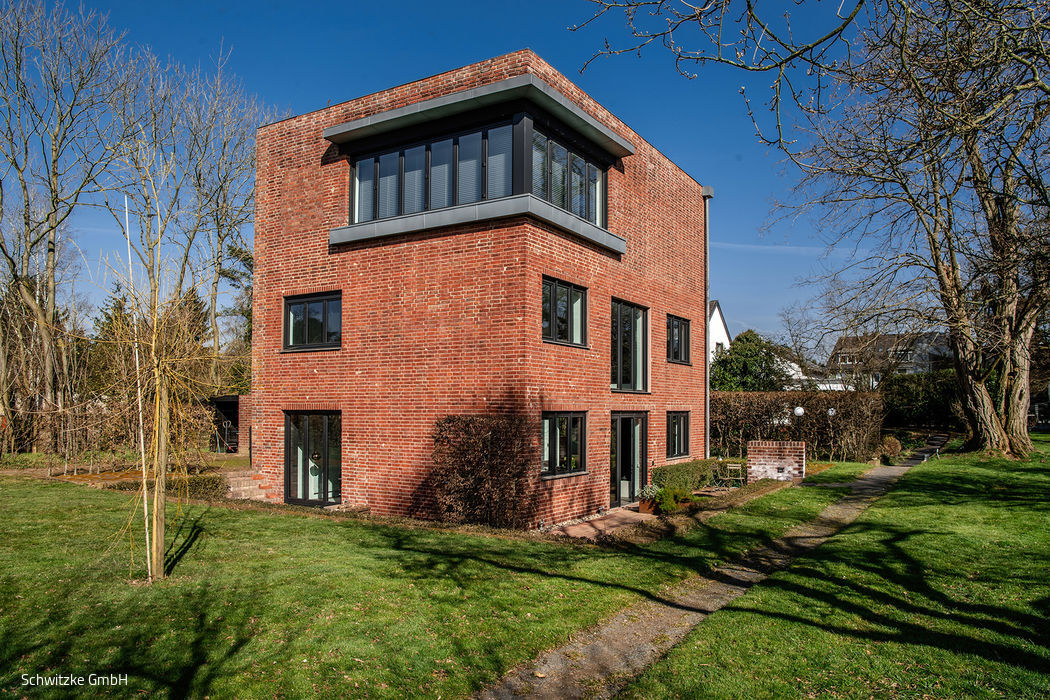

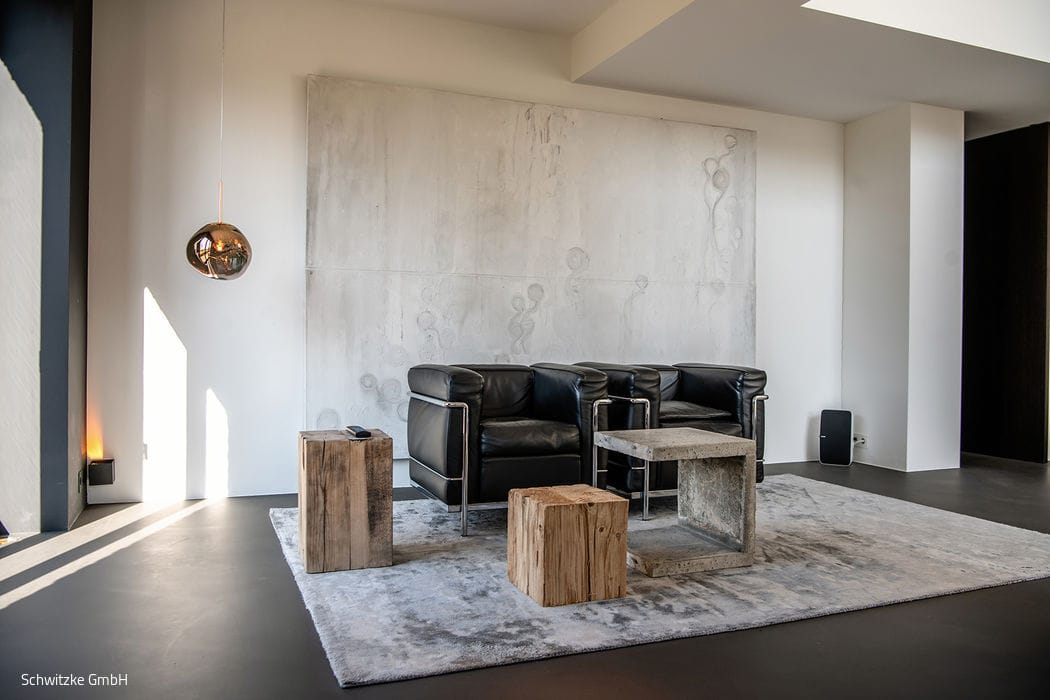
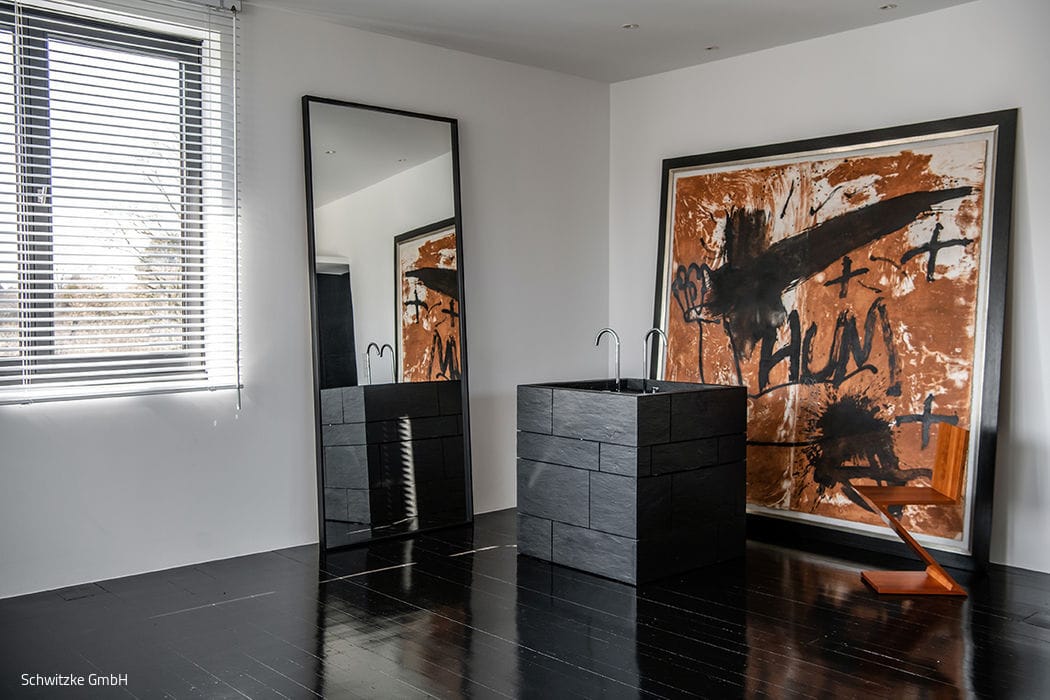
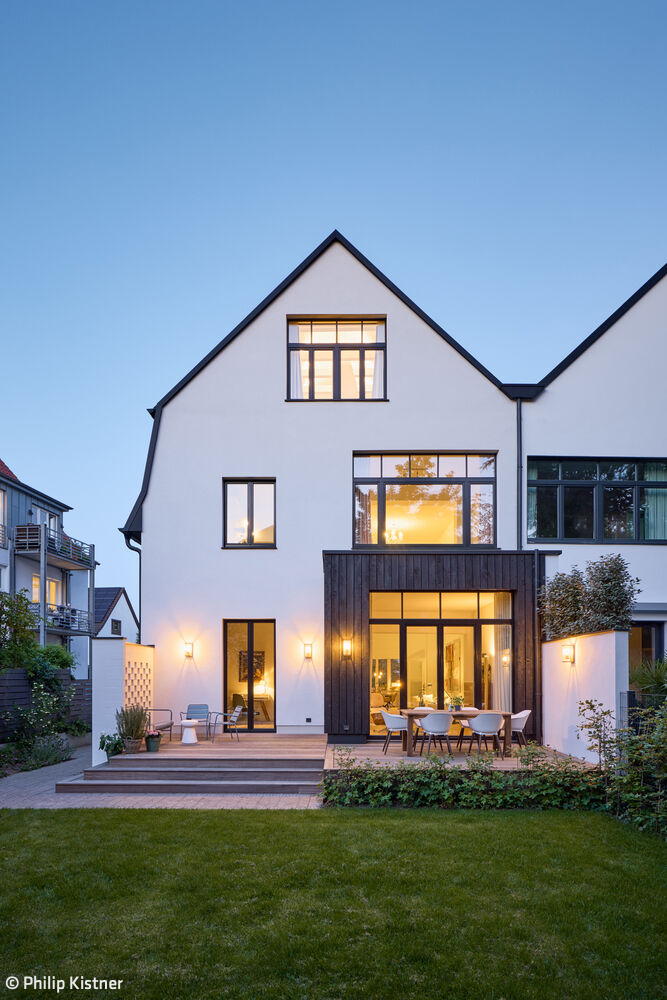
Love at first sight. This 1929 Bauhaus home captivated the current owners immediately, and the purchase agreement was signed without hesitation. But moving in required patience—extensive renovations were needed to transform their vision into reality. "Throughout the renovation, preserving the building's authentic Bauhaus character was paramount," Wolfgang Sigg explains. "Every change was made to honor the original architecture while adapting it to our lifestyle."
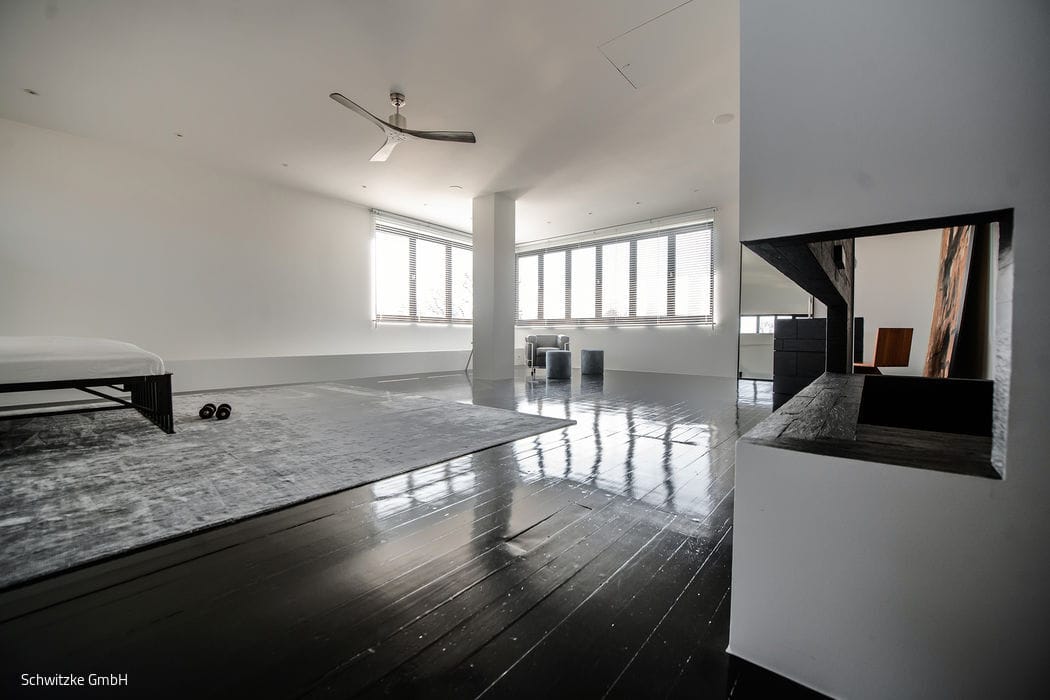
What truly distinguishes this design is the seamless flow of spaces and how each area connects and complements the others. The interior layout dissolves boundaries between rooms, allowing residents to experience the entire home as a unified whole while maintaining distinctive sightlines and destinations throughout. The first and second floors exemplify this philosophy—linked as a single, flowing space. A striking cantilevered wooden staircase, anchored to the walls at just two points, reinforces this sense of spatial continuity. Beyond openness, the architecture's clean graphic language—defined by precise lines and thoughtful connections—extends to another signature feature: integrated built-ins. Cabinetry, shelving, and storage are seamlessly embedded within the exposed concrete walls across all levels, eliminating the need for freestanding furniture and maintaining the design's elegant minimalism.
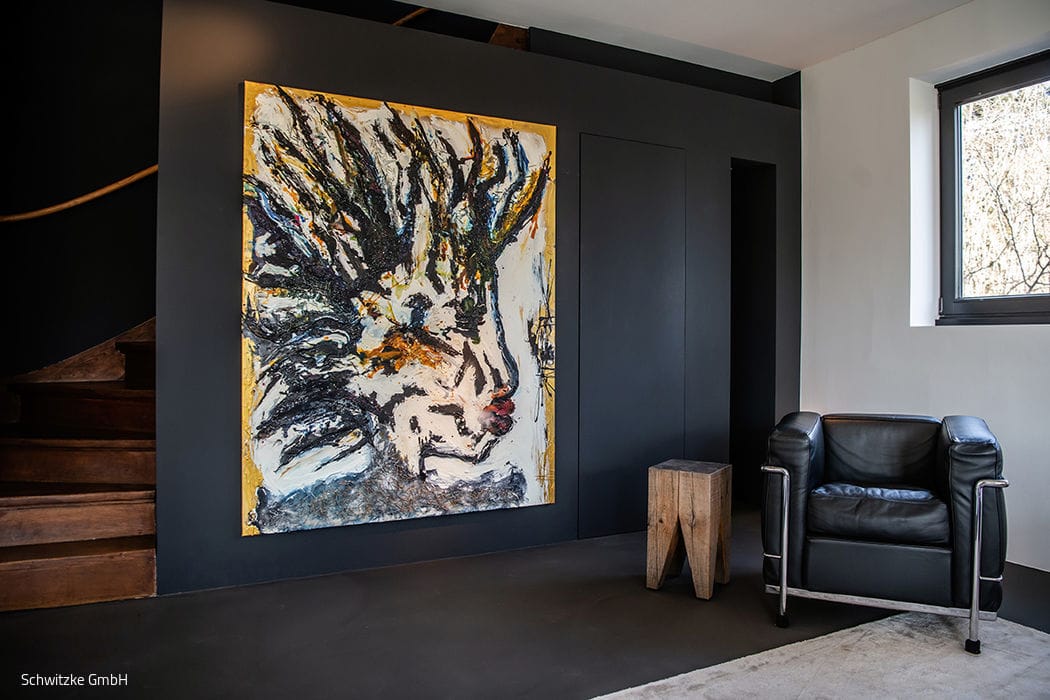
To honor the home's original essence, the owners thoughtfully preserved key historic elements: the handcrafted staircase and handrail ascending to the upper floors, and a Campendonk artwork displayed prominently in the entry hall. The original floor mosaic remains intact on the first floor, as do the vintage wooden boards above. The brick construction required breathable insulation panels throughout—finished with plaster and paint for a seamless aesthetic. Ground and first floors feature radiant floor heating for comfort, while the second floor employs wall-mounted heating. The standout feature is the open bathroom, entirely finished in black slate—a dramatic counterpoint echoed by the second-floor folding glass wall system that opens the corner completely to the outdoors. On the ground floor, the kitchen built-in—cast in exposed concrete with blackened steel fronts—rivals even the Campendonk piece as a defining design statement.
Photography Credits:
Schwitzke GmbH
(Published in CUBE Düsseldorf 02|22)
A Second Home for the Little Ones
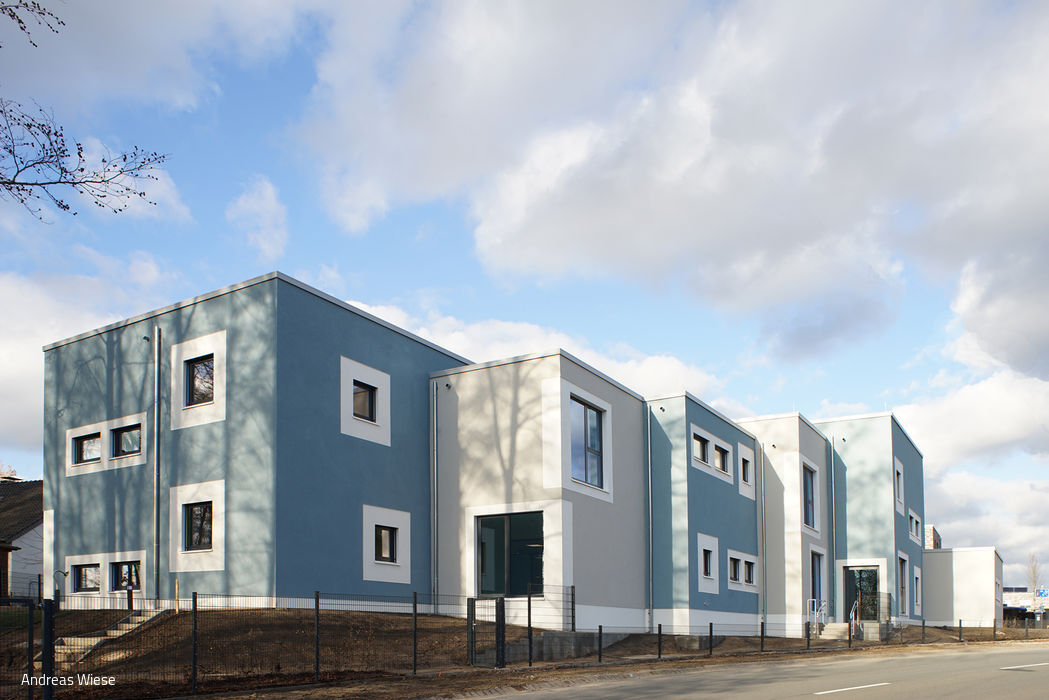
Two-Storey Daycare Facility in Haan
Temple of Contemplation
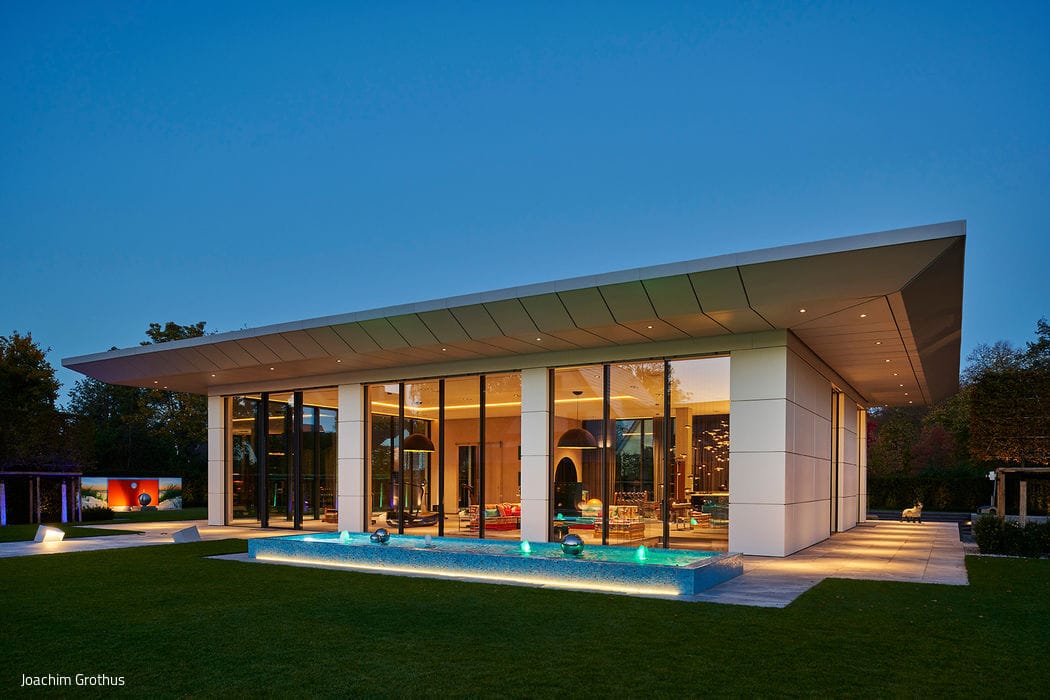
Expansive glass walls and soaring ceilings transform these sun-filled fitness studio spaces into sanctuaries for quiet reflection and contemplation.
Building On With Bold Contrast
A restored semi-detached house: where architectural layers speak to one another.

Diversity in Harmony
A vibrant new residential quarter with generous green space has emerged on Ulmer Höh' in Derendorf.