


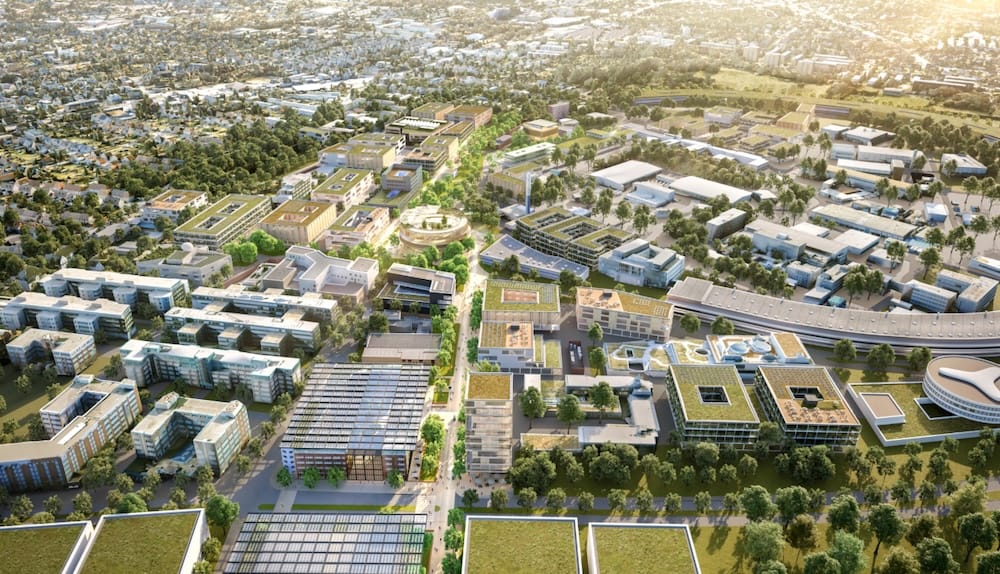
A rendering of "Science City Bahrenfeld," envisioned for the 2040s. Photo: Moka Studios
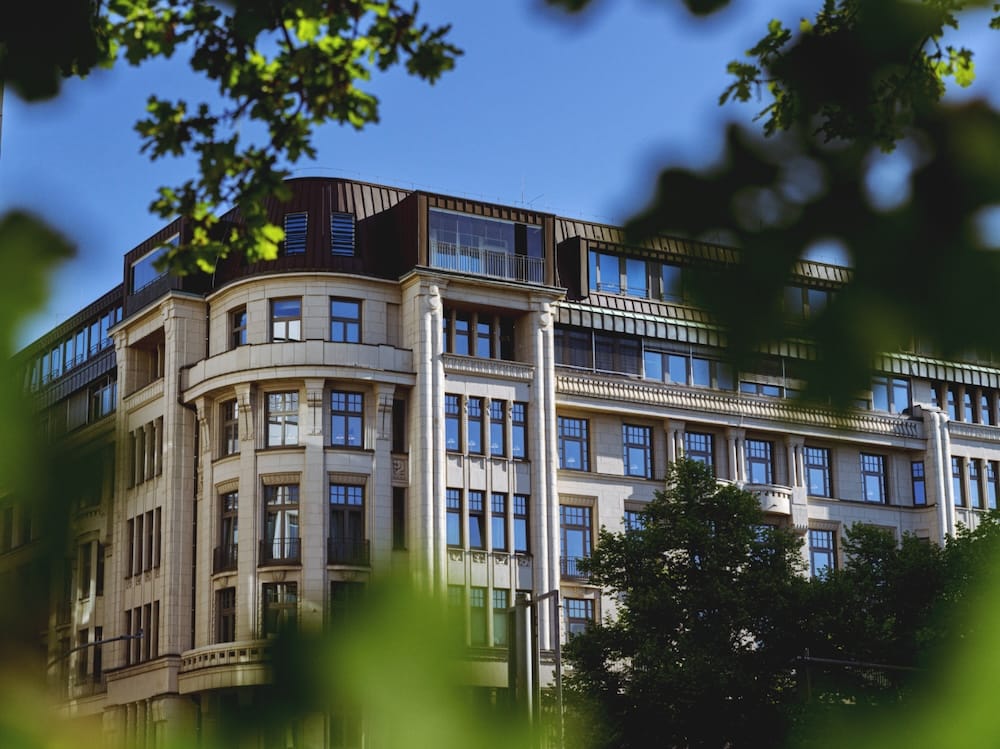
Launched in early 2025, "The Embassies" residential project inhabits the historically significant, recently renovated "Hindenburghaus" on Großer Burstah—a community designed for a sophisticated, discerning clientele. Photo: The Embassies
Olympics on the Horizon
2026 marks a milestone year for Hamburg, bringing both a significant anniversary and a pivotal referendum.
For some, HafenCity remains refreshingly new; for others, it's simply part of the urban fabric. Hamburg's riverside district will mark a quarter-century in 2026—measured from the groundbreaking on April 9, 2001. The ensemble of Speicherstadt, innovative neighborhoods, and the Elbphilharmonie increasingly feels complete, even as development continues in the east. "The master plan targeted completion by 2025, and we've essentially delivered on that promise—quite an achievement," notes Reiner Nagel, who helped shape HafenCity from its inception. The acclaimed architect has chaired the Federal Foundation for Building Culture in Potsdam since 2013, having served on HafenCity GmbH's management board from 1998 onward. Today, Nagel remains bullish on this district—one of Europe's most ambitious urban development projects. "For the few skeptics who find the environment too new, too dense, or insufficiently green, I'd suggest imagining HafenCity a century from now," he reflects. "Hamburg's historic turn-of-the-century neighborhoods took time to develop their character too."
When HafenCity first entered public discourse in 1997, many saw it less as a new district and more as an extension of the city center toward the Elbe. This year's breakthrough on the Elbtower has palpably eased tensions around the upcoming milestone. A striking new natural history museum capping off HafenCity's architectural vision will inject genuine prestige into the neighborhood. A similarly striking opera house on Grasbrook—plans launched earlier this year—would further amplify what HafenCity and the Elbphilharmonie have already accomplished for Hamburg: perhaps not a "Bilbao effect," but undeniably a seismic shift in the city's cultural magnetism and global standing. Hamburg's surging appeal shows up in more than overnight visitor numbers, which have nearly tripled over 25 years. Projects like "The Embassies" are drawn here too—a "global hospitality concept reimagining how we perceive and embrace later life," in its own words. The venue houses co-working spaces, conference rooms, and spa facilities exclusively for members of the "Ambassadors Club."
Launched in early 2025, "The Embassies" residential project inhabits the historically significant, recently renovated "Hindenburghaus" on Großer Burstah—a community designed for a sophisticated, discerning clientele.
This new residential venture targets those who have deliberately chosen not just Hamburg, but this vibrant inner-city location. "Hamburg is an extraordinarily dynamic city right now," explains General Manager Tina Morgenstern. "The downtown is experiencing a real renaissance, and cultural offerings are right at your doorstep." This vision is precisely why the first "Embassy" of this internationally-scaled project took root on the Elbe. The response has been equally strong from both the surrounding region and from companies seeking to offer their employees a temporary Hamburg base under the Embassies umbrella. At its heart, the concept is a curated "living room" in the city centre—a gathering place for like-minded individuals. Morgenstern anticipates "one of the city's most dynamic networks" emerging as residents, club members, and guests convene at the venue's regularly programmed events. The inclusion of a café with an integrated concept store serving the broader public is equally important to the vision. "We're not creating an exclusive enclave," Morgenstern emphasizes. "This is a place open to the city."
Hamburg's growing prominence will carry further significance next year—into the city's campaign for the 2036, 2040, or 2044 Olympic and Paralympic Games. Hamburg faces competition from three fellow German contenders: Berlin, Munich, and the Rhine-Ruhr region. On May 31, residents will vote via referendum on whether Hamburg should pursue a bid. "We're committed to helping the Senate make the Olympic case to Hamburg's people," says Dr. Philipp Henze, head of the Chamber of Commerce's "Liveable Metropolis" division. The Senate's Olympic blueprint proves compelling because it interlocks with and accelerates Hamburg's existing urban agenda. "Science City Bahrenfeld," slated for the 2040s, would get a crucial head start by initially functioning as the Olympic Village. "All competition venues would cluster within an eight-kilometer radius of the main sporting facilities," Henze notes. Critically, no new construction would occur outside what's already planned or imminently necessary.
The failed 2015 Olympic referendum and past missteps offer a stark lesson: genuine public support depends on both inspiration and authentic participation. "You must begin with a robust foundational phase that brings all stakeholders and community groups into the conversation," Rainer Nagel observes, drawing on lessons from HafenCity's triumph and other ventures. "You need a compelling, enduring vision—one that transcends electoral cycles and political shifts." Urban development is no sprint; it demands "sustained commitment and unwavering dedication to the highest standards of architectural culture."
Source: Hamburg Chamber of Commerce Magazine
More News
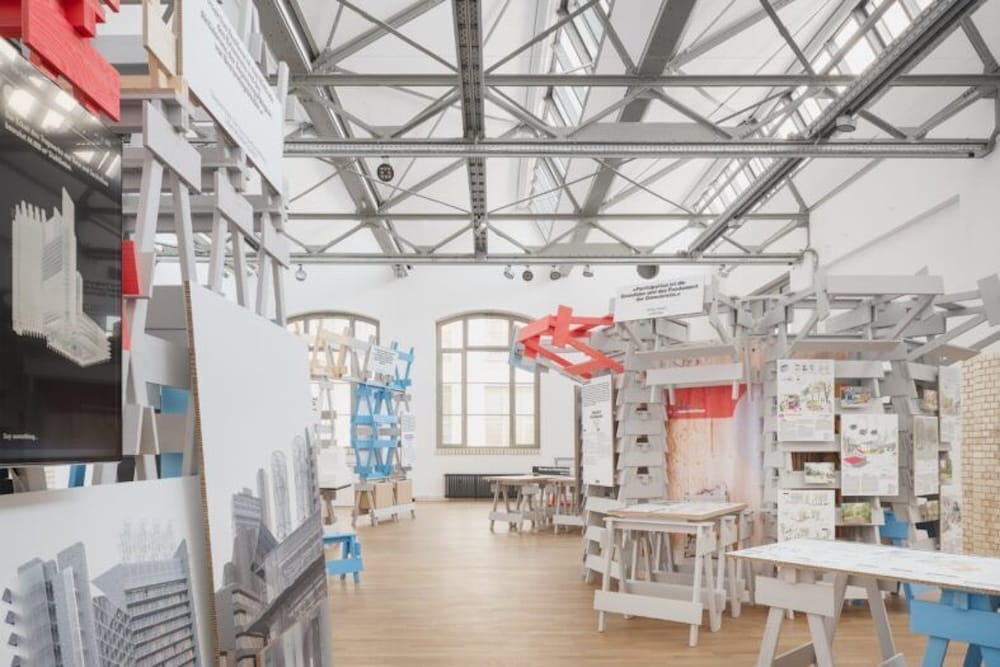
Construction Site Transformation. Ten Strategies for City and Country
Exhibition at the German Architecture Center
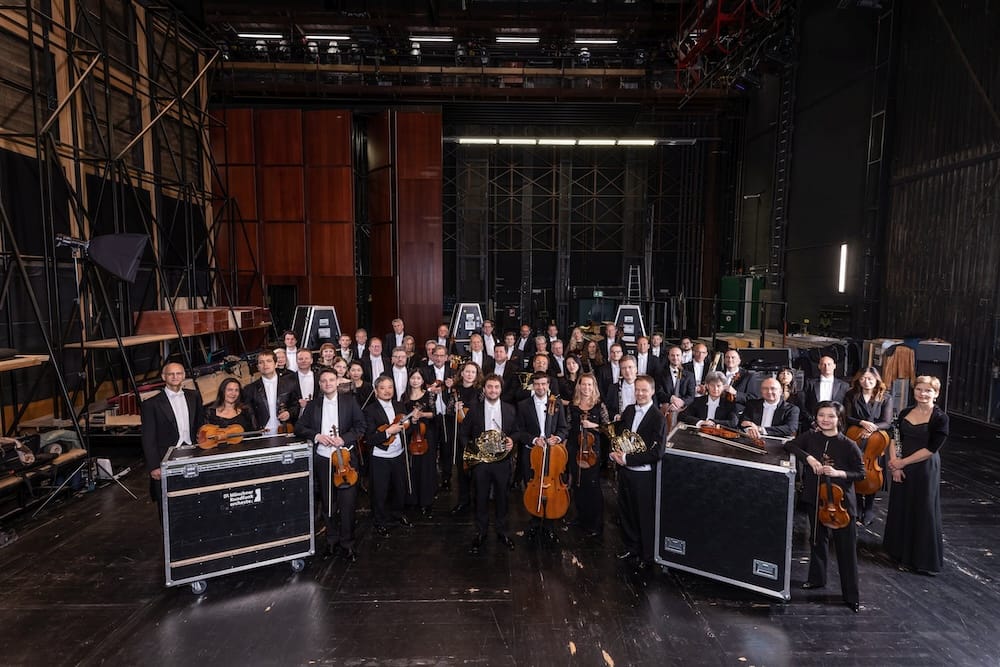
British Film Music Night
Concert in Wiesbaden Spa Gardens
Erich Mendelsohn Prize 2026
Deadline for submissions for the Backstein Architecture Award extended

German Urban Design Prize 2027
The application period has begun