


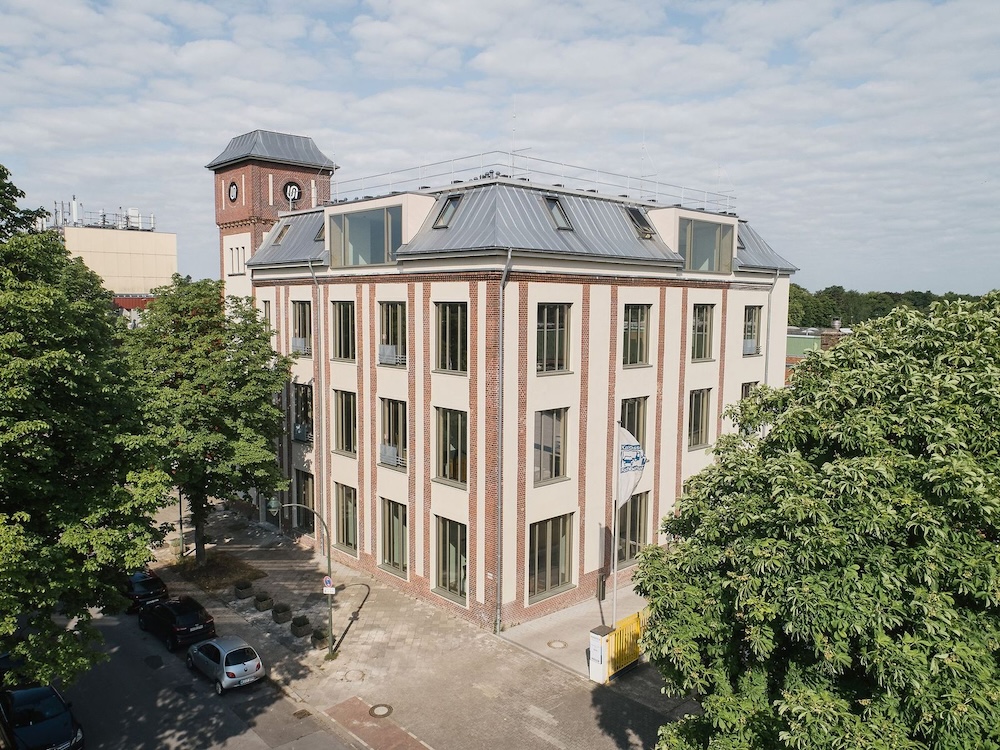
Photography by Jan Ladwig
Sustainable and Creatively Flexible
Düsseldorf's "Building of the Year 2025"
Each year, the prestigious Düsseldorf Association of Architects and Engineers (AIV) recognizes an outstanding "Building of the Year" from recently completed construction projects across the state capital. This year, members voted for the sustainable conversion of a historic property on Hugo-Viehoff-Straße, situated near the former wholesale market site in Derendorf, which is currently undergoing major redevelopment. Originally constructed in 1909 as a dairy, this striking building has been thoughtfully reimagined as the Hugo corporate campus by Beilmann Architekten (Bochum) and DSK Innenarchitektur (Düsseldorf). Media agency Unbound Media (formerly Crossmedia) – both developer and sole tenant – now operates its headquarters here, providing flexible workspaces and collaborative areas for over 180 employees. The AIV Düsseldorf board presented the bronze plaque "Building of the Year 2025" to the developers during a special ceremony on site.
This year, 157 of 307 AIV members participated in the online voting process, choosing from six outstanding nominees: the Hugo, the mixed-use JEP1 building with hotel on Kö-Bogen (christoph Ingenhoven architects/ingenhoven associates), the newly revitalized Levelz office building in Golzheim (RKW Architektur +), the Euref Campus at Düsseldorf Airport (Euref Consulting), One Plaza in Golzheim, and the alltours headquarters at the Rhine promenade (both HPP Architekten). "This year's shortlist showcases six exceptional commercial buildings," explains Christian Kawe, board member of AIV Düsseldorf. "By selecting Hugo am Großmarkt, our members recognized a conversion project that honors existing building fabric while delivering a climate-neutral, resource-conscious workplace – one that thrives on both flexibility and collaboration." The original structure, designed in 1909 by Düsseldorf architects Richard Krekel and Heinrich Storck on a nearly square footprint, opened as a dairy. Post-WWII damage necessitated modifications, including the infilling of its original oversized windows. Over subsequent decades, it served multiple purposes: assembly hall, airport boarding house, and most recently, homeless shelter with 55 units. When Crossmedia (now Unbound Media) acquired the vacant building in 2018, they launched an ambitious renovation and expansion. Today, Hugo anchors the broader transformation of the adjacent wholesale market site, which will soon feature mixed-use development with offices, retail, dining, a swimming pool, and additional leisure facilities. With 180 employees, Hugo is already catalyzing the creative and social vitality the future neighborhood aims to achieve.
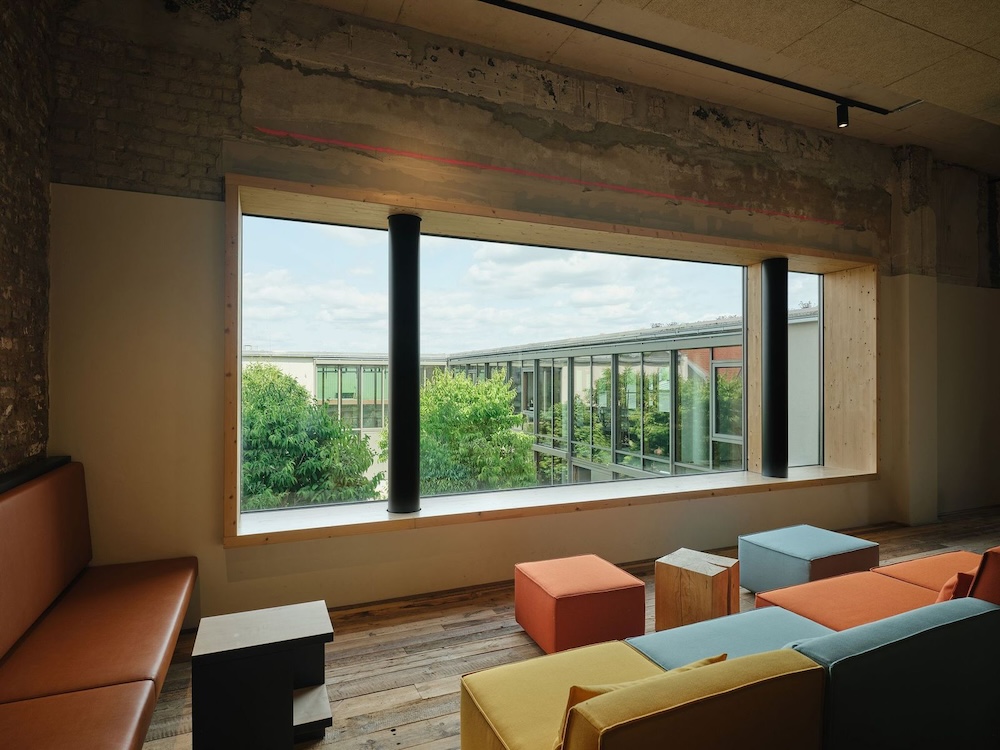
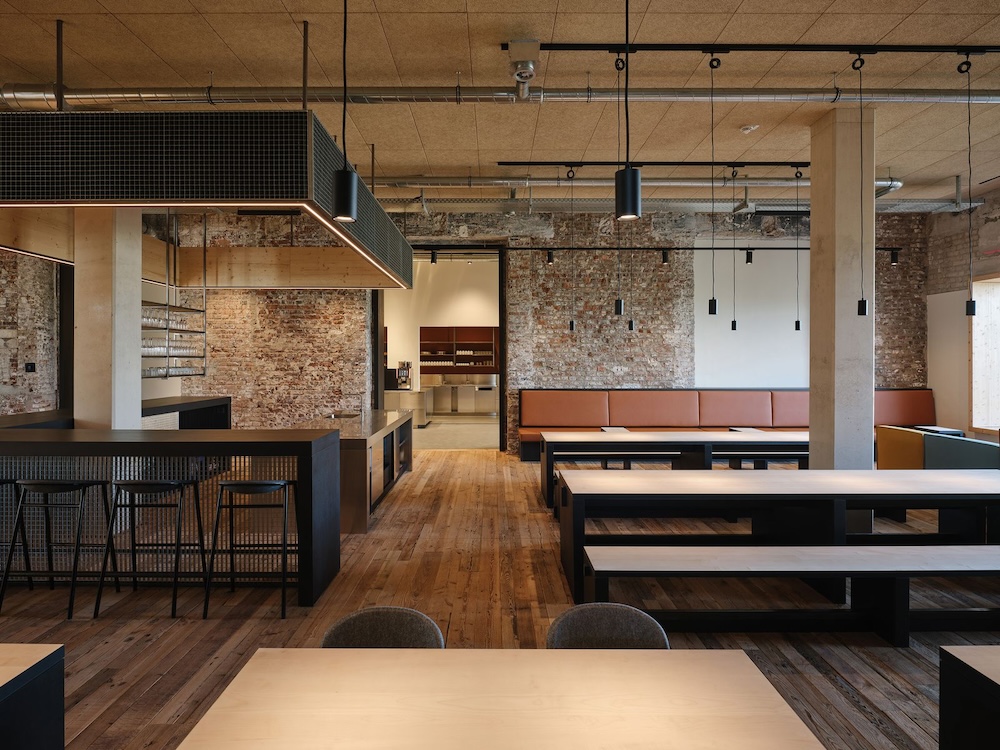
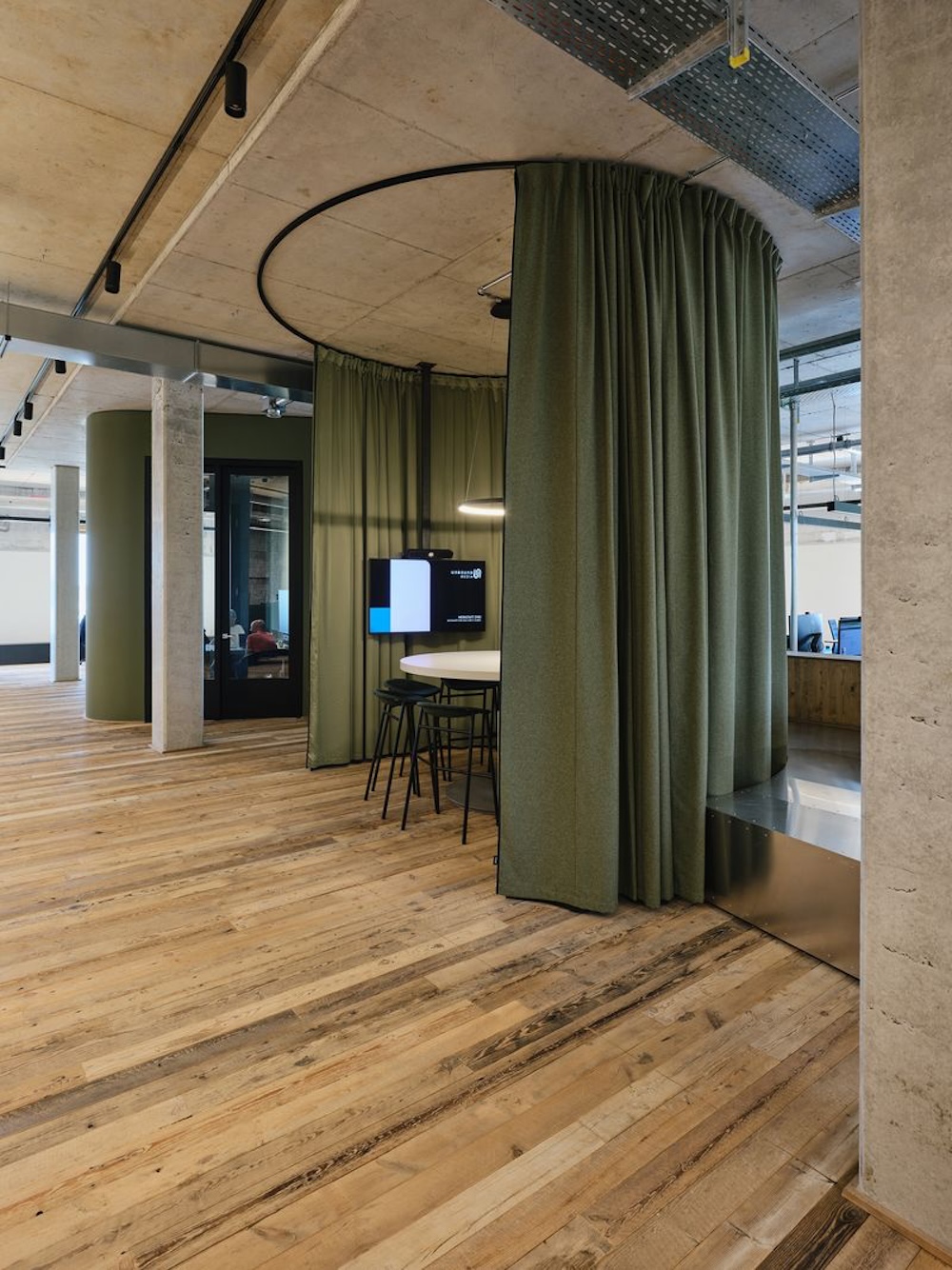
The vision was bold: create an innovative, climate-neutral workplace that radiates creative energy and cultivates genuine well-being. The historic structure itself embodies this philosophy – a building that has been continuously adapted and repaired across decades, composed largely of salvaged and repurposed materials. The current renovation honors this practice: untreated wooden flooring throughout features floorboards salvaged from century-old farmhouses. Former office furniture was carefully re-integrated by craftspeople into custom cabinetry. Existing brick walls were exposed to reveal their character, while raw concrete complements them, creating a cohesive dialogue between old and new.
The building's historic identity shines through inside and out, paired with intelligent smart-building systems managing lighting, solar control, and sustainable energy. Energy consumption has dropped to roughly one-third of previous levels, sourced almost entirely from on-site generation: ice storage heating, geothermal systems, and photovoltaic panels work in concert to heat, cool, and power the space. The interior layout embraces fluid, adaptive work – each of the four floors features a distinct plan tailored to fixed or flexible arrangements. With ceiling heights reaching 4.50 metres, the design maximizes verticality and creates expansive open areas. A blend of open-plan zones, five monochrome "Digital Windows" (acoustically optimized hybrid rooms for video calls or focused work), seven "Workshops" (conference spaces), and "Campfires" (collaborative islands) spreads throughout the building, offering every employee an ideal workspace. Lounge areas and stepped seating deliberately soften the typical office layout. The design adapts effortlessly to shifting work demands through flexible furniture, acoustic panels, and a responsive lighting system.
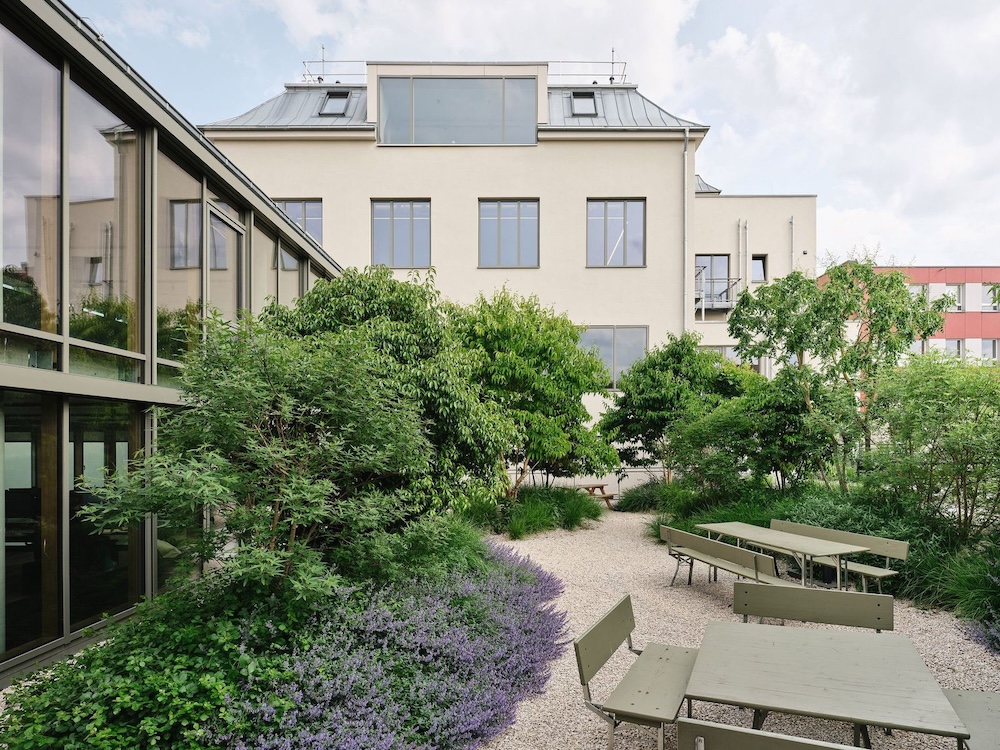
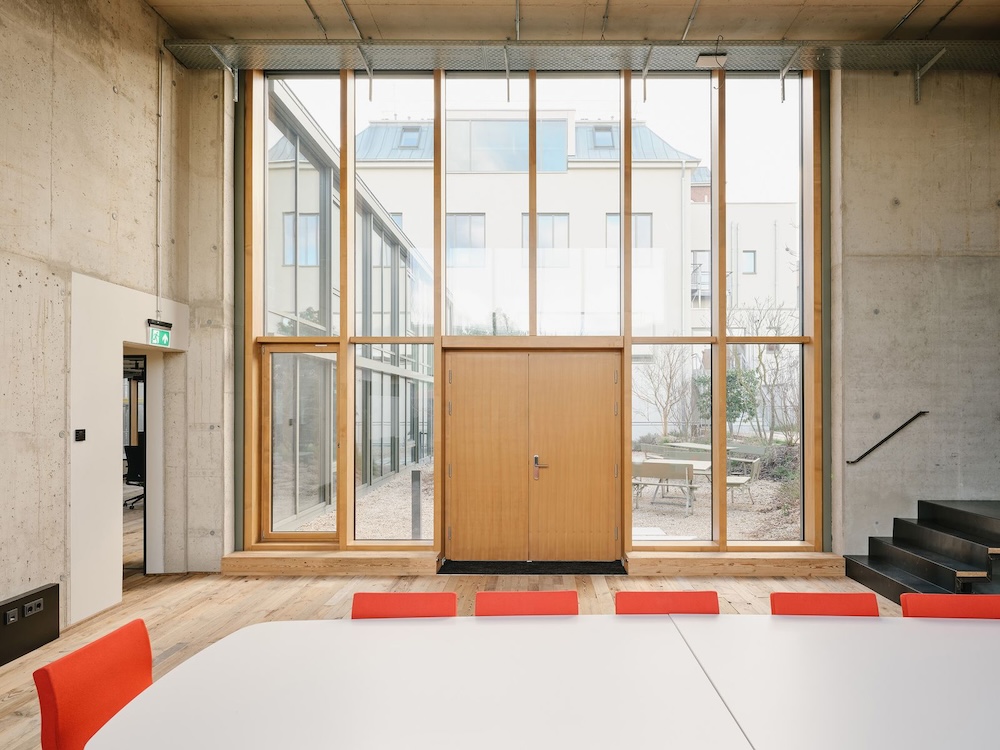
The agency's social hub occupies the first floor: an expansive dining room with kitchen and bar welcomes staff and guests alike. A striking six-metre panoramic window frames the lush interior courtyard and two new glazed workshops (each with 4.50-metre ceilings) designed for diverse purposes. Beyond the dining room, the connector to the workshops and the generously planted courtyard – filled with climate-resilient trees and shrubs – become natural gathering spaces for everything from table tennis and foosball to impromptu barbecues. Generous dormer windows on the top floor, overlooking all four directions, plus a terrace deliver sweeping views across Düsseldorf.
More News
German Urban Design Award 2027
The application period has begun

YOUNG PORTUGUESE ARCHITECTURE – THE SIXTH GENERATION
Exhibition at the Findeisen Foundation Forum

Simply Built!
Exhibition on the gallery access housing in Dessau-Törten
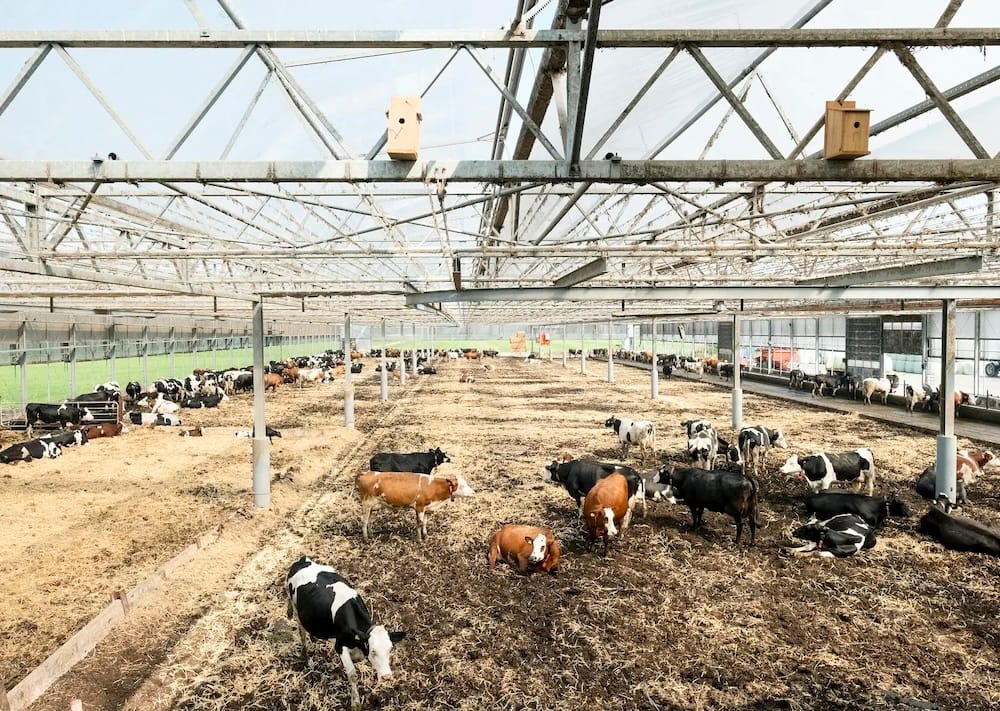
CONVIVIUM: Food Systems at the Limit
Exhibition at the TUM Architecture Museum