


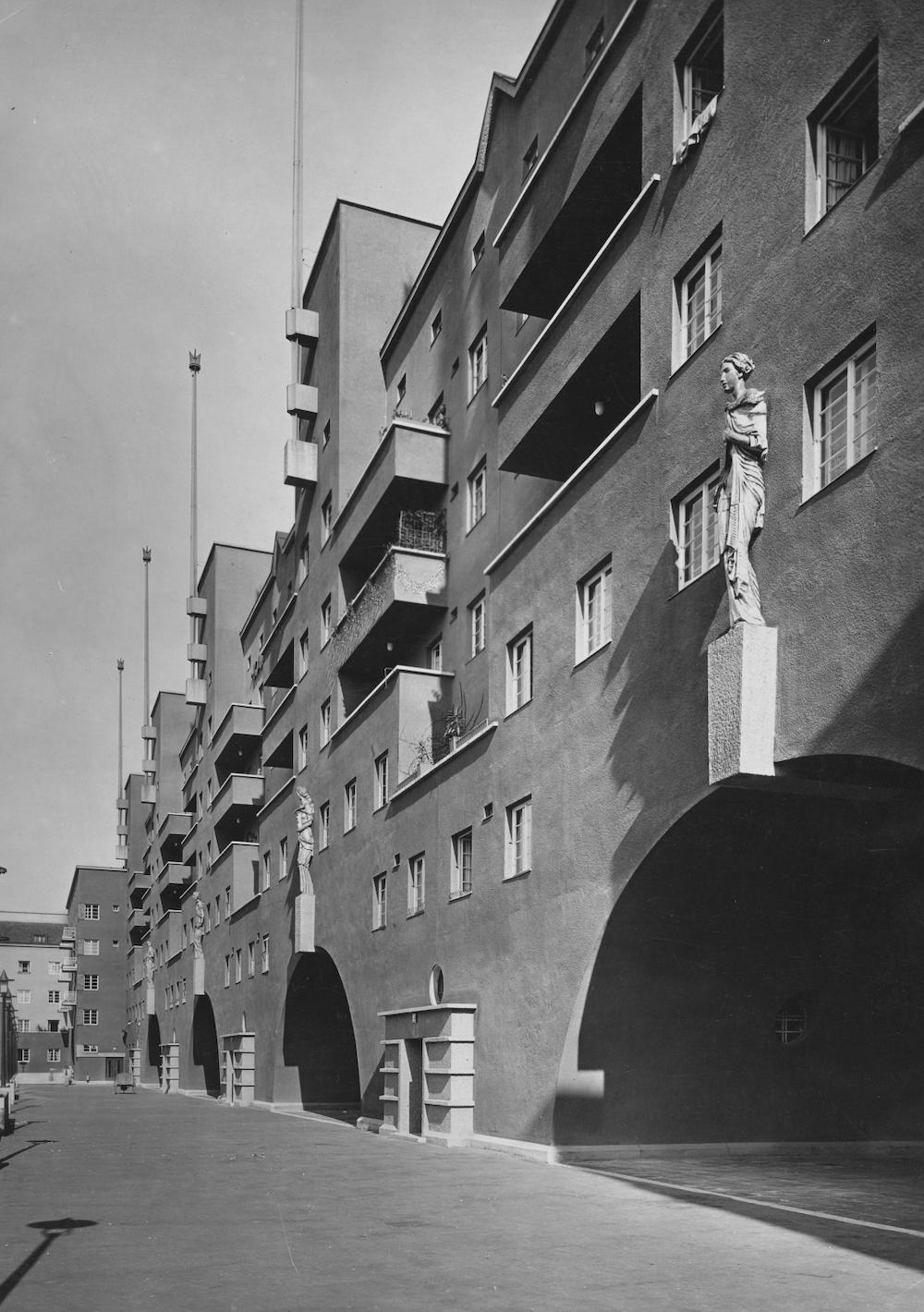
Karl Marx Hof, Vienna Architect: Karl Ehn 1927–30 | Photograph by Martin Gerlach © Vienna Museum, Vienna
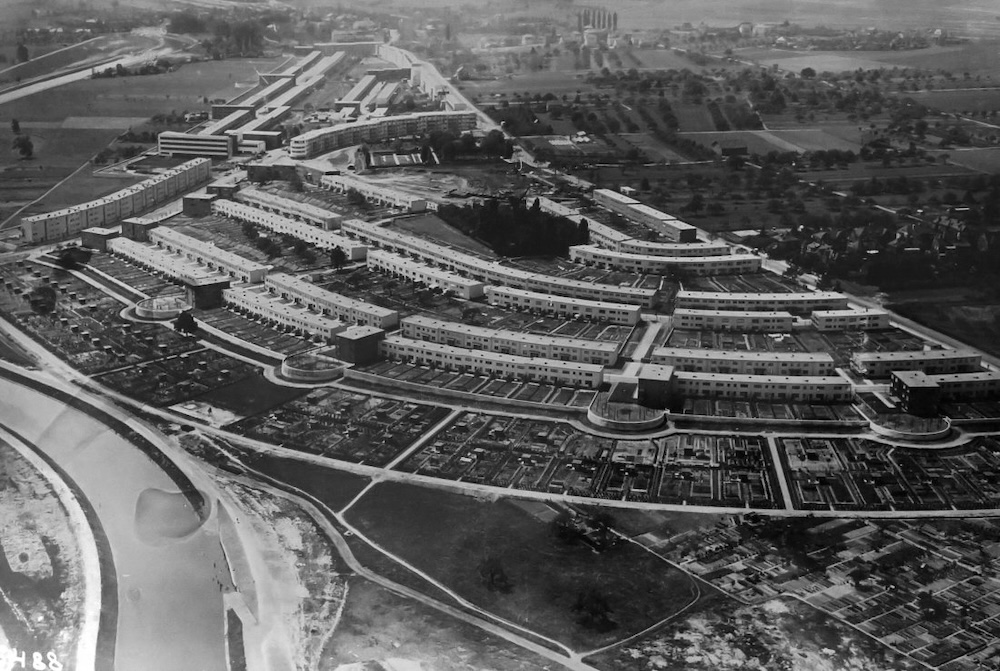
Römerstadt Housing Estate, Frankfurt | Aerial View Architects: Ernst May and others 1927–28 Photograph by unknown photographer © Institute for City History, Frankfurt
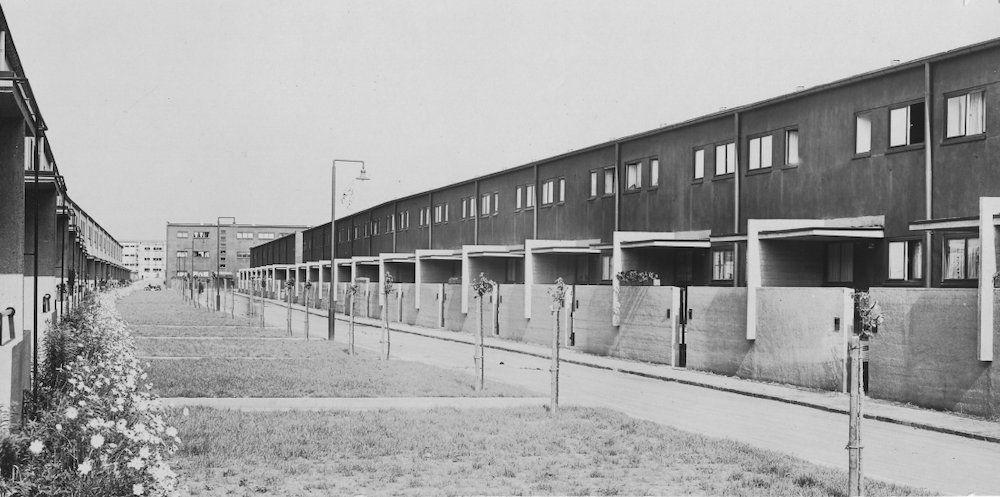
Römerstadt Housing Estate, Frankfurt | Im Burgfeld Street Architects: Ernst May, Carl-Hermann Rudloff, and others 1927–28 Photograph by Max Göllner © Ernst May Society, Frankfurt
The Rise of the Modern City: 1925–1933
Frankfurt, Vienna, and Hamburg: Three Models in Dialogue
In 2025, New Frankfurt marks a centennial milestone. Throughout the 1920s, under Lord Mayor Ludwig Landmann and architect Ernst May—who also served on city council—Frankfurt underwent a remarkable transformation into a model modern metropolis, one that was socially progressive, architecturally innovative, and culturally vibrant. The First World War's aftermath left Germany and Austria's great cities utterly transformed. Monarchies gave way to democratic republics with universal suffrage for all citizens. Yet this newfound freedom came shadowed by food scarcity, economic collapse, currency devaluation, and a crisis of unprecedented housing shortage. Little had been built during the war; less still in the years following. Both Vienna and Germany's major cities shifted housing from private speculation to public responsibility. Frankfurt emerged as a beacon of avant-garde modernism in this new era. This exhibition seizes the moment of New Frankfurt's centenary to examine three pivotal urban experiments side by side. The municipal housing of Red Vienna, the settlements of New Frankfurt, and the residential blocks of Hamburg each embodied new typologies of mass housing, the idealist vision of the "New Man," and modernist building practices—yet each also honored existing traditions. Despite remarkably similar political motivations, the three cities developed strikingly distinct programs and architectures within just a few years. By placing them in dialogue, we gain the chance to question familiar narratives anew. The comparison reveals what makes each model distinctive, illuminating both their individual character and their profound differences.
Red Vienna's Social Housing, 1919–1934 After the collapse of the Habsburg Monarchy in 1918 and Austria's emergence as a republic, Vienna found itself the capital of a diminished nation and simultaneously a federal state governed by a social democratic majority from 1919 to 1934. As the intellectual center of "Austro-Marxism," Vienna stood as a progressive island within an otherwise conservative republic. The city grappled with mass unemployment, food shortages, and severe housing scarcity. Over 90 percent of all dwellings lacked indoor plumbing or toilets, typically consisting of just a kitchen and single room. Early housing settlements on the city's periphery offered only modest relief. Vienna's fiscal independence proved decisive: in 1923, the city enacted a property tax on wealthy residents, with revenues directly funding municipal housing construction. Between 1919 and 1934, Vienna built 65,000 new municipal apartments—many within distinctive "superblocks." These iconic complexes housed over a thousand residents each, most famously the 1930 Karl-Marx-Hof. Affordability was paramount: rents remained accessible even to the unemployed. This necessitated compact floor plans with modest amenities—combined kitchen-living spaces, walk-through rooms, toilets but no bathrooms—yet these still far surpassed traditional working-class standards. Community facilities compensated: laundries, public baths, health clinics, kindergartens, libraries, and assembly halls transformed daily life. Hamburg's Residential City Unlike Frankfurt, which belonged to Prussia, Hamburg was an independent state within the German Empire. After 1918, urban policy shifted from serving merchants, ports, and colonial interests toward addressing the majority's housing crisis. Fritz Schumacher, appointed building director in 1909, spearheaded this transformation. Initially responsible only for municipal construction, he gradually expanded his influence over citywide urban planning. A comprehensive master plan proved impossible to implement, so Schumacher worked incrementally. His 1918–1920 Dulsberg scheme demonstrated how modern social housing could work in Hamburg's constrained geography. The city's narrow northward expansion left little room for westward or eastward growth—urban densification became essential. Schumacher's new "Wohnstadt" (residential districts) weren't sprawling satellites but carefully integrated neighborhoods within compact, high-density development.
Schumacher arrived in Hamburg before becoming the brick architect he's now remembered as. Yet a strong regionalist sentiment dominated the city, championing red brick as northern Germany's defining architectural character. Schumacher embraced this identity wholeheartedly, endowing the Wohnstadt with unified red-brick facades and clinker detailing. New Frankfurt: A City Reimagined From 1925 onward, New Frankfurt embodied perpetual renewal. Following hyperinflation's devastation in 1923, the Weimar government introduced a property tax to fund housing construction. In October 1925, Frankfurt launched an ambitious decade-long program: 10,000 apartments with controlled rents. By 1931, over 10,500 units had risen. The breakneck pace—eventually reaching 12,000 units by 1932—commanded international attention. Ernst May leveraged this program as a catalyst for urban and architectural revolution. Rather than expanding outward, he reorganized the compact city through satellite neighborhoods, green belts, and strategic settlements. For a brief moment, Frankfurt's building authority became an avant-garde powerhouse, attracting architects worldwide. This magnetism proved decisive: October 1929's 2nd International Congress of Modern Architecture (CIAM) convened in Frankfurt rather than Berlin or Bauhaus Dessau. The 1929 financial crisis halted construction momentum. The Nazi regime delivered the final blow to New Frankfurt. May and much of his team departed in 1930, accepting a major planning commission in the Soviet Union.
www.museumangewandtekunst.de
More News
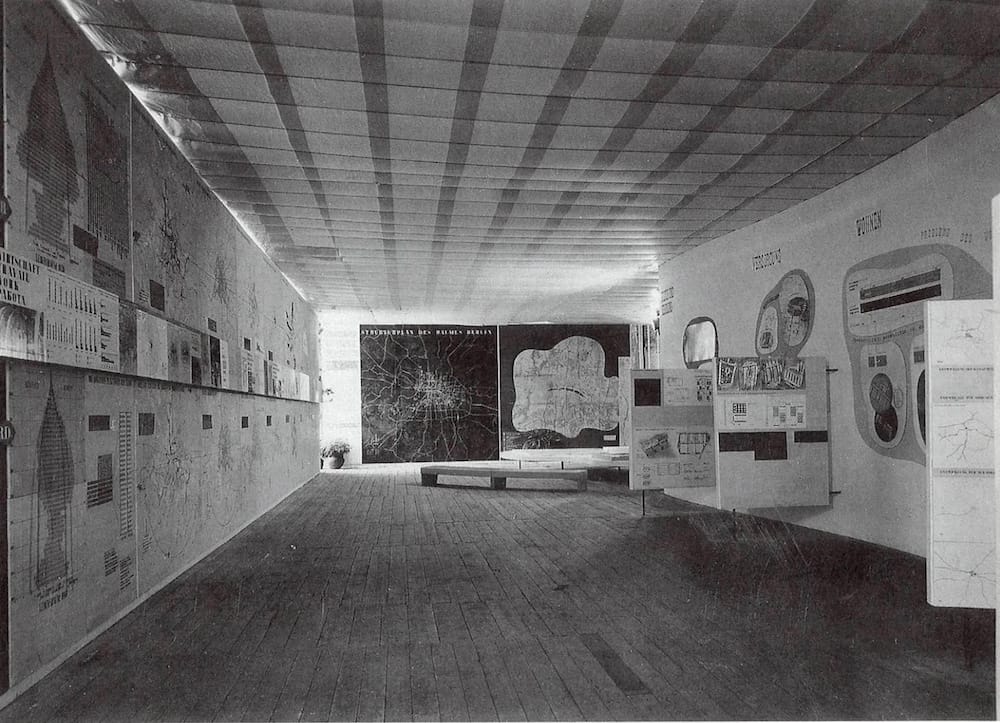
Berlin Plans. Year Zero
Exhibition at the Neuer Berliner Kunstverein
Hans Georg Esch – The Architectural Gaze
Exhibition at the Museum of Applied Arts from 11 June
How Do We Want to Live?
Exhibition focuses on urban coexistence
Community Happens Here
Community-building projects at the Architecture Gallery…